1 Stage vs. 2 Stage Compressor: Which Fits Your Setup Better?
Choosing the right compressor architecture dictates your shop's efficiency and equipment longevity. This technical guide contrasts single-stage and two-stage pneumatic pumps for professional trade applications.

Choose a 1 stage unit for standard automotive repair and intermittent shop tasks. Upgrade to a 2 stage compressor for continuous industrial manufacturing, high-demand sandblasting, and heavy pneumatic tool usage.
Compare all top models in our Best Air Compressor: Top Picks for Every Garage & Roadside.
Side-by-Side Breakdown
| Criteria | 1 Stage | 2 Stage Compressor | Edge |
|---|---|---|---|
| Peak Performance & Output | Up to 135 PSI max pressure | 175+ PSI continuous pressure | 2 Stage Compressor |
| Duty Cycle & Consistency | 50% to 60% duty cycle | 80% to 100% continuous duty | 2 Stage Compressor |
| Operating Noise & Vibration | Higher RPM mechanical clatter | Lower RPM smoother operation | 2 Stage Compressor |
| Portability & Footprint | Compact, lighter wheelbarrow styles | Heavy stationary vertical tanks | 1 Stage |
| Maintenance & Service Life | Standard consumer upkeep needs | Commercial cast iron durability | 2 Stage Compressor |
| Power Requirements | Standard 115V or 230V circuits | Heavy 230V or 3-phase power | 1 Stage |
| Best Ideal Use-Case | Garages, framing, and nailing | Auto bodies, production lines | 2 Stage Compressor |
Fundamental Engineering and Compression Mechanics
Single-stage air compressors utilize a straightforward mechanical design where pistons draw atmospheric air into cylinders and compress it directly to final tank pressure in one single stroke.
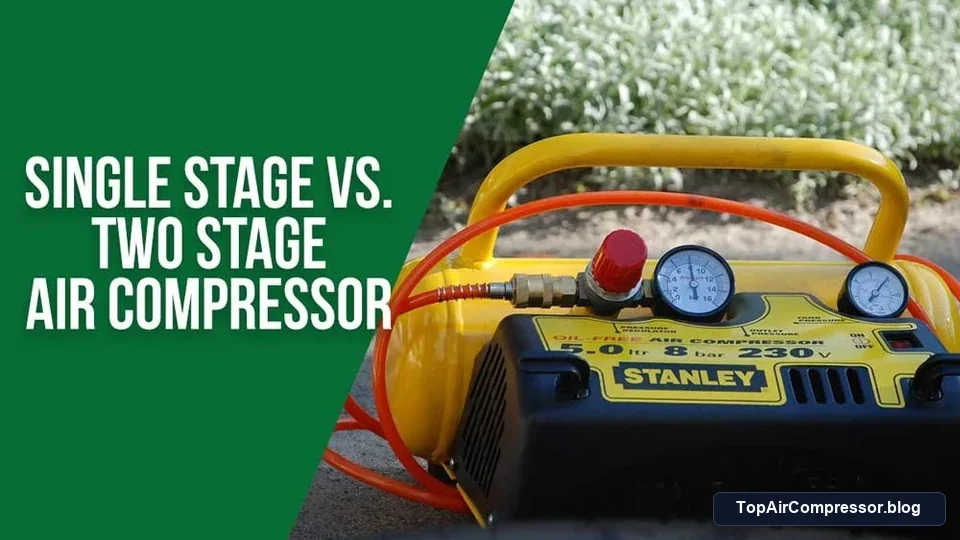
This direct approach makes the equipment mechanically simpler, lighter, and more affordable for contractors who need reliable air power without excessive complexity or specialized infrastructure.
Conversely, two-stage compressors divide the compression cycle across distinct high-pressure and low-pressure cylinders to achieve higher operational pressures with significantly greater mechanical efficiency.
- Single piston stroke per compression cycle
- Dual-cylinder progressive pressure multiplication
- Simplified valving on entry-level models
Cylinder Staging Mechanics
Atmospheric air enters the large low-pressure cylinder first, where initial mechanical compression occurs before passing through a specialized metal intercooler tube.
The pre-compressed air then enters a smaller high-pressure cylinder, boosting ultimate psi output safely and efficiently for heavy-duty industrial pneumatic equipment.
- Interstage cooling tubes
- Progressive pressure gains
Fundamental Engineering and Compression Mechanics
Single-stage reciprocating compressors draw atmospheric air into a cylinder, compressing it to final pressure in one stroke. For heavier shop duties, explore our best 60 gallon 2 stage air compressor guide for high-demand options.
Two-stage architecture utilizes a large low-pressure piston to intake ambient air, passing the pre-compressed charge through an intercooler before a high-pressure piston delivers up to 175 PSI or higher.
Volumetric efficiency drops significantly in single-stage pumps operating near their maximum thermal limits due to excessive clearance volume, whereas interstage cooling in dual-stage units preserves air density effectively.
Performance Metrics and Pressure Delivery Dynamics
Single-stage units typically operate effectively up to one hundred thirty-five pounds per square inch, making them ideal for standard pneumatic impact wrenches, nailers, and inflation tasks.
When professional applications demand consistent pressures exceeding one hundred seventy-five psi, a dual-stage setup becomes an absolute engineering necessity for your facility.
Carefully evaluating these critical pressure limits ensures you avoid purchasing underpowered equipment that struggles during demanding automotive or fabrication shop workflows.
- Maximum 135 PSI limit for single-stage pumps
- Continuous 175+ PSI delivery for two-stage units
- Superior CFM volume maintenance under heavy loads
CFM Output Consistency
Cubic feet per minute delivery drops quickly on single-stage pumps as tank pressure approaches its maximum cutoff threshold during extended painting or grinding tasks.
Two-stage configurations maintain stable volumetric output much longer because secondary compression stages require less mechanical effort at peak operational tank pressures.
- Volume drop-off in single-stage
- Sustained flow in dual-stage
Performance Metrics and Pressure Delivery Dynamics
Continuous duty cycles demand stable airflow measurements expressed in Actual Cubic Feet per Minute, accounting for ambient temperature, humidity, and intake barometric pressure variations across standard operating ranges.
Single-stage systems experience severe pressure drop when operating high-demand pneumatic tools continuously, falling below the minimum operating threshold required for heavy impact wrenches or abrasive blast cabinets.
Two-stage units maintain consistent receiver pressure by utilizing a wider pressure band, preventing the pump from cycling excessively while delivering reliable CFM output for industrial assembly lines.
Thermal Management and Intercooling Efficiency
Compressing atmospheric air generates intense thermal energy that can degrade pump components and lubricating oil if not dissipated rapidly during continuous operation cycles.
Single-stage pumps rely strictly on external flywheel fan blades and ambient shop airflow to cool the single cylinder block during operation.
Excessive internal heat accelerates valve wear, increasing maintenance downtime and reducing overall pneumatic efficiency across busy commercial workshop environments.
- High heat accumulation in single-stage cylinder walls
- Integrated intercooler copper tubing on two-stage units
- Reduced moisture buildup through effective air cooling
The Role of Intercoolers
Two-stage compressors feature finned intercooler tubes running between cylinders to cool compressed air significantly before final delivery. Many models featured in our best 2 stage air compressor under 1000 selections incorporate this vital thermal management.
This intermediate cooling lowers overall operating temperatures, prevents carbon buildup on valve reeds, and extends compressor pump longevity remarkably.
- Thermal heat rejection
- Valve carbon prevention
Thermal Management and Intercooling Efficiency
Heat dissipation remains the primary engineering hurdle in pneumatic compression, governed by the ideal gas law where rapid volume reduction generates extreme cylinder temperatures exceeding four hundred degrees.
Single-stage pumps rely strictly on external flywheel fan blades and cast-iron cooling fins, which struggle to dissipate thermal energy during extended operational cycles under heavy industrial loads.
Two-stage compressors integrate fluted copper or aluminum intercoolers between cylinders, dropping compressed air temperatures drastically to optimize thermodynamic efficiency and prevent lubricant oil breakdown.
Electrical Requirements and Power Consumption Profiles
Electrical demands differ dramatically between these two distinct compressor styles based on horsepower ratings and motor starting current characteristics.
Most single-stage compressors operate smoothly on standard single-phase residential or commercial electrical circuits ranging from one hundred fifteen to two hundred thirty volts.
Understanding these power requirements prevents costly electrical upgrades and ensures safe integration into your existing workshop wiring infrastructure.
- 115V and 230V compatibility for single-stage motors
- Heavy-duty 230V or 460V three-phase power for dual-stage
- Magnetic starter switches required on larger industrial units
Starting Amperage and Infrastructure
Heavy industrial two-stage compressors frequently demand robust three-phase electrical service and dedicated heavy-gauge wiring to handle high initial starting electrical loads safely.
Failing to provide adequate electrical supply infrastructure will result in frequent breaker trips, motor overheating, and premature electrical component failure.
- Three-phase service needs
- Heavy-gauge wiring importance
Electrical Requirements and Power Consumption Profiles
Electrical infrastructure demands careful calculation of starting versus running amperage, especially when configuring heavy induction motors operating on standard 230-volt single-phase workshop circuits safely.
Single-stage units generally require smaller horsepower motors, reducing initial electrical panel upgrades, but they draw massive surge current when recovering from depleted tank pressure during frequent work cycles.
Two-stage systems demand robust magnetic starters and often necessitate three-phase power supplies to handle higher torque requirements smoothly without tripping circuit breakers under load.
Build Quality, Maintenance Schedules, and Service Life
Heavy cast iron crankcases and precision-machined connecting rods define professional-grade equipment featured inside our best two stage air compressor recommendations engineered for multi-shift industrial manufacturing environments.
Single-stage units often utilize aluminum components or smaller cast iron sleeves, lowering upfront costs while reducing total operational service lifespan.
Prioritizing robust build quality safeguards your capital equipment investment against premature mechanical failures during intensive daily fabrication projects.
- Cast iron construction on commercial two-stage pumps
- Frequent synthetic oil changes required for high-hour units
- Air filter inspections prevent premature valve wear
Routine Servicing Protocols
Maintaining proper synthetic lubricant levels and replacing inlet air filter elements annually ensures optimal operating efficiency across both system categories.
Two-stage pumps require meticulous attention to intercooler fin cleanliness to ensure maximum thermal heat rejection during heavy industrial workloads.
- Synthetic lubricant checks
- Intercooler fin cleaning
Build Quality, Maintenance Schedules, and Service Life
Material selection dictates long-term durability, with splash-lubricated cast-iron crankcases providing superior wear resistance compared to aluminum alloys utilized in light-duty portable compressor designs.
Maintenance protocols for single-stage equipment involve frequent air filter inspections and bi-annual oil changes using synthetic compressor lubricants to prevent carbon buildup on reed valves.
Two-stage industrial pumps feature pressure lubrication systems with oil pumps, requiring strict adherence to filter replacement intervals and rigorous inspection of intercooler copper lines.
Acoustic Output, Vibration Control, and Shop Footprint
Workshop noise levels impact operator fatigue and communication, making acoustic performance a critical factor when choosing your pneumatic equipment investment.
Single-stage compressors often produce a high-pitched mechanical clatter due to rapid piston speeds and less substantial cast iron dampening structures.
Carefully evaluating sound ratings helps maintain a safer, more comfortable working environment for all technicians inside your facility.
- Lower RPM operation reduces two-stage acoustic resonance
- Rubber vibration isolation pads minimize structural floor noise
- Vertical tank layouts save valuable floor space
Vibration Dampening Engineering
Heavy-duty two-stage pumps typically rotate at lower revolutions per minute, resulting in smoother mechanical operation and substantially reduced vibration propagation.
Bolting large stationary units securely to reinforced concrete flooring prevents resonance and protects surrounding facility infrastructure from damaging rhythmic vibrations.
- Lower operating RPMs
- Concrete anchoring security
Acoustic Output, Vibration Control, and Shop Footprint
Sound pressure levels dictate operator comfort and OSHA compliance, requiring careful placement of reciprocating machinery on vibration isolation pads to dampen structural resonance within facilities.
Single-stage compressors often operate at higher RPMs, generating a sharper high-frequency noise profile that necessitates remote installation or acoustic enclosure panels for continuous shop environments.
Two-stage pumps typically spin at slower rotational speeds, producing a deeper, more manageable sound signature despite their larger physical vertical tank footprint and heavy cast-iron weight.
Selecting the Optimal Architecture for Your Workload
Assessing your peak CFM requirements and daily duty cycle duration remains the most reliable method for determining the correct compressor category.
Automotive hobbyists, framing contractors, and small garages often find reliable performance within our best 60 gallon single stage air compressor reviews, delivering sufficient pneumatic power without unnecessary infrastructure investments.
Selecting the ideal unit guarantees seamless pneumatic tool operation without experiencing frustrating pressure drops or unexpected workflow delays.
- Match CFM output to your most air-hungry tool
- Consider future shop expansion before buying equipment
- Evaluate available electrical service before installation
Industrial Applications and Expansion
Commercial body shops, manufacturing plants, and large service facilities require the relentless high-pressure output of a robust two-stage compressor system.
Investing in superior pneumatic architecture prevents production bottlenecks and guarantees reliable compressed air delivery through demanding operational schedules.
- Commercial workflow demands
- Production bottleneck prevention
Selecting the Optimal Architecture for Your Workload
Matching compressor architecture to facility demands prevents premature equipment failure and ensures adequate CFM delivery for automotive body shops requiring uninterrupted tool operation all day.
Hobbyists and residential contractors find single-stage units perfectly adequate for framing nailers, tire inflators, and light painting tasks where intermittent air consumption rarely exceeds fifty percent.
Production manufacturing facilities and commercial service trucks must invest in heavy-duty two-stage systems to guarantee sustained pressure delivery and withstand rigorous daily operational demands.
Frequently Asked Questions
Can I run a sandblaster on a single-stage air compressor?
Most sandblasting tools require continuous high CFM that single-stage pumps struggle to maintain. You really need a two-stage unit for consistent abrasive blasting performance.
Do two-stage compressors last longer than single-stage models?
Commercial-grade two-stage pumps use heavier cast iron materials and lower operating RPMs. This robust engineering typically translates into significantly extended operational service life spans.
Is a magnetic starter required for two-stage units?
Larger two-stage motors draw immense starting amperage that standard switches cannot handle safely. A dedicated magnetic starter protects your electrical system from dangerous overloads.
Why do two-stage compressors run cooler?
Intercooler tubes transfer compressed air between cylinders to dissipate heat effectively. This vital cooling prevents extreme thermal buildup during prolonged heavy-duty industrial work cycles.
Can I plug a two-stage compressor into a standard wall outlet?
Heavy industrial models require dedicated 230V or three-phase electrical circuits for safe operation. Standard 115V wall outlets lack the necessary amperage capacity for these motors.