30 Gallon vs. 60 Gallon Air Compressor: Which Fits Your Setup Better?
Evaluating mid-capacity portable tanks versus heavy-duty stationary units defines shop efficiency. Selecting the proper volume dictates your continuous pneumatic tool performance.

For light automotive work and mobile service, the 30-gallon unit wins. For continuous industrial production and high-demand grinding, the 60-gallon compressor is the definitive choice.
Compare all top models in our Best Air Compressor: Top Picks for Every Garage & Roadside.
Side-by-Side Breakdown
| Criteria | 30 Gallon | 60 Gallon Air Compressor | Edge |
|---|---|---|---|
| Peak Performance & Output | Moderate CFM at standard pressures | High continuous CFM for heavy tools | 60 Gallon |
| Duty Cycle & Consistency | Intermittent duty cycle limits runtimes | Extended duty cycle handles heavy loads | 60 Gallon |
| Operating Noise & Vibration | Louder direct-drive or smaller pumps | Lower RPM belt-drive dampens sound | 60 Gallon |
| Portability & Footprint | Wheeled mobility for flexible workspaces | Stationary vertical footprint requires anchoring | 30 Gallon |
| Maintenance & Service Life | Standard oil or oil-free upkeep | Cast-iron multi-cylinder longevity | 60 Gallon |
| Power Requirements | Standard 120V or 240V single-phase | Dedicated 240V heavy-duty electrical circuit | 30 Gallon |
| Best Ideal Use-Case | Garages, trim nailing, and tire inflation | Auto body shops and heavy fabrication | 60 Gallon |
Fundamental Tank Volume and Volumetric Storage Dynamics
Understanding receiver tank physics helps clarify why storage capacity changes your pneumatic workflow. Larger vessels store more compressed air volume, preventing rapid pressure drops during intense tool operation.
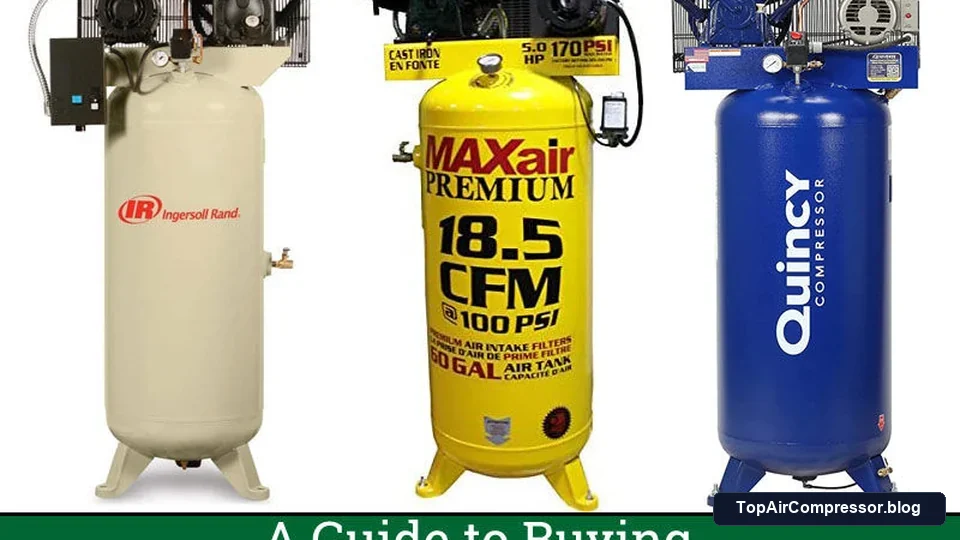
A compact mid-size reservoir balances physical size with adequate air reserve for intermittent shop tasks. Operating high-demand pneumatic equipment requires sufficient volumetric buffering to prevent excessive motor cycling.
If space is tight, reviewing our best 20 gallon air compressor options helps balance physical dimensions with adequate air storage capacity. These smaller tanks provide reliable performance for basic tasks without overwhelming your workshop footprint.
Boyle’s law dictates that larger reservoirs manage thermal expansion more efficiently during rapid discharge cycles. Technicians must calculate actual cubic feet per minute demands against tank hysteresis to prevent premature pressure drops.
- Greater storage capacity smooths out sudden pressure fluctuations during heavy tool bursts.
- Smaller tanks cycle more frequently, generating higher operating temperatures inside the pump head.
- Volumetric efficiency directly correlates with how long tools run before pressure drops.
Storage Capacity Impact on Tool Run-Time
Stored air volume acts as a temporary buffer when your tool consumption exceeds pump output. A larger vessel absorbs peak demands effortlessly without forcing the motor to run continuously.
Smaller configurations force the pressure switch to trigger earlier during demanding grinding applications. Proper sizing ensures your compressor keeps pace with demanding pneumatic impact wrenches.
- Buffer capacity prevents premature motor burnout under heavy workloads.
- Pressure recovery rates depend heavily on total tank volume.
Performance Output and Continuous CFM Delivery Ratings
Cubic feet per minute ratings dictate which pneumatic tools your compressor can reliably power. Comparing pump displacement requires looking closely at real-world delivery numbers at ninety psi.
Heavy-duty stationary systems deliver superior airflow volumes required for sandblasters and heavy grinders. Mid-range portables manage standard impact wrenches and nailers without experiencing severe performance starvation.
While portability defines smaller units, continuous CFM delivery often peaks around 5.5 at 90 PSI for typical 30-gallon configurations. Operating high-demand orbital sanders quickly depletes this reserve, triggering constant pump engagement.
Conversely, if you only need mobility for finish nailers, exploring the best 6 gallon air compressor models offers extreme portability. However, heavy industrial applications require upgrading to stationary 60-gallon units featuring robust 14 CFM output capabilities.
- Always match your air compressor CFM output to your most demanding tool requirements.
- Continuous delivery ratings matter more than peak horsepower claims for industrial tasks.
- Pressure drop recovery speed determines overall workflow efficiency in busy shops.
CFM Requirements for High-Demand Pneumatic Tools
Sanders and heavy cut-off tools demand continuous airflow to maintain functional operational speeds. Undersized pumps will constantly struggle to maintain adequate pressure during prolonged surface prep work.
Reviewing manufacturer specifications prevents costly mismatches between your air supply and tools. Adequate CFM delivery ensures professional finishes without frustrating mid-job pressure losses.
- Rotary sanders require steady high CFM to prevent stalling under load.
- Impact guns use air in bursts, making tank storage exceptionally critical.
Electrical Infrastructure and Power Supply Demands
Electrical requirements dictate where and how you install your new pneumatic equipment safely. Standard household circuits easily support smaller mobile units without costly wiring upgrades.
Large vertical systems demand dedicated high-amperage breakers and heavy-gauge copper wiring installations. Assessing your facility's electrical capacity prevents tripped breakers and dangerous motor overheating issues.
While mid-size machines run on standard lines, researching the best 60 gallon air compressor choices reveals the heavy electrical demands of industrial systems. These larger units require 230-volt service and dedicated breakers to operate safely.
Conversely, 60-gallon industrial units require dedicated 230-volt single-phase electrical service and heavy-duty magnetic starters. Facility managers must verify breaker capacity and wire gauge to safely handle high initial locked-rotor amperage draws.
- Verify your breaker panel capacity before purchasing heavy-duty workshop compressors.
- Extension cords cause voltage drops that can permanently damage electric compressor motors.
- Professional hardwiring is often necessary for high-amperage industrial stationary units.
Voltage Compatibility and Circuit Protection
Running heavy equipment on inadequate wiring causes excessive heat and premature electrical failure. Ensuring proper circuit protection safeguards your investment against unexpected power fluctuation damage.
Consulting a licensed electrician ensures your shop meets local electrical safety codes. Proper grounding protects operators from dangerous electrical shorts during humid operating conditions.
- Dedicated lines eliminate interference with other heavy shop machinery.
- Thermal overload switches protect motors from sustained low-voltage conditions.
Thermal Management and Duty Cycle Mechanics
Heat generation remains the primary enemy of pneumatic compressor longevity and reliable operation. Efficient cooling fins and cast-iron pumps dissipate thermal energy much faster than aluminum alternatives.
Running a compressor beyond its rated duty cycle accelerates internal oil breakdown and wear. Proper thermal management guarantees reliable performance during extended fabrication and painting projects.
Compressors generate immense heat during compression, making pump displacement and cooling fin design critical for longevity. Smaller 30-gallon units frequently operate at a 50 percent duty cycle, requiring mandatory cooling intervals.
Heavy-duty 60-gallon systems incorporate cast-iron cylinders and ASME-certified intercoolers, sustaining a 70 to 80 percent duty cycle. This robust thermal management prevents oil breakdown and extends valve plate operational lifespans significantly.
- Cast-iron pumps offer superior heat dissipation compared to oil-free alternatives.
- Exceeding recommended duty cycles leads to catastrophic valve and piston failure.
- Ambient shop temperatures directly impact overall thermal efficiency and pump cooling.
Pump Construction and Heat Dissipation Efficiency
Dual-cylinder cast-iron pumps operate at lower RPMs to minimize destructive friction heat. Slower pump speeds translate to quieter operation and significantly extended mechanical service life.
Splash lubrication systems distribute oil evenly across critical bearings and cylinder walls. Maintaining proper oil levels prevents metal-on-metal contact during heavy industrial workloads.
- Low-RPM pumps reduce thermal stress on internal reed valves.
- Synthetic compressor oils resist breakdown under high operating temperatures.
Footprint, Mobility, and Shop Floor Ergonomics
Floor space availability heavily influences your choice between mobile and stationary compressor designs. Wheeled mid-size tanks offer unmatched flexibility for mobile contractors and tight workshops.
Vertical stationary units claim minimal floor space while providing massive air storage capacity. Proper positioning ensures easy access for mandatory daily moisture drain maintenance routines.
Space constraints dictate equipment selection, favoring 30-gallon wheeled units featuring pneumatic tires for effortless relocation across uneven concrete floors. Contractors appreciate this mobility when shifting between remote job sites and tight workshops.
Stationary 60-gallon models demand a permanent footprint, requiring secure bolting to concrete slabs using vibration isolation pads. This fixed arrangement eliminates tipping hazards while maximizing precious floor space in professional mechanical facilities.
- Vertical tanks maximize storage while keeping a minimal shop footprint.
- Wheeled units allow easy repositioning for garage cleaning or mobile jobs.
- Vibration pads prevent stationary units from walking across concrete floors.
Space Optimization in Professional Workspaces
Placing stationary systems against shop walls keeps central workspaces open and safe. Isolating noisy equipment in dedicated utility closets reduces overall ambient workplace noise.
Hose reels connected to stationary pipes distribute compressed air efficiently throughout your shop. Ergonomic layouts minimize hose clutter and improve overall technician daily productivity.
- Piped air networks deliver clean air directly to multiple workstations.
- Corner installations protect vertical tanks from accidental vehicle impacts.
Vibration Control and Acoustic Signature Profiles
Managing compressor noise levels protects operator hearing and improves overall shop communication. Belt-drive stationary systems generally produce a deeper, less irritating sound frequency profile.
Direct-drive portable units often emit high-pitched whines that cause fatigue during extended use. Bolting stationary units securely to concrete eliminates resonant frame vibrations effectively.
Mechanical oscillations create noise pollution and structural fatigue, with portable units generating higher decibel ratings near 80 dB due to lighter materials. Operators should utilize hearing protection during extended pneumatic tool usage sessions.
Heavy 60-gallon two-stage pumps operate at lower RPM thresholds, producing a smoother acoustic profile that reduces fatigue. Their massive structural mass naturally dampens vibration harmonics, improving overall shop environment comfort and safety.
- Belt-driven pumps run significantly quieter than direct-drive counterparts.
- Rubber isolation feet absorb high-frequency motor vibrations successfully.
- Enclosed compressor designs reduce decibel output in shared spaces.
Decibel Ratings and Hearing Protection Standards
High noise levels require mandatory hearing protection during prolonged shop operating sessions. Choosing lower-decibel equipment creates a much safer and more comfortable working environment.
Acoustic enclosures can further dampen compressor noise without restricting critical cooling airflow. Evaluating sound profiles prevents friction with neighboring businesses or residential areas.
- Comply with OSHA guidelines regarding daily workplace noise exposure limits.
- Locating compressors outdoors or in sheds eliminates indoor noise entirely.
Maintenance Protocols and Long-Term Component Wear
Routine maintenance routines directly dictate the operational lifespan of your compressed air system. Daily moisture draining prevents internal tank corrosion and structural failure risks.
Checking belt tension and changing compressor oil annually ensures peak mechanical efficiency. Investing time in preventative upkeep prevents unexpected downtime during critical project deadlines.
Routine maintenance ensures equipment reliability, demanding weekly condensate drainage to prevent internal tank corrosion from accumulated moisture. Ignoring this vital task drastically shortens the safe structural lifespan of pressure vessels.
Owners of the best 30 gallon air compressor units must follow similar strict upkeep schedules, including synthetic oil changes and filter replacements every 500 hours to preserve volumetric efficiency and pump longevity.
- Drain receiver tanks daily to prevent dangerous internal moisture accumulation.
- Inspect air filter elements monthly to maintain unrestricted pump breathing.
- Check safety relief valves periodically to guarantee emergency pressure release.
Preventative Service Schedules for Heavy Equipment
Establishing a strict preventative maintenance calendar catches minor issues before failure occurs. Keeping detailed service logs helps preserve warranty coverage and resale equipment value.
Using OEM-recommended synthetic lubricants protects precision machined internal components from wear. Regular belt inspections prevent unexpected slippage and power transmission losses.
- Replace worn intake filters immediately to keep abrasive dust out.
- Monitor oil sight glasses daily for signs of contamination.
Frequently Asked Questions
Can a standard 30-gallon air compressor run a dual-action sander continuously?
A standard 30-gallon unit will struggle to maintain the continuous CFM required by most dual-action sanders. You will experience frequent pressure drops and excessive motor cycling during prolonged surface prep work.
Do stationary units require professional installation or specialized electrical wiring?
Most large stationary units require a dedicated 240V circuit installed by a licensed electrician. Proper breaker sizing and heavy-gauge wiring prevent dangerous overloads and protect your equipment investment.
Why is belt-drive compressor technology preferred for heavy workshop applications?
Belt-drive systems operate at much lower RPMs, which significantly reduces friction and heat generation. This engineering design yields a longer service life and a quieter acoustic profile.
How often should I drain moisture from my vertical air receiver tank?
You must drain moisture from your receiver tank at the end of every working day. This crucial routine prevents internal rust formation and structural weakening of the steel walls.
Is it safe to run an air compressor using a long heavy-duty extension cord?
Using extension cords causes severe voltage drops that can overheat and ruin electric motors. Always connect your compressor directly to a properly rated wall outlet or disconnect switch.