Air Compressor vs. Tire Inflator: Which Fits Your Setup Better?
Selecting the right pneumatic equipment requires balancing high-volume workshop demands against compact roadside convenience. Understanding internal mechanical architectures helps prevent costly tool mismatch.

Choose the multi-tool air compressor for versatile workshop fabrication and high-CFM pneumatic tasks. Select the dedicated tire inflator when prioritizing ultra-portable roadside emergency tire maintenance.
Compare all top models in our Best Air Compressor: Top Picks for Every Garage & Roadside.
Side-by-Side Breakdown
| Criteria | Air Compressor | Tire Inflator | Edge |
|---|---|---|---|
| Peak Performance & Output | High CFM delivery for air tools | High PSI capacity for high-pressure tires | Air Compressor |
| Duty Cycle & Consistency | Continuous running via storage tank | Intermittent duty requiring cooling breaks | Air Compressor |
| Operating Noise & Vibration | Louder mechanical pumps (70-90 dB) | Quieter, localized motor-driven vibration | Tire Inflator |
| Portability & Footprint | Heavy tanks requiring wheels or truck beds | Compact hand-held or trunk-ready chassis | Tire Inflator |
| Maintenance & Service Life | Requires oil changes, filters, and draining | Sealed, maintenance-free motor assemblies | Air Compressor |
| Power Requirements | Heavy 120V/240V AC or heavy gas engine | 12V DC auxiliary outlet or lithium battery | Tire Inflator |
| Best Ideal Use-Case | Auto repair shops and framing crews | Emergency roadside top-offs and sports gear | Split Workload |
Fundamental Engineering and Operational Mechanics
Traditional workshop pneumatic systems rely on reciprocating piston pumps driven by electric motors. These systems pressurize atmospheric air and store it inside a heavy steel ASME-certified pressure vessel for immediate deployment.
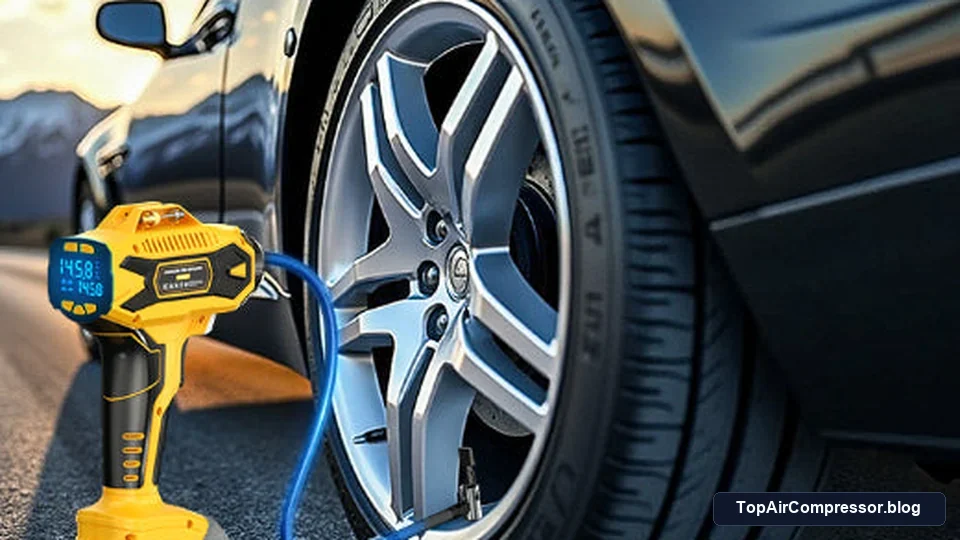
Conversely, modern digital inflators utilize compact diaphragm or small piston pumps designed specifically for direct-drive inflation. They generate high static pressure on demand without utilizing any intermediate air storage tank mechanism.
Air compressors rely on positive displacement mechanisms like reciprocating pistons or rotary screws to continuously compress atmospheric air into dedicated storage tanks. This design sustains high-pressure pneumatics for heavy industrial applications safely.
Conversely, units featured in our best car tire inflator portable air compressor guide utilize direct-drive micro diaphragm pumps or miniature piston assemblies optimized strictly for volume delivery into sealed pneumatic receptacles.
- Air compressors store compressed air inside an ASME pressure tank.
- Tire inflators push air directly through a hose without storage.
- Reciprocating pumps use crankshafts, connecting rods, and steel piston rings.
Internal Pump Architecture Differences
Heavy-duty workshop units feature oil-lubricated cast iron cylinders built for extreme durability. Oil-free variants use Teflon piston seals to deliver clean, oil-free air for delicate finishing applications.
Portable emergency units prioritize lightweight aluminum components and direct gear-driven shafts to minimize overall weight. This sacrifices long-term thermal endurance in exchange for extreme portability and compact dimensions.
- Cast iron pumps dissipate frictional heat much faster than aluminum.
- Teflon seals eliminate oil contamination in spray painting lines.
Volumetric Output, CFM, and Pressure Dynamics
Evaluating pneumatic performance requires analyzing cubic feet per minute alongside maximum pressure thresholds. Workshop compressors excel at high volumetric delivery, easily sustaining continuous pneumatic ratchets, impact wrenches, and paint spray guns.
Emergency inflation devices focus strictly on maximizing pounds per square inch rather than volumetric flow rate. They inflate large truck or SUV tires efficiently by concentrating force through restrictive high-pressure valve stems.
Standard air compressors deliver robust cubic feet per minute ratings at standardized pressure thresholds, allowing mechanics to run high-demand pneumatic tools continuously. Their large storage reservoirs absorb transient pressure drops during heavy load cycles.
Tire inflators focus purely on maximum PSI output rather than high CFM delivery. Because they pump directly into closed valves without intermediate reservoirs, their effective volumetric flow rate drops significantly as backpressure rises.
- CFM ratings dictate how fast air tools operate under load.
- PSI ratings determine maximum inflation pressure limits for heavy tires.
- Tank storage bridges the gap between pump output and tool demand.
Understanding Volumetric Deficits
Using a small direct-drive inflation tool on high-demand abrasive blasters causes immediate pressure drop. The tiny pump cannot keep pace with the massive continuous air consumption of heavy pneumatic equipment.
Large workshop units prevent pressure starvation by drawing from their reserve tank capacity. This lets technicians execute high-torque fastening tasks without waiting for the motor to cycle continuously.
- Reserve tanks supply instant high-volume air surges on demand.
- Direct inflators struggle with continuous air tool applications.
Duty Cycles, Thermal Management, and Endurance
Thermal management remains the primary engineering divider between industrial compressors and consumer inflation tools. Heavy stationary units run extended duty cycles because their finned cast-iron cylinders dissipate frictional heat effectively.
Compact inflators feature restricted duty cycles, often requiring mandatory cool-down periods after ten minutes of continuous operation. Overheating melts internal plastic gears and ruins small permanent-magnet DC electric motors.
Industrial air compressors often feature a 100 percent duty cycle, engineered with finned cast-iron cylinders and dedicated aftercoolers to dissipate extreme thermal energy generated during continuous multi-hour operational shifts reliably.
Conversely, compact tire inflators typically operate on a restricted 15-minute duty cycle before requiring mandatory cooling intervals. Overheating causes catastrophic thermal degradation in their lightweight plastic internal gears and motor windings.
- Continuous duty cycles allow uninterrupted tool operation all day.
- Intermittent duty ratings protect small motors from thermal overload.
- Thermal overload switches automatically shut down overheating inflator pumps.
Mitigating Thermal Degradation in the Field
Technicians must monitor run times closely when inflating heavy commercial truck tires with portable units. Allowing adequate rest intervals prevents catastrophic armature burnout during roadside service calls.
Workshop systems incorporate heavy flywheel fan blades that force cooling air across copper windings and discharge tubes. This engineering protects internal components during sweltering summer job site conditions.
- Flywheel fans improve active cooling on stationary shop compressors.
- Strict adherence to run limits extends portable inflator lifespan.
Portability, Power Delivery, and Field Ergonomics
Portability depends entirely on weight distribution, chassis design, and available power source compatibility. Roadside inflators plug directly into standard twelve-volt auxiliary sockets or run on lithium-ion cordless battery packs.
Stationary workshop compressors require dedicated high-amperage electrical circuits or portable gasoline engines. Their massive steel tanks and heavy cast iron pumps demand wheeled utility carts or permanent shop floor placement.
Jobsite air compressors require heavy-duty 120V or 240V AC power, limiting their mobility unless paired with a robust gasoline generator or a heavy wheeled utility cart for rough terrain navigation.
Modern tire inflators excel in roadside ergonomics, drawing power directly from 12V automotive accessory sockets or integrated lithium-ion battery packs to ensure effortless storage inside vehicle trunks for emergency deployment.
- Twelve-volt DC plugs make inflators ideal for remote roadside service.
- AC electrical requirements restrict large compressors to wired workspaces.
- Ergonomic handles and rugged wheels ease job site transport challenges.
Electrical Infrastructure Constraints
Running a large dual-cylinder shop compressor requires proper circuit breaker sizing to prevent nuisance tripping. Heavy startup amperage draws demand robust extension cords with minimal voltage drop characteristics.
Portable digital inflators featured in our best portable air compressor pump digital tire inflator reviews draw minimal electrical current, operating safely within standard vehicle accessory fuse ratings while eliminating heavy power cord management hassles.
- High startup amps require heavy-gauge extension cords on job sites.
- Low-amp draw protects vehicle electrical systems during emergency inflation.
Acoustic Signatures, Vibration, and Workspace Footprint
Operating heavy pneumatic machinery generates significant acoustic noise and mechanical vibration across concrete floors. Industrial piston pumps routinely exceed eighty decibels, necessitating mandatory hearing protection in enclosed garage environments.
Modern consumer inflators feature enclosed acoustic housings and rubber vibration-damping feet. Their lower decibel output makes them neighbor-friendly for late-night residential garage use and quiet roadside emergencies.
Stationary workshop compressors generate significant decibel levels exceeding 80 dB, requiring dedicated sound enclosures or remote placement to protect technicians from hearing damage during extended periods of operation.
Handheld tire inflators produce a high-frequency whine but feature rubberized anti-vibration feet that minimize walking during operation. Their minuscule footprint allows direct tabletop placement without structural shop modifications.
- High decibel output demands hearing protection in enclosed workshops.
- Rubber isolation feet minimize structural vibration transfer to floors.
- Enclosed motor designs significantly lower high-frequency operating noise.
Controlling Noise and Vibration in Tight Spaces
Placing stationary units on thick anti-fatigue rubber pads absorbs troublesome low-frequency floor vibrations. This simple mitigation technique prevents annoying resonance throughout residential or commercial building structures.
Compact inflators produce minimal vibration, allowing safe operation on top of vehicle hoods. Their lightweight chassis do not require permanent floor bolting or specialized acoustic baffling.
- Anti-vibration pads isolate low-frequency compressor hums effectively.
- Portable units require no special mounting or floor preparation.
Maintenance Protocols, Wear Parts, and Longevity
Maximizing equipment service life demands rigorous preventive maintenance schedules. Heavy units highlighted in our best portable air compressor tire inflator for cars overview require frequent oil changes, air filter replacements, and daily moisture tank drainage.
Dedicated tire inflators utilize sealed, oil-free mechanical assemblies that require virtually zero user maintenance. However, their disposable nature means component failure usually warrants complete unit replacement rather than internal repair.
Standard air compressors demand rigorous preventative maintenance, including weekly moisture drain valve cycles, air filter replacements, and scheduled synthetic oil changes to prevent catastrophic pump scoring and premature failure.
Portable tire inflators operate oil-free, eliminating internal fluid changes entirely. However, their sealed internal components mean user serviceability is virtually nonexistent once internal piston seals inevitably wear down.
- Regular oil changes protect reciprocating piston rings from wear.
- Moisture draining prevents internal tank corrosion and structural failure.
- Sealed inflator designs eliminate messy fluid checks and filter changes.
Managing Condensation and Corrosion Risks
Atmospheric humidity naturally condenses inside pressurized storage vessels during rapid cooling cycles. Technicians must open bottom drain valves daily to prevent destructive rust pitting and potential tank explosions.
Portable inflators avoid moisture accumulation risks because they lack large air storage reservoirs. Air moves instantly from the pump through the delivery hose directly into the inflatable object.
- Daily tank draining eliminates harmful internal rust accumulation.
- Lack of a storage vessel prevents internal condensation pooling.
Task-Specific Selection Framework for Technicians
Selecting the correct pneumatic device depends entirely on your specific daily operational workloads. Professional mechanics and woodworkers need the heavy continuous volume delivered by a stationary multi-tool compressor setup.
Commuters, cyclists, and off-road enthusiasts achieve optimal results using models from our best air compressor tire inflator roundup. Matching equipment capabilities to actual air demands prevents premature equipment failure and frustration.
Professional technicians must evaluate total air demand, factoring in whether tools require continuous CFM or intermittent pressure surges before choosing a heavy-duty compressor over a light-duty alternative.
Conversely, keeping a dedicated digital tire inflator in a service vehicle provides unmatched convenience for routine inflation tasks without wasting valuable cargo space on an unneeded storage tank.
- Match CFM output requirements directly to your heaviest pneumatic tool.
- Prioritize compact DC power for mobile roadside emergency readiness.
- Evaluate total daily run times to avoid thermal overload shutdowns.
Making the Final Equipment Investment Decision
Investing in a versatile workshop compressor provides unlimited capabilities for inflation, nailing, and spray finishing. It serves as the central pneumatic anchor for ambitious DIY garages and professional service bays.
Choosing a dedicated roadside inflator keeps your trunk organized while solving unexpected flat tire emergencies swiftly. Evaluate your primary tasks carefully before committing capital to either specialized pneumatic category.
- Shop compressors handle diverse tools, painting, and heavy inflation.
- Roadside inflators provide ultimate convenience for mobile motorists.
Frequently Asked Questions
Can a portable tire inflator run standard pneumatic workshop tools?
No, portable inflators lack the volumetric cubic foot delivery required by air tools. Air compressors provide the necessary continuous air volume and storage tanks.
Why do workshop compressors require regular moisture tank draining?
Compressed air holds moisture that condenses inside steel storage tanks over time. Daily draining prevents internal corrosion, rust pitting, and structural tank failure.
What causes portable tire inflators to overheat during use?
Exceeding recommended duty cycles causes internal electric motors and gears to overheat. Thermal protection circuits automatically shut down the pump to prevent permanent damage.
Are oil-free air compressors better than oil-lubricated models?
Oil-free models deliver clean air without maintenance, but wear out faster. Oil-lubricated pumps last significantly longer under heavy continuous commercial workshop duty cycles.
How do I choose the right pressure rating for my needs?
Match your peak PSI requirements to the highest pressure tire you service. High-pressure inflators excel at tires, while high-CFM compressors power heavy tools.