Arb Ckma12 vs. Viair 400P: Which Fits Your Setup Better?
Choosing between onboard pneumatic architecture and portable recovery systems defines modern off-road equipment builds. Evaluating the ARB CKMA12 against the Viair 400P requires deep technical scrutiny of flow rates and duty cycles.


The ARB CKMA12 dominates permanent under-hood installations requiring automated locker integration and rapid tire inflation. Meanwhile, the Viair 400P excels as a dedicated portable unit for recreational overlanding without permanent vehicle modifications.
Compare all top models in our Best Air Compressor: Top Picks for Every Garage & Roadside.
Side-by-Side Breakdown
| Criteria | Arb Ckma12 | Viair 400P | Edge |
|---|---|---|---|
| Peak Performance & Output | 2.65 CFM at zero pressure | 2.54 CFM at zero pressure | ARB CKMA12 |
| Duty Cycle & Consistency | 50% duty cycle at 100 PSI | 33% duty cycle at 100 PSI | Arb Ckma12 |
| Operating Noise & Vibration | Engine bay dampening required | Ground isolation reduces rumble | Viair 400P |
| Portability & Footprint | Compact permanent engine mount | Portable bag with battery clamps | Viair 400P |
| Maintenance & Service Life | Serviceable filters and seals | Replaceable piston rings & filters | Tie |
| Power Requirements | Hardwired 30-amp harness | Direct battery alligator clamps | Tie |
| Best Ideal Use-Case | Onboard lockers and quick fills | Multi-vehicle portable trail recovery | Split |
Engineering Architecture and Mechanical Layout
Off-road pneumatic systems rely on distinct mechanical layouts to deliver compressed air. Understanding these core engineering differences helps operators select equipment tailored to specific vehicle configurations and trail demands.
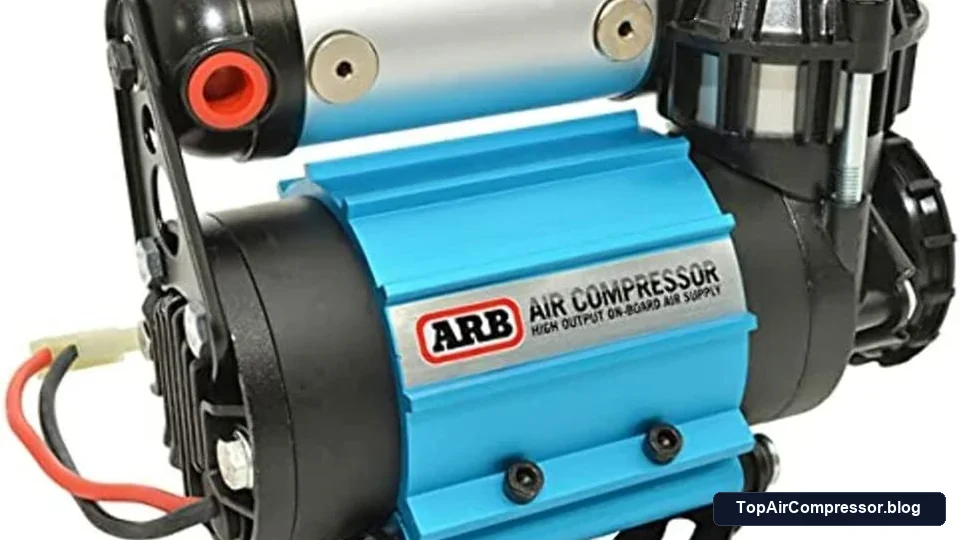
The ARB CKMA12 utilizes a permanent magnet motor coupled to a sealed ball-bearing crankshaft. This compact design is engineered specifically for integrated vehicle mounting and harsh under-hood environments.
- ARB prioritizes sealed permanent installations for maximum weather resistance.
- Viair emphasizes portable grab-and-go convenience for multi-vehicle utility.
- Both units utilize oil-less maintenance-free piston compressor designs.
Permanent Onboard Integration
Installing an onboard air compressor requires routing dedicated wiring harnesses through the vehicle firewall. Mechanics must secure the chassis bracket away from high-temperature exhaust manifolds and moving engine components.
The ARB system excels in this permanent role by incorporating pressure switches directly into the manifold. This configuration allows seamless expansion for pneumatic locking differentials alongside tire inflation lines.
- Eliminates cabin clutter by hiding hardware under the hood.
- Integrates directly with factory or aftermarket air lockers.
Portable Field Deployment
Portable compressors eliminate complex engine bay installations by connecting directly to the battery terminals. Operators simply open a storage case, attach power leads, and deploy the extended air hose.
Models highlighted in the Viair 88P review capitalize on this operational simplicity, making them ideal for mechanics who service multiple vehicles. There is zero risk of heat soak from a cramped engine compartment layout.
- Allows effortless sharing between different trail vehicles.
- Stores neatly inside a rugged canvas carry bag.
Volumetric Flow and Air Delivery Capacity
Air delivery speed determines how quickly large off-road tires reach operational pressure after trail descents. Evaluating free flow rates at zero pressure reveals the raw volumetric capabilities of each compressor.
The ARB CKMA12 delivers approximately 2.65 CFM at zero head pressure. This robust output fills standard tires rapidly while maintaining sufficient pneumatic pressure for rapid differential engagement.
- ARB delivers high flow relative to its compact physical footprint.
- Viair provides sustained high-volume airflow optimized for large tire rehabilitation.
- Pressure thresholds dictate automatic shut-off and system cycling behavior.
High-Pressure Inflation Dynamics
Pumping tires from fifteen to thirty-five psi places sustained thermal stress on internal cylinder walls. Compressors must maintain volumetric efficiency even as backpressure builds inside the rubber tire casing.
The Viair unit shines during prolonged inflation cycles by maintaining steady CFM ratings under load. Users experience minimal performance degradation during back-to-back tire inflation sequences on heavy vehicles.
- Sustains airflow efficiently against rising tire backpressure.
- Prevents excessive motor bogging during multi-tire fillups.
Dual-Purpose Air Delivery
Vehicles equipped with air lockers demand rapid pressure recovery to engage traction aids instantly. The ARB manifold maintains constant line pressure so drivers never wait for differential actuation.
Portable units analyzed in the Viair 400P-RV review lack integrated manifold pressure switches designed for locker control. Trying to operate lockers with a portable compressor requires complex custom plumbing and auxiliary tanks.
- Manifold design supports simultaneous locking and inflation tasks.
- Ensures instant pneumatic response for traction control systems.
Thermal Management and Duty Cycle Limits
Managing internal operating temperatures prevents premature motor failure during extended multi-tire recovery operations. Duty cycles define the exact ratio of active run time to required cooling intervals.
The Viair 400P highlighted in our best Viair compressor for RV list features a thirty-three percent duty cycle at one hundred psi. This rating allows continuous operation for roughly twenty minutes.
- Viair incorporates cooling fins along the cylinder head for heat dissipation.
- ARB relies on anodized aluminum cooling brackets and heavy-duty motor housings.
- Thermal overloads protect internal windings from catastrophic burnout damage.
Under-Hood Thermal Stress
Mounting a compressor inside a modern engine bay exposes the housing to extreme ambient temperatures. The ARB unit combats this thermal penalty with high-temperature motor windings and robust construction.
Heat soak reduces operating efficiency significantly when running compressors immediately after highway driving. Engine bay installations require careful consideration of airflow and ventilation to prevent thermal shutdowns.
- Engine bay heat can accelerate internal thermal fatigue.
- Requires strategic mounting locations to maintain adequate airflow.
Portable Cooling Advantages
Portable compressors operate in ambient outside air rather than trapped engine compartments. This external positioning promotes superior convective cooling and helps sustain longer operational run times on the trail.
Operators can also position portable units away from mud and water crossings during recovery tasks. This flexibility protects electrical connections from corrosive moisture and damaging thermal shock.
- Benefits from fresh outside ambient air during operation.
- Eliminates heat soak issues associated with engine bays.
Electrical Demands and Power Configurations
Delivering electrical current safely requires heavy-gauge wiring and properly rated circuit protection components. High-draw compressors demand robust battery connections to prevent voltage drop and excessive heat generation.
The ARB CKMA12 draws a maximum current of thirty amps under heavy load conditions. Installing this unit necessitates routing heavy gauge wire directly to the vehicle battery terminals.
- ARB utilizes a pre-wired loom with an integrated relay and switch.
- Viair supplies heavy-duty battery clamps with an inline fuse holder.
- Proper grounding prevents erratic electrical behavior and premature relay failure.
Permanent Harness Installation
Professional onboard installations involve soldering connections and protecting wires with split loom tubing. Secure routing prevents chafing against sharp metal edges inside the crowded vehicle engine compartment.
The included ARB loom simplifies this process by consolidating relays and dashboard switches into one harness. Mechanics appreciate the plug-and-play architecture that minimizes custom wiring errors during setup.
- Includes dedicated dashboard rocker switches for clean aesthetics.
- Protects critical circuits with automotive-grade relay switches.
Direct Battery Hookups
Portable units bypass permanent wiring by utilizing large alligator clamps attached directly to battery posts. This setup allows users to transfer the compressor between different vehicles without tools.
Operators must ensure the vehicle engine remains running during high-draw inflation tasks. This practice prevents draining the starter battery and maintains optimal voltage levels for the compressor motor.
- Enables tool-free connection across multiple rescue vehicles.
- Requires running the engine to preserve battery voltage levels.
Physical Footprint and Mounting Flexibility
Available space inside modern vehicles dictates where auxiliary equipment can be safely secured. Evaluating physical dimensions helps fabricators identify optimal mounting locations without sacrificing cabin or cargo utility.
The ARB CKMA12 boasts a remarkably compact footprint designed to fit tight engine bays. Fabricators can tuck this unit behind headlights or mount it securely inside rear quarter panels.
- ARB offers versatile mounting brackets for custom chassis integration.
- Viair relies on a portable canvas bag for secure storage and transport.
- Weight distribution matters when mounting heavy equipment inside passenger cabins.
Engine Bay Packaging
Finding unutilized space under the hood challenges builders working on modern complex vehicles. The ARB compressor solves this by offering a slim profile that fits narrow fender gaps.
Secure mounting prevents destructive vibration fatigue from cracking delicate metal brackets over rough terrain. High-grade fasteners and locking washers are mandatory for all permanent under-hood installations.
- Designed specifically to navigate cramped modern engine bays.
- Demands secure mounting to survive severe off-road vibrations.
Portable Storage Solutions
Storing a portable compressor in a dedicated bag keeps gear organized and prevents cabin rattling. Users simply toss the kit into the cargo area alongside recovery straps and kinetic ropes.
The trade-off is sacrificing precious cargo space for the storage bag and hose assembly. Overland travelers must weigh this footprint against the convenience of non-permanent equipment placement.
- Keeps gear neatly contained within a durable storage bag.
- Consumes floor space inside crowded overlanding cargo areas.
Acoustic Profiles and Mechanical Vibration
Operating high-pressure compressors generates notable noise levels and mechanical vibration across the chassis. Understanding these acoustic signatures helps users select equipment that minimizes trail disturbance and operational fatigue.
The Viair 400P produces a moderate mechanical hum during active inflation cycles. Its standalone design isolates vibrations away from the vehicle body when placed on the ground.
- Rubber isolation feet dampen high-frequency vibrations on portable units.
- Solid chassis mounting transmits compressor harmonics directly through the vehicle body.
- Enclosed housings help muffle harsh mechanical valve and piston noises.
Chassis Resonance Management
Bolt-on compressors transmit high-frequency vibrations straight into vehicle sheet metal if improperly insulated. Installers must use rubber vibration dampeners between the mounting bracket and the chassis surface.
The ARB unit includes built-in vibration isolation features to protect its internal electronics. Proper torque on mounting bolts prevents loosening caused by relentless washboard road vibrations.
- Rubber dampeners prevent annoying sheet metal acoustic resonance.
- Secures internal components against harsh off-road vibrations.
External Sound Propagation
Running a portable compressor on bare ground eliminates annoying body panel resonance entirely. Operators can position the unit away from open windows to maintain conversational audio levels outside.
Mechanical noise remains a minor factor during emergency trail repairs where function supersedes comfort. However, quieter operation enhances the overall user experience during late-night camp tire adjustments.
- Placing units on the ground muffles structural vehicle echoes.
- Maintains reasonable audio volumes during late-night camp recoveries.
Long-Term Maintenance and Reliability
Maximizing equipment lifespan requires routine inspections and adherence to recommended preventive maintenance schedules. Oil-less compressors eliminate messy fluid changes but still demand attention to air filters and seals.
The ARB CKMA12 features serviceable components including replaceable intake air filter elements. This design ensures years of reliable service in dusty environments encountered during desert expeditions.
- Clean intake filters prevent abrasive dust from scoring cylinder walls.
- Check electrical connections annually for corrosion and loose terminal screws.
- Inspect rubber air hoses regularly for cracking and abrasion wear.
Filter Maintenance Protocols
Dust ingestion represents the primary cause of premature failure in off-road pneumatic systems. Operators referencing our best Viair compressor guide must inspect remote filter elements after heavy trail runs through fine silt beds.
Replacing clogged filter media restores optimal volumetric efficiency and prevents motor overheating. Both compressors provide easy access to filter housings for quick trailside maintenance checks.
- Protects internal cylinder walls from abrasive fine silt dust.
- Restores peak operating efficiency after dusty trail adventures.
Component Wear Inspection
Piston seals and check valves experience continuous mechanical fatigue during high-pressure inflation cycles. Routine inspections catch minor wear issues before they escalate into complete system failure on remote trails.
Keeping spare fuses and replacement valve components inside your recovery kit guarantees field reparability. Investing time in proactive maintenance ensures your air system operates flawlessly when emergencies occur.
- Catches minor seal wear before catastrophic field failures occur.
- Carrying spare fuses ensures quick trailside troubleshooting recovery.
Frequently Asked Questions
Can the ARB CKMA12 run air tools?
The ARB CKMA12 handles light pneumatic tasks like air lockers and tire inflation effortlessly. However, it lacks the large storage tank required for continuous high-demand air tool usage.
Does the Viair 400P require engine power?
Operating the Viair 400P requires keeping the vehicle engine running during tire inflation. This prevents discharging the starting battery and maintains optimal electrical voltage for the compressor motor.
Which compressor is better for permanent mounting?
The ARB CKMA12 is specifically engineered for permanent under-hood vehicle installations. Its compact footprint and integrated pressure switch make it the definitive choice for dedicated onboard setups.
How do I maintain an oil-less compressor?
Oil-less compressors require minimal maintenance focused primarily on air filter inspection and cleaning. Regularly check electrical connections and inspect rubber hoses for abrasion or cracking damage.
Are portable compressors slower than onboard systems?
Portable units offer comparable inflation speeds based on their volumetric flow ratings. The performance difference depends entirely on the specific CFM output rather than the mounting configuration.