Belt Drive vs. Direct Drive Air Compressor: Which Fits Your Setup Better?
Choosing the right air compressor mechanism dictates your shop's long-term efficiency, noise output, and maintenance schedule. This engineering guide evaluates belt drive versus direct drive systems.

Choose a belt drive compressor for continuous heavy industrial workloads and lower noise levels. Select a direct drive unit for maximum mechanical efficiency and ultimate jobsite portability.
Compare all top models in our Best Air Compressor: Top Picks for Every Garage & Roadside.
Side-by-Side Breakdown
| Criteria | Belt Drive | Direct Drive Air Compressor | Edge |
|---|---|---|---|
| Peak Performance & Output | High CFM delivery at sustained high pressures | Moderate CFM output suited for intermittent tools | Belt Drive |
| Duty Cycle & Consistency | Supports continuous 100% duty cycles easily | Prone to overheating during prolonged usage | Belt Drive |
| Operating Noise & Vibration | Significantly quieter due to pulley dampening | Louder acoustic profile with sharper vibration | Belt Drive |
| Portability & Footprint | Heavier, stationary footprint requiring floor bolting | Compact, lightweight configuration for mobility | Direct Drive |
| Maintenance & Service Life | Requires periodic belt tensioning and replacement | Fewer moving parts with sealed direct connections | Direct Drive |
| Power Requirements | Demands robust three-phase or heavy single-phase power | Runs efficiently on standard household electrical circuits | Direct Drive |
| Best Ideal Use-Case | Automotive body shops and manufacturing plants | Framing crews, finish carpentry, and mobile repair | Split |
Mechanical Architecture and Power Transmission
Engineering design dictates how rotational force travels from the electric motor to the pump. Belt drive systems utilize pulleys and rubber belts to transmit torque across variable speed ratios.
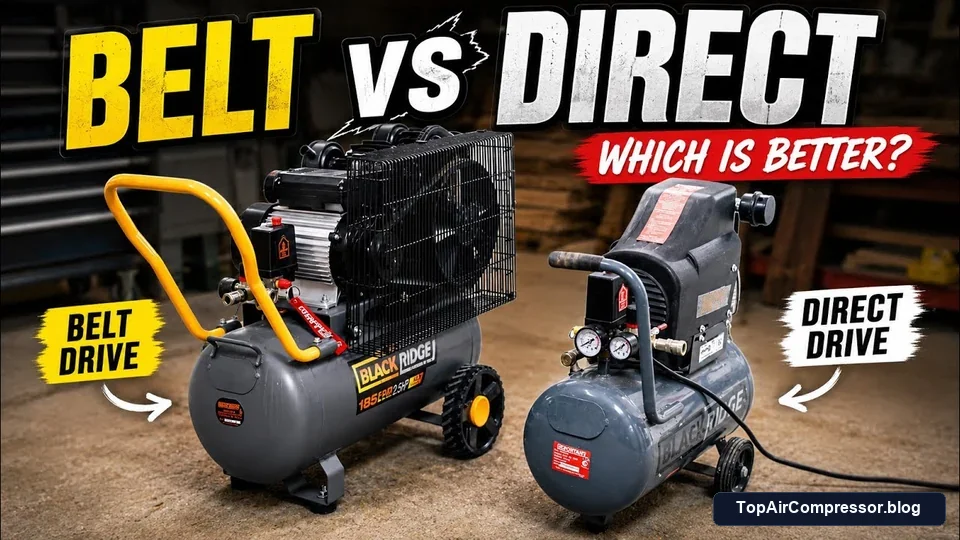
Conversely, direct drive units couple the pump crankshaft directly to the motor shaft. Similar direct-coupling mechanics power the top picks featured in our portable tire air compressor review, eliminating slippage losses during roadside inflation.
Direct drive units couple the pump directly to the motor shaft via a rigid crankshaft. This engineering eliminates energy losses typical of flexible links, ensuring maximum torque transfer during startup phases.
Belt drive systems utilize a pulley and V-belt assembly to connect the motor and pump. This mechanical buffer allows for speed reduction ratios, lowering pump RPM while maintaining high operational pressures.
- Pulley ratios allow adjustable pump RPM speeds
- Direct shafts eliminate power transfer slip losses
- Coupling design impacts overall mechanical longevity
Evaluating Power Transfer Efficiency
Power transmission efficiency affects your monthly electricity operational costs significantly. Direct drive units boast near-total mechanical transfer efficiency because no energy escapes through belt flex or friction.
Belt systems experience minor energy dissipation through pulley friction and belt stretch. However, this configuration protects the motor from sudden pump lockups by slipping instead of stalling.
- Direct drive maximizes immediate energy conversion rates
- Belt friction introduces minor baseline energy losses
- Slippage acts as a natural mechanical safety clutch
Performance Metrics and Real-World Output
Assessing volumetric output requires examining cubic feet per minute ratings under working pressure loads. Many units highlighted in our portable air compressor for tools guide excel at sustaining high CFM delivery for demanding pneumatic sanding tasks.
Direct drive machines generally target lower CFM thresholds ideal for brad nailers and inflation tasks. Exceeding their designed output limits causes rapid pressure drops and thermal overload shutdowns.
Direct drive compressors generally spin at high revolutions, often exceeding 3450 RPM on standard consumer models. This rapid cycling generates swift CFM deliveries but limits continuous volumetric efficiency in demanding environments.
Belt drives operate at much slower speeds, frequently resting near 1200 RPM. Lower rotational velocity results in cooler running temperatures, extended volumetric efficiency, and sustained high CFM output under heavy industrial workloads.
- Belt compressors maintain steady pressure during heavy tool draws
- Direct units suit low-draw intermittent pneumatic applications
- Pump displacement scales directly with flywheel dimensions
CFM Delivery and Pressure Recovery
Pressure recovery speed determines how quickly your tank refills after heavy pneumatic tool usage. Larger belt-driven pumps restore tank pressure rapidly thanks to enhanced displacement capacities per revolution.
Smaller direct drive pumps require higher RPM spinning to match airflow demands. This accelerated operational speed generates excessive internal heat and reduces overall volumetric efficiency over time.
- High displacement speeds up tank pressure recovery cycles
- High RPM pumps sacrifice volumetric efficiency for size
- Sustained airflow demands require adequate thermal headroom
Duty Cycle Capabilities and Thermal Management
Thermal management remains a critical differentiator for continuous commercial and industrial production environments. Belt drive compressors dissipate heat effectively through large flywheel fan blades and remote pumps.
Direct drive units cram motors and pumps into tight housings with minimal airflow clearance. This compact arrangement traps heat near critical seals, restricting duty cycles to moderate operational thresholds.
Direct drive machines struggle with high ambient temperatures due to rapid friction buildup. Most models are rated for a 50 percent duty cycle, requiring frequent cool-down periods to prevent thermal overload shutdowns.
Belt drive compressors excel in continuous duty operations thanks to massive flywheel fan designs. These flywheels force ambient air circulation across copper cooling fins, supporting a 100 percent duty cycle capability.
- Flywheels act as cooling fans on belt configurations
- Tight housings restrict airflow in direct drive units
- Thermal overload switches protect motors from burnout
Managing Heat Dissipation in Industrial Shops
Managing operational temperatures prevents premature valve degradation in heavy-duty machinery. Exploring options featured in our best belt driven air compressor guide ensures reliable thermal management and extended equipment lifespan.
Direct drive systems force motors and pumps to share a unified thermal mass. Consequently, continuous operation causes rapid temperature spikes that necessitate mandatory cool-down intervals.
- Separated pump heads enhance natural air cooling
- Unified housings transfer heat directly to motor windings
- Mandatory cool-down periods interrupt workflow timelines
Operational Noise Profiles and Vibration Control
Acoustic engineering heavily favors belt-driven architectures due to their inherent mechanical dampening qualities. Lower pump RPMs combined with rubber belt absorption yield remarkably quiet workshop environments.
Direct drive equipment operates at high rotational speeds, producing high-frequency whines and harsh mechanical vibrations. Operators often require hearing protection when running direct drive units inside enclosed garages.
High-speed direct drive units produce harsh acoustic signatures, frequently exceeding 85 decibels at close range. The rigid connection transmits high-frequency vibrations directly into the frame, necessitating sturdy anti-vibration floor pads.
Belt drive configurations absorb mechanical shock through rubberized belts and balanced cast-iron pulleys. Sound levels drop significantly, often hovering around 75 decibels, creating a safer environment for prolonged workshop operator presence.
- Belt dampening absorbs harsh mechanical vibration spikes
- High RPM direct drives generate loud acoustic whines
- Lower decibel ratings improve indoor workplace safety
Acoustic Dampening and Workplace Ergonomics
Workshop ergonomics improve substantially when background noise pollution drops below harmful occupational thresholds. Belt drive models typically operate around modest decibel ranges suitable for shared indoor spaces.
Direct drive units often exceed high decibel limits, causing fatigue during extended projects. Sound-attenuating enclosures or remote installation locations become necessary for comfortable daily operation.
- Lower decibels reduce operator fatigue during long shifts
- Enclosed spaces amplify harsh direct drive frequencies
- Proper mounting pads help isolate residual vibrations
Footprint Dimensions and Jobsite Portability
Physical dimensions dictate whether a compressor remains stationary in a shop or travels between active jobsides. Direct drive portables feature lightweight pancake or twin-tank layouts for easy vehicle loading.
Belt drive systems employ heavy cast-iron pumps and large horizontal or vertical ASME tanks. These massive assemblies require dedicated floor space and professional anchoring to prevent movement.
Direct drive compressors feature compact, vertically stacked profiles designed for effortless transport. Their lightweight frame and lack of protruding belt guards make them ideal for mobile jobsite contractors needing quick loading.
Belt drive systems require expansive horizontal floor space due to external flywheels and side-mounted motors. This bulky footprint demands permanent shop installation, restricting mobility unless mounted on heavy-duty industrial tow trailers.
- Pancake and twin tanks maximize vehicle bed space
- Cast-iron pumps demand permanent shop floor placement
- Weight distribution affects safe transport on rough terrain
Mobility Demands Versus Stationary Shop Setup
Jobsite contractors prioritize lightweight maneuverability over continuous high-volume air delivery capabilities. Direct drive wheelbarrows and hand-carried units fit easily into standard service truck storage compartments.
Stationary automotive facilities require robust belt-driven vertical tanks supplying plumbed overhead airline networks. Attempting to relocate these heavy industrial units regularly risks damaging internal plumbing connections.
- Contractors rely on lightweight portable tank designs
- Automotive shops depend on stationary plumbed networks
- Rigid piping protects delicate permanent installation joints
Maintenance Protocols and Component Longevity
Long-term ownership costs depend heavily on routine maintenance requirements and component replacement intervals. Belt drive units demand periodic tension checks, alignment adjustments, and eventual belt replacements.
Direct drive machines eliminate belt maintenance entirely by coupling shafts directly together. However, their high-speed wear patterns eventually necessitate complete pump overhauls when internal bearings degrade.
Direct drive systems offer simplified maintenance routines since they lack belts, pulleys, and external guards. Operators only need to monitor oil levels and replace air intake filters regularly to ensure baseline operational longevity.
Belt drives demand periodic inspections to check belt tension and alignment parameters. Technicians must routinely inspect for rubber cracking, dusting, or pulley wear to prevent unexpected mechanical failures during critical shop production cycles.
- Rubber belts require periodic tension inspection routines
- Direct connections eliminate belt wear liabilities completely
- Bearing longevity dictates overall direct drive lifespan
Routine Service Schedules and Wear Items
Following manufacturer service schedules ensures optimal performance and prevents catastrophic mechanical failures during operation. Inspect belt deflection monthly and replace cracked rubber components before they snap.
Direct drive maintenance focuses primarily on oil changes, air filter cleanings, and moisture drainage. Keeping moisture out of high-speed crankcases prevents premature rust formation on precision bearings.
- Monthly belt tension checks prevent unexpected downtime
- Regular oil changes protect high-speed crankcase bearings
- Daily tank drainage prevents internal corrosion damage
Selecting the Right Drive System for Your Facility
Matching your compressor architecture to daily operational demands prevents premature equipment failure and budget overruns. Evaluate your peak CFM requirements, duty cycle percentages, and available electrical supply.
Investing in a belt drive system rewards commercial facilities with decades of reliable, quiet service. Choosing a direct drive model empowers mobile contractors with affordable, lightweight pneumatic power.
Choose direct drive compressors if your facility requires intermittent air for framing, roofing, or light pneumatic fastening. Their low initial footprint and minimal maintenance requirements suit mobile contractors and small garage operators.
Invest in belt drive systems when your production line demands continuous air delivery for heavy manufacturing. Proper upkeep, detailed in our air compressor belt tightening guide, ensures optimal power transmission and prevents premature component failure.
- Analyze peak CFM tool demands before making purchases
- Verify workshop electrical panel amperage capacities safely
- Balance initial equipment costs against projected lifespan
Balancing Budget Constraints with Operational Demands
Balancing upfront equipment expenditures against long-term utility and maintenance costs ensures sound financial decision-making. Direct drive options generally offer lower initial purchase prices for budget-conscious buyers.
Industrial belt configurations command higher initial investments but deliver exceptional durability and lower lifetime operating expenses. Assess your facility's projected growth trajectory to justify the hardware investment.
- Direct drive units offer affordable entry-level pricing
- Belt systems reduce lifetime operating and repair expenses
- Future shop expansion dictates optimal machinery selection
Frequently Asked Questions
Why are belt drive compressors significantly quieter than direct drive models?
Belt drives operate at much lower pump rotational speeds and use flexible rubber belts to absorb mechanical vibrations. This dampening design reduces acoustic noise output substantially compared to high-speed direct connections.
Can I run a belt drive air compressor on standard household electrical outlets?
Most larger belt drive systems demand heavy-duty electrical circuits or three-phase power to handle startup loads. Smaller belt units exist, but high-amp requirements usually necessitate professional workshop electrical wiring upgrades.
What causes direct drive air compressors to wear out faster than belt drives?
Direct drive pumps spin at identical motor speeds, creating intense friction and high operating temperatures. This constant thermal stress accelerates internal component wear and shortens total service life significantly.
How often should I inspect and replace the belts on a belt drive compressor?
Inspect your drive belts every month for signs of cracking, fraying, or improper tension. Routine belt replacements are recommended every one to two years depending on daily operational workload intensity.
Which compressor type is better suited for mobile framing and roofing contractors?
Direct drive compressors provide the ultimate lightweight portability required for frequent jobsite relocation. Their compact tank layouts fit easily in trucks, making them ideal for framing crews needing mobile pneumatic power.