California Air Tools vs. Makita Quiet: Which Fits Your Setup Better?
Evaluating California Air Tools and Makita Quiet compressors requires analyzing their distinct engineering approaches to low-noise pneumatic output. We break down motor design, CFM delivery, and jobsite durability to guide your investment.

Choose California Air Tools for superior high-CFM multi-tool operation in stationary workshops. Select Makita Quiet when maximum jobsite portability and rugged durability are your primary engineering requirements.
Compare all top models in our Best Air Compressor: Top Picks for Every Garage & Roadside.
Side-by-Side Breakdown
| Criteria | California Air Tools | Makita Quiet | Edge |
|---|---|---|---|
| Peak Performance & Output | High CFM at lower pressures | Balanced pressure regulation | California Air Tools |
| Duty Cycle & Consistency | Extended thermal thresholds | Optimized rapid recovery | Makita Quiet |
| Operating Noise & Vibration | Ultra-low decibel oil-free design | Acoustically dampened motor housing | Tie |
| Portability & Footprint | Roll-cage and wheel configurations | Compact jobsite handle designs | Makita Quiet |
| Maintenance & Service Life | Extended oil-free pump cycles | Heavy-duty commercial components | California Air Tools |
| Power Requirements | Low amp draw starting currents | Jobsite generator compatibility | Makita Quiet |
| Best Ideal Use-Case | Precision finish carpentry and workshops | Mobile framing and trim crews | Split Choice |
Architectural Engineering and Motor Design Philosophies
Engineering silent compressors demands radical departures from traditional oil-lubricated units. Both brands utilize specialized slow-running pump mechanisms to keep operational decibels remarkably low while maintaining necessary pneumatic pressure.
Discover top picks in our best california air tools compressor roundup. These models focus on dual-piston oil-free pumps running at half-speed to minimize mechanical wear and heat generation.
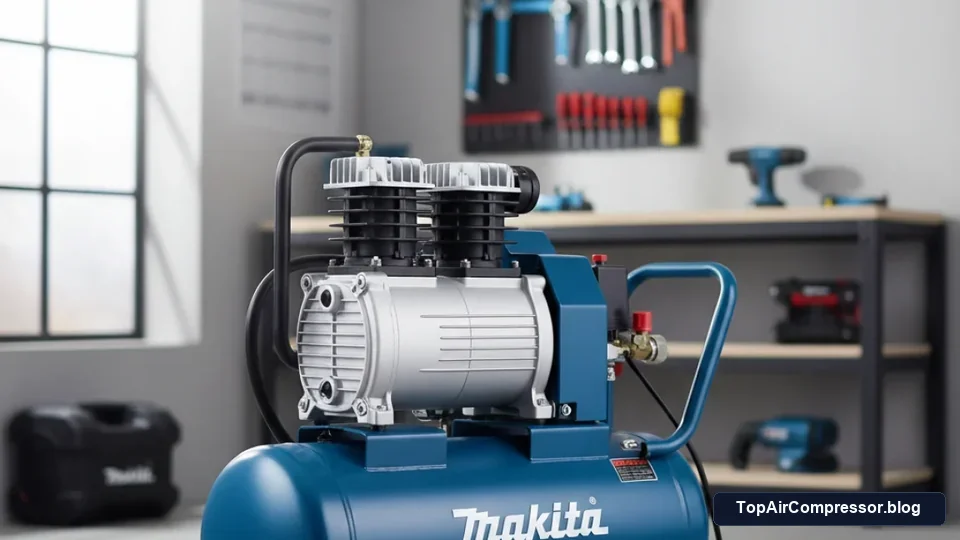
Makita approaches quiet engineering through enclosed acoustic baffling and optimized brushless motor technology. Their units prioritize high torque at lower RPMs to reduce thermal stress on jobsite circuits.
California Air Tools relies heavily on dual-piston oil-free pump designs. These units prioritize lower rotational speeds, typically running near 1,750 RPM, which drastically minimizes mechanical wear and internal operating temperatures compared to universal motors.
Makita approaches quiet engineering by utilizing advanced brushless DC motor technology coupled with multi-stage compression. Their architecture emphasizes smart power delivery, maximizing torque while keeping current draw safely within standard household limits.
Comparing these structural philosophies reveals distinct engineering priorities. CAT targets longevity through oversized mechanical assemblies and low-revving thermal distribution, whereas Makita pursues compact efficiency using high-frequency electronic controls and precision-machined aluminum alloy crankcases.
- California Air Tools utilizes low-RPM dual-piston oil-free pump assemblies.
- Makita integrates advanced acoustic dampening within protective roll-cages.
- Both manufacturers eliminate traditional splash-lubrication to reduce maintenance overhead.
Piston Configuration and Thermal Management
Thermal buildup remains the primary enemy of compact pneumatic pumps. California Air Tools uses finned aluminum cylinder heads to dissipate heat rapidly during extended running cycles.
Makita employs internal cooling fans directed strategically across motor windings. This ensures sustained performance during back-to-back nailing operations in warm ambient environments.
- Finned aluminum heads enhance passive cooling on oil-free cylinders.
- Forced-air ventilation protects electrical windings during heavy duty cycles.
Delivering Volumetric Efficiency and Real-World CFM Output
Evaluating true pneumatic performance requires looking beyond raw horsepower ratings. Volumetric efficiency dictates how well a compressor maintains pressure when running demanding tools like framing nailers or sanders.
Examined closely within our california air tools 10020c review, these units excel in delivering high CFM per amp drawn, supplying steady airflow for continuous operation.
Makita Quiet models focus on rapid pressure recovery. While peak volume might be slightly lower, their quick tank refilling keeps carpenters moving without frustrating workflow delays.
Volumetric efficiency dictates how effectively a compressor converts piston displacement into usable delivery. CAT pumps utilize optimized valve plates and larger bore dimensions to sustain steady CFM at 90 PSI for continuous tool operation.
Makita compressors optimize airflow dynamics through precision intake porting and rapid valve actuation. This engineering focus ensures immediate pressure recovery, reducing downtime between heavy fastening cycles in demanding finish carpentry applications.
When evaluating real-world performance under fluctuating jobsite loads, users must look beyond raw displacement figures. True volumetric output depends on ambient temperature, altitude, and internal cooling efficiency during extended run times.
- CFM delivery directly impacts tool compatibility and continuous workflow.
- California Air Tools provides higher sustained volume for air-hungry sanders.
- Makita emphasizes rapid tank recovery for sporadic framing tool demands.
Pressure Drop and Tank Recovery Metrics
Maintaining stable line pressure prevents uneven fastener depth on trim work. California Air Tools maintains tight pressure tolerances through efficient regulator valves.
Makita uses responsive pressure switches that kick the motor on precisely at predetermined thresholds, minimizing dead zones during heavy nail gun usage.
- Consistent line pressure protects delicate wood surfaces from hammer marks.
- Precise switch activation eliminates frustrating pressure drop intervals.
Acoustic Engineering, Decibel Ratings and Vibration Control
Jobsite noise fatigue creates safety hazards and communication barriers. Both brands successfully push decibel levels down to conversational thresholds, allowing crews to work indoors comfortably.
As detailed in our california air tools 8010 review, these units achieve quiet operation using ultra-low RPM motors operating under sixty decibels for peaceful indoor working conditions.
Makita relies on sound-absorbing housing shrouds and vibration-isolation feet. These dampening elements absorb mechanical resonance before it transfers into subfloors or concrete slabs.
Achieving ultra-quiet operation requires sophisticated acoustic baffling and vibration isolation. Both brands employ heavy-duty rubber feet, but CAT adds balanced eccentric bearings to dampen mechanical resonance across the steel tank chassis.
Decibel ratings tell only part of the story regarding jobsite acoustics. Frequency distribution matters significantly; lower-pitched hums prove far less fatiguing to human ears than piercing whines, even when measuring identical decibel levels.
Makita integrates specialized intake mufflers to disrupt sound wave propagation at the source. This targeted engineering approach suppresses high-frequency noise spikes, creating a remarkably quiet working environment suitable for interior remodeling tasks.
- Operating below 70 decibels protects professional hearing on enclosed jobsides.
- Vibration isolation prevents structural resonance in finished residential homes.
- Acoustic shrouds effectively trap high-frequency mechanical whining sounds.
Decibel Comparison in Enclosed Workspaces
Working inside finished rooms amplifies mechanical noise significantly. California Air Tools units produce a soft hum that rarely disrupts indoor client communications.
Makita dampens high-pitched motor frequencies effectively, ensuring workers can operate right next to the machine without wearing active electronic ear protection.
- Indoor acoustics test the true effectiveness of compressor dampening.
- Soft mechanical hums prevent client annoyance during interior renovations.
Structural Durability, Component Materials and Duty Cycles
Jobsite environments punish equipment through drops, impacts, and exposure to moisture. Structural integrity separates weekend hobbyist tools from genuine commercial-grade contractor investments.
As highlighted in our california air tools 1p1060s review, the brand builds robust steel tanks with thick gauge walls, though auxiliary components require careful transport handling.
Makita is legendary for rugged jobsite durability. Their protective roll-cages shield vital gauges and regulators from falling lumber and aggressive jobsite handling.
Long-term durability hinges on metallurgy and thermal dissipation. CAT utilizes aluminum cylinders paired with PTFE piston rings, engineered to resist scoring and deliver thousands of hours before requiring preventive ring replacement.
Makita constructs vital internal components using hardened steel alloys and anodized coatings. These material choices enhance wear resistance against abrasive jobsite dust while maintaining structural integrity under high operating pressure thresholds.
Duty cycle ratings dictate how long a compressor can run before requiring a cool-down period. Exceeding these specified operational thresholds accelerates thermal degradation of electrical windings and internal valve assemblies.
- Commercial durability requires thick tank walls and protected control panels.
- Roll-cage designs safeguard regulators from impact damage during transport.
- Steel construction withstands extreme temperature shifts without cracking.
Pump Longevity and Oil-Free Wear Characteristics
Oil-free pumps rely on specialized Teflon piston rings that wear over extended periods. California Air Tools engineers these components for thousands of operational hours before replacement.
Makita utilizes heavy-duty metallurgy in cylinder sleeves to resist scoring. This minimizes internal air blowby and preserves original pump efficiency over years of service.
- Specialized piston rings extend oil-free maintenance intervals significantly.
- Hardened cylinder sleeves prevent premature internal pressure loss.
Electrical Draw, Circuit Load and Thermal Management
Overloading residential circuits halts construction work instantly and trips breakers. Understanding starting amps and running loads is vital when plugging into existing household wiring.
California Air Tools units feature low amp draw motors designed specifically for standard household circuits. You can run them alongside other tools without constantly visiting the breaker panel.
Makita optimizes electrical efficiency to run smoothly on long extension cords. Their motors handle voltage drops gracefully without overheating or stalling prematurely.
Managing electrical load prevents nuisance breaker trips on shared jobsite circuits. CAT units feature low amp draws, typically operating safely on standard 15-amp breakers without straining the electrical supply infrastructure.
Makita employs intelligent thermal management systems to monitor internal motor temperatures continuously. If heat buildup approaches critical thresholds, the unit temporarily scales back performance or pauses to protect sensitive electronic components.
Extension cord selection plays a vital role in preventing voltage drop and premature motor failure. Using undersized wiring increases resistance, generating excessive heat that compromises both motor efficiency and overall service life.
- Low amp draw prevents nuisance breaker trips on residential remodels.
- Extension cord compatibility keeps workflows efficient across large job sites.
- Thermal overload protection prevents permanent motor burnout during stalls.
Generator Compatibility and Voltage Tolerance
Remote jobsides rely entirely on portable gas generators for power. Makita compressors tolerate fluctuating generator voltage outputs exceptionally well without stalling.
California Air Tools units also feature stable electrical components, but users should verify generator wattage ratings to ensure smooth motor startup sequences.
- Generator compatibility ensures reliable power in undeveloped locations.
- Voltage tolerance prevents erratic motor behavior during brownouts.
Portability Metrics, Ergonomics and Jobsite Footprint
Transporting heavy pneumatic equipment strains backs and slows down setups. Ergonomic handles, balanced weight distribution, and rugged wheels dictate true field mobility.
California Air Tools offers models with sturdy wheel kits and balanced pull handles. While heavier units require effort to lift, rolling them across smooth concrete is effortless.
Makita prioritizes compact, lightweight configurations with integrated carry handles. Their designs fit easily beneath truck tonneau covers and navigate tight stairwells.
Jobsite mobility requires balancing tank capacity against overall unit weight. CAT designs often feature horizontal twin-tank configurations that lower the center of gravity, improving stability during transit across uneven terrain.
Makita prioritizes compact vertical footprints and integrated roll cages to protect vulnerable gauges and regulators. This ergonomic focus makes their compressors exceptionally easy to load into crowded service vehicles alongside heavy tools.
Handle placement and weight distribution directly impact user fatigue during daily transport. Properly balanced chassis designs allow technicians to carry heavy equipment comfortably without straining their lower backs or shoulders.
- Wheel kits ease transport across flat workshop and jobsite floors.
- Compact form factors fit beneath standard truck bed covers easily.
- Balanced carry handles reduce physical strain during stair climbs.
Weight Distribution and Vehicle Storage
Optimized center of gravity prevents tipping during sharp vehicle turns. Makita engineering ensures units remain stable when strapped into truck beds.
California Air Tools stationary vertical models save valuable floor space in crowded workshops while remaining easily movable via integrated wheel assemblies.
- Low center of gravity prevents tipping during transit.
- Vertical tank configurations maximize precious workshop floor space.
Preventive Maintenance Protocols and Long-Term Service Life
Proper upkeep guarantees your investment delivers reliable performance for years. Establishing consistent maintenance routines prevents unexpected breakdowns during critical project deadlines.
Oil-free designs from California Air Tools eliminate messy crankcase oil changes entirely. Users simply need to drain moisture from tanks regularly and replace intake filters.
Makita emphasizes straightforward upkeep with easily accessible air filters and drain valves. Their robust warranty support and parts availability simplify long-term ownership.
Oil-free compressors eliminate crankcase oil changes, but they still demand rigorous moisture management. Daily draining of the air tank prevents internal corrosion and extends the structural lifespan of the steel receiver vessel.
Air filter maintenance remains critical for protecting precision piston rings and reed valves from abrasive dust particles. Cleaning or replacing filter elements every fifty operating hours ensures optimal volumetric efficiency and consistent pressure output.
Inspecting check valves and safety pressure relief mechanisms annually guarantees safe operation under maximum load. Adhering strictly to these routine maintenance protocols prevents unexpected field failures and maximizes return on equipment investment.
- Oil-free pumps eliminate messy fluid changes and disposal hassles.
- Daily tank draining prevents internal corrosion and structural failure.
- Regular filter inspections maintain optimal volumetric airflow efficiency.
Moisture Management and Tank Integrity
Compressed air naturally generates condensation inside storage tanks. Both brands feature accessible ball valves that make daily moisture purging fast and clean.
Ignoring moisture drainage leads to internal rust perforation and safety hazards. Utilizing automated drain valves can further extend the structural lifespan of your tank.
- Daily drainage prevents rust accumulation inside steel reservoirs.
- Accessible ball valves encourage consistent operator maintenance habits.
Frequently Asked Questions
Which brand offers a quieter operating experience on jobsides?
Both brands engineer remarkably quiet compressors operating near 60 decibels. California Air Tools achieves this through low RPMs, while Makita uses advanced acoustic baffling.
Are oil-free compressors as durable as oil-lubricated models?
Modern oil-free pumps utilize advanced composite materials for extended wear life. California Air Tools and Makita engineer these pumps to last thousands of hours without oil changes.
Can I run these quiet compressors on standard household circuits?
Yes, both manufacturers design their units for low amp draws. Low starting currents prevent nuisance breaker trips when operating on standard 15-amp household electrical outlets.
Which compressor is better suited for mobile framing crews?
Makita quiet models excel in mobile framing environments due to their rugged roll-cages. Compact portability makes them ideal for rough jobsite transport and frequent loading.
How often should I drain moisture from the air tanks?
You must drain accumulated condensation from the air tanks after every daily use. Daily moisture purging prevents internal tank corrosion and preserves structural pressure integrity.