Coalescing Filter vs. Desiccant Dryer: Which Fits Your Setup Better?
Selecting the right compressed air treatment requires balancing dew point targets against operational energy costs and maintenance intervals.

Choose a coalescing filter for general shop tools and aerosol removal, but deploy a desiccant dryer when absolute dryness is mandated for sensitive electronics or medical applications.
Compare all top models in our Best Air Compressor: Top Picks for Every Garage & Roadside.
Side-by-Side Breakdown
| Criteria | Coalescing Filter | Desiccant Dryer | Edge |
|---|---|---|---|
| Peak Performance & Output | Removes 99.98% of liquid aerosols | Achieves -40F pressure dew point | Desiccant Dryer |
| Duty Cycle & Consistency | Continuous passive mechanical filtration | Cyclical twin-tower pressure swing regeneration | Coalescing Filter |
| Operating Noise & Vibration | Virtually silent passive fluid flow | Audible exhaust purge valve cycling | Coalescing Filter |
| Portability & Footprint | Compact inline vertical housing design | Large dual-tank floor-mounted configuration | Coalescing Filter |
| Maintenance & Service Life | Annual element replacement schedule | Bi-annual media checks and valve service | Coalescing Filter |
| Power Requirements | Zero electrical power needed | Requires power for controllers and valves | Coalescing Filter |
| Best Ideal Use-Case | General pneumatic tools and paint prep | Pharmaceuticals, labs, and robotics | Depends on Application |
Engineering Fundamentals of Moisture and Aerosol Control
When researching options like the best air compressor dryer for painting setups, remember systems naturally accumulate heavy water vapor, compressor oil, and microscopic particulate matter during routine atmospheric intake.
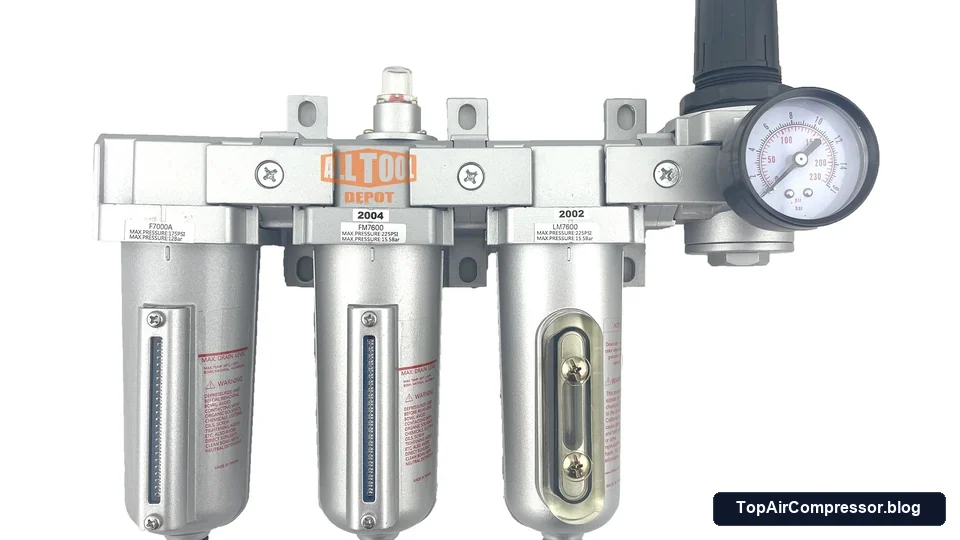
Without adequate purification, these lingering contaminants travel downstream, ruining pneumatic tools, corrupting paint finishes, and accelerating internal corrosion across distribution networks.
Engineering teams must carefully analyze baseline operating pressures, ambient humidity levels, and specific dew point requirements before selecting primary air treatment hardware.
Compressed air naturally carries atmospheric moisture and hydrocarbon aerosols directly from ambient intake cycles into downstream distribution piping networks without proper intermediate conditioning equipment protecting critical industrial instruments.
Water vapor exists as a gas throughout the compression stroke until cooling causes condensation, generating liquid droplets that demand mechanical separation before causing severe downstream corrosion issues.
Controlling relative humidity and aerosol concentration prevents premature pneumatic actuator failure while safeguarding sensitive process machinery against catastrophic particulate contamination during continuous heavy-duty industrial production shifts.
- Atmospheric moisture severely impacts pneumatic tool longevity.
- Oil aerosols create severe downstream contamination risks.
- Dew point suppression protects delicate instrumentation lines.
Atmospheric Contaminant Dynamics
Ambient air drawn directly into an industrial intake filter contains varying moisture content driven by immediate weather conditions and geographic location.
Compressing this humid air concentrates water vapor, forcing it to condense into liquid water as temperatures drop inside the storage receiver tank.
- Relative humidity dictates condensation rates.
- Receiver tanks collect initial bulk moisture.
Downstream Impact Analysis
Unfiltered moisture actively washes away critical lubricating oils inside pneumatic cylinders, leading to premature mechanical wear and frequent tool failure.
Highly delicate automated assembly equipment demands ultra-clean air to prevent valve stiction and erratic sensor performance during high-speed production runs.
- Moisture destroys internal pneumatic seals.
- Sensors require dry air to avoid failure.
Coalescing Filter Architecture and Mechanics
Coalescing filters utilize intricate, multi-layered borosilicate glass fiber matrices designed to capture microscopic liquid aerosols and solid particulate matter suspended in airflow.
As contaminated air passes inward through the filter element, tiny droplets collide, merge into larger droplets, and drain downward via gravity.
These robust filtration units excel at removing oil mist and water droplets down to fractional micron ratings, protecting downstream equipment from gross contamination.
Coalescing filters utilize borosilicate glass microfibers arranged in a tortuous matrix that forces microscopic liquid aerosols to merge into larger droplets via inertial impaction.
As saturated air passes radially from inside to outside, accumulated liquids gravity-drain toward the bottom bowl, requiring reliable automatic drain valves to prevent re-entrainment into the stream.
Standard industrial units capture particles down to zero point zero one microns while achieving an oil removal efficiency exceeding ninety-nine percent, protecting downstream valves from varnish buildup.
- Borosilicate matrices trap sub-micron oil aerosols.
- Gravity drainage channels liquid to bowl bottoms.
- Automatic drains prevent re-entrainment of fluids.
Filtration Efficiency Ratings
Standard industrial coalescing elements capture particles down to zero point zero one microns with exceptional capture efficiency ratings.
Evaluating pore size distribution helps plant managers match filter grades to specific ISO purity classes required by manufacturing machinery.
- Sub-micron ratings ensure high capture rates.
- ISO purity classes dictate filter selection.
Housing and Drainage Design
Rugged aluminum or steel housings withstand high working pressures without structural deflection or seal degradation over extended operating intervals.
Reliable electronic or float-operated automatic drains expel trapped liquids promptly without allowing compressed air to bleed wastefully.
- Heavy-duty housings prevent pressure ruptures.
- Auto drains eliminate manual maintenance chores.
Desiccant Dryer Adsorption Principles and Design
Selecting from the best desiccant air dryer models ensures your setup deploys advanced chemical adsorption towers filled with porous materials like activated alumina to reliably strip water vapor.
By forcing compressed air through these granular beds, relative humidity drops drastically, achieving ultra-low pressure dew points below minus forty degrees.
Twin-tower regenerative designs ensure continuous operation by automatically purging moisture from one inactive bed while the other treats incoming airflow.
Regenerative desiccant dryers employ porous chemical media like activated alumina to strip water vapor molecules efficiently from compressed air through physical adsorption mechanisms.
Twin-tower configurations alternate drying and purge cycles, utilizing a portion of dry product air or external heat to continuously reactivate the saturated desiccant bed.
Achieving a pressure dew point of minus forty degrees Fahrenheit prevents ice formation in outdoor piping while ensuring ultra-dry air for critical instrumentation applications.
- Adsorption removes water vapor at molecular levels.
- Twin towers provide uninterrupted dry airflow.
- Purge air regenerates saturated desiccant beads.
Adsorption Media Types
Activated alumina offers exceptional crush resistance and moisture affinity, making it the preferred choice for heavy industrial drying applications.
Molecular sieve beads deliver superior performance when extremely low dew points are mandatory for critical laboratory and instrumentation workflows.
- Activated alumina handles high moisture loads.
- Molecular sieves achieve extreme dew points.
Regeneration Cycle Mechanics
A portion of dried purge air sweeps backward through the saturated tower, stripping moisture and exhausting it safely into the surrounding atmosphere.
Advanced controllers manage switching valves precisely to maintain stable pressure equilibrium and minimize pneumatic shock across the entire system.
- Purge air strips moisture from beads.
- Smart controllers optimize cycle timing.
Pressure Drop, Energy Consumption, and Operational Efficiency
Every air treatment device introduces a natural pressure drop that forces your compressor to work harder, increasing overall electrical power consumption.
Coalescing filters typically generate minimal pressure loss when clean, but differential pressure spikes rapidly as the filter media becomes saturated.
Desiccant dryers consume valuable purge air or thermal energy to regenerate saturated desiccant beds, directly impacting plant efficiency through continuous operational overhead.
Every filtration and drying stage introduces pressure drop that forces upstream compressors to work harder, directly increasing plant electrical consumption and operational overhead expenses.
Coalescing elements typically start clean with minimal restriction, but differential pressure rises steadily as trapped contaminants accumulate, signaling the exact moment for element replacement.
Heat-of-compression desiccant designs minimize purge air losses, optimizing overall system efficiency compared to standard pressure-swing models that consume valuable dry air during regeneration cycles.
- Clean filters maintain low initial pressure drops.
- Purge air consumption increases total energy costs.
- Pressure monitoring identifies required service intervals.
Evaluating Filter Pressure Losses
Monitoring differential pressure gauges across your coalescing filter housing prevents excessive energy waste caused by neglected, clogged filter elements.
Selecting oversized filter housings reduces fluid velocity, lowering overall resistance and preserving valuable compressor horsepower across peak production shifts.
- Differential gauges track internal restriction.
- Oversized housings reduce flow resistance.
Calculating Desiccant Energy Penalties
Reviewing choices inside our best air dryer for air compressor guide reveals standard purge systems typically consume fifteen percent of total compressed air output strictly for bed regeneration.
Heat-of-compression or blower purge designs reclaim thermal energy, drastically reducing electrical waste and lowering long-term facility utility expenditures.
- Standard purge uses valuable compressed air.
- Blower purge models improve overall efficiency.
Maintenance Protocols, Media Replacement, and Lifespan
Routine maintenance for coalescing filters involves inspecting automatic drain valves and replacing filter elements annually or based on differential pressure gauges.
Desiccant towers require rigorous monitoring of media integrity, valve seals, and purge mufflers to prevent premature breakdown and bed contamination.
Neglecting desiccant replacement leads to fluidized bed channeling, dust generation, and catastrophic failure of downstream pneumatic instrumentation and valves.
Establishing rigorous routine maintenance schedules prevents catastrophic pressure boundary failures while ensuring consistent delivery of clean, dry air matching strict ISO 8573-1 standards across all facilities.
Coalescing filter elements generally require replacement every twelve months or whenever differential pressure exceeds two psi, effectively avoiding unacceptably high energy penalties for facility operators worldwide.
Desiccant media degrades over three to five years due to oil poisoning and thermal stress, necessitating complete refills to maintain low dew point performance.
- Coalescing elements need annual replacement.
- Desiccant beads degrade over multi-year cycles.
- Valve seals require periodic preventive inspection.
Filter Element Servicing
Replacing coalescing elements is a straightforward task that requires depressurizing the housing and unthreading the lower bowl assembly safely.
Always inspect internal housing walls for trapped particulate buildup and clean surfaces thoroughly before installing fresh replacement filter cartridges.
- Depressurize housings before opening bowls.
- Inspect internal surfaces during element swaps.
Desiccant Bed Recharging
Replacing exhausted desiccant media involves draining old granules, inspecting support screens, and refilling towers with precise manufacturer-specified quantities.
Contaminated desiccant poisoned by compressor oil requires immediate upstream filtration upgrades to prevent recurrent chemical breakdown in new beds.
- Refill towers with exact media volumes.
- Check for oil contamination during service.
Industrial Applications and Environment Suitability
General automotive repair shops, standard assembly lines, and general woodworking facilities achieve exceptional results using standard coalescing filtration setups.
Critical pharmaceutical manufacturing, semiconductor fabrication, and food processing plants mandate the extreme moisture elimination provided by regenerative desiccant dryers.
Selecting the appropriate technology prevents costly production shut-downs and ensures strict compliance with recognized international air quality purity standards.
General manufacturing plants often rely exclusively on particulate filters and coalescing units to protect pneumatic tools from incidental compressor lubricant carryover during routine daily operations.
Pharmaceutical and semiconductor facilities demand rigorous desiccant drying to eliminate all moisture that could ruin sensitive batches or oxidize delicate microelectronic circuit traces.
Outdoor winter installations require stringent desiccant dew point control to completely prevent frozen condensate lines from halting critical plant automation systems during severe freezing weather.
- Automotive shops rely on coalescing filtration.
- Electronics manufacturing requires absolute dryness.
- Purity standards dictate equipment selection.
General Manufacturing Environments
Basic pneumatic fastening tools and material handling cylinders function reliably when supplied with air filtered for liquid oil and water aerosols.
Coalescing filters provide sufficient protection against everyday atmospheric moisture without introducing complex regeneration cycles or high capital costs.
- Basic tools tolerate moderate humidity levels.
- Filtration prevents bulk liquid contamination.
High-Purity Facility Requirements
Laboratories and cleanrooms demand ultra-dry air to prevent moisture-induced chemical reactions and delicate pneumatic instrument calibration drift.
Desiccant dryers eliminate water vapor completely, safeguarding sensitive instrumentation and ensuring flawless quality control during critical processing runs.
- Cleanrooms mandate strict dew point control.
- Instrument air must remain completely dry.
Making the Final Selection for Your Pneumatic Workflow
Balancing initial capital expenditure with long-term operating costs remains vital when choosing between simple filtration and advanced desiccant drying.
Evaluate your specific pneumatic tools, ambient facility climate, and acceptable dew point thresholds to make a scientifically sound purchasing decision.
Consult experienced compressed air specialists to carefully review your peak flow rates and operational duty cycles before finalizing your infrastructure upgrade.
Selecting appropriate air treatment equipment requires carefully analyzing your specific downstream humidity tolerances, flow rates, and acceptable total cost of ownership metrics before purchase.
Consulting our best air compressor filter dryer guide helps you pair coalescing elements with refrigerated units for standard shop air, reserving expensive desiccant systems strictly for critical dew point applications.
Consulting engineering standards guarantees your pneumatic infrastructure remains compliant, reliable, and energy-efficient throughout the entire expected operational lifecycle of the industrial facility.
- Compare upfront equipment costs versus upkeep.
- Assess ambient climate and humidity factors.
- Verify peak airflow demands before purchasing.
Budget and Cost-Benefit Analysis
Coalescing filters offer low initial purchase prices and minimal upkeep, making them budget-friendly for standard industrial and commercial workshops.
Desiccant dryers demand higher capital investment and ongoing energy overhead, but prevent thousands of dollars in spoiled production batches.
- Filters provide economical aerosol removal.
- Dryers protect high-value production lines.
Future-Proofing Your Air System
Anticipate future facility expansions and potential tool upgrades when sizing your compressed air purification and drying infrastructure today.
Modular systems allow you to combine coalescing filters and desiccant dryers for comprehensive multi-stage air treatment protection.
- Plan for future manufacturing capacity growth.
- Combine technologies for maximum protection.
Frequently Asked Questions
Can a coalescing filter remove water vapor from compressed air?
No, a coalescing filter only captures liquid aerosols and solid particulates. You must use a desiccant dryer to remove invisible water vapor.
How often should desiccant media be replaced in a dryer?
Desiccant media typically requires replacement every three to five years depending on operating hours. Always monitor outlet dew points to determine exact service timing.
Do coalescing filters require electricity to operate?
Coalescing filters operate entirely through passive fluid mechanics without electricity. Only their automatic condensate drains require electrical power or pneumatic pulses.
Why is oil contamination harmful to desiccant dryer beds?
Compressor oil coats the porous desiccant beads and ruins their adsorption capacity. Installing a coalescing pre-filter is mandatory to protect desiccant media.
What ISO air quality class requires a desiccant dryer?
Stringent ISO classes one through three mandate extremely low pressure dew points. Achieving these standards requires a regenerative desiccant dryer setup.