Electric Impact Wrench vs. Battery Powered: Which Fits Your Setup Better?
Choosing between corded electric and battery-powered impact wrenches dictates your daily workflow efficiency, torque consistency, and mechanical reliability on heavy industrial job sites.

For continuous heavy-duty fastening without downtime, Electric Impact Wrenches dominate industrial applications. For ultimate mobility and quick field repairs, Battery Powered units offer superior operational convenience.
Compare all top models in our Best Air Compressor: Top Picks for Every Garage & Roadside.
Side-by-Side Breakdown
| Criteria | Electric Impact Wrench | Battery Powered | Edge |
|---|---|---|---|
| Peak Performance & Output | Sustained high torque delivery | High initial torque drop-off | Electric Impact Wrench |
| Duty Cycle & Consistency | 100 percent continuous duty cycle | Limited by thermal throttling | Electric Impact Wrench |
| Operating Noise & Vibration | Moderate motor hum, steady vibration | Gearbox whine, high percussion impact | Battery Powered |
| Portability & Footprint | Tethered by heavy power cords | Completely cordless, standalone freedom | Battery Powered |
| Maintenance & Service Life | Brushless AC motors last decades | Battery chemistry degrades over years | Electric Impact Wrench |
| Power Requirements | Standard 120V/240V AC wall power | High-capacity lithium-ion charging docks | Battery Powered |
| Best Ideal Use-Case | Automotive assembly and heavy rigging | Mobile service trucks and framing | Electric Impact Wrench |
Torque Delivery and Raw Mechanical Output
Industrial tightening requires exceptional fastening torque to break stubborn rusted fasteners loose without burning out internal windings. Corded electric units excel by drawing direct current continuously from wall outlets.
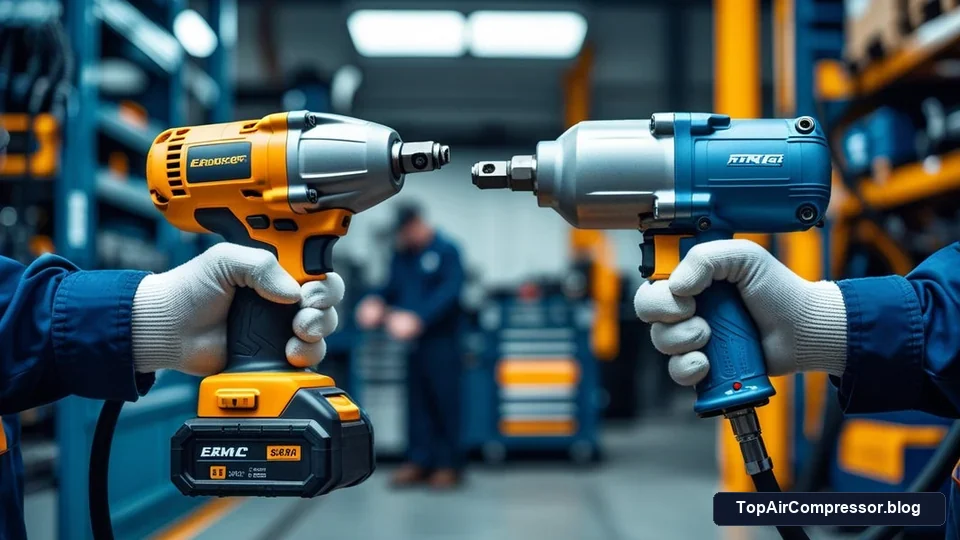
Battery alternatives utilize advanced lithium-ion cells that deliver massive instantaneous current spikes. However, continuous heavy hammering rapidly depletes cell voltage, causing noticeable performance degradation during extended bolting sequences.
Engineers measuring dynamic output find that corded motors maintain stable RPM under heavy loads. This steady rotational force prevents fastener shear and ensures accurate clamp load application across critical structural joints.
Corded electric impact wrenches deliver continuous high-torque output via direct alternating current conversion. This eliminates voltage sag during prolonged heavy bolting, maintaining consistent fastening torque across demanding industrial assembly tasks.
For portable applications like our best battery powered tire inflator, lithium-ion cells supply immense initial surge current. However, internal resistance and thermal throttling reduce continuous output during extended high-load operations.
Mechanical hammer-and-anvil mechanisms convert rotational motor force into high-frequency impacts. Corded variants often sustain higher peak impacts due to unlimited grid capacity, whereas cordless units depend on battery cell chemistry limits.
- Direct grid power eliminates voltage sag under heavy mechanical loads.
- High-drain lithium packs generate intense heat during sustained fastening.
- Corded induction motors maintain flat torque curves throughout cycles.
Breakaway Torque Dynamics
Breaking rusted lug nuts demands extreme initial breakaway force from the anvil mechanism. Corded models deliver unyielding power indefinitely.
Cordless wrenches rely on fully charged batteries to achieve maximum breakaway ratings. Depleted packs struggle significantly against stubborn bolts.
- Anvil mass influences impact energy transfer efficiency.
- Thermal protection circuits can trip during heavy breakaway tasks.
Duty Cycle Tolerances and Thermal Management
Heavy assembly lines demand continuous tool operation across multiple shifts daily. Corded electric impact wrenches feature robust internal cooling fans that dissipate heat effectively during prolonged tasks.
Similar to high-drain units found in any best battery powered air compressor roundup, these alternatives generate internal resistance heat within motor windings and battery packs during intensive work.
Operators working in high-ambient-temperature environments must monitor battery temperatures closely. Overheated lithium packs require mandatory cooling periods before accepting charge cycles on external charging docks.
Corded electric models experience significant stator heating under sustained loads, requiring robust internal cooling fans. Operators must monitor winding temperatures to prevent thermal insulation breakdown during continuous heavy-duty structural steel fabrication.
Cordless impact wrenches generate concentrated heat within both the motor windings and battery packs. Advanced phase change materials and smart BMS architectures actively manage heat dissipation to prevent premature thermal shutdown cycles.
Exceeding recommended duty cycles on either platform accelerates brush wear and electronic component degradation. Maintaining proper cool-down intervals preserves armature integrity and significantly extends the operational lifespan of the tool.
- Active fan cooling prevents motor burn-out during continuous marathon sessions.
- Thermal throttling protects battery chemistry from permanent degradation.
- Industrial facilities prefer corded equipment for uninterrupted production schedules.
Cooling Systems in Extreme Environments
Industrial job sites test thermal limits with heavy dust and high ambient temperatures. Corded housings use intake filters effectively.
Sealed cordless motors prevent debris ingress but trap internal heat during heavy mechanical duty cycles.
- Dust accumulation restricts internal cooling airflow channels.
- Sealed electronics improve moisture resistance at cost of heat dissipation.
Ergonomics, Weight Distribution, and Fatigue
When comparing pneumatic options, pairing your setup with the best air compressor for impact wrench keeps tool weight minimal during extended overhead or horizontal fastening tasks.
Battery variants concentrate considerable weight at the base of the handle through heavy lithium-ion blocks. This offset balance changes wrist articulation angles and increases strain over long shifts.
Managing thick extension cords introduces a different ergonomic challenge on crowded shop floors. Technicians must navigate tether lines carefully to prevent tripping hazards and accidental tool drops.
Battery placement at the base of cordless impact wrenches shifts the overall center of gravity downward. This design creates a distinct wrist torque moment that increases muscular fatigue during overhead automotive assembly work.
Corded units distribute weight more evenly along the barrel housing, reducing distal arm fatigue. Nevertheless, heavy rubberized power cords introduce drag resistance and require constant cable management in confined workspaces.
Ergonomic grip circumferences and vibration-damping overmolds play critical roles in reducing operator hand-arm stress. Selecting tools with certified anti-vibration handles helps technicians comply with daily occupational exposure limits.
- Lighter corded chassis reduce repetitive strain injuries in production roles.
- Battery placement affects overall balance and single-handed tool control.
- Power cords require mindful routing across busy automotive service bays.
Overhead Bolting Ergonomics
Overhead structural work amplifies every ounce of equipment weight during repetitive tasks. Corded tools save upper body energy.
Heavy battery packs create awkward leverage moments when technicians reach into deep engine bays.
- Wrist strain correlates directly with forward center of gravity.
- Harness attachments help mitigate heavy cordless tool fatigue.
Power Infrastructure and Site Flexibility
Job site infrastructure dictates whether corded or cordless tools provide better operational efficiency. Remote locations lack reliable grid power access, making battery platforms essential for field service technicians.
Stationary assembly benches benefit enormously from dedicated 120V outlets supplying infinite runtime without battery swaps. Facilities avoid costly spare battery investments entirely by standardizing on wired electrical tools.
Voltage drop over long extension cords can impair corded motor performance significantly. Proper wire gauge selection remains critical for maintaining safe operating voltage on distant job sites.
Choosing an efficient air compressor for impact wrenches completely avoids voltage drop issues, ensuring stable power delivery without any reliance on hazardous long extension cords.
Battery-powered platforms offer unmatched jobsite mobility, eliminating hazardous cord tangles in remote locations. Maintenance crews rely on rapid multi-bay chargers to sustain uninterrupted workflow across sprawling outdoor industrial facilities.
Evaluating site infrastructure helps determine the most efficient fastening solution for specific operational environments. Generators or temporary drop cords must supply sufficient amperage capacity to prevent corded motor stall conditions.
- Cordless units provide unmatched mobility for remote infrastructure repairs.
- Stationary workstations eliminate battery charging logistics and equipment downtime.
- Extension cord length impacts electrical resistance and available motor torque.
Remote Field Service Logistics
Field service vehicles require versatile charging stations powered by inverters or generators. Battery rotation keeps work moving.
Generators supply stable AC power for corded tools when working far from permanent building electrical services.
- Inverter capacity limits simultaneous battery charger operations.
- Generator fuel logistics add overhead to remote project sites.
Maintenance Protocols and Long-Term Durability
Mechanical longevity depends heavily on internal component quality and routine servicing schedules. Corded electric wrenches utilize durable brushless motors designed to operate for decades with minimal intervention.
Battery packs represent a consumable expense that degrades chemically over years of charge cycles. Replacement costs for high-capacity lithium-ion packs form a major portion of long-term operational budgets.
Gearboxes and impact mechanisms on both platform types require periodic high-pressure grease replenishment. Regular cleaning prevents premature wear on internal anvils, hammers, and planetary gear sets.
Corded electric impact wrenches require periodic inspection of carbon brushes and commutator surfaces. Replacing worn brushes prevents excessive arcing and protects the armature from catastrophic electrical failure over years of service.
Battery systems demand rigorous terminal cleaning and preventative storage protocols to maximize cell longevity. Operators must inspect battery housings for micro-cracks that compromise ingress protection ratings in wet jobsite conditions.
Both tool categories rely on planetary gearboxes that require high-pressure lithium grease replenishment. Routine gearbox maintenance prevents premature gear pitting and ensures consistent mechanical efficiency throughout the tool lifecycle.
- Corded tools offer lower lifetime ownership costs due to fewer consumables.
- Battery chemistry requires careful storage and eventual expensive replacement.
- Gearbox lubrication schedules preserve impact mechanism efficiency over time.
Brushless Motor Technology Integration
Modern electronic commutation eliminates physical carbon brushes in high-end impact wrenches. This advancement extends motor life.
Reduced friction generates less internal heat, improving overall energy efficiency across both corded and cordless models.
- Electronic controllers optimize power draw during high-torque impacts.
- Eliminating wear parts reduces unexpected motor failure rates.
Noise, Vibration, and Operator Safety Standards
Industrial workplace safety regulations mandate strict monitoring of tool vibration and acoustic output levels. High-impact percussion mechanisms generate intense noise that requires hearing protection during operation.
Corded electric models typically produce steadier acoustic profiles without battery housing resonance rattles. Vibration isolation handles help dampen harsh impacts before they reach the operator's hand joints.
Ergonomic handle rubber overmolds absorb minor vibrations but cannot eliminate high-frequency impacts. Regular exposure monitoring ensures compliance with occupational health and safety guidelines across industrial facilities.
High-impact mechanisms generate intense acoustic pressure levels exceeding standard occupational health guidelines. Operators must wear certified hearing protection devices to mitigate long-term auditory damage during continuous high-torque bolting tasks.
Hand-arm vibration syndrome represents a major ergonomic hazard associated with heavy impact tool usage. Employers should track exposure durations and select tools meeting stringent ISO vibration standards to protect technician health.
Electrical safety remains paramount when operating corded tools in damp or conductive environments. Utilizing ground-fault circuit interrupters prevents severe electrical shocks and ensures compliance with current OSHA safety regulations.
- Acoustic shielding reduces decibel output in enclosed assembly workshops.
- Vibration dampening handles protect operators from nerve damage risks.
- Mandatory PPE protects workers from high-frequency impact noise.
Vibration Transmission Mitigation
Internal spring-loaded dampeners isolate the grip from the hammering mechanism. This engineering protects user hand structures.
Poorly maintained anvils increase harmonic vibration transfer directly into the operator's forearm bones.
- Pneumatic-style electric hammers require robust internal isolation.
- Extended trigger time increases white finger syndrome risks.
Frequently Asked Questions
Can corded electric impact wrenches match cordless torque?
Yes, corded electric impact wrenches often exceed cordless peak torque because they draw continuous unrestricted power directly from standard wall outlets. Continuous grid power eliminates the voltage sag that limits high-end battery models.
Why do battery impact wrenches lose power over time?
Lithium-ion cells experience internal chemical degradation and voltage drop as they discharge during heavy fastening tasks. Thermal protection circuits also throttle output to prevent battery damage under extreme loads.
Are corded wrenches better for permanent assembly lines?
Corded models offer superior reliability and infinite duty cycles for stationary industrial workstations. Uninterrupted power eliminates battery charging logistics and costly replacement cell investments entirely.
How often should impact wrench gearboxes be greased?
Heavy industrial gearboxes require high-pressure molybdenum grease replenishment every six months of continuous operation. Proper lubrication prevents premature wear on internal hammers and planetary gears.
Which tool type offers lower long-term operating costs?
Corded electric wrenches typically provide lower lifetime ownership expenses because they lack consumable battery packs. Eliminating battery replacements saves significant budget allocations over years of professional use.