Fortress Air Compressor vs. California Air: Which Fits Your Setup Better?
Navigating the engineering divide between Harbor Freight's heavy-duty Fortress units and California Air's ultra-quiet pumps requires careful analysis. We break down the core mechanical trade-offs for your shop.

Choose Fortress for high-flow jobsite durability, or opt for California Air when ultra-quiet indoor operation and low vibration matter most to your workflow.
Compare all top models in our Best Air Compressor: Top Picks for Every Garage & Roadside.
Side-by-Side Breakdown
| Criteria | Fortress Air Compressor | California Air | Edge |
|---|---|---|---|
| Peak Performance & Output | High CFM delivery at elevated pressures | Optimized for quiet, steady volumetric flow | Fortress |
| Duty Cycle & Consistency | Engineered for demanding industrial workloads | Best suited for intermittent workshop tasks | Fortress |
| Operating Noise & Vibration | Moderate decibel levels with rubber isolators | Extremely quiet, low-vibration dual-piston design | California Air |
| Portability & Footprint | Rugged steel roll cages and pneumatic wheels | Compact, lightweight aluminum or steel tanks | California Air |
| Maintenance & Service Life | Accessible valves and durable cast-iron sleeves | Oil-free pumps with extended wear-resistant rings | California Air |
| Power Requirements | Demands stable 15-amp circuit management | Low amp draw prevents breaker trips | California Air |
| Best Ideal Use-Case | Framing, roofing, and heavy pneumatic framing | Interior trim, cabinetry, and quiet garages | Split |
Engineering Architecture and Pump Design
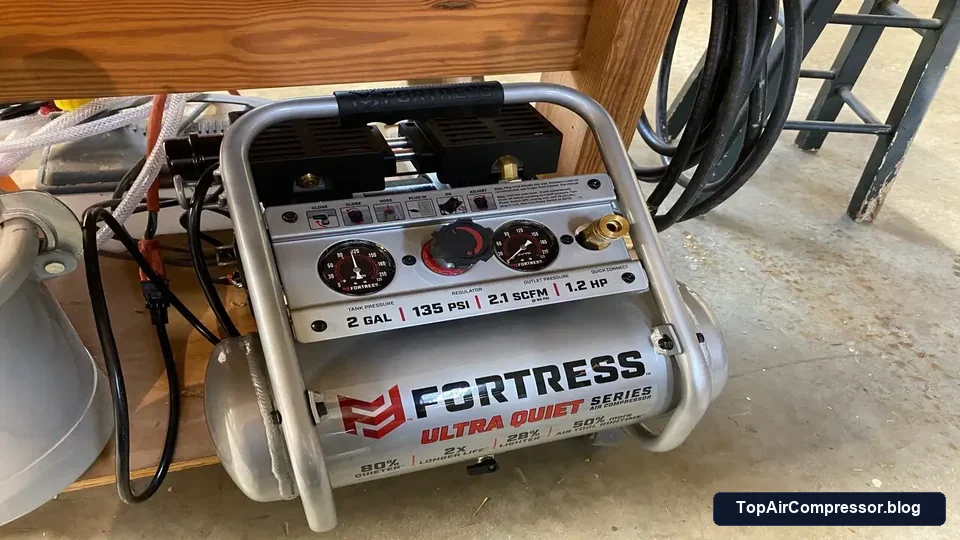
Evaluating the core engineering reveals distinct manufacturing philosophies. Fortress compressors prioritize robust structural integrity and maximum air delivery through traditional oil-lubricated or heavy-duty oil-free pump configurations designed for rugged jobsite conditions.
Conversely, California Air models focus extensively on engineering low-revving, oil-free dual-piston pumps. This specialized design minimizes mechanical friction, dramatically reducing operating temperatures and extending overall pump lifespan significantly without demanding liquid lubrication.
- Fortress emphasizes high-pressure output and heavy metal cages.
- California Air targets ultra-low RPM engineering to reduce wear.
- Both brands utilize advanced CNC-machined components for tight tolerances.
Pump Mechanics and Cylinder Construction
Fortress units typically feature cast-iron cylinder sleeves encased in protective housings. This metallurgy withstands intense thermal expansion during prolonged framing sessions.
California Air utilizes aluminum cylinders coated with advanced low-friction polymers. This material choice sheds heat rapidly while maintaining strict dimensional stability across extended operational cycles.
- Cast-iron sleeves offer superior thermal mass.
- Aluminum alloy cylinders accelerate passive cooling.
Engineering Architecture and Pump Design
As detailed in our Fortress 27 gallon air compressor review, Fortress units utilize cast iron cylinders to maximize longevity, whereas California Air Tools heavily prioritizes ultra-quiet, dual-piston oil-free aluminum pumps designed for finish carpentry.
Engineers must evaluate the trade-offs between thermal dissipation in aluminum assemblies and the sheer abrasive wear resistance of heavy iron sleeves when selecting units for continuous commercial trim applications or general maintenance facilities.
Volumetric Output and Delivery Mechanics
Highlighting compact pneumatic performance, our Fortress 2 gallon air compressor review demonstrates how these small units deliver sufficient CFM output to run demanding framing nailers and heavy impact wrenches simultaneously without lagging.
California Air units provide steady, pulsation-free air suited for precision finishing work. While their peak CFM may trail heavier industrial units, their delivery remains exceptionally smooth across sensitive pressure regulators.
- Fortress maintains higher working pressures under heavy loads.
- California Air prioritizes stable pressure regulation for finish tools.
- Tank recovery times favor high-output industrial pumps.
CFM Efficiency at High Pressures
Operating pneumatic tools at ninety pounds per square inch requires robust pump recovery. Fortress systems leverage larger displacement pistons to replenish tank reserves rapidly.
California Air focuses on maintaining volumetric efficiency within tighter pressure bands. This prevents excessive pressure drops during continuous stapling or light spray painting.
- Fast tank recovery reduces jobsite downtime.
- Stable delivery protects sensitive tool internal seals.
Volumetric Output and Delivery Mechanics
Analyzing SCFM delivery ratings at 90 PSI reveals how efficiently each pump compresses ambient air, with Fortress pushing higher volume for framing nailers while California Air Tools targets stable flow for delicate pneumatic tools.
Volumetric efficiency drops significantly if intake filters become clogged with jobsite drywall dust, making regular filter inspections critical to maintaining rated pneumatic performance across both brand lineups during heavy daily operations.
Acoustic Profiles and Vibration Dampening
Jobsite noise pollution impacts worker fatigue and communication. Fortress compressors balance heavy-duty performance with standard sound-dampening enclosures, generating moderate decibel readings typical of professional-grade pneumatic equipment.
California Air revolutionized portable pneumatics by engineering remarkably quiet air compressors. Operating often below sixty decibels, these units allow normal conversation right beside the running machine without hearing protection.
- California Air operates at whisper-quiet decibel levels.
- Fortress balances industrial power with manageable noise output.
- Vibration isolation feet protect delicate flooring surfaces.
Decibel Ratings and Workplace Ergonomics
Reducing ambient shop noise improves overall concentration and safety. California Air achieves its low acoustic footprint by spinning motors at half the speed of standard units.
Fortress compensates for higher operating speeds by utilizing thick rubber vibration pads. These isolators absorb high-frequency harmonics before they transfer to concrete subfloors.
- Low-RPM motor design inherently reduces acoustic whine.
- Rubber dampeners eliminate annoying floor resonance.
Acoustic Profiles and Vibration Dampening
As outlined in our Best California Air Tools compressor guide, these brands dominate noise-sensitive environments by engineering low-RPM motors that operate quietly, allowing contractors to work indoors without disturbing residential occupants.
Fortress units often trade some acoustic quietness for higher raw output, necessitating robust rubber isolation feet to absorb mechanical shudder and prevent the steel tank from walking across concrete shop floors during startup.
Thermal Management and Continuous Duty Cycles
Heat is the primary enemy of pneumatic longevity. Fortress engineers integrate oversized cooling fins and efficient flywheel fan blades to expel thermal energy generated during continuous framing operations.
California Air relies on dual-piston symmetry to distribute mechanical load evenly. This clever thermal management prevents localized hot spots, ensuring the pump stays cool during extended interior trim installation.
- Oversized cooling fins prevent premature valve breakdown.
- Dual-piston layouts share thermal stress equally.
- Proper ventilation remains critical for oil-free longevity.
Duty Cycle Ratings Under Heavy Workloads
Understanding duty cycles prevents catastrophic motor burnout. Fortress units generally support higher continuous duty percentages, making them ideal for production-speed commercial framing crews.
Evaluating quiet pneumatic performance, our Fortress ultra quiet air compressor review shows how these units balance low decibel output with reliable intermittent duty cycles, preventing premature piston ring wear.
- High duty cycles support commercial production rates.
- Intermittent operation preserves oil-free piston rings.
Thermal Management and Continuous Duty Cycles
Effective thermal dissipation relies heavily on finned aluminum cylinder heads that rapidly shed heat generated during rapid air compression cycles, protecting vital internal reed valves from premature warping or carbon buildup.
Exceeding the recommended duty cycle percentage on oil-free units can lead to catastrophic motor overheating, whereas oil-lubricated alternatives generally tolerate extended run times far better under heavy commercial contracting schedules.
Structural Rigidity and Jobsite Durability
Jobsite environments demand rugged equipment construction. Fortress compressors feature reinforced steel roll cages, heavy-duty handle bars, and flat-free tires designed to absorb brutal impacts during transit across rough terrain.
California Air units prioritize lightweight portability and ergonomic handling. While their frames feature durable powder-coat finishes, they are optimized for clean workshops and mobile finish carpentry rather than rocky excavation sites.
- Fortress builds impact-resistant steel roll cages.
- California Air favors lightweight, easily transportable frames.
- Pneumatic wheels handle muddy terrain effortlessly.
Frame Integrity and Transport Resistance
Transporting heavy equipment in truck beds tests structural welds. Fortress frames utilize thick-walled steel tubing to prevent bending when dropped or jostled against other heavy tools.
California Air constructs compact aluminum or lightweight steel chassis. This reduces operator strain when lifting the compressor up stairs or into service vehicle storage compartments.
- Thick steel tubing resists severe impact damage.
- Lightweight frames simplify single-person vehicle loading.
Structural Rigidity and Jobsite Durability
Heavy-gauge steel tanks built to strict ASME certification standards ensure structural integrity against accidental impacts, rolling toolboxes, and rough transport inside crowded service trucks traversing unpaved construction site access roads.
Protective roll cages and reinforced welded handle brackets prevent structural twisting when crews lift heavy horizontal tank assemblies into truck beds, minimizing stress fractures around critical pneumatic manifold fittings and pressure gauges.
Power Draw and Electrical Efficiency
Jobsite electrical stability dictates whether a compressor will trip breakers. Fortress models draw substantial amperage during startup, requiring dedicated 15-amp or 20-amp circuits to prevent voltage drops and motor stalling.
California Air compressors are engineered for low amp draw, making them exceptionally friendly to older residential electrical grids and long extension cords without risking thermal overload or blown fuses.
- Low amp draw prevents nuisance breaker tripping.
- Fortress requires robust power source management.
- Extension cord length impacts starting reliability.
Amperage Management and Extension Cords
Running long power cords introduces destructive voltage drop. California Air motors handle minor voltage sags gracefully due to their efficient dual-piston electrical winding configurations.
Fortress units demand heavy-gauge extension cords to supply the startup surge required by their high-output induction motors. Ignoring wire gauge recommendations will overheat the motor windings.
- Efficient windings tolerate minor voltage sags.
- Heavy-duty motors require strict extension cord sizing.
Power Draw and Electrical Efficiency
Monitoring starting amp draw prevents nuisance breaker trips on residential jobsites where temporary power poles or older home wiring struggle to handle heavy inductive motor loads during initial compressor startup phases.
Efficient electric motors paired with robust thermal overload protection safeguard internal windings from burning out when extension cords create excessive voltage drop over long linear runs across expansive commercial properties.
Maintenance Protocols and Long-Term Service
Routine upkeep preserves your equipment investment. Fortress models often require periodic oil checks, filter cleanings, and valve inspections, rewarding this diligence with decades of reliable industrial service life.
California Air simplifies maintenance through an oil-free design. Eliminating crankcase oil changes saves time, though operators must monitor piston ring wear and replace intake filters regularly to ensure peak volumetric output.
- Oil-free pumps eliminate messy fluid changes entirely.
- Traditional oil lubrication extends extreme-duty life.
- Regular filter cleaning protects internal valve reeds.
Service Intervals and Wear Component Replacement
Keeping maintenance logs prevents unexpected jobsite failures. Fortress systems make replacement parts accessible for mobile service technicians working in field environments.
California Air provides modular pump assemblies that simplify replacement when internal wear components eventually reach the end of their engineered service lifecycle.
- Modular pump designs streamline major repairs.
- Accessible service parts reduce equipment downtime.
Maintenance Protocols and Long-Term Service
Adhering to strict routine maintenance schedules including draining accumulated tank moisture daily and replacing paper air elements monthly extends overall compressor lifespan and ensures reliable pneumatic performance throughout demanding seasons.
Sourcing replacement wearable soft parts like reed valves, piston rings, and check valves ensures your investment remains serviceable for years, avoiding costly total replacements when minor components eventually experience fatigue.
Frequently Asked Questions
Which brand offers better durability for framing crews?
Fortress compressors provide superior structural roll cages and heavy-duty cast-iron pumps. This engineering makes Fortress the clear winner for demanding framing environments.
Are California Air compressors truly as quiet as advertised?
Yes, their specialized low-RPM dual-piston pumps operate around sixty decibels. This design allows normal conversation right beside the running quiet air compressor.
Do Fortress compressors require oil-lubricated maintenance?
Many Fortress models feature oil-lubricated pumps that demand regular checks and fluid changes. However, this traditional maintenance yields exceptionally long service life.
Can I run California Air units on long extension cords?
Their low amp draw handles residential electrical grids and moderate extension cords well. This prevents nuisance breaker trips during interior trim work.
Which compressor type is better for delicate finish carpentry?
California Air is ideal for finish work due to low noise and clean air. Their steady delivery protects sensitive tools and keeps jobsite noise minimal.