Husky vs. Kobalt Air Compressor: Which Fits Your Setup Better?
Husky and Kobalt represent home center pneumatic powerhouses built for distinct trade applications. Choosing between them requires analyzing your specific CFM demands and duty cycle limits.

For heavy shop fabrication, Husky delivers superior continuous duty performance. If you prioritize budget mobility and standard garage tasks, Kobalt wins the matchup.
Compare all top models in our Best Air Compressor: Top Picks for Every Garage & Roadside.
Side-by-Side Breakdown
| Criteria | Husky | Kobalt Air Compressor | Edge |
|---|---|---|---|
| Peak Performance & Output | High CFM delivery at 90 PSI | Balanced output for standard tools | Husky |
| Duty Cycle & Consistency | Extended thermal endurance ratings | Moderate standard workshop ratings | Husky |
| Operating Noise & Vibration | Standard industrial decibel output | Quiet tech options widely available | Kobalt |
| Portability & Footprint | Heavier vertical tank designs | Lighter frame mobility focus | Kobalt |
| Maintenance & Service Life | Cast iron cylinder longevity | Aluminum pump heat dissipation | Husky |
| Power Requirements | Standard 120V to 240V variants | Optimized 120V residential draws | Kobalt |
| Best Ideal Use-Case | Professional auto body shops | DIY garage and trim work | Husky |
Architectural Design and Engineering Philosophy
Husky compressors emphasize rugged industrial longevity through heavy-duty pump construction. Their engineering focuses on maximizing volumetric efficiency for prolonged professional jobsite environments.
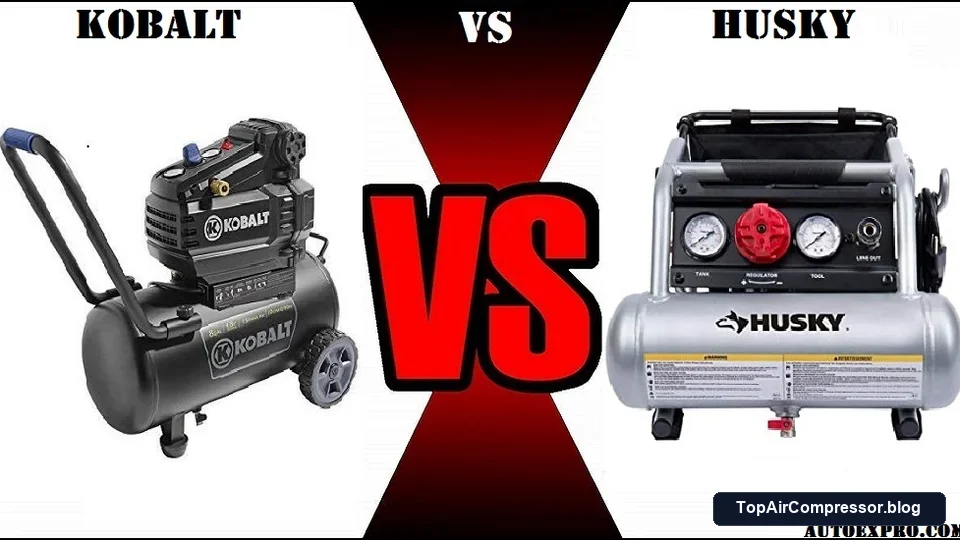
Kobalt prioritizes user-friendly operation by integrating innovative quiet technologies. For electrical troubleshooting, consult our kobalt air compressor switch technical guide to safely maintain system pressure controls during indoor tasks.
Husky units generally emphasize jobsite mobility through rugged, roll-cage frames, whereas Kobalt designs often prioritize stationary workshop stability with vertical tank orientations. Both brands utilize ASME-certified receiver tanks rated for 150 to 200 PSI maximum operational pressures.
Engineers at Husky focus on impact-resistant shrouds and reinforced axle assemblies for rough terrain transport. Conversely, Kobalt structural layouts favor compact footprints, utilizing heavy-gauge steel welds to minimize spatial overhead inside permanent garage installations.
- Husky targets heavy industrial and automotive trades.
- Kobalt leans toward residential remodeling and DIY convenience.
- Both brands utilize oil-lubricated and oil-free options.
Pump Metallurgy and Cylinder Construction
Husky heavily utilizes cast iron cylinder sleeves to resist thermal breakdown. This material choice significantly extends service intervals under harsh working conditions.
Kobalt frequently incorporates aluminum pump assemblies featuring engineered cooling fins. These designs accelerate heat dissipation for lighter duty cycles.
- Cast iron offers superior wear resistance.
- Aluminum reduces overall unit weight.
Pneumatic Performance and Volumetric Output
Delivering adequate cubic feet per minute at operational pressure remains critical for pneumatic tools. When electrical issues arise, installing a new husky pressure switch replacement restores reliable automatic motor cycling under heavy loads.
Kobalt systems deliver reliable pressure curves tailored for standard nailers. Their performance metrics match routine maintenance requirements without excessive energy waste.
Volumetric efficiency relies heavily on pump displacement metrics measured in CFM at 90 PSI. Husky models typically deliver strong burst delivery for framing nailers, while Kobalt units frequently maintain higher sustained volumetric output for continuous grinding operations.
Analyzing volumetric capacity requires looking past raw horsepower claims to evaluate true displacement and stroke length. Kobalt dual-piston configurations often bridge the gap, providing stable recovery rates that prevent excessive pressure drops during prolonged sanding tasks.
- Husky handles high-consumption grinders and sanders.
- Kobalt excels with staple guns and impact wrenches.
- Pressure recovery times favor Husky's larger displacement pumps.
Pressure Recovery and Tank Dynamics
Husky vertical storage tanks maintain stable reservoir pressure during heavy draws. This prevents erratic tool operation during prolonged cutting or painting phases.
Kobalt portable tanks recover quickly thanks to optimized manifold routing. Users experience minimal downtime between consecutive fastening cycles.
- Vertical tanks optimize shop floor space.
- Quick-recovery check valves reduce motor strain.
Thermal Dynamics and Continuous Duty Limits
Managing internal heat accumulation determines compressor longevity. Husky engineering incorporates robust splash lubrication to protect critical connecting rod bearings from failure.
Kobalt balances thermal thresholds by utilizing efficient cooling fan shrouds. These protective covers direct ambient airflow directly across high-temperature cylinder heads.
Heat dissipation dictates how long a unit runs before thermal overload protection engages. If electrical components fail, consult our husky air compressor switch wiring guide to properly troubleshoot and restore safe operation.
Cast iron cylinder sleeves used in heavy-duty configurations absorb thermal energy much faster than aluminum alternatives. Monitoring ambient temperature thresholds prevents rapid oil degradation and ensures consistent volumetric performance across extended heavy construction shifts.
- Thermal overload switches protect motors automatically.
- Proper oil viscosity prevents premature pump scoring.
Duty Cycle Percentages Explained
Husky models often feature higher operational duty cycle ratings. Professionals can run these machines continuously without risking thermal shutdown.
Kobalt units generally operate on intermittent duty cycles. Exceeding these limits can trigger internal thermal breakers during heavy tasks.
- Check nameplate ratings before continuous operation.
- Allow proper cool-down periods for oil-free pumps.
Structural Integrity and Mechanical Durability
Jobsite environments demand robust protective cages and heavy-gauge steel tanks. Husky designs incorporate reinforced wheel brackets to withstand rough terrain transport easily.
Kobalt frames focus on ergonomic handling and manageable curb weight. Their structural roll cages protect vulnerable gauges from accidental impact damage.
Mechanical longevity depends on connecting rod metallurgy, crankshaft balancing, and vibration dampening materials. Husky heavy-duty pumps incorporate forged steel crankshafts, whereas Kobalt frequently employs robust aluminum alloys designed to reduce total reciprocating mass and operational friction.
Tank wall thickness and powder-coat finish quality determine resistance to internal rust and external jobsite abrasion. Premium models feature dual-welded bung fittings and interior corrosion inhibitors capable of withstanding moisture accumulation over years of heavy daily use.
- Welded steel construction prevents air leaks.
- Powder-coated finishes resist rust and corrosion.
Wheels, Handles, and Mobility Hardware
Husky utilizes solid flat-free tires paired with thick steel axles. This hardware supports effortless movement across gravel and construction debris.
Kobalt implements balanced handle positioning to reduce operator strain. Maneuvering these units around tight residential hallways is remarkably straightforward.
- Flat-free tires eliminate jobsite punctures.
- Rubber feet dampen cabinet vibrations effectively.
Acoustic Signatures and Vibration Mitigation
High decibel output causes severe fatigue in enclosed workshop spaces. Kobalt low-noise variants operate at remarkably reduced decibel levels compared to traditional units.
Husky industrial models generate standard mechanical noise profiles requiring hearing protection. Their powerful induction motors vibrate more due to higher torque output.
Noise levels matter significantly in residential zones or attached workshops where decibel outputs directly impact operator comfort. Induction motors on belt-drive Kobalt units often achieve quieter operations, frequently dropping below 75 decibels during standard compression cycles.
Direct-drive Husky compressors generate higher acoustic frequencies due to rapid motor RPMs. Implementing heavy-duty rubber isolation feet and rigid mounting platforms effectively absorbs harmonic vibrations, preventing structural resonance through concrete workshop floors and metal workbenches.
- Quiet compressors protect user hearing health.
- Vibration pads prevent wandering across concrete floors.
Decibel Comparison in Residential Areas
Operating a Kobalt quiet series compressor indoors disturbs neighbors minimally. When internal components wear out, sourcing proper kobalt air compressor pressure switch parts ensures your quiet motor cycles reliably.
Husky traditional units demand outdoor placement or dedicated enclosures. Their raw mechanical power produces significant acoustic resonance indoors.
- Quiet pumps run below standard decibel thresholds.
- Enclosures reduce perceived sound effectively.
Power Delivery and Electrical Infrastructure
Electrical draw limits dictate where you can safely operate these machines. Husky stationary units often demand dedicated 240V circuits to prevent frequent breaker trips.
Kobalt compressors optimize electrical efficiency for standard 120V outlets. Homeowners can plug them into existing garage circuits without rewiring costs.
Starting surge amperage demands robust electrical infrastructure, especially when running heavy equipment on standard 120-volt circuits. Husky and Kobalt units incorporate specialized capacitor-start induction motors designed to handle high initial torque without repeatedly tripping standard circuit breakers.
Voltage drop over long extension cords can cause catastrophic motor winding failure due to excessive heat generation. Operating larger units requires heavy-gauge copper wiring and dedicated circuits rated for at least 20 amps to ensure reliable compressor startup.
- Always verify circuit amperage before startup.
- Extension cords must match proper wire gauges.
Starting Amperage and Voltage Drops
Inrush current spikes can strain residential electrical panels heavily. Husky motors require robust thermal overload protection to manage startup demands.
Kobalt incorporates efficient capacitor-start designs to minimize initial current surges. This protects sensitive home electronics from sudden voltage sags.
- Avoid long extension cords to prevent voltage drop.
- Use heavy-gauge cords for high-draw motors.
Operational Workloads and Ideal Applications
Matching compressor capabilities to your specific tasks prevents costly equipment failures. Husky units thrive during continuous automotive repair and heavy pneumatic grinding operations.
Kobalt compressors shine during routine DIY maintenance and trim carpentry. Their balanced performance satisfies hobbyists without overcomplicating daily operations.
Matching equipment capabilities to specific trade requirements prevents premature burnout and ensures efficient workflow pacing. Husky units excel in framing, roofing, and general carpentry where rapid mobility and quick tank recovery trump prolonged continuous airflow.
Stationary Kobalt installations serve automotive repair shops and fabrication facilities best, where operators demand steady pneumatic supply for impact wrenches, plasma cutters, and orbital sanders requiring sustained constant pressure delivery.
- Select Husky for professional automotive shops.
- Choose Kobalt for home garages and weekend projects.
- Evaluate your maximum tool CFM requirements first.
Maintenance Schedules and Long-Term Upkeep
Routine maintenance ensures decades of reliable pneumatic pressure delivery. Husky oil-lubricated pumps require regular oil level checks and annual fluid changes.
Kobalt oil-free models eliminate fluid changes entirely. Users simply drain tank moisture daily to prevent internal corrosion and rust.
- Drain moisture tanks after every heavy use.
- Inspect air intake filters monthly for debris.
Frequently Asked Questions
Are Husky and Kobalt parts interchangeable?
Basic fittings and couplers share universal sizing standards across brands. Internal pump components remain proprietary, meaning direct replacement parts must match your exact model number.
Which brand offers better longevity for professionals?
Husky generally provides superior longevity due to cast iron pumps. Their industrial engineering handles heavy continuous duty cycles much better than residential alternatives.
Can I run a sandblaster with a Kobalt compressor?
Most standard Kobalt models lack the high CFM output required for sandblasting. You would need a high-capacity Husky unit to maintain necessary pressure.
Why is my Husky compressor tripping the garage breaker?
High starting amperage often overloads standard residential circuits. Upgrading to a dedicated electrical line resolves this power delivery limitation.
Do Kobalt quiet compressors require oil?
Most quiet models utilize oil-free dual-piston pump designs. This engineering choice eliminates routine maintenance while keeping operating noise extremely low.