Pancake vs. Hotdog Air Compressor: Which Fits Your Setup Better?
Choosing between these portable pneumatic units dictates your job site stability and air volume. Evaluate their unique tank architectures to optimize daily performance.

Select the pancake compressor for superior stability on uneven surfaces, or choose the hotdog compressor when linear workspace clearance matters most.
Compare all top models in our Best Air Compressor: Top Picks for Every Garage & Roadside.
Side-by-Side Breakdown
| Criteria | Pancake | Hotdog Air Compressor | Edge |
|---|---|---|---|
| Peak Performance & Output | Moderate CFM at standard pressure | Comparable CFM with balanced draw | Hotdog Air Compressor |
| Duty Cycle & Consistency | Short burst recovery cycles | Consistent pneumatic delivery | Hotdog Air Compressor |
| Operating Noise & Vibration | Low center dampens vibration | Cylindrical frame requires mounts | Pancake |
| Portability & Footprint | Compact, wide, low profile | Elongated, narrow cylinder shape | Pancake |
| Maintenance & Service Life | Standard moisture drain intervals | Accessible bottom drain valves | Hotdog Air Compressor |
| Power Requirements | Standard 120V household current | Standard 120V household current | Tie |
| Best Ideal Use-Case | Finish carpentry and trim work | Framing and general inflation tasks | Hotdog Air Compressor |
Architectural Design and Tank Geometry
When evaluating pancake compressors, the flat, circular tank design offers a remarkably low center of gravity. This physical geometry prevents tipping on uneven job site terrain while maintaining a sturdy footprint.
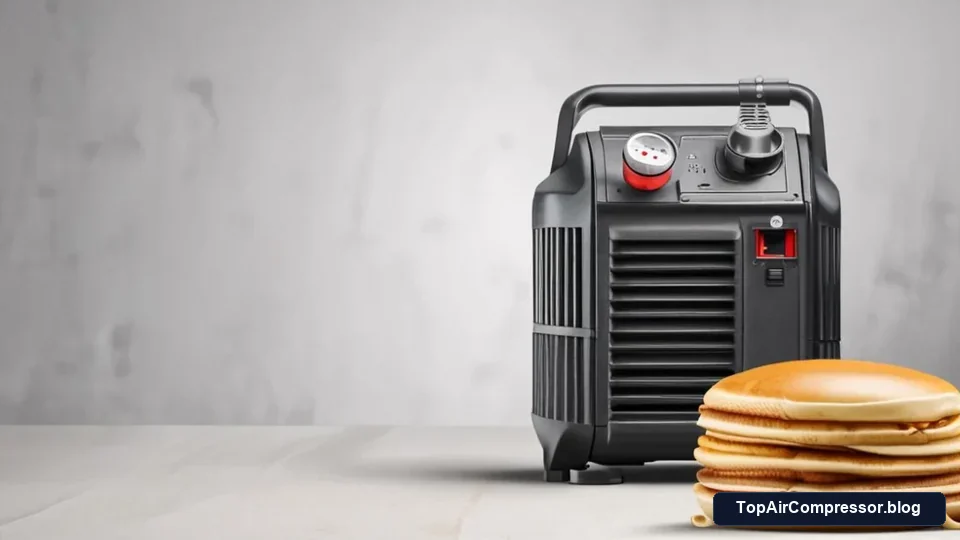
When reviewing top models in our best pancake air compressor guide, you will notice they weld two stamped steel bowls together. This creates a compact vessel that maximizes storage capacity efficiently.
Conversely, hotdog units rely on a single horizontal cylindrical tank. This traditional configuration mimics a classic pipe structure, delivering balanced weight distribution when mounted on standard wheeled service carts.
Pancake compressors utilize a circular stamped steel bowl configuration that distributes internal pneumatic stress evenly. This low-profile geometry lowers the center of gravity, preventing accidental tip-overs on uneven residential jobsite flooring.
Conversely, hotdog units employ a cylindrical horizontal vessel welded from heavy-gauge rolled steel. While slightly taller, this elongated tubular layout fits narrow vehicle storage compartments much better than bulky pancake tanks during transit.
ASME certification standards dictate minimum shell thickness tolerances for both designs. Engineers must calculate wall stress ratings based on maximum allowable working pressure limits to guarantee long-term structural integrity under cycling loads.
- Pancake tanks provide exceptional resistance against accidental tip-over events.
- Hotdog cylinders offer streamlined horizontal clearance for tight truck beds.
- Both designs utilize ASME-certified steel construction for high-pressure safety.
Analyzing Internal Tank Volume
Internal tank volume directly dictates how frequently your motor must cycle. Pancake units typically offer between one and six gallons of compressed air storage capacity.
Hotdog models span a similar volumetric range but often optimize internal airflow dynamics. Their tubular design reduces turbulence during rapid air evacuation phases.
- Volumetric efficiency impacts total tool runtime.
- Cylindrical shapes influence internal moisture accumulation patterns.
Standby Pressure Reserves and Operational Readiness
Maintaining a reliable standby air reserve ensures your pneumatic tools never starve mid-cycle. Pancake units build pressure rapidly due to their smaller upper chamber surface area.
Pro technicians always keep a standby strategy ready when tackling heavy trim jobs. Running out of air during delicate crown molding placement can ruin expensive finish carpentry materials.
Hotdog compressors excel at maintaining sustained line pressure during continuous fastening tasks. Their elongated vessel design promotes smoother pressure recovery phases under heavy loads.
Effective volumetric capacity dictates tool runtime before the pump cycles on. For heavy timber fastening, choosing options from our best pancake air compressor for framing nailer roundup ensures reliable two to six gallons of storage.
Hotdog configurations provide comparable volumetric ranges but optimize delivery through different manifold placements. This layout minimizes pressure drop across internal fittings, preserving line pressure during high-demand framing applications.
Pressure differential switches govern motor activation thresholds. Setting a tight ninety to one hundred twenty PSI operating window ensures consistent pneumatic tool performance without overloading small fractional horsepower electric motors.
- Rapid pressure recovery minimizes workflow interruptions on busy job sites.
- Standby reserves prevent sudden pressure drops during staple gun volleys.
- Consistent delivery protects sensitive internal tool O-rings from starvation.
Pressure Switch Calibration
Factory pressure switches dictate exact cut-in and cut-out thresholds for both units. Proper calibration ensures the motor restarts precisely when working pressure drops below safety limits.
Fine-tuning these electrical components prevents unnecessary thermal overload on job sites.
- Standard cut-out pressure usually reaches 135 PSI.
- Differential settings control motor restart frequency.
Workflow Execution and Operational Monitoring
Watching how these units perform under load reveals distinct engineering trade-offs. Pancake compressors tend to vibrate less against flooring due to their wide base pads.
Operator monitoring involves keeping a close eye on regulator gauges and moisture traps. Both machine types require diligent observation to prevent water damage in air tools.
Hotdog configurations require secure rubber feet to isolate motor vibrations. Without proper dampening, the cylindrical chassis can walk across smooth concrete workshop floors during operation.
Monitoring operational metrics requires dual-scale analog gauges tracking tank pressure and regulated output. Technicians rely on these visual indicators to diagnose internal regulator failure or restricted downstream airflow quickly.
Duty cycle ratings dictate allowable run times relative to cooling intervals. Operating devices highlighted in our best portable tire air compressor reviews beyond a fifty percent duty cycle invites thermal overload.
Sound pressure levels heavily impact indoor trim carpentry workflows. Selecting units that feature acoustically dampened motor housings helps maintain OSHA-compliant noise thresholds while operating in enclosed residential renovation spaces.
- Wide pancake bases absorb mechanical shock significantly better.
- Hose connections need secure quick-coupler fittings for safety.
- Regular gauge checks ensure accurate pressure delivery to nailers.
Monitoring Thermal Performance
Pumping air generates immense frictional heat inside the pump cylinder head. Monitoring ambient temperature prevents premature thermal shutdown during peak summer remodeling projects.
Good ventilation around the motor housing extends overall compressor longevity.
- Cast iron cylinders dissipate heat faster than aluminum.
- Thermal overload switches protect windings from burning out.
Field Durability and Lifecycle Management
Job site life can be unforgiving on portable pneumatic equipment. Many options featured in our best portable air compressor for tools guide feature protective roll cages shielding vital gauges.
Managing the lifecycle of your compressor demands strict adherence to maintenance schedules. Neglecting routine tank draining invites internal rust that compromises structural vessel integrity.
Hotdog compressors often feature exposed motor assemblies that require careful loading. Technicians must secure the tubular frame properly inside transport vehicles to prevent dents.
Environmental exposure tests verify corrosion resistance on external tank surfaces. Manufacturers apply high-grade powder coat finishes to shield bare steel against jobsite moisture, chemical spills, and abrasive impact damage.
Internal condensation remains the primary catalyst for structural tank degradation. Operators must open brass drain valves daily to purge accumulated water, preventing localized pitting along the bottom vessel seam.
Vibration isolation feet absorb high-frequency kinetic energy generated by reciprocating pumps. Replacing worn rubber mounts promptly protects welded frame joints from fatigue fractures during prolonged highway transportation.
- Protective cages prevent costly damage to manifold gauges.
- Daily moisture drainage stops internal tank corrosion effectively.
- Powder-coated finishes resist scratching in harsh outdoor environments.
Corrosion Control Protocols
Condensation forms naturally inside compressed air tanks during humid weather conditions. Implementing a daily purge protocol removes accumulated water before oxidation destroys the steel walls.
Ball valve drains offer superior reliability over standard petcock keys.
- Always relieve tank pressure before opening drain valves.
- Inspect internal walls annually using a boroscope tool.
Component Selection and Core Materials
The core ingredients of a reliable compressor include oil-free pumps and copper windings. Pancake models frequently utilize lightweight composite shrouds to reduce total carrying weight.
Selecting the right pump type depends entirely on your daily noise tolerance. Oil-free designs require zero shaft lubrication but generate higher decibel levels during operation.
Hotdog units balance material weight with heavy-duty structural steel frames. Their robust construction handles rough handling by multiple crew members on commercial construction sites.
Pump longevity heavily depends on cylinder sleeve metallurgy. Cast iron sleeves offer superior wear resistance compared to plain aluminum bores, significantly extending total operating hours before requiring a rebuild.
Oil-free pump designs utilize self-lubricating fluoropolymer piston rings to eliminate maintenance complexity. While convenient for contractors, these non-serviceable components generate higher operating temperatures than oil-lubricated counterparts.
Reed valves control intake and discharge airflow within the compression head. Constructed from specialized stainless steel alloys, these thin flexible strips must withstand millions of rapid bending cycles without cracking.
- Oil-free pumps eliminate messy maintenance routines entirely.
- Copper motor windings provide superior electrical conductivity.
- Composite shrouds reduce overall tool carriage weight.
Pump Mechanics and Piston Rings
Teptlon-coated piston rings seal the compression chamber without liquid oil. These components wear down gradually over thousands of operational cycles under demanding loads.
Replacing worn rings restores factory pressure output efficiently.
- Standard piston strokes dictate CFM delivery rates.
- Valve reeds must seal tightly for optimal efficiency.
Ergonomic Accessories and Output Configurations
Optimizing your pneumatic setup requires matching appropriate accessories to your compressor. Pancake units pair exceptionally well with coiled polyurethane hoses for trim carpentry.
Adding high-flow universal couplers minimizes pressure drop across long hose runs. These minor upgrades significantly improve the driving power of framing and finish nailers.
Hotdog compressors accommodate dual universal quick-connect manifolds easily. This allows two distinct operators to draw regulated air simultaneously from a single mobile machine.
Integrated control panels shield delicate air regulators and quick-connect couplers from impact damage. Positioning these fittings strategically prevents snagging on scaffolding poles or vehicle door frames during transport.
Carry handle placement dictates balance and user fatigue during manual transport. Pancake units feature centered top grips, whereas hotdog compressors utilize offset handles to counterbalance the heavier motor assembly weight.
Cord wrap fixtures keep electrical lines organized and eliminate tripping hazards on busy job sites. Securely storing power cords prevents terminal damage and extends the operational lifespan of the input plug.
- Dual couplers boost job site productivity for framing crews.
- Lightweight hoses reduce wrist fatigue during overhead fastening.
- Inline regulators provide precise pressure control for brad nailers.
Managing Air Line Restrictions
Narrow inner diameter hoses starve tools of vital volumetric airflow. Upgrading to quarter-inch or three-eighths inch lines ensures maximum kinetic energy reaches your nailer pistons.
Proper fittings prevent frustrating pressure leaks during operation.
- Check all hose clamps for secure mechanical retention.
- Avoid sharp kinks that restrict pneumatic volume delivery.
Comprehensive System Requirements
Operating these portable machines safely demands stable electrical power supply sources. You will need a dedicated 15-amp household circuit to prevent breaker trips during motor startup.
Using long, undersized extension cords causes severe voltage drop and motor burnout. Always plug your compressor directly into wall outlets or heavy-gauge contractor cords.
Understanding your electrical limitations ensures uninterrupted productivity throughout demanding renovation projects.
Electrical supply stability remains critical for reliable compressor startup. Running portable units on long extension cords causes voltage drops that can overheat windings and trip circuit breakers prematurely.
Ambient temperature extremes heavily influence lubrication viscosity and starting torque. Cold weather operations often require synthetic compressor oils to ensure smooth motor rotation before pressure builds up.
Ventilation clearance around the motor shroud prevents localized heat retention. Operators must maintain adequate spacing from walls to ensure cooling fans draw sufficient airflow across cylinder cooling fins.
- Dedicated circuits prevent nuisance electrical breaker tripping.
- Heavy-gauge extension cords protect sensitive motor windings.
- GFCI adapters ensure safety in damp outdoor environments.
Electrical Safety and Grounding
Proper grounding protects operators from dangerous electrical shock hazards on damp concrete. Inspect power cords regularly for frayed insulation or damaged ground prongs.
Never bypass safety mechanisms for temporary convenience.
- Three-prong plugs are mandatory for safe operation.
- Store cords loosely to prevent internal copper fracturing.
Frequently Asked Questions
Can a pancake compressor run a framing nailer?
Yes, pancake compressors can handle framing nailers for light work. Fast consecutive nailing will quickly exhaust their small air reserves.
Which compressor type is quieter during operation?
Neither design is inherently quieter based purely on tank shape. Pump motor design and dampening feet determine total noise levels.
How often should I drain moisture from the tank?
You must drain accumulated water after every single work session. Daily moisture removal prevents dangerous internal rust and tank failure.
Is an oil-free pump better for residential remodeling?
Oil-free pumps require zero maintenance and prevent messy oil leaks. Clean pneumatic output makes them ideal for indoor finish carpentry.
Can I use an extension cord with these compressors?
You can use extension cords if they feature heavy wire gauges. Undersized cords cause voltage drops that burn out motors.