Pneumatic vs. Electric Impact Wrench: Which Fits Your Setup Better?
Selecting the right fastener tool demands balancing air delivery systems against high-torque battery platforms. Professional mechanics must weigh continuous power delivery against ultimate jobsite mobility.


Choose pneumatic impact wrenches for high-volume automotive shops requiring endless duty cycles. Select electric impact wrenches for mobile service trucks demanding total freedom from heavy air hoses and stationary compressors.
Compare all top models in our Best Air Compressor: Top Picks for Every Garage & Roadside.
Side-by-Side Breakdown
| Criteria | Pneumatic | Electric Impact Wrench | Edge |
|---|---|---|---|
| Peak Performance & Output | Instant, unyielding breakaway torque | High-discharge lithium-ion surge | Pneumatic |
| Duty Cycle & Consistency | Infinite continuous operation | Subject to thermal throttling | Pneumatic |
| Operating Noise & Vibration | Loud exhaust venting noise | Mechanical motor whine | Electric |
| Portability & Footprint | Tethered to air lines | Completely cordless freedom | Electric |
| Maintenance & Service Life | Decades of mechanical longevity | Battery degradation over time | Pneumatic |
| Power Requirements | Stationary compressor & plumbing | Rechargeable battery packs | Electric |
| Best Ideal Use-Case | High-volume commercial truck bays | Roadside emergency repairs | Split |
Core Architecture and Power Delivery Fundamentals
Understanding the foundational mechanics of fastening tools helps technicians maximize shop productivity. Both pneumatic and electric systems convert energy into rotational impact, yet their internal power transmission paths differ significantly across applications.
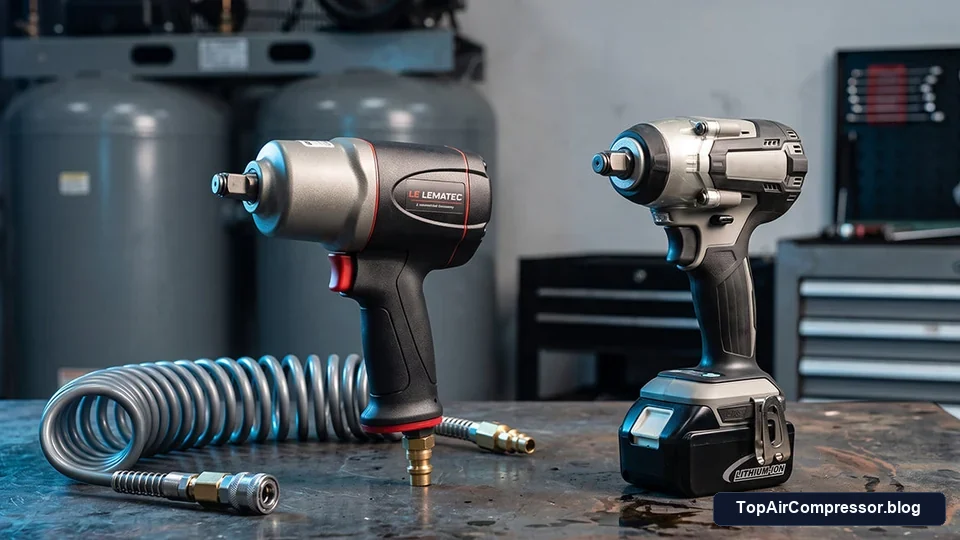
Air-powered tools rely on compressed gas expanding against rotor blades. This simple turbine design delivers massive power density without generating internal heat that typically degrades electronic components during heavy continuous industrial use.
- Pneumatic tools utilize compressed air expansion.
- Electric units leverage high-torque brushless motors.
- Power transmission dictates overall tool lifespan.
Pneumatic Motor Mechanics
Pneumatic motors feature fewer moving electrical parts, reducing mechanical failure risks. High-pressure air enters the housing, spinning a steel rotor at incredible speeds while gearboxes multiply the final output torque.
Because air continuously flows through the tool body, natural cooling occurs. Pairing your shop setup with the best air compressor to run impact wrench tasks prevents thermal overloads.
- Simplified turbine rotor design
- Continuous internal air cooling
Cordless Brushless Innovation
Modern cordless impact wrenches harness advanced lithium-ion batteries and brushless motors. Sophisticated electronic controllers manage current draw to optimize torque delivery while protecting internal circuits from catastrophic overloads.
Advanced microprocessors adjust power delivery based on fastener resistance. This digital oversight ensures consistent fastening results while maximizing total runtime per battery charge under demanding professional working conditions.
- Brushless motor efficiency gains
- Smart electronic current management
Performance Metrics and Fastening Torque Output
Raw fastener removal capability remains the primary metric for professional technicians. Pneumatic wrenches traditionally dominate heavy industrial environments by delivering instant, unyielding breakaway torque without electronic safety limitations.
Electric models have narrowed this performance gap remarkably through high-discharge battery cells. However, extreme duty cycles can occasionally trigger internal thermal protection circuits, temporarily reducing peak output during stubborn bolt removal.
- Breakaway torque dictates fastener removal speed.
- Battery discharge rates influence electric surge.
- Thermal limits restrict continuous heavy pulls.
Sustained Breakaway Torque
When confronting rusted truck suspension components, initial breakaway torque is critical. Pneumatic impact wrenches supply consistent maximum force because compressors maintain continuous line pressure throughout the entire loosening sequence.
Cordless alternatives provide exceptional peak numbers on paper. Yet, battery voltage sag under heavy loads can sometimes reduce sustained torque output during prolonged fastener extraction procedures in commercial truck bays.
- Consistent line pressure support
- Voltage sag under heavy load
Impact Frequency and RPM Dynamics
Impact frequency dictates how rapidly a tool can hammer threaded fasteners loose. Pneumatic designs typically achieve higher free-speed RPMs, accelerating rundown times during high-volume assembly line manufacturing applications.
Electric impact wrenches compensate with precise electronic variable-speed triggers. Technicians can dial in exact fastening speeds to prevent thread stripping on delicate automotive chassis components without external regulators.
- Higher free-speed RPM in air tools
- Precise electronic trigger modulation
Ergonomics, Weight Distribution, and Fatigue
Tool weight directly impacts operator fatigue over long maintenance shifts. Pneumatic wrenches generally feature lighter tool bodies because heavy motor windings are replaced by compact, lightweight compressed air rotors.
Despite the lighter tool body, pneumatic setups require heavy rubber supply hoses. These stiff hoses introduce constant torsional resistance, complicating precise wrist movements during intricate under-car positioning tasks.
- Lightweight pneumatic housing designs
- Hose drag increases wrist fatigue
- Battery placement alters tool balance
Tool Head Mass Balance
Balancing tool mass minimizes wrist strain during overhead automotive repairs. Electric impact wrenches integrate heavy lithium-ion battery packs at the base, shifting the center of gravity downward toward the operator hand.
Pneumatic designs distribute weight more evenly along the barrel axis. This balanced profile reduces awkward wrist torque when working inside cramped engine bays or restricted industrial machinery housings.
- Base-heavy battery weight distribution
- Axial balance in pneumatic barrels
Tethered Hose Resistance
Hose management represents a major ergonomic drawback for compressed air systems. Technicians constantly wrestle with heavy rubber lines catching on lift arms and scraping against freshly painted vehicle panels.
Choosing the best air hose for impact wrench operations minimizes snagging, though switching to flexible lines helps technicians navigate tight bays without frustrating movement restrictions.
- Rubber line snagging hazards
- Unrestricted cordless spatial mobility
Duty Cycles and Thermal Management
Heavy-duty industrial applications demand uninterrupted tool operation without thermal shutdowns. Pneumatic tools excel in continuous production environments because expanding exhaust air actively cools internal mechanical components.
Electric impact wrenches rely on passive cooling fins and smart electronics. Extended continuous fastening cycles generate substantial internal heat, eventually triggering thermal throttling to protect sensitive battery cells and motor windings.
- Exhaust expansion provides natural cooling.
- Thermal throttling protects battery cells.
- Continuous industrial duty cycle needs.
Continuous Shop Operation
Busy tire shops operate impact wrenches thousands of times daily. Selecting the best air compressor for impact wrench applications ensures adequate CFM volume and consistent operating pressure.
Relying solely on electric tools in high-volume settings requires multiple backup batteries. Swapping depleted packs and managing charging stations introduces workflow interruptions that pneumatic lines completely avoid.
- Endless high-volume tire service
- Battery swapping workflow delays
Battery Thermal Throttling
Lithium-ion chemistry degrades rapidly when subjected to excessive internal operating temperatures. Smart battery management systems protect cells by throttling power output when sustained high-torque demands cause overheating in summer months.
Pneumatic motors experience the exact opposite thermal reaction during operation. As compressed air expands through the tool, internal temperatures drop significantly, preventing heat-related performance loss during heavy industrial usage.
- Heat degradation in lithium cells
- Pneumatic cold-expansion benefit
Noise Profiles, Vibration, and Safety Standards
Shop safety regulations mandate careful monitoring of noise and vibration exposure. Pneumatic impact wrenches generate piercing exhaust noise that requires mandatory hearing protection to prevent permanent occupational hearing loss over time.
Electric impact wrenches produce a distinct mechanical whine rather than loud air exhausts. While quieter overall, both tool categories generate substantial vibration levels that necessitate anti-vibration gloves during prolonged daily operation.
- Mandatory hearing protection for air tools
- Mechanical whine in electric models
- Vibration exposure mitigation needs
Decibel Output and Hearing Protection
Pneumatic tools often exceed permissible exposure limits due to high-velocity exhaust venting. Installing inline mufflers helps reduce decibel levels, but operators must still wear certified earplugs in busy professional workshops.
Cordless electric wrenches eliminate pneumatic exhaust noise entirely. Their acoustic footprint remains significantly lower during idle states, though high-impact metal hammering still demands standard personal protective equipment compliance.
- Exhaust venting decibel spikes
- Quieter cordless idle profiles
Whole-Hand Vibration Exposure
Repetitive impact forces transmit harmful vibration energy directly into operator hands. Prolonged exposure can lead to hand-arm vibration syndrome, making ergonomic handle designs and vibration dampening rubber grips essential features.
Both tool types incorporate internal dampening mechanisms to protect operators. However, the absence of rigid supply hoses on electric models prevents external pulling forces from compounding daily vibration stress on wrists.
- Hand-arm vibration syndrome risks
- Hose tension compounding stress
Infrastructure Investment and Operating Expenses
Initial equipment acquisition costs tell only part of the total ownership story. Pneumatic setups require substantial capital investment in large stationary air compressors, moisture filters, distribution piping, and heavy-duty regulators.
Electric impact wrenches require minimal supporting infrastructure beyond standard battery chargers. However, high-capacity lithium-ion battery packs eventually degrade and require costly replacements after several years of heavy professional use.
- High initial compressor infrastructure
- Periodic battery pack replacement costs
- Long-term tool durability factors
Compressor and Plumbing Overhead
Setting up a compressed air network involves complex engineering considerations. Shops must calculate total CFM requirements, install moisture separators, and run rigid black iron piping to maintain stable operating pressures.
A failing compressor completely halts all pneumatic tool operations across the entire facility. This single point of failure introduces operational vulnerabilities that decentralized cordless tool ecosystems easily circumvent.
- CFM calculation and black iron piping
- Single point of facility failure
Battery Ecosystem Longevity
Investing in a cordless tool platform ties your shop to a specific battery brand. While convenient, proprietary battery ecosystems become expensive when upgrading multiple aging packs simultaneously across your technician fleet.
Pneumatic tools offer superior long-term hardware longevity without obsolescence fears. Pairing the best air impact wrench for small compressor units ensures decades of reliable service with minimal maintenance.
- Proprietary battery platform lock-in
- Decades of pneumatic mechanical life
Real-World Application and Scenario Matching
Matching equipment to specific job requirements guarantees maximum operational efficiency. Stationary automotive assembly plants and high-output tire centers benefit immensely from the endless duty cycles of reliable compressed air systems.
Conversely, mobile service technicians and roadside assistance crews thrive using high-output cordless electric wrenches. These portable platforms eliminate bulky generators and long air hoses, streamlining emergency field repair operations.
- Assembly plant pneumatic integration
- Mobile service cordless advantages
- Task-specific equipment matching
Heavy Commercial Truck Repair
Servicing commercial semi-trucks demands extreme torque output for stubborn lug nuts. Pneumatic 1-inch drive impact wrenches deliver the unstoppable brute force required for heavy suspension and axle maintenance tasks.
Modern high-voltage cordless tools now challenge traditional pneumatic dominance in truck bays. They provide comparable breakaway torque while keeping technicians safe from tripping hazards around heavy commercial vehicles.
- 1-inch drive pneumatic brute force
- High-voltage cordless truck bay entry
Roadside Service and Field Maintenance
Field service technicians operate far away from stationary shop air compressors. Cordless electric impact wrenches provide the ultimate portable solution for rapid roadside tire changes and emergency mechanical repairs.
Transporting heavy gas-powered compressors on service trucks introduces unnecessary fuel costs and maintenance headaches. Battery-powered impact tools eliminate this auxiliary engine overhead entirely, improving daily route efficiency.
- Portable roadside tire service
- Eliminating auxiliary gas compressors
Frequently Asked Questions
Can an electric impact wrench truly replace a pneumatic tool in a busy professional auto shop setting?
High-end cordless models deliver impressive breakaway torque, but pneumatic wrenches remain superior for uninterrupted, high-volume tire service applications where constant compressed air cooling completely prevents thermal downtime during demanding work shifts.
What are the primary hidden operating expenses associated with running professional pneumatic impact wrenches daily?
While the individual tools remain relatively affordable, facilities must invest heavily in large stationary air compressors, complex moisture filtration systems, copper distribution piping, and heavy-duty hoses to maintain stable pressure.
How does cold weather affect the performance and battery life of cordless electric impact wrenches?
Extreme sub-zero temperatures significantly reduce lithium-ion battery chemical capacity and peak output, whereas pneumatic tools operate reliably provided mechanics use proper line antifreeze solutions and effective moisture management devices.
Why do high-volume manufacturing assembly lines continue preferring pneumatic tools over modern cordless options?
Pneumatic motors provide infinite duty cycles without thermal degradation, offering unmatched long-term reliability and lightweight construction that drastically reduces operator fatigue over repetitive multi-hour production shifts.
Do electric impact wrenches expose technicians to higher whole-hand vibration levels than traditional air tools?
Both categories generate substantial operational vibration energy, but pneumatic systems introduce external pulling forces from stiff rubber supply hoses that frequently compounds daily wrist stress during intricate mechanical fastening tasks.