Single vs. Dual Stage Air Compressor: Which Fits Your Setup Better?
Choosing the right air compressor depends on balancing pressure demands and volumetric output. This technical breakdown evaluates single and dual stage systems for rigorous industrial and commercial workloads.

Opt for a single stage compressor for intermittent garage tasks, and choose a dual stage unit for heavy industrial pneumatic tool applications.
Compare all top models in our Best Air Compressor: Top Picks for Every Garage & Roadside.
Side-by-Side Breakdown
| Criteria | Single | Dual Stage Air Compressor | Edge |
|---|---|---|---|
| Peak Performance & Output | Up to 135 PSI max pressure with high CFM at lower thresholds. | Delivers up to 175 PSI with sustained high-pressure delivery. | Dual Stage |
| Duty Cycle & Consistency | Typically features a 50% duty cycle suited for intermittent jobs. | Designed for 80% to 100% duty cycles under continuous loads. | Dual Stage |
| Operating Noise & Vibration | Produces moderate noise levels with standard reciprocating piston vibration. | Employs heavier cast-iron pumps to reduce vibration frequency. | Dual Stage |
| Portability & Footprint | Lighter, more compact designs available for mobile job site use. | Heavier stationary configurations requiring dedicated floor space. | Single |
| Maintenance & Service Life | Simpler valve assemblies with fewer moving parts for easy upkeep. | Requires intercooler maintenance and dual piston servicing over time. | Single |
| Power Requirements | Operates efficiently on standard 115V or 230V residential circuits. | Demands robust 230V or three-phase heavy electrical infrastructure. | Single |
| Best Ideal Use-Case | Ideal for automotive repair shops, framing, and light fastening. | Best for commercial auto body painting, sandblasting, and assembly plants. | Dual Stage |
Fundamental Thermodynamic Principles of Air Compression
Air compressors rely on volumetric reduction to raise atmospheric pressure inside a sealed chamber. Understanding how compression stages alter air temperature and density dictates overall system efficiency in industrial workshops.
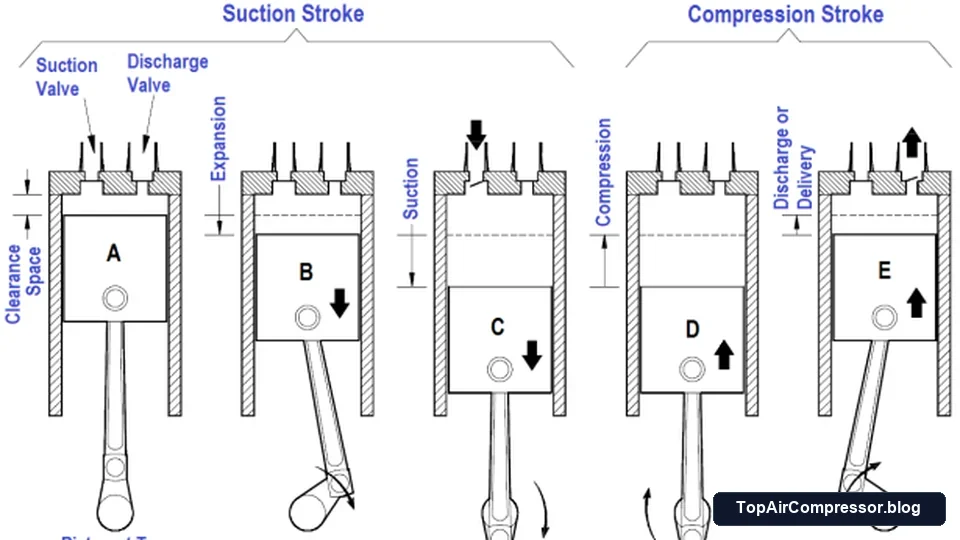
A single stage pump uses one piston stroke to compress ambient air directly to target pressure. This direct mechanical action generates rapid heat buildup during continuous operation cycles.
Advanced setups like the best two stage air compressor introduce an intermediate intercooler loop between two separate cylinders. The first piston compresses the air partially before routing it through cooling tubes.
- Single stage compresses air in one continuous piston stroke.
- Dual stage utilizes an intercooler to drop compressed air temperature.
- Thermodynamic efficiency improves significantly when heat is removed between stages.
Piston Configuration and Mechanical Mechanics
The physical arrangement of cylinders defines how mechanical force translates into pneumatic energy. Single stage pumps often feature twin identical cylinders operating simultaneously.
Dual stage compressors stagger piston sizing to leverage mechanical advantage. A large low pressure piston feeds a smaller high pressure piston for optimal energy transfer.
- Identical cylinder sizing characterizes standard single stage displacement pumps.
- Stepped piston diameters reduce motor strain during high pressure final compression.
Performance Metrics and Volumetric Efficiency Output
Evaluating pneumatic performance requires analyzing both cubic feet per minute and maximum pressure thresholds. Single stage units typically operate efficiently up to one hundred thirty-five pounds per square inch.
Dual stage compressors easily surpass standard pressure ceilings by delivering up to one hundred seventy-five pounds per square inch. This higher threshold powers heavy pneumatic tools without pressure drops.
Volumetric efficiency drops when single stage pumps run near their maximum thermal limits. Dual stage cooling mechanisms maintain consistent volumetric output throughout extended working shifts.
- Single stage maximum pressures generally peak near 135 PSI.
- Dual stage units maintain steady airflow at 175 PSI operating thresholds.
- Volumetric efficiency remains stable in dual stage designs due to intermediate cooling.
CFM Delivery Under Load Conditions
Air delivery rates dictate which pneumatic tools a compressor can successfully operate continuously. Selecting the best single stage air compressor provides adequate airflow for standard nailers and impact wrenches.
Industrial applications demanding constant high CFM output require dual stage engineering. Sandblasters and large rotary sanders rely on the superior reserve capacity of dual stage tanks.
- Impact wrenches and ratchets run efficiently on single stage CFM outputs.
- Sandblasting requires the heavy continuous CFM delivered by dual stage pumps.
Thermal Management and Heat Dissipation Architectures
Heat remains the primary enemy of pneumatic equipment longevity and sustained operational performance. Single stage pumps radiate heat directly through external cast iron cylinder fins.
Without active intercoolers, single stage units quickly overheat during prolonged high demand tasks. Excessive heat degrades lubricating oil and accelerates internal reed valve wear.
Dual stage systems route compressed air through finned copper or aluminum intercoolers between cylinders. This crucial cooling step drops air temperature substantially before final compression.
- Cast iron cooling fins manage thermal loads on basic single stage pumps.
- Intermediate intercoolers protect dual stage components from extreme heat spikes.
- Lower operating temperatures extend compressor oil life and valve integrity.
Oil Degradation and Lubrication Safety
Lubricating oil viscosity breaks down rapidly when operating temperatures exceed safe engineering thresholds. Single stage pumps require frequent oil checks in demanding commercial environments.
Dual stage thermal stability prevents premature oil breakdown inside the crankcase. Cooler operating conditions ensure consistent lubrication across all moving bearings and piston rings.
- High operating heat thins compressor oil in overworked single stage pumps.
- Stable intercooler temperatures preserve oil viscosity in industrial dual stage systems.
Electrical Infrastructure and Starting Load Requirements
Electrical supply compatibility dictates where and how air compressors can be installed safely. Single stage units generally operate on standard residential or light commercial 115V or 230V circuits.
Dual stage compressors demand heavy duty electrical service due to higher startup amperages. Most industrial dual stage setups require dedicated 230V or three phase power connections.
Motor starter switches and thermal overload protection prevent electrical damage during heavy compression cycles. Facilities must verify local amperage capacities before installing heavy dual stage machinery.
- Single stage compressors easily plug into standard shop electrical outlets.
- Dual stage systems require heavy duty 230V or three phase circuits.
- Proper electrical planning prevents tripped breakers and premature motor burnout.
Starting Torque and Amperage Draws
Overcoming head pressure during startup places immense strain on electric drive motors. Single stage motors require moderate starting torque to spin low pressure pistons.
Dual stage motors need robust magnetic starters to manage high initial electrical currents. Proper wiring gauges ensure voltage sag does not damage motor windings.
- Standard pressure switches manage startup loads on single stage units.
- Magnetic starters protect high amperage dual stage motors from power surges.
Duty Cycles, Intermittent Demands, and Continuous Flow
Duty cycle ratings determine the percentage of time a compressor can operate safely under load. Single stage models typically feature a fifty percent duty cycle limitation.
Running single stage compressors continuously without rest periods risks catastrophic thermal failure. Workshops needing constant air rely on the eighty to one hundred percent duty cycles of dual stage units.
Commercial production lines utilize dual stage equipment to maintain uninterrupted pneumatic supply. Storage tank replenishment happens rapidly without forcing the pump to run continuously.
- Single stage units operate safely on a standard 50% duty cycle.
- Industrial dual stage systems support 80% to 100% continuous duty cycles.
- Tank replenishment times decrease significantly with high output dual stage pumps.
Managing Workshop Air Flow Demands
Matching compressor capacity to tool consumption prevents frustrating workflow interruptions. Small automotive shops thrive using options from our best 60 gallon single stage air compressor roundup for intermittent tasks.
Manufacturing facilities require robust dual stage capacity to run multiple heavy tools simultaneously. Continuous production environments cannot tolerate pressure drops from underpowered compressors.
- Intermittent tool usage matches the operational profile of single stage units.
- Simultaneous multi-tool operation demands continuous dual stage pneumatic supply.
Structural Footprints, Portability, and Vibration Control
Physical dimensions and weight dictate where compressors can be positioned within a workspace. Single stage models offer exceptional portability with wheeled cart and portable tank designs.
Dual stage compressors are heavy stationary machines built with thick cast iron pumps. Their substantial weight requires permanent floor anchoring to prevent excessive movement during operation.
Vibration damping pads help isolate heavy dual stage machinery from concrete workshop floors. Proper balancing reduces mechanical wear and lowers overall structural fatigue over time.
- Single stage compressors provide lightweight portability for mobile contractors.
- Dual stage units require permanent stationary installation on concrete floors.
- Vibration isolators protect facility foundations from heavy reciprocating pump forces.
Sound Dampening and Acoustic Profiles
Operating noise impacts worker comfort and communication in enclosed workshop environments. Single stage units produce standard mechanical chatter during compression strokes.
Dual stage pumps often feature slower rotational speeds that soften acoustic frequencies. Enclosed belt guards and cast iron housings help mumble harsh industrial operating noise.
- Standard piston chatter characterizes mobile single stage compressor noise.
- Slower pump speeds on dual stage units improve overall acoustic comfort.
Long-Term Maintenance Schedules and Component Durability
Routine maintenance preserves mechanical integrity and extends the operating lifespan of pneumatic equipment. Single stage systems feature simplified valve plates and fewer moving internal parts.
Dual stage compressors require rigorous maintenance protocols including intercooler inspection and belt tension checks. Servicing multiple piston rings and dual valve assemblies demands experienced technical skill.
Using synthetic compressor oil and replacing intake air filters regularly prevents premature wear. Upgrading to a model from our best 60 gallon 2 stage air compressor guide ensures decades of reliable service.
- Single stage upkeep involves simple filter changes and basic oil checks.
- Dual stage maintenance includes inspecting intercoolers and dual valve plates.
- Synthetic lubricants extend service intervals across all heavy-duty reciprocating pumps.
Valve Plate Inspections and Rebuilds
Reed valves control airflow direction inside compressor pump cylinder heads. Single stage valve assemblies are easily accessed for routine cleaning or replacement.
Dual stage systems incorporate multiple high pressure valve stages requiring precise torque specifications. Professional rebuilding ensures optimal sealing and prevents inter-stage pressure leaks.
- Single stage reed valves allow quick field replacement and cleaning.
- Dual stage valve rebuilds demand precise torque calibration for maximum sealing.
Selecting the Right System for Your Specific Workload
Choosing between single and dual stage compressors requires realistic evaluation of air demands. Assess your peak pressure requirements and total CFM consumption before making a final investment.
Home garages, woodworking shops, and framing contractors benefit from agile single stage units. Their electrical efficiency and portability match fluctuating project requirements perfectly.
Heavy automotive repair facilities and industrial manufacturing plants require dual stage power. Investing in a dual stage system guarantees reliable high pressure delivery for demanding workloads.
- Evaluate peak CFM and pressure requirements before selecting a compressor.
- Single stage units suit mobile contractors and light woodworking shops.
- Dual stage systems power industrial manufacturing and commercial auto shops.
Future-Proofing Your Pneumatic Infrastructure
Anticipating future business growth prevents premature equipment upgrades and costly downtime. Purchasing a slightly oversized dual stage compressor accommodates future tool additions effortlessly.
Calculating total air consumption with a safety margin ensures steady shop productivity. Professional guidance helps match your pneumatic needs with the correct compression stage.
- Anticipate future tool upgrades when sizing your workshop compressor.
- Incorporate safety margins into total CFM calculations for maximum efficiency.
Frequently Asked Questions
Can a single stage compressor run high pressure tools?
Single stage compressors typically peak at one hundred thirty-five PSI, making them unsuitable for tools requiring sustained higher pressures. Tasks demanding constant high pressure require a dual stage system.
Why do dual stage compressors run cooler than single stage units?
Dual stage pumps utilize an intermediate intercooler to drop air temperature between compression cylinders. This cooling architecture prevents extreme thermal buildup during continuous operation.
Do dual stage compressors require special electrical wiring?
Most industrial dual stage units demand dedicated 230V or three-phase power due to heavy starting amperages. Always verify your facility electrical capacity before installation.
What is the typical duty cycle difference between these units?
Single stage models generally feature a fifty percent duty cycle for intermittent tasks, whereas dual stage units support eighty to one hundred percent continuous workloads.
Which compressor type is better for mobile job sites?
Single stage compressors offer lightweight portability and standard voltage compatibility, making them ideal for mobile contractors and framing crews.