How Many CFM Does an Impact Wrench Need?
Understanding pneumatic volume demands ensures your compressor delivers adequate performance for continuous fastening tasks without unexpected pressure drops or stalling.

Most standard impact wrenches require 4 to 8 CFM at 90 PSI, meaning you need an air compressor rated for at least 12 to 16 CFM at 90 PSI to account for the standard three-times safety factor.
Looking for matching picks? See our Best Air Compressor For Impact Wrench: Top Picks.
Practical Quick-Reference Table
| Scenario / Metric | Recommended Target | Why It Matters |
|---|---|---|
| Compact 3/8-inch Impact | 3 to 5 CFM at 90 PSI | Handles light automotive fasteners and interior trim work efficiently. |
| Standard 1/2-inch Impact | 4 to 8 CFM at 90 PSI | Provides necessary torque for stubborn lug nuts and suspension bolts. |
| Heavy 3/4-inch Impact | 10 to 14 CFM at 90 PSI | Powers commercial truck maintenance and heavy industrial machinery assembly. |
| Duty Cycle Safety Factor | 2x to 3x Tool Rating | Prevents continuous motor run-time and premature thermal overload wear. |
| Operating Pressure | 90 PSI Working Pressure | Ensures rated torque delivery and proper internal vane motor rotation. |
| Hose Inner Diameter | 3/8-inch or 1/2-inch ID | Minimizes severe pressure drops across long pneumatic distribution lines. |
Demystifying Air Volume and Impact Wrench Demands
Pneumatic impact wrenches rely on high-velocity compressed air to drive internal hammer mechanisms. Understanding cubic feet per minute prevents buying an undersized compressor that struggles under heavy loads.
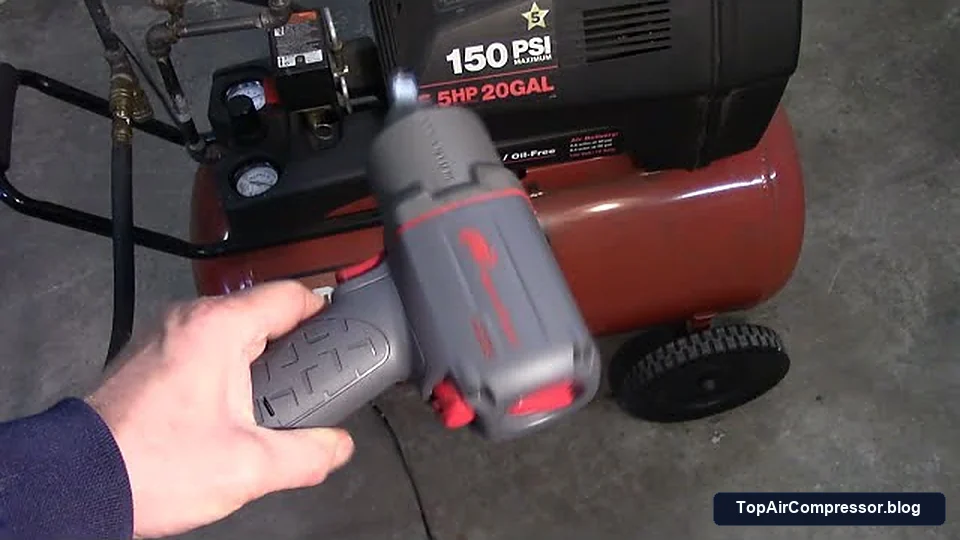
Unlike spray guns that run continuously, pneumatic models differ from cordless options; you can evaluate these differences using our electric impact wrench comparison before deciding.
Ignoring these fundamental volumetric dynamics leads to severe pressure starvation. Your fasteners will remain loose, and your pneumatic tools will experience rapid internal mechanical wear over time.
Evaluating your exact mechanical application helps narrow down appropriate compressor displacement figures. Professional mechanics require different volumetric outputs compared to weekend hobbyists tackling occasional vehicle repairs.
- Impact wrenches consume air only while the trigger is actively depressed.
- Intermittent operation allows smaller storage tanks to buffer short fastening bursts.
- Inadequate volume causes noticeable torque drops during stubborn bolt removal.
- Matching tool consumption to pump output protects your entire pneumatic system.
The Mechanics of Pneumatic Impact Delivery
Compressed air enters the tool housing and expands rapidly against internal rotor blades. This expansion converts pneumatic energy into rotational kinetic force for heavy fastening tasks.
The anvil and hammer assembly then convert rotation into high-frequency impacts. Maintaining steady working pressure during this cycle is critical for maximum breakaway torque output.
- Rotor blades require consistent lubrication to prevent premature friction wear.
- Pressure drops directly reduce the kinetic impact force of the striking mechanism.
Decoding Manufacturer Air Tool Specifications
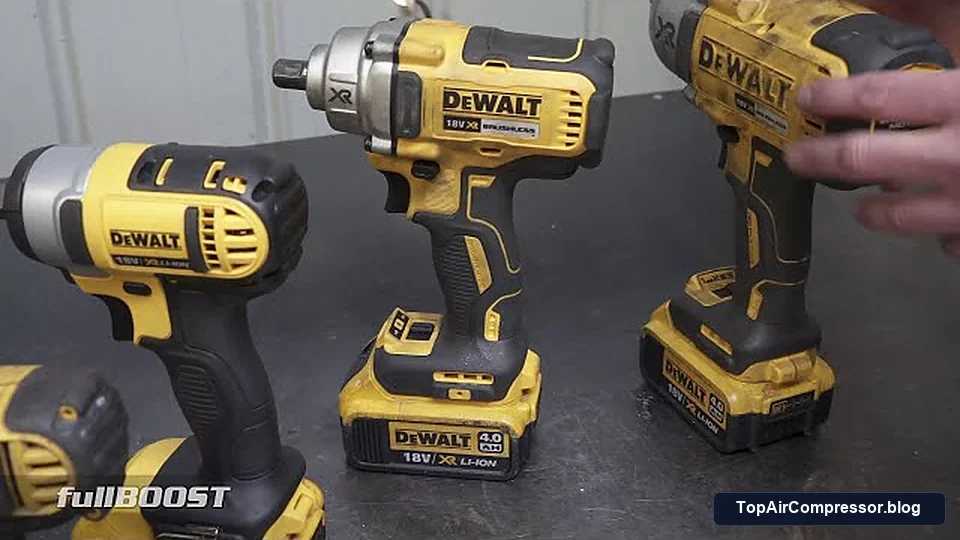
Interpreting tool manufacturer data sheets requires careful attention to measurement standards. Ratings often assume a twenty-five percent duty cycle rather than continuous, uninterrupted tool operation.
Always look for the SCFM rating at 90 PSI rather than raw displacement figures. Manufacturer marketing labels can sometimes inflate compressor capabilities by ignoring real-world operating conditions.
Real-world volumetric efficiency drops as ambient humidity and operating temperatures fluctuate. Factoring in these environmental variables ensures your compressor maintains reliable performance throughout seasonal shifts.
Checking the specific air consumption data plate on your exact tool model prevents costly sizing mistakes. Never rely on generic assumptions when calculating shop-wide pneumatic infrastructure demands.
- Verify if ratings represent continuous flow or intermittent duty cycles.
- Account for pressure drops across regulators, fittings, and distribution lines.
- Use manufacturer specifications as a baseline, not an absolute guarantee.
- Factor in altitude adjustments if your shop operates above sea level.
Interpreting Duty Cycle Percentage Ratings
A twenty-five percent duty cycle means the tool runs for fifteen seconds per minute. Exceeding this usage pattern overheats the compressor pump and exhausts the storage tank prematurely.
Heavy industrial applications demand high duty-cycle pumps equipped with robust cooling systems. Recognizing your actual usage intensity prevents unexpected equipment failures during critical jobs.
- Exceeding duty cycles accelerates thermal breakdown of synthetic compressor oil.
- Commercial shops require continuous-run pumps to handle overlapping tool demands.
Video Walkthrough: Choosing Your First Battery Impact Wrench for DIY Automotive Work
Evaluating Impact Wrench Categories and Volume Needs
Different drive sizes demand vastly different volumes of compressed air. Reviewing our pneumatic versus electric analysis helps clarify whether air or battery power suits your specific shop tasks.
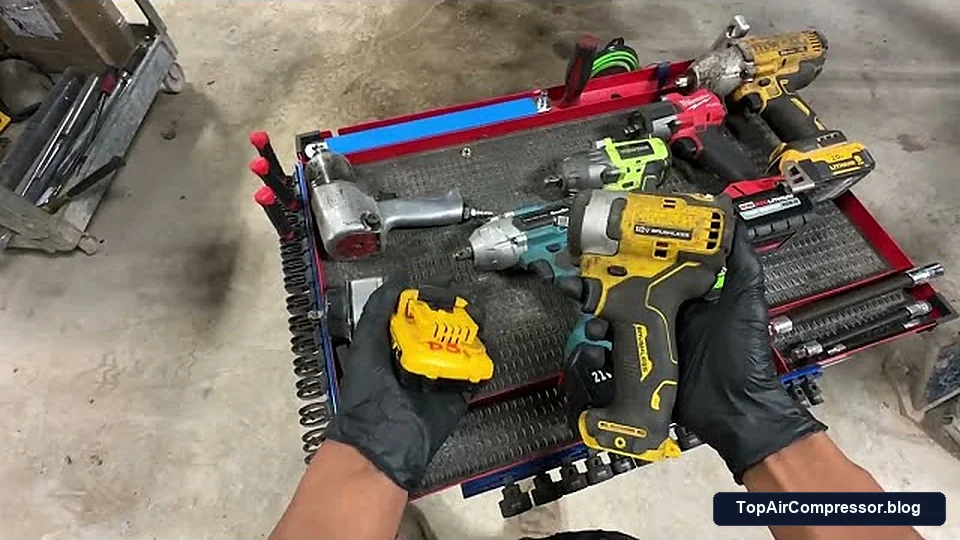
Standard automotive service typically relies on half-inch impact wrenches requiring moderate airflow. Selecting a compressor that comfortably meets this half-inch demand is standard shop practice.
Heavy-duty commercial maintenance requires substantial airflow to sustain high-torque output over prolonged durations. Undersized compressors will constantly cycle and fail to keep up with heavy fasteners.
Always verify the maximum air consumption figures rather than average consumption estimates. This conservative sizing approach guarantees adequate power when removing rusted or overtightened industrial fasteners.
- Quarter-inch models generally consume under three cubic feet per minute.
- Half-inch pneumatic wrenches typically require four to eight cubic feet per minute.
- Three-quarter-inch and one-inch tools demand ten to twenty cubic feet per minute.
- Specialty high-torque composite tools may have unique volumetric thresholds.
Analyzing Half-Inch Impact Wrench Demands
The half-inch impact wrench serves as the universal standard for automotive repair shops. These versatile tools balance manageable physical weight with substantial breakaway torque capabilities.
Supplying these tools requires a compressor capable of delivering consistent flow at ninety psi. A dual-cylinder pump configuration provides the necessary recovery speed for busy service bays.
- Expect air consumption to spike during prolonged bolt extraction tasks.
- Ensure your delivery hose has adequate interior diameter to prevent restriction.
Calculating Total System Requirements for Multi-Tool Shops
Calculating total air volume becomes complex when multiple technicians operate tools simultaneously. You must sum individual tool requirements and apply a realistic simultaneous usage factor.
Not every technician triggers their impact wrench at the exact same time. Checking our best compressor for impact wrenches guide ensures you select a unit matching your multi-bay volumetric load.
Storage tank capacity plays a crucial role in absorbing short-term volumetric deficits. A large ASME-certified tank acts as a buffer during high-demand bursts from multiple service bays.
Consulting with experienced pneumatic system designers helps optimize your main distribution piping layout. Proper pipe sizing eliminates internal friction losses and maintains steady operating pressure.
- List every pneumatic tool operating in the active work area.
- Multiply individual CFM ratings by the estimated simultaneous usage percentage.
- Add a safety margin for future shop expansion and tool upgrades.
- Ensure electrical service can support the required motor amperage draw.
Applying Coincidence Factors in Multi-User Shops
In a four-bay shop, rarely do all mechanics pull their triggers simultaneously. Estimating a realistic concurrency rate keeps your capital investment realistic and technically sound.
Monitor peak usage periods using pressure gauges installed at strategic distribution points. This empirical data guides future compressor upgrades and maintenance scheduling.
- Track compressor run-times during peak operating hours to identify bottlenecks.
- Upgrade storage capacity before replacing the primary pump if deficits are minor.
Understanding SCFM Versus ACFM in Pneumatic Engineering
Standard cubic feet per minute normalizes air density to specific baseline atmospheric conditions. This standardized metric allows fair comparison between different compressor models and pump designs.
Actual cubic feet per minute reflects real-world performance under local environmental conditions. Temperature, humidity, and elevation significantly alter the true volumetric output of any compressor.
Failing to account for the difference between SCFM and ACFM leads to unexpected performance drops. High altitudes reduce compressor volumetric efficiency due to lower ambient air density.
Always reference manufacturer technical data sheets that specify correction factors for elevation. Designing your compressed air system with these realities in mind guarantees reliable everyday operation.
- SCFM provides a uniform baseline for laboratory compressor performance testing.
- ACFM accounts for temperature, humidity, and intake pressure variations.
- High altitudes decrease effective compressor output by up to three percent per thousand feet.
- Consult engineering conversion charts when operating in extreme climates.
Environmental Impacts on Compressor Efficiency
High ambient temperatures reduce the density of air entering the intake filter. Less dense intake air results in fewer actual molecules delivered to the storage tank per stroke.
Installing intake piping that draws cooler outside air improves overall volumetric efficiency. Managing compressor room ventilation protects your equipment from thermal degradation.
- Keep compressor rooms well-ventilated to prevent ambient overheating.
- Incorporate aftercoolers to remove moisture before air enters distribution lines.
Preventing Common Pressure Drops and Sizing Errors
Undersized delivery lines create severe internal friction that starves your impact wrench. Restricting airflow with narrow hoses drastically reduces the available breakaway torque at the socket.
Using quick-disconnect fittings with small internal orifices restricts maximum airflow volume. Upgrading to high-flow pneumatic couplers eliminates unnecessary pressure restrictions across the line.
Regulators adjusted incorrectly cause erratic pressure delivery across your system. You can verify total air requirements using our cfm tool sizing calculator to maintain reliable pneumatic performance.
Ignoring moisture accumulation inside storage tanks reduces effective air volume capacity. Implementing automatic drain valves keeps your system dry and preserves maximum storage volume.
- Use minimum three-eighths inch inner diameter hoses for impact wrench applications.
- Avoid excessively long hose runs that compound internal friction losses.
- Inspect quick-connect fittings regularly for internal wear and flow restriction.
- Drain condensate from storage tanks daily to prevent internal corrosion.
Optimizing Hose Length and Diameter Standards
Pressure drop increases exponentially with hose length and decreases with larger diameters. Limiting whip hoses to twenty-five feet preserves vital operating pressure for heavy fastening.
Select lightweight polyurethane or hybrid polymer hoses that resist kinking and abrasion. Proper hose management maintains unobstructed airflow during aggressive workshop maneuvers.
- Keep primary drop lines short and direct from the main header.
- Replace aged or cracked hoses that exhibit internal flow restrictions.
Identifying Performance Deficits from Undersized Equipment
An undersized compressor reveals itself through slow socket rotation and weak impact strikes. When your tool stalls on moderately tight bolts, pneumatic starvation is the primary culprit.
Continuous compressor motor run-time without reaching shut-off pressure indicates a severe deficit. This relentless operation causes overheating, tripping thermal breakers, and burning out motor windings.
Listening to your compressor pump cycle provides immediate diagnostic feedback during heavy tasks. Frequent cycling points toward either an undersized tank or excessive system air demand.
Addressing these performance deficits early prevents catastrophic compressor pump failure. Upgrading your air delivery infrastructure ensures long-term reliability for all pneumatic workshop tasks.
- Noticeable loss of impact frequency during extended bolt removal sessions.
- Compressor motor runs continuously without cycling off during tool use.
- Thermal overload switch trips repeatedly during heavy shop operations.
- Moisture levels spike in discharge lines due to overworked pump cylinders.
Diagnosing Thermal Overload and Motor Strain
Extended run times generate excessive heat that degrades compressor lubricating oil quickly. Protecting your motor with proper thermal relays prevents permanent electrical winding damage.
Ensure your electrical circuit matches the starting amperage draw of the compressor motor. Low voltage drops can also cause motors to stall and overheat prematurely.
- Check supply voltage under load to verify proper electrical delivery.
- Change compressor oil annually to combat thermal breakdown and friction.
Selecting Proper Tank Capacity for Intermittent Impact Use
Storage tank capacity determines how long you can operate tools before the pump engages. Larger tanks act as vital reservoirs that smooth out peak volumetric demands seamlessly.
For standard half-inch impact wrenches, a thirty-gallon tank represents a practical minimum. Larger sixty-gallon or eighty-gallon vertical tanks provide superior performance for demanding automotive environments.
Pancake and small portable compressors lack sufficient volume for heavy impact work. Their small tanks empty within seconds, forcing the small pump to run constantly under heavy load.
Balancing tank size with workshop floor space ensures practical ergonomics and safety. Always bolt stationary vertical tanks securely to concrete flooring to prevent tipping hazards.
- Small portable tanks suit emergency roadside service and light trim work.
- Medium thirty-gallon tanks handle standard home garage automotive tasks effectively.
- Large vertical tanks support professional service bays with minimal pump cycling.
- Check tank certification stamps to ensure compliance with local safety codes.
The Role of Storage Reservoirs in Pneumatic Systems
Storage tanks cool compressed air, allowing suspended water vapor to condense out. This natural cooling effect protects downstream tools from excessive moisture contamination.
Positioning secondary receiver tanks near heavy usage areas reduces distribution line friction. Strategic reservoir placement stabilizes pressure drops across expansive industrial facilities.
- Install moisture traps and filter-regulator-lubricator units downstream.
- Perform hydrostatic pressure inspections on older tanks per safety guidelines.
Frequently Asked Questions
How many CFM does a standard 1/2-inch impact wrench need?
Most standard half-inch impact wrenches require 4 to 8 CFM at 90 PSI for normal operation. You should select a compressor that exceeds this rating by a factor of two to account for intermittent duty cycles and pressure drops.
Can I use a small portable pancake compressor with an impact wrench?
Small pancake compressors can drive an impact wrench for brief, occasional fastener removals. However, their limited tank capacity causes rapid pressure loss and forces the motor to run continuously under heavy loads.
What happens if my air compressor CFM is too low for my tool?
Low CFM delivery results in severe pressure drops, causing your impact wrench to lose torque and stall. Your compressor motor will also run continuously, leading to overheating, thermal trips, and premature mechanical wear.
Why is the 90 PSI rating so important for pneumatic impact wrenches?
Pneumatic impact wrenches are engineered to deliver their rated breakaway torque at exactly 90 PSI working pressure. Operating below this threshold drastically diminishes the internal hammer force and fastening efficiency.
How does hose diameter affect the CFM delivered to my impact wrench?
Using narrow hoses creates internal friction that restricts airflow volume and reduces operating pressure. Upgrading to a three-eighths inch inner diameter hose ensures your tool receives adequate CFM for maximum torque.