How Many SCFM Do I Need for Sandblasting?
Understanding abrasive blasting demands requires balancing nozzle orifice dimensions and operating pressure. Proper matching prevents pressure starvation during prolonged surface preparation jobs.

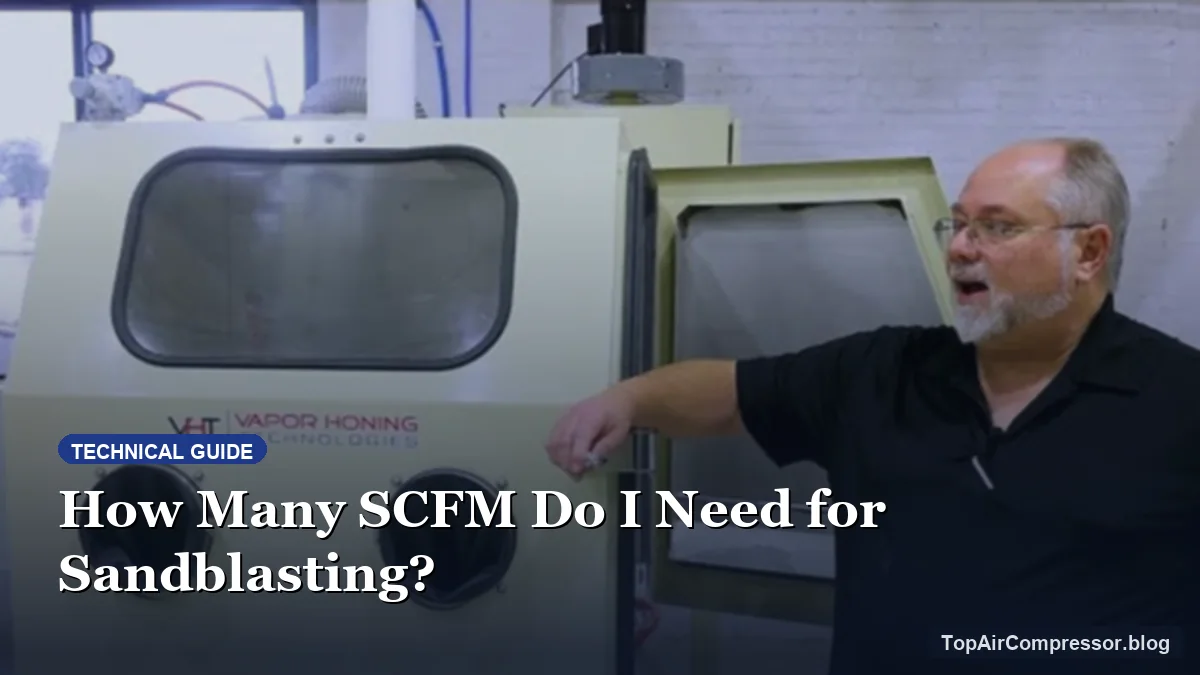
Most standard siphon blasters require 10 to 15 SCFM at 80 PSI, while heavy industrial pressure pots demand 50 to 100 SCFM or higher for continuous surface stripping.
Looking for matching picks? See our Best Air Compressor For Sandblasting: Top Picks.
Practical Quick-Reference Table
| Scenario / Metric | Recommended Target | Why It Matters |
|---|---|---|
| Siphon Blaster | 10-15 SCFM at 80 PSI | Sufficient for light hobby restoration and rust removal. |
| Pressure Pot Blaster | 25-50 SCFM at 90 PSI | Handles production-grade metal stripping and large automotive panels. |
| Industrial Blasting | 50-100+ SCFM at 100 PSI | Powers large nozzles for continuous commercial steel cleaning. |
| Hose Diameter | 3/4 inch minimum | Prevents severe friction losses on high-volume delivery runs. |
| Moisture Control | Refrigerated + Desiccant | Stops media clumping and metering valve blockages instantly. |
| Safety Margin | 20 percent buffer | Prevents motor burnout and accounts for mechanical pump wear. |
Understanding Abrasive Blasting Air Consumption Fundamentals
Sandblasting places an enormous demand on compressed air systems because abrasive delivery relies on continuous volume. Unlike intermittent tools like nail guns, blasting requires steady volumetric output to maintain particle velocity.
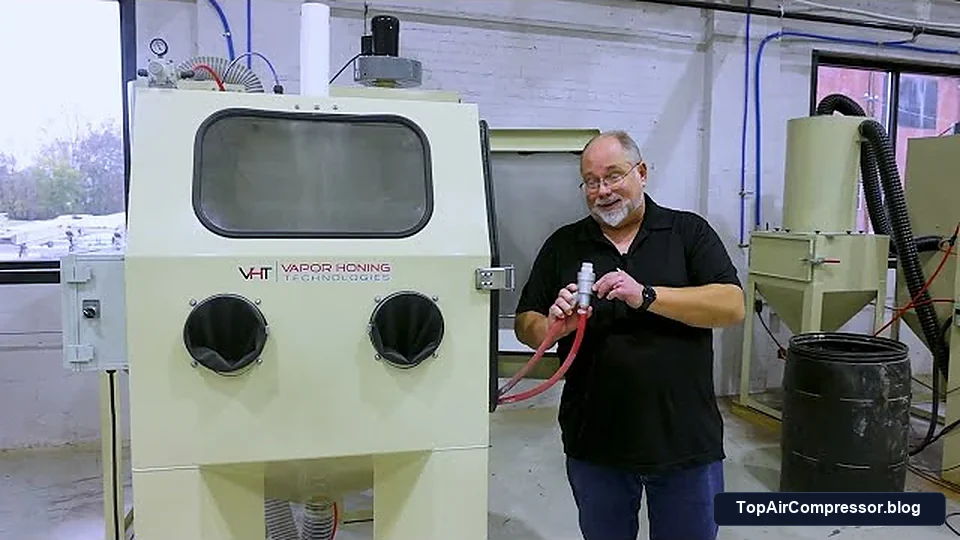
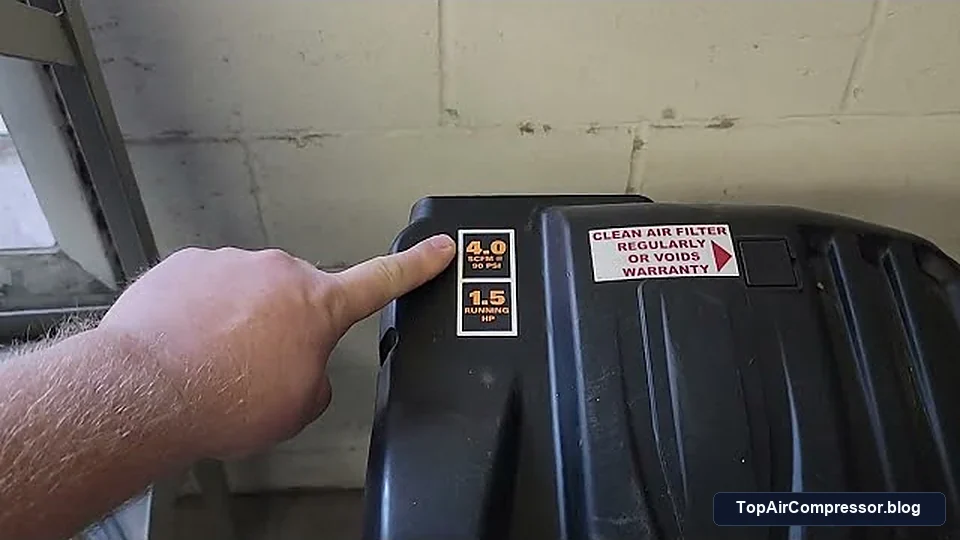
Evaluating your specific setup demands understanding the fundamental difference between CFM and SCFM. Standard cubic feet per minute normalizes measurements to sea-level conditions, ensuring accurate performance calculations across different operating environments.
Selecting an inadequate compressor leads to frustrating pressure drops and incomplete media acceleration. Reviewing our best air compressor for sandblasting options helps prevent wasted abrasives and long project delays.
Matching your compressor to the blast gun means reviewing manufacturer specifications very carefully. Always calculate a twenty percent safety buffer above your minimum requirements to account for natural mechanical wear.
- Always calculate total volumetric requirements before purchasing equipment.
- Account for altitude variations when assessing compressor output ratings.
- Never rely on peak horsepower metrics for continuous blasting.
- Maintain a safety margin to prevent premature pump degradation.
Evaluating Duty Cycle Limits
Piston compressors generate substantial heat during extended abrasive blasting sessions. Exceeding recommended duty cycles causes thermal overload and potential pump valve failure.
Industrial applications demand two-stage rotary screw compressors built for continuous heavy-duty operation. These units sustain high volumetric output without requiring cooling downtime during large surface preparation projects.
- Monitor compressor head temperatures during extended jobs.
- Select rotary screw units for continuous industrial production.
Nozzle Orifice Dimensions and Their Direct SCFM Impact
The physical diameter of your blast nozzle dictates total volumetric air consumption. Even a slight increase in orifice size exponentially raises the required SCFM needed for effective media propulsion.
A standard one-eighth inch nozzle typically consumes roughly twenty cubic feet per minute at eighty psi. Upgrading to a quarter-inch orifice quadruples the required volumetric output instantly.
Technicians must measure existing nozzle wear regularly using specialized sizing gauges. Using our cfm tool sizing calculator helps prevent internal wear from silently draining compressor capacity and ruining abrasive impact.
Balancing nozzle selection with compressor output prevents frustrating operational bottlenecks. Always downgrade your nozzle size if your current compressor cannot deliver adequate sustained volumetric pressure.
- Measure nozzle orifices regularly using precision gauge pins.
- Understand that larger nozzles require significantly higher SCFM.
- Replace worn ceramic liners before efficiency drops further.
- Match nozzle ratings directly to pump displacement capabilities.
Orifice Wear and Air Loss
Abrasion gradually enlarges nozzle bores during normal daily operations. This silent expansion causes massive unexpected air loss across standard production shifts.
Inspecting internal contours weekly prevents costly volumetric discrepancies from disrupting your workflow. Keep replacement carbide nozzles ready in your workshop inventory for quick swaps.
- Check carbide inserts for cracking and uneven wear patterns.
- Keep replacement nozzles accessible during large restoration jobs.
Video Walkthrough: How big of a compressor do I need for sandblasting?
Operating Pressure Ratios and Effective Blast Velocity
Maintaining proper operating pressure ensures abrasive particles strike surfaces with sufficient kinetic energy. Dropping below recommended pressure thresholds results in sluggish media movement and ineffective paint removal.
Most standard blasting operations require a steady baseline of ninety pounds per square inch at the nozzle. Achieving this at the gun requires accounting for friction losses inside delivery hoses.
Pressure regulators must be sized correctly to prevent internal flow restrictions. Undersized regulators choke volumetric airflow, starving the blast pot and drastically reducing overall cleaning productivity.
Utilizing high-capacity manifold systems stabilizes pressure delivery across longer hose runs. This steady delivery protects surface finishes and ensures uniform texture depth across intricate metal components.
- Measure operating pressure directly at the blast nozzle inlet.
- Avoid using restrictive regulators on high-volume supply lines.
- Maintain consistent PSI to ensure uniform media impact velocity.
- Calibrate gauges monthly to verify reading accuracy.
Pressure Drop Calculations
Friction inside long hose runs causes measurable pressure loss before air reaches the nozzle. Calculating these losses prevents unexpected performance drops on remote job sites.
Increase primary compressor pressure slightly to compensate for anticipated line losses. Always use short heavy-duty hoses whenever possible to maximize kinetic energy delivery.
- Account for one PSI of loss per ten feet of hose.
- Use larger diameter lines to minimize friction resistance.
Connecting Hoses Manifolds and Pressure Drop Mitigation
Hose diameter plays a critical role in delivering adequate air volume to your equipment. Exploring our best portable air compressor for tools guide prevents severe flow restrictions that choke system output.
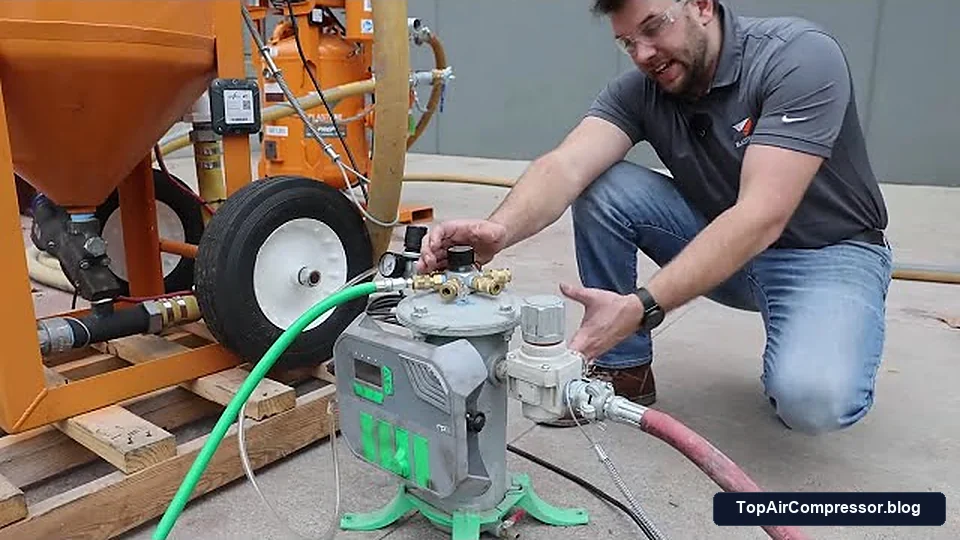
Industrial blasting setups generally require a minimum inner hose diameter of three-quarters of an inch. Smaller lines severely limit CFM delivery regardless of compressor horsepower ratings.
Quick-disconnect fittings can also introduce hidden restrictions into your air supply network. Standard industrial couplers often feature narrow internal passages that impede high-volume pneumatic flow.
Upgrading to direct-threaded fittings or high-flow couplings eliminates these restrictive bottlenecks. Secure all connections tightly to prevent dangerous hose whipping and unexpected pressure loss events.
- Never use quarter-inch lines for primary abrasive blasting feeds.
- Inspect hose interiors for oil residue and internal degradation.
- Upgrade to high-flow couplings to maximize volumetric output.
- Secure whip checks at every pressurized hose connection point.
Manifold Distribution Systems
Complex workshops often utilize rigid distribution manifolds to supply multiple blasting stations safely. Proper pipe sizing prevents pressure starvation across distributed work bays.
Install drop legs with automatic drain valves along your primary header pipes. This design captures condensation before it enters sensitive pneumatic delivery lines.
- Slope header piping slightly toward scheduled condensation drain points.
- Use black iron pipe for permanent workshop air distribution networks.
Moisture Management and Air Drying Equipment Setup
Moisture contamination ruins abrasive media and causes severe clogging within blast pots. Humid compressed air mixes with dry media, instantly forming solid clumps that jam metering valves.
Installing an industrial refrigerated air dryer removes the vast majority of suspended water vapor. Pair this equipment with a desiccant filter stage for absolute humidity elimination.
Position primary moisture separators far from the pump. Reviewing our best air compressor for car tires guide ensures proper cooling and helps condensation drop out before reaching sensitive filtration media.
Inspect and drain all water interceptors daily before starting active production runs. Ignoring accumulated moisture leads directly to rusted piping and contaminated substrate surfaces.
- Install refrigerated air dryers for high-humidity operational environments.
- Change desiccant beads whenever color indicators signal saturation.
- Position water separators away from direct radiant heat sources.
- Drain receiver tanks completely at the end of each shift.
Desiccant Maintenance Protocols
Desiccant filters require regular media replacement to maintain low dew point standards. Saturated drying agents allow moisture to pass directly into your abrasive blast stream.
Monitor downstream moisture indicators closely during extended humid weather conditions. Keep spare desiccant canisters stocked to ensure uninterrupted surface preparation workflows.
- Check sight glasses daily for moisture accumulation signs.
- Seal spare desiccant media containers tightly against ambient humidity.
Recognizing Starvation Symptoms and Corrective Adjustments
Compressor starvation manifests as surging pressure and intermittent abrasive flow at the nozzle. This frustrating operational rhythm destroys surface finish uniformity and wastes expensive blasting media.
Monitor your tank pressure gauge continuously during extended surface preparation projects. If recovery time exceeds fifty percent of total runtime, your compressor is severely undersized.
Pulsating blast streams also indicate potential restrictions within the media mixing valve. Clear blockages immediately and verify that supply pressures meet required manufacturer specifications.
Correcting volumetric deficiencies requires either reducing nozzle size or adding auxiliary compressor capacity. Never attempt high-production blasting with an inadequately matched pneumatic system.
- Watch receiver tank gauges for rapid, unrecoverable pressure drops.
- Listen for continuous motor strain during active blasting sessions.
- Verify that compressor pump displacement matches equipment demand.
- Inspect mixing valves for internal blockages and wear.
Staging Multiple Compressors
Linking multiple compressors together provides a practical workaround for temporary high-volume demands. Connect units through a dedicated surge tank to balance output pressures effectively.
Ensure both compressors feature matching pressure switch settings to share operational loads. Unsynchronized units cause premature wear and erratic delivery performance across work shifts.
- Use check valves to prevent backflow into idle compressors.
- Balance electrical loads across separate workshop circuit breakers.
Preventive Maintenance Protocols and Essential Safety Standards
Rigorous maintenance routines protect your compressed air equipment from premature mechanical failure. Clean intake filters weekly to maintain optimal volumetric efficiency and prevent particulate damage.
Change compressor lubricating oil strictly according to operational hour milestones. Neglected oil leads to excessive heat generation and catastrophic pump seizure during heavy jobs.
Inspect receiver tanks annually for internal corrosion and structural wall thinning. Safety relief valves must be tested manually to ensure proper emergency pressure venting capabilities.
Adhering to these strict maintenance standards guarantees reliable performance for all abrasive blasting tasks. Safety should always remain your primary priority inside the active workshop.
- Replace air intake filter elements every two hundred hours.
- Test pressure relief valves monthly for proper mechanical release.
- Inspect electrical wiring for signs of thermal degradation.
- Keep comprehensive maintenance logs for all shop equipment.
Personal Protective Equipment Standards
Blasting creates hazardous airborne particulate clouds requiring certified respiratory protection gear. Always wear a supplied-air respirator system designed specifically for abrasive blasting environments.
Ensure breathing air filters meet strict grade-D quality standards before entering hoods. Protect your hearing and skin with heavy leather garments and durable blasting gloves.
- Use grade-D breathing air filtration for supplied-air respirators.
- Inspect blast hoods and protective capes for tearing.
Frequently Asked Questions
Can I use a standard portable garage compressor for sandblasting?
Most standard portable garage compressors lack the continuous volumetric output required for efficient abrasive blasting. Attempting to run a blast gun on a small unit causes constant pressure starvation and premature motor burnout.
Why does my blast pressure drop rapidly after a few minutes?
Rapid pressure drops indicate your compressor cannot keep pace with the volumetric air consumption of the blast nozzle. This common issue stems from using an undersized pump or a restricted intake supply line.
How does nozzle size affect my compressor requirements?
Nozzle orifice dimensions dictate the total volume of air required to maintain effective abrasive particle velocity. Even a minor increase in nozzle diameter exponentially raises your minimum SCFM and horsepower demands.
Do I need an air dryer for sandblasting operations?
Moisture contamination is the primary cause of abrasive media clumping and pneumatic valve clogging. Installing a refrigerated air dryer and desiccant filter keeps your blast stream completely dry and reliable.
What safety precautions are necessary when running a sandblaster?
Abrasive blasting generates hazardous particulate clouds that require a certified supplied-air respirator system. Always wear heavy protective garments and maintain proper grounding to prevent dangerous static electricity discharges.