How to Mount Air Compressor to Concrete Floor
Proper anchoring protects industrial machinery from vibration fatigue. This technical guide outlines professional concrete fastening techniques.

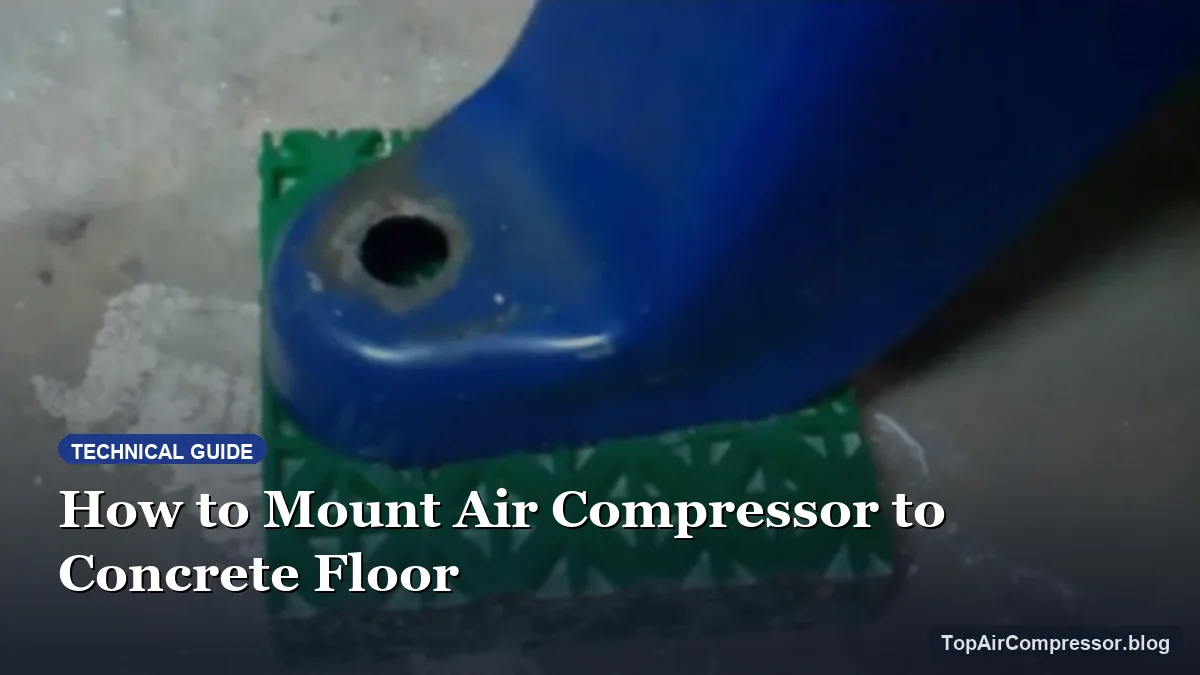
Use heavy-duty wedge anchors rated for concrete to prevent dangerous machine walk. Always verify slab thickness before drilling mounting holes.
Looking for matching picks? See our Best Wall Mount Air Compressor: Top Garage Picks for 2026.
Practical Quick-Reference Table
| Scenario / Metric | Recommended Target | Why It Matters |
|---|---|---|
| Wedge Anchor Diameter | 3/8 inch to 1/2 inch | Provides adequate shear resistance for heavy reciprocating compressors. |
| Minimum Slab Thickness | 4 inches to 6 inches | Ensures sufficient concrete embedment strength to prevent pullout. |
| Concrete Compression PSI | 3,000 PSI minimum | Guarantees structural integrity under continuous cyclic loading. |
| Vibration Pad Material | High-density neoprene | Absorbs high-frequency harmonics and prevents frame distortion. |
| Anchor Torque Setting | Manufacturer specified | Achieves proper expansion grip without cracking the concrete. |
| Embedment Depth | 2 inches minimum | Secures the fastener deep past the surface wear layer. |
Evaluating Concrete Slab Integrity and Load Requirements
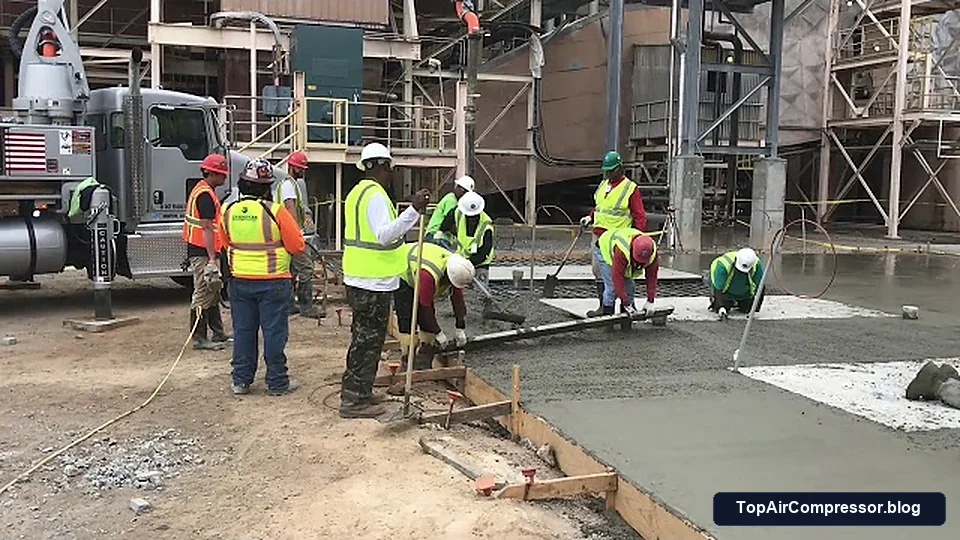
Before installing any heavy equipment, you must verify that your concrete slab meets minimum structural standards. A weak or cracked floor will fail under continuous cyclic loads.
Inspect the installation zone for fractures or moisture seepage. Industrial systems and equipment like our best portable tire air compressor require solid, stable surfaces to prevent shifting.
Measure the overall thickness of your workspace flooring using a depth gauge or core sample. Standard industrial setups demand at least four inches of solid, reinforced concrete.
Verify that the concrete mix strength reaches at least three thousand PSI. Lower grade mixes crumble under the intense shear forces generated by reciprocating compressor pumps.
- Check concrete age to ensure full curing before anchoring.
- Inspect for hidden plumbing or electrical conduits beneath the slab.
- Confirm levelness within acceptable manufacturing tolerances.
- Clear all dust, oils, and loose debris from the surface zone.
Assessing Dynamic Load Forces
Reciprocating and rotary screw compressors generate unique harmonic vibrations that stress foundation anchors. Calculating these dynamic forces ensures your mounting hardware will remain secure over years.
Account for startup torque spikes which frequently exceed running amperage loads by several factors. These sudden rotational forces test every single anchor bolt simultaneously.
- Factor in total equipment weight plus maximum fluid loads.
- Calculate lateral shear forces generated during startup phases.
Selecting Proper Mechanical Fasteners and Isolation Pads
Choosing the correct fastener prevents equipment shifting during operation. Zinc plated wedge anchors offer excellent shear resistance for permanent workshop installations.
Avoid using standard plastic sleeve anchors for heavy stationary compressors. Dynamic operating vibrations will quickly fatigue and loosen light-duty plastic expansion components.
Install high-density neoprene vibration isolation pads directly beneath each compressor foot. Protecting your foundation matters just as much as picking the best portable air compressor for tools on demanding jobsites.
Ensure your selected hardware includes matching lock washers and heavy-duty hex nuts. Proper hardware pairing maintains clamping tension despite continuous thermal expansion cycles.
- Select grade five or grade eight steel bolts for maximum strength.
- Match anchor diameter precisely to compressor mounting hole sizes.
- Use elastomer pads rated for the exact weight of your unit.
- Apply anti-seize compound to threads to prevent galling during torquing.
Choosing Specialized Isolation Mounts
Spring-loaded seismic isolators provide superior dampening for massive industrial rotary screw units. They accommodate multi-directional movement without compromising frame stability.
Evaluate facility floor conditions before purchasing specialized leveling mounts to ensure proper load distribution across every support point.
- Match isolator load ratings to individual leg weights.
- Verify vertical clearance requirements before final placement.
Video Walkthrough: Permanently Mount Your Air Compressor
Essential Layout and Precision Drilling Preparation
Position your compressor in a well-ventilated area with adequate clearance for maintenance. Before final placement, verify system demands using our CFM tool sizing calculator to match airflow requirements accurately.
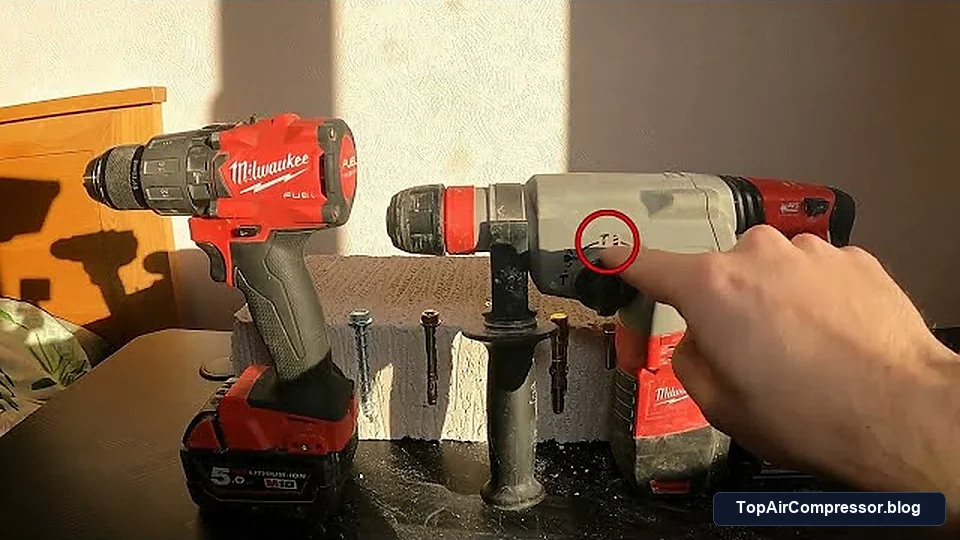
Use the compressor base frame as a direct template to mark your floor anchor locations. Transfer center points accurately using a durable industrial marker or punch.
Double-check diagonal measurements between all marked hole locations to ensure absolute squareness. Misaligned holes cause severe frame binding when tightening anchor bolts.
Put on certified safety glasses and respiratory protection before operating heavy rotary hammer drills. Concrete dust contains hazardous silica particles requiring proper mitigation.
- Verify all local clearance codes before finalizing unit placement.
- Check surrounding workspace for unobstructed belt guard access.
- Ensure electrical conduit runs reach the starter safely.
- Keep drilling perpendicular to maintain true anchor alignment.
Executing Clean Hole Boring
Use a rotary hammer drill equipped with a carbide-tipped masonry bit matching your anchor size. Slow, steady pressure prevents bit wandering and oversized holes.
Clean all concrete debris from inside the drilled holes using compressed air and a nylon brush. Trapped dust significantly reduces wedge anchor holding strength.
- Drill slightly deeper than the minimum required embedment length.
- Vacuum residual dust thoroughly from the hole perimeter.
Inserting Wedge Anchors and Securing Base Plates
Gently tap each wedge anchor through the compressor mounting feet and into the prepared concrete holes using a heavy mallet. Ensure threads remain protected from direct impacts.
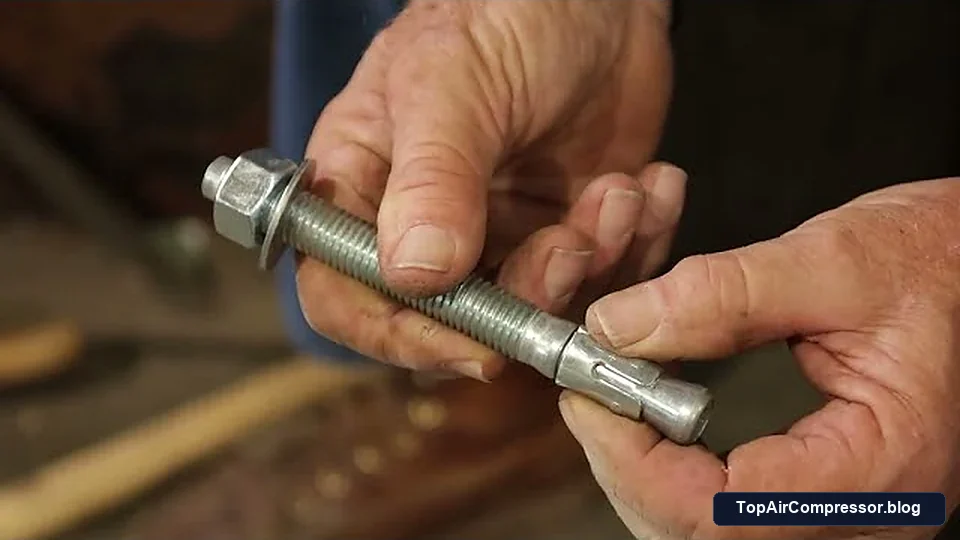
Drive the anchor until the nut sits flush with the top of the expansion clip. Never force an anchor into an undersized or obstructed hole.
Position your anti-vibration pads between the compressor feet and the concrete floor before final tightening. Align pad cutouts carefully with your installed anchor bolts.
Tighten each anchor nut gradually using a calibrated torque wrench. Even tightening distributes mechanical clamping forces uniformly across the entire compressor base.
- Follow exact manufacturer foot-pound torque specifications closely.
- Check frame levelness across all four corners periodically.
- Verify that vibration pads compress evenly under operating weight.
- Inspect protruding threads for adequate engagement past the nut.
Avoiding Over-Torquing Hazards
Excessive torque can crack the concrete surrounding the wedge clip or strip anchor threads. Always rely on a calibrated torque wrench rather than guesswork.
Re-check torque levels after the compressor completes its first ten hours of break-in operation as initial settling occurs.
- Use a manual torque wrench for precise final adjustments.
- Inspect base frame corners for stress fractures during torquing.
Managing High-Frequency Vibration and Thermal Expansion
Continuous pump operation creates harmonic frequencies that can loosen fasteners over extended operational periods. Installing thread-locking adhesive prevents unexpected hardware migration.
Monitor rigid plumbing connections attached to your best wall mount air compressor. Rigid pipes transmit vibration and frequently crack without flexible hose integration during cycles.
Thermal expansion during heavy summer duty cycles causes minor metal shifting across mounting interfaces. Flexible design considerations accommodate these microscopic structural movements safely.
Inspect elastomer vibration pads monthly for signs of oil degradation or splitting. Deteriorated pads fail to isolate harmful frequencies and damage concrete footings.
- Install flexible discharge lines to isolate compressor vibration.
- Check anchor bolt tightness during routine quarterly maintenance.
- Keep mounting areas free of pooling compressor condensate oils.
- Replace hardened or compressed isolation pads immediately.
Evaluating Piping Stress Points
Hard piping directly connected to a vibrating compressor creates massive fatigue stresses. Always incorporate braided flexible connectors between the pump and storage tank.
Secure overhead air supply lines with independent hangers to prevent weight transfer onto the compressor discharge port.
- Use certified flexible steel hoses for discharge lines.
- Anchor supply headers to building studs independently.
Post-Installation Inspection and Alignment Verification
Perform a comprehensive visual and physical inspection immediately after securing your compressor to the concrete floor. Verify that all four mounting feet contact their isolation pads uniformly.
Place a precision machinists level across the compressor pump crankcase to confirm horizontal trueness. Level operation ensures proper splash or pressure lubrication across internal bearings.
Start the electric motor while observing the entire unit for excessive frame rocking or abnormal shifting. Immediate shutdown protocols apply if excessive movement occurs.
Check ambient electrical draw and operating temperatures during the initial loaded test cycle to verify normal mechanical function under secured conditions.
- Confirm zero frame twist using a feeler gauge under feet.
- Verify belt tension remains properly aligned after anchoring.
- Listen for unusual metallic rattling or resonant vibrations.
- Check automatic tank drain operation for smooth cycling.
Conducting Load Test Protocols
Run the compressor up to maximum working pressure while watching anchor points for any micro-movement. Secure installations remain completely stationary under full load.
Touch up any chipped concrete or scratched base paint resulting from the installation process to prevent rust formation.
- Monitor tank pressure switch cut-out accuracy.
- Inspect anchor bolts after the first pressurized cycle.
Routine Maintenance Protocols for Anchored Compressors
Establish a regular maintenance schedule to inspect your anchor bolts and vibration dampening pads quarterly. Routine checks prevent minor shifts from becoming major equipment failures.
Clean accumulated dust and moisture away from the base mounting zone during every scheduled oil change. Debris accumulation traps moisture and accelerates anchor corrosion.
Check anchor nut torque values annually using your calibrated wrench to compensate for natural structural settling. Maintaining correct tension preserves foundation integrity.
Replace damaged isolation pads at the first sign of cracking or permanent deformation to protect your concrete slab from impact fatigue.
- Include anchor checks in your standard preventative maintenance logs.
- Inspect surrounding concrete for hairline stress fractures regularly.
- Keep touch-up paint on hand for base frame protection.
- Verify ground wire connections remain secure after maintenance.
Documenting Foundation Health
Maintain an active equipment log recording anchor torque checks and vibration pad inspections. Clear documentation ensures long-term reliability for heavy workshop machinery.
Train workshop personnel to report any unusual shifting or new noises immediately during daily pre-start walkaround checks.
- Record maintenance dates in the central equipment binder.
- Train operators to spot early signs of anchor loosening.
Frequently Asked Questions
Do I really need to bolt my air compressor to the floor?
Yes, bolting prevents dangerous machine walking caused by reciprocating pump vibrations. Unsecured units strain connected plumbing and create severe safety hazards.
What size concrete anchors should I use for a large compressor?
Most industrial stationary units require three-eighths inch to half-inch wedge anchors. Always consult your specific equipment manual for exact manufacturer recommendations.
How thick must the concrete slab be for proper anchoring?
Your concrete slab must measure at least four inches thick and rate over three thousand PSI. Thinner slabs risk cracking under heavy cyclic operational loads.
Should I install vibration pads under the compressor feet?
Yes, high-density neoprene pads absorb destructive high-frequency harmonics. These pads protect both your concrete foundation and the compressor frame from premature fatigue.
Why do my anchor bolts keep loosening over time?
Continuous operating vibration naturally fatigues standard fasteners without proper locking hardware. Use thread-locking adhesive and torque your bolts to exact specifications.