What CFM Do I Need for Air Tools?
Understanding cubic feet per minute prevents tool starvation and motor burnout. Proper sizing ensures reliable pneumatic performance on every job site.


Always multiply your highest-consuming air tool rating by 1.5 for safety margin. This simple calculation accounts for pressure drop and continuous operation without stalling.
Looking for matching picks? See our Best 5 Cfm Air Compressor: Top Workshop Picks.
Practical Quick-Reference Table
| Scenario / Metric | Recommended Target | Why It Matters |
|---|---|---|
| Impact Wrench (1/2 in) | 4 - 5 CFM at 90 PSI | Demands moderate bursts of continuous volume. |
| Die Grinder | 5 - 8 CFM at 90 PSI | Requires high sustained airflow for continuous operation. |
| Brad Nailer | 0.5 - 1 CFM at 90 PSI | Low volumetric demand accommodates smaller portable tanks. |
| Automotive Sander | 6 - 10 CFM at 90 PSI | High continuous air consumption requires industrial pumps. |
| Paint Spray Gun | 4 - 12 CFM at 40 PSI | Consistent pressure and high volume prevent finish defects. |
| Cut-Off Tool | 8 - 12 CFM at 90 PSI | Heavy abrasive load demands large two-stage compressors. |
Understanding Cubic Feet Per Minute and Pneumatic Power Delivery
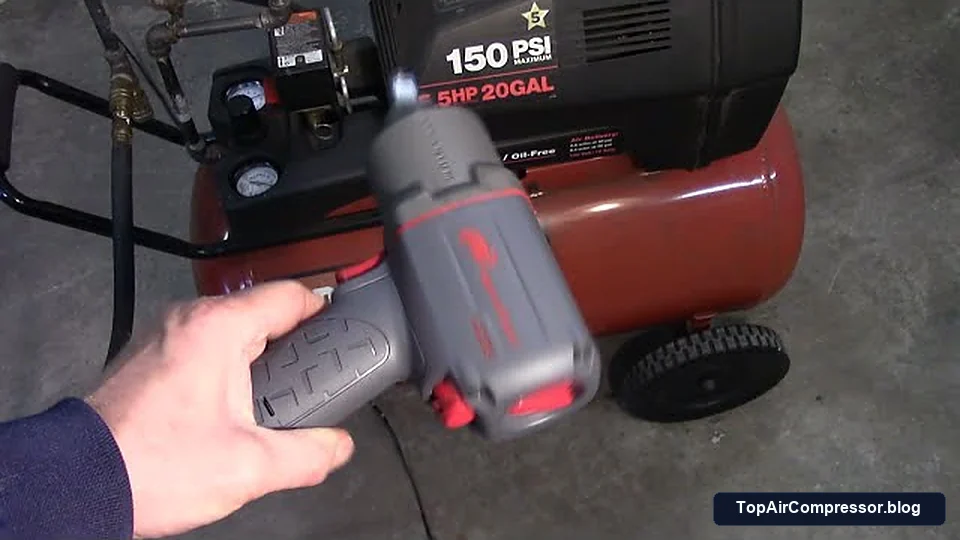
Cubic feet per minute, or CFM, measures the volume of compressed air a unit delivers. Without adequate CFM, pneumatic tools lose torque, stall, and fail to complete standard fastening tasks efficiently.
Pneumatic equipment relies on steady airflow rather than static pressure alone. While PSI dictates operating force, CFM provides the volume required to sustain that force under heavy continuous workloads.
Manufacturers test CFM output at specific pressures, typically 90 PSI for most workshop tools. If your pressure drops, delivered airflow drops simultaneously, resulting in sluggish performance across your pneumatic lineup.
Matching your compressor to your tools prevents frustrating interruptions during critical fabrication tasks. Recognizing your specific volumetric demands eliminates guesswork before investing in heavy shop equipment installations.
Cubic Feet Per Minute measures volumetric air flow delivered at specific pressures. Consult our best cfm for air tools guide to ensure pneumatic equipment maintains operating torque and speed.
When compressed air travels through standard distribution piping, friction causes inherent pressure losses. Engineers must account for these drops to ensure adequate volume reaches every workstation tool.
Environmental factors like ambient temperature and atmospheric humidity directly influence compressor volumetric efficiency. Cooler intake air significantly increases the actual mass of oxygen and air delivered.
Selecting undersized compressors starves pneumatic motors, leading to excessive heat generation and premature mechanical failure. Always match pump displacement to the duty requirements of your specific application.
- CFM dictates the raw volume of air supplied to tools.
- PSI measures the actual pressure or force behind the air.
- Most workshop specifications rate CFM delivery at 90 PSI.
- Inadequate airflow causes pneumatic motors to stall prematurely.
Basic Air Tool Volumetric Demands
Standard impact wrenches demand roughly four to five CFM during heavy fastener removal. Smaller nailers require minimal volume, while heavy grinding attachments consume massive air quantities continuously.
Reviewing individual tool specifications ensures you never purchase an underpowered compressor. Always verify operational requirements directly stamped onto your specific pneumatic machinery nameplates before starting projects.
- Impact wrenches need moderate continuous volume.
- Grinders demand high sustained CFM output.
How to Size an Air Compressor Using the Industry Standard Multiplier
Sizing an air compressor requires applying the reliable 1.5 safety multiplier to your setup. Review our best portable air compressor for tools selection to prevent motor overheating and efficiency losses.
Take your highest-rated air tool CFM requirement and multiply that specific figure by 1.5. For example, a sander requiring six CFM demands a compressor delivering at least nine CFM at 90 PSI.
Applying this multiplier accounts for hose friction, manifold restrictions, and natural mechanical wear. Ignoring this crucial buffer leads to thermal overload switches tripping constantly during intensive shop operations.
Professional technicians always oversize their air delivery systems slightly to accommodate future equipment upgrades. Planning for expansion protects your initial investment and prevents premature hardware replacement cycles.
Calculating total air requirements safely demands applying an industry multiplier to your aggregate tool consumption. Most professionals multiply continuous CFM demand by 1.5 to 2.0 for safety margins.
Intermittent tools like impact wrenches consume high volumes for short bursts. Applying the proper duty factor prevents the compressor from running continuously and overheating pump components.
For heavy-duty continuous grinding or sanding operations, professionals apply a strict two-times multiplier. This ensures the pump rests adequately while maintaining stable line pressure throughout the shift.
Never rely solely on the maximum displacement rating stamped on the pump housing. True system output depends on effective volumetric efficiency under actual working pressures.
- Apply the 1.5 multiplier to your peak tool CFM.
- Account for frictional losses inside long air hoses.
- Prevent thermal overload by maintaining adequate safety margins.
- Size systems for future workshop equipment additions.
Video Walkthrough: Why Your Air Compressor Can’t Keep Up (CFM Explained)
Differentiating Between SCFM, ACFM, and Actual Tool Delivery
Standard cubic feet per minute, or SCFM, measures airflow under standardized laboratory conditions. These baseline metrics allow fair comparisons between different compressor models regardless of ambient humidity and temperature.
Actual cubic feet per minute, or ACFM, reflects true performance in your specific workspace environment. ACFM accounts for local atmospheric pressure, temperature, and relative humidity affecting actual compressor pump efficiency.
Tool manufacturers generally list requirements in SCFM, while pump manufacturers sometimes quote displacement. Always compare true SCFM ratings at 90 PSI rather than theoretical displacement numbers printed on marketing labels.
Atmospheric variations can reduce your compressor output by up to ten percent at high altitudes. Factoring in these environmental realities prevents unexpected performance drops during high-altitude workshop installations.
Standard CFM evaluates air flow under fixed baseline conditions of 68 degrees Fahrenheit and sea-level pressure. This standardized metric allows direct comparison between different compressor models.
Actual CFM measures real-world volume delivered at the compressor discharge under specific operating pressures. ACFM accounts for thermodynamic losses that Standard CFM ratings completely ignore.
Tool manufacturers typically specify consumption in Free Air Delivery. Consult our best air compressor for pneumatic tools guide to prevent unexpected performance drops during high-demand tasks.
Always verify manufacturer specifications using ACFM measurements rather than idealized laboratory metrics. Real operational environments introduce temperature spikes that reduce overall volumetric output.
- SCFM provides a standardized laboratory measurement baseline.
- ACFM reflects real-world performance in your facility.
- Displacement figures exaggerate true volumetric air output capabilities.
- High altitude environments reduce overall compressor volumetric efficiency.
Calculating Total CFM Demands for Multiple Simultaneous Operators
Running multiple air tools simultaneously requires summing up individual CFM requirements rather than averaging them. If two technicians operate grinders together, your compressor must deliver the combined total volume continuously.
Intermittent tools like nail guns rarely fire at exact intervals. Use our cfm tool sizing calculator to determine the proper diversity factor for your combined intermittent demands.
Continuous-duty applications like sanders, spray guns, and blast cabinets require one hundred percent combined capacity. Never apply diversity factors when calculating requirements for continuous-run abrasive or finishing operations.
Mapping out your workshop workflow helps identify peak concurrent air consumption periods accurately. Proper manifold distribution prevents localized pressure starvation across different bays during busy working shifts.
Managing multiple technicians requires calculating a simultaneous usage factor rather than simply adding all tool ratings. Not every operator triggers their pneumatic tool at the exact same moment.
A standard production floor with four active assembly stations utilizes an application diversity rate around sixty percent. Multiply the aggregate tool total by this safety coefficient.
Main header pipes must feature adequate diameters, such as two-inch schedule 40, to eliminate restriction. Undersized distribution lines choke aggregate airflow and ruin system efficiency.
Install dedicated sub-regulators at each workstation drop to isolate pressure fluctuations and protect sensitive pneumatic components from sudden upstream pressure drops.
- Sum all concurrent tool requirements for accurate sizing.
- Apply diversity factors only for intermittent pneumatic tools.
- Never discount continuous-run applications like abrasive sanders.
- Map workshop workflows to prevent localized pressure drops.
Tank Capacity Versus Compressor Output: Which Specification Matters More?
Many beginners mistakenly believe a massive air storage tank increases pump output capacity. Tank size only provides a reservoir, acting as a temporary buffer for short bursts of heavy tool use.
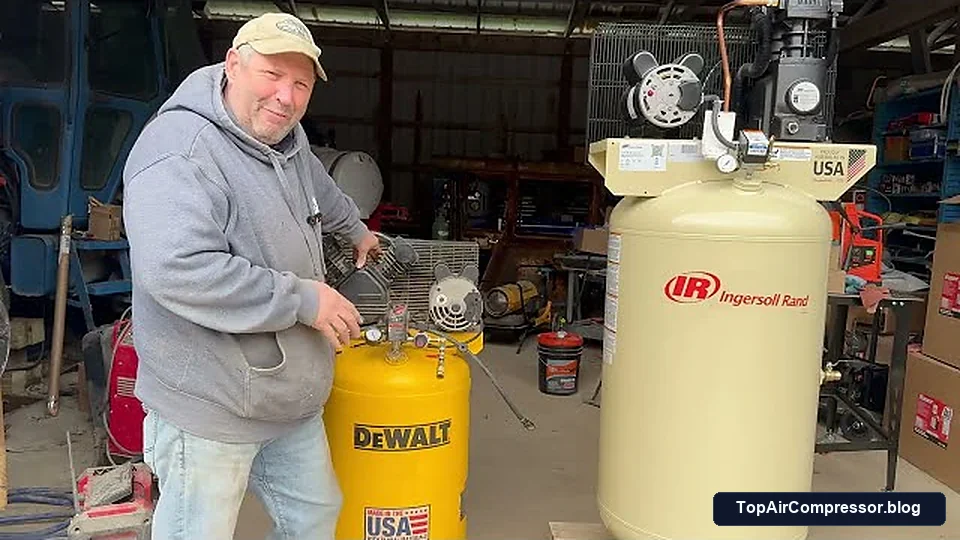
If your tool consumes ten CFM and your pump delivers only five CFM, a large tank simply delays pressure drops. Once the reservoir empties, the pump cannot sustain continuous operation without stopping.
Conversely, a smaller tank paired with a high-output rotary screw pump handles continuous loads easily. Match your pump CFM to the tool first, then select a tank size suitable for your duty cycle.
Larger receiver tanks help cool compressed air and trap excess moisture before it reaches tools. However, they cannot compensate for an underpowered pump struggling to meet basic volumetric air demands.
Air receiver tanks serve as temporary storage reservoirs rather than generators of continuous flow capacity. A larger tank handles short peak demands without dropping system pressure.
Pump CFM output remains the primary specification determining whether your compressor can sustain continuous tool operation. Without adequate pump displacement, a massive storage tank eventually empties completely.
Match your tank volume to the compressor horsepower using standard guidelines like three gallons per CFM. This ratio prevents excessive motor cycling and prolongs switch lifespans.
ASME-certified tanks require periodic inspection for internal condensation buildup and corrosion damage. Always drain moisture daily using automated valves to maintain safe operational capacity.
- Storage tanks act as temporary operational buffers.
- Large tanks cannot substitute for low pump CFM.
- Match compressor pump output before selecting tank volume.
- Receiver tanks help cool air and drop moisture.
Video Walkthrough: Air Compressors \u0026 Pneumatic Tools
Evaluating Compressor Duty Cycle Ratings for Intermittent Versus Continuous Work
Duty cycle represents the percentage of time a compressor pump can safely run within a timeframe. A fifty percent duty cycle means the motor runs for five minutes then rests for five minutes.
Consumer-grade compressors typically feature intermittent duty cycles ranging from thirty to fifty percent. Exceeding these thermal limits causes rapid oil breakdown, motor winding damage, and catastrophic pump failure over time.
Industrial workshops requiring non-stop pneumatic operations need continuous-duty compressors rated for one hundred percent runtime. These robust units feature specialized cooling systems designed to dissipate heat efficiently during extended shifts.
Monitoring ambient workshop temperatures prevents unexpected thermal overloads during heavy summer fabrication work. Adequate ventilation around your compressor housing preserves pump longevity and sustains reliable daily operational readiness.
Compressor duty cycle defines the percentage of time a motor can run within a ten-minute window. Exceeding a fifty percent rating causes thermal overload.
Commercial piston compressors typically feature a seventy percent duty cycle, requiring mandatory cooling periods. Industrial rotary screw units offer one hundred percent operation capability.
Running consumer-grade equipment continuously will trigger thermal safety switches and burn out expensive electric motors. Match your shop workflow directly to the pump duty rating.
Ambient temperatures above 100 degrees Fahrenheit severely degrade compressor cooling efficiency and reduce safe duty cycles. Ensure adequate ventilation around the equipment enclosure.
- Duty cycle indicates safe running time percentages.
- Consumer units usually feature 30 to 50 percent ratings.
- Industrial systems require 100 percent continuous-duty capability.
- Proper ventilation prevents premature thermal overload shutdowns.
Avoiding Common Sizing Mistakes That Cause Severe Pressure Drops
Using undersized air hoses restricts airflow long before compressed air reaches your tools. Upgrading from quarter-inch lines to three-eighths inch hoses dramatically reduces friction loss over standard fifty-foot working lengths.
Another frequent error involves ignoring pressure drops across quick-disconnect fittings, filters, and regulators. Restrictive line components choke volumetric delivery, making a powerful compressor behave like an underpowered hobby unit.
Failing to drain moisture from receiver tanks reduces effective storage volume and damages internal components. Establish a daily manual or automatic condensate draining routine to maintain peak pneumatic system efficiency.
Always verify your electrical circuit capacity matches compressor startup amperage requirements to prevent nuisance tripping. Proper wiring infrastructure ensures reliable motor starting under heavy workshop loads without voltage drops.
Using quick-disconnect fittings smaller than three-eighths inch creates severe flow restrictions and pressure drops. Always match quick couplers to the hose inner diameter.
Long distribution runs using flexible rubber hoses instead of rigid copper piping cause excessive friction losses. Upgrade main lines to smooth materials to preserve working pressure.
Neglecting to install inline coalescing filters allows moisture to accumulate and damage internal tool mechanisms. Proper filtration protects your capital equipment investments.
Failing to account for future shop expansion leaves your pneumatic system undersized within months. Always size your initial compressor installation for growth capacity and increased tool demands.
- Use adequate hose diameters to minimize friction loss.
- Avoid restrictive quick-disconnect fittings and undersized regulators.
- Drain moisture daily to preserve effective tank volume.
- Verify electrical circuit amperage to prevent voltage drops.
Frequently Asked Questions
What CFM do I need for standard automotive air tools?
Operating standard automotive hand tools effectively across busy workshop maintenance tasks typically requires between four and eight CFM at 90 PSI of clean, regulated airflow.
You should always check your single highest-drawing pneumatic device and apply a strict 1.5 safety multiplier to completely prevent unexpected pressure drops during intensive mechanical fastener removal procedures.
Can a larger air receiver tank make up for low pump CFM?
No, a large storage tank only provides a temporary operational buffer for short bursts of high-demand pneumatic work in your busy shop.
Once the receiver reservoir empties completely under load, an underpowered compressor pump will inevitably fail to keep pace and cause your heavy-duty tools to stall and lose essential operating torque.
What is the difference between SCFM and ACFM ratings?
SCFM measures volumetric output under strict standardized laboratory conditions to allow easy manufacturer comparisons across different equipment models.
In contrast, ACFM reflects true real-world compressor performance accurately adjusted for local temperature, relative humidity, and atmospheric pressure inside your specific workshop environment every single day.
How do I calculate total CFM when running multiple air tools?
You must directly sum up the individual CFM requirements of all pneumatic tools operated simultaneously during peak workshop workflows.
For intermittent devices like nailers and ratchets, you can safely apply a standard diversity factor to account for non-continuous firing patterns without starving the system.
Why does my air hose length affect tool performance?
Excessively long air hoses introduce internal friction that restricts airflow and causes noticeable pressure drops at the tool connection point.
Upgrading to a wider hose diameter minimizes these frictional line losses and restores full pneumatic power delivery across your entire workspace.