What Is Compressor Oil: Complete Technical Guide
Compressor oil is specialized fluid that lubricates, seals, and cools internal pump components. Understanding its properties prevents catastrophic mechanical failure.


Compressor oil is a heavy-duty lubricant designed for extreme thermal loads. Always use designated compressor oil rather than standard motor oils to prevent dangerous carbon buildup.
Looking for matching picks? See our Best Oil Less Air Compressor: Top Picks & Buying Guide.
Practical Quick-Reference Table
| Scenario / Metric | Recommended Target | Why It Matters |
|---|---|---|
| Reciprocating Piston Pump | ISO 68 or ISO 100 | Ensures proper film thickness on pistons. |
| Rotary Screw Compressor | ISO 32 or ISO 46 | Accommodates tight clearances and cooling. |
| Mineral Oil Change Interval | 500 Hours / Annual | Prevents carbon buildup and varnish. |
| Synthetic Oil Change Interval | 2,000 Hours | Offers superior oxidation resistance. |
| Oil Sight Glass Target | Center Red Dot | Prevents low-fluid scoring and seizure. |
| Break-In Fluid Change | First 100 Hours | Flushes abrasive metallic wear burrs. |
Why Air Compressors Require Specialized Lubrication

Air compressors operate under severe mechanical stress and extreme internal temperatures. Standard engine oils fail quickly in these environments because they lack the specific thermal stability required by compressed air systems.
When you rely on any best oil lubricated air compressor, the primary function of the fluid is reducing friction. Without adequate lubrication, internal pistons and bearings experience rapid mechanical wear.
Beyond lubrication, the fluid acts as a vital thermal transfer medium. It absorbs compression heat and carries it away from critical chambers, preventing internal overheating during continuous heavy-duty workshop operations.
Rotary screw and reciprocating compressors also rely on oil to create an airtight seal. This viscous barrier prevents compressed air from escaping past piston rings or screw rotors, ensuring high volumetric efficiency.
- Reduces metal-on-metal friction across pistons and bearings.
- Absorbs and dissipates extreme operational heat effectively.
- Seals internal clearances to maximize volumetric efficiency.
- Prevents premature mechanical failure in heavy-duty environments.
The Physics of High-Pressure Heat
Compressing ambient air generates massive amounts of thermal energy rapidly. When air pressure increases, molecular agitation spikes internal temperatures, putting immense thermal stress on surrounding mechanical parts and fluids.
Specialized compressor oils maintain their viscosity and chemical integrity under these punishing thermal loads. This stability prevents the fluid from thinning out or burning away during extended commercial operations.
- High pressures generate intense internal friction and heat.
- Thermal stability protects fluid integrity under heavy loads.
Mineral Versus Synthetic Formulations Explained
Mineral compressor oils are refined from natural petroleum crude stocks. They provide reliable lubrication for standard, intermittent-use workshop compressors operating under moderate ambient temperatures and normal daily workloads.
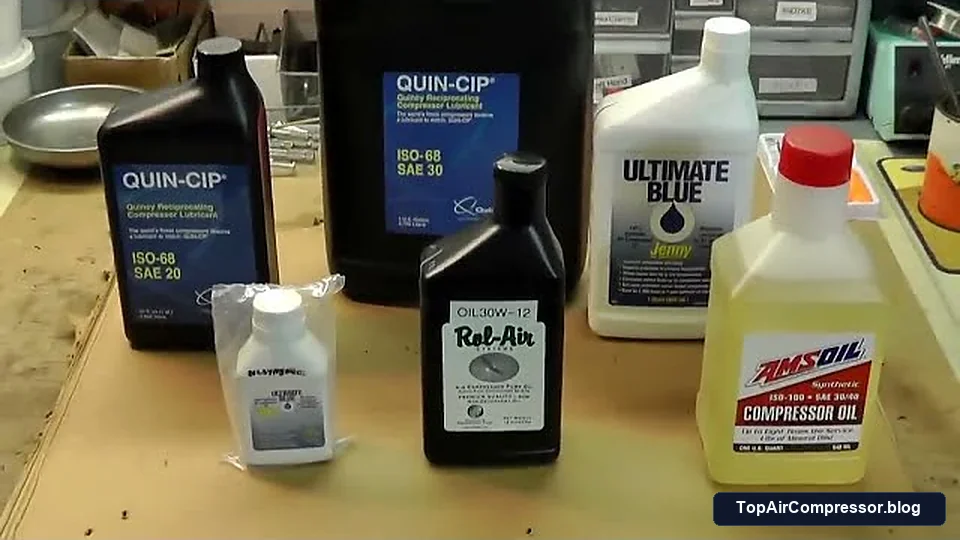
However, mineral oils contain natural impurities that react with oxygen at high temperatures. This reaction leads to varnish formation, carbon deposits, and sludge accumulation within the valves and discharge lines.
Synthetic compressor oils are engineered in laboratories using chemically altered base stocks. These advanced formulations offer superior resistance to thermal breakdown, oxidation, and carbon buildup during continuous heavy-duty industrial tasks.
Choosing the best synthetic air compressor oil ensures higher upfront costs translate into extended change intervals. Their stable molecular structure prevents severe viscosity thinning over thousands of demanding operating hours.
- Mineral oils suit light-duty, intermittent shop applications.
- Synthetic oils resist thermal breakdown and oxidation better.
- Petroleum stocks are prone to carbon and varnish deposits.
- Synthetic formulations extend service intervals and pump life.
Selecting Base Stocks for Duty Cycles
Your compressor duty cycle dictates whether mineral or synthetic oil is necessary. Intermittent home shop units thrive on standard mineral oil changes, while continuous industrial systems demand full synthetic performance.
Environmental operating conditions also influence your baseline choice. High ambient workshop temperatures or dusty surroundings require robust synthetic additives to prevent premature fluid degradation and mechanical wear.
- Match fluid type directly to operational duty cycles.
- Use synthetics for continuous-duty industrial applications.
Video Walkthrough: What’s the Difference between Motor and Compressor Oil?
Selecting the Correct Viscosity Grade
Alongside evaluating tools via our cfm tool sizing calculator, remember that viscosity measures fluid resistance at specific temperatures. Choosing the correct ISO grade ensures proper oil film thickness across moving components.
Most reciprocating air compressors require ISO 100 or ISO 68 weight oils. Rotary screw compressors typically utilize lighter ISO 32 or ISO 46 fluids to accommodate tight internal clearances and rapid circulation.
Using an incorrect viscosity grade can cause severe mechanical damage. Oil that is too thin fails to protect bearings, while fluid that is too thick restricts flow and causes excessive pump heat.
Always consult your original equipment manufacturer manual before purchasing replacement fluid. Adhering strictly to factory viscosity specifications guarantees optimal pump performance and preserves valid warranty coverage over time.
- ISO viscosity grades determine fluid thickness and flow.
- Reciprocating pumps usually need ISO 68 or 100 oils.
- Rotary screw systems generally require ISO 32 or 46.
- Always follow factory manual specifications for viscosity.
Checking and Maintaining Proper Fluid Levels
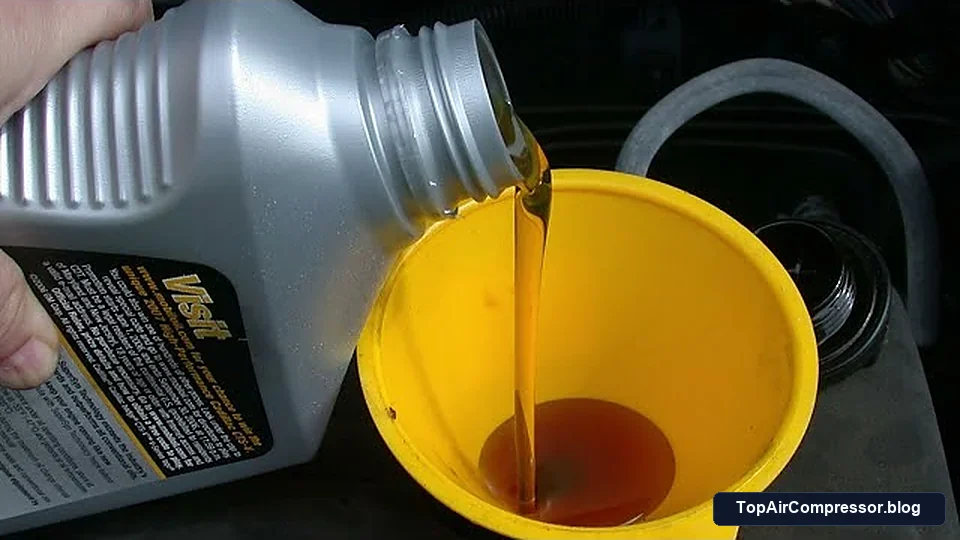
Monitoring compressor oil levels should be part of your daily pre-start checklist. Operating any lubricated compressor with low fluid levels will quickly result in catastrophic internal scoring and pump destruction.
Locate the oil sight glass or dipstick on the side of the pump crankcase. The correct fluid level should sit precisely at the center red dot of the sight glass window.
Inspect the visual condition of the oil through the glass before startup. Dark, murky, or milky fluid indicates heavy contamination from moisture, dirt, or thermal breakdown, requiring an immediate fluid change.
Top off the crankcase slowly using a clean funnel to prevent dirt entry. Never mix different oil brands or viscosity grades together, as incompatible chemical additives can cause harmful sludge reactions.
- Check the oil sight glass daily before starting equipment.
- Maintain fluid levels at the center red dot mark.
- Inspect oil color for contamination or water intrusion.
- Never mix incompatible oil brands or viscosity grades.
Understanding Deposit Potential and Thermal Breakdown
Continuous exposure to high compression temperatures accelerates oil oxidation. When oxygen molecules bond with degraded lubricant compounds, sticky varnish and hard carbon deposits begin forming on internal discharge valves.
These carbon deposits act as thermal insulators, trapping heat inside the valve assembly. Accumulated buildup can also prevent valves from closing properly, leading to reduced compressor efficiency and overheating hazards.
Micro-dieseling is another danger caused by poor oil selection or low flash points. Under extreme pressure, combustible oil vapors can ignite spontaneously inside the cylinder, causing internal pitting and damage.
Using high-flash-point synthetic lubricants minimizes micro-dieseling and deposit formation risks. Routine maintenance and timely oil replacements keep internal metal surfaces clean, safe, and fully protected against aggressive chemical breakdown.
- Thermal oxidation creates harmful varnish and carbon deposits.
- Carbon buildup on valves causes dangerous operating heat.
- Micro-dieseling occurs when low-flash oils ignite under pressure.
- Synthetic lubricants resist deposit formation and thermal breakdown.
Video Walkthrough: Air Compressor Oil vs Engine Oil: What’s the Difference?
Break-In Wear and Oil Sample Analysis
If you prefer minimizing maintenance headaches with a best oil less air compressor, note that traditional pumps still require a strict break-in period. During initial hours, metallic particles often contaminate the fluid.
This initial break-in oil must be drained completely after the first hundred hours of operation. Failing to remove these abrasive metal particles causes accelerated wear across precision cylinder walls and bearings.
Industrial facilities often perform professional oil sample analysis to monitor internal equipment health. Laboratory testing identifies microscopic wear metals, moisture levels, and additive depletion before catastrophic mechanical failures occur.
Tracking fluid condition over time helps schedule proactive maintenance rather than emergency repairs. Analyzing used oil samples provides deep insights into compressor operating stress, filtration efficiency, and mechanical component longevity.
- Drain break-in oil completely after initial operating hours.
- Metal particles in old fluid act as liquid sandpaper.
- Oil analysis detects internal wear metals and moisture.
- Laboratory testing prevents unexpected commercial equipment downtime.
Best Practices for Routine Oil Changes
Establish a strict routine maintenance schedule based on manufacturer operating hour guidelines. Standard mineral oils typically require replacement every five hundred hours, while synthetics can often run up to two thousand hours safely.
Always warm up the compressor for ten minutes before performing an oil change. Warm fluid flows much faster and carries suspended contaminants and sludge particles out of the crankcase more effectively.
Disconnect the power supply completely to prevent accidental motor startup during servicing. Remove the drain plug carefully, catch the old fluid in a suitable container, and dispose of it responsibly.
Replace any oil filter elements simultaneously during your scheduled fluid change procedure. Clean filtration ensures fresh oil remains uncontaminated, protecting your precision compressor pump from premature internal wear and damage.
- Follow operating hour intervals specified in your manual.
- Warm up the compressor before draining old oil.
- Always disconnect power before servicing mechanical components.
- Change oil filters alongside fluid replacement procedures.
Frequently Asked Questions
Can I use regular motor oil in my air compressor?
Never use standard automotive motor oil in an air compressor because it contains detergent additives that create heavy carbon deposits at high compression temperatures.
Instead, always use specialized non-detergent or synthetic compressor oil matching your exact factory viscosity specifications to prevent dangerous valve fires and premature mechanical pump failure during operation.
How often should I change my air compressor oil?
Standard mineral oils typically require complete replacement every five hundred operating hours or annually, depending on your workshop environment and daily workload.
Premium synthetic compressor oils can safely extend change intervals up to two thousand hours, but you should always verify these maintenance timelines inside your specific equipment operator manual thoroughly.
What happens if my compressor runs low on oil?
Running an air compressor with low fluid levels generates extreme friction and severe thermal heat that rapidly destroys internal cylinder walls and precision bearings.
Without adequate lubrication to transfer heat and maintain vital sealing pressure, the pump will experience catastrophic mechanical seizure, requiring expensive component overhauls or complete unit replacement.
What is the difference between ISO 46 and ISO 100 compressor oil?
ISO viscosity ratings measure fluid thickness and flow resistance at standard temperatures, where ISO 46 is thinner and ISO 100 is significantly thicker.
Rotary screw compressors typically utilize lighter ISO 32 or ISO 46 fluids for rapid circulation, while heavy-duty reciprocating piston pumps require thicker ISO 68 or ISO 100 oils for proper protection.
Can I mix different brands of compressor oil together?
You should never mix different oil brands or varying viscosity grades together in your compressor crankcase under any normal operating circumstances.
Incompatible chemical additive packages can react negatively, causing the fluid to break down prematurely, form harmful sludge, and severely damage internal pump components through reduced lubrication and thermal efficiency.