What Is the Correct Tire Pressure for a Car?
Maintaining correct tire pressure ensures optimal braking distances, uniform tread wear, and safe handling dynamics. Always reference your specific vehicle placard instead of relying on generic numbers.

The correct tire pressure for your vehicle is listed on the driver door jamb placard, typically ranging between 30 psi and 35 psi for most standard passenger cars.
Looking for matching picks? See our Best Air Compressor For Car Tires: Top Rated Picks.
Practical Quick-Reference Table
| Scenario / Metric | Recommended Target | Why It Matters |
|---|---|---|
| Standard Sedan | 32 psi to 35 psi | Balances comfort and fuel economy. |
| Compact Car | 30 psi to 32 psi | Supports lighter vehicle gross weight. |
| SUV / Crossover | 35 psi to 38 psi | Handles higher load capacities safely. |
| Light Truck | 35 psi to 40+ psi | Prevents sidewall flex under heavy payloads. |
| Cold Temperature Drop | Lose 1 psi per 10°F | Requires seasonal pressure adjustments outdoors. |
| Max Sidewall Rating | Absolute ceiling limit | Never inflate tires to this safety maximum. |
Understanding Why Proper Tire Inflation Directly Impacts Vehicle Safety
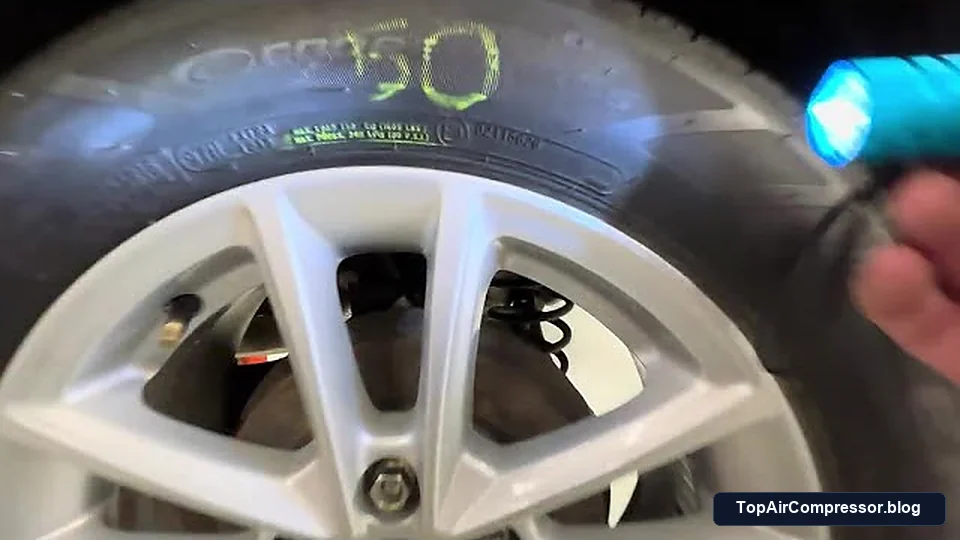
Proper tire pressure maintains the contact patch between your rubber tread and the road surface. Incorrect inflation degrades handling response, braking distances, and overall vehicle stability during emergency maneuvers.
Underinflated tires experience excessive sidewall flexing that generates destructive heat. When properly equipping your service garage, our cfm tool sizing calculator helps evaluate air compressor airflow demands.
Overinflation creates a rigid, narrow contact patch centered squarely on the tread. This center-focused footprint reduces wet-weather traction and causes rapid, premature wear along the middle section of the tire.
Maintaining precise inflation pressures optimizes your engine's fuel economy by minimizing rolling resistance. Correctly pressurized tires require less mechanical energy to rotate across asphalt surfaces every single day.
Maintaining correct inflation pressure ensures optimal contact patch geometry between the rubber tread and the road surface, maximizing braking traction during emergency stopping maneuvers on wet asphalt surfaces.
Underinflated tires experience excessive sidewall flexing, generating dangerous internal heat that can lead to catastrophic tread separation and sudden structural failure while operating at highway cruising speeds.
Overinflation reduces the footprint area significantly, concentrating vehicle weight on the center tread ribs, which diminishes cornering grip and accelerates central tread wear across all four tire positions.
Adhering strictly to federal safety standards set by the National Highway Traffic Safety Administration helps prevent preventable accidents caused by compromised vehicle handling dynamics and stability control failures.
- Inspect tire pressures monthly using a calibrated dial gauge.
- Avoid driving on severely underinflated tires to prevent rim damage.
- Check tread depth alongside inflation levels for comprehensive safety.
- Remember that proper pressure maximizes braking performance on wet roads.
Locating Your Specific Vehicle Manufacturer Inflation Specifications
Every passenger vehicle features a permanent safety compliance certification label attached to the driver door pillar. This manufacturer placard lists the precise cold pressure requirements for both front and rear tires.
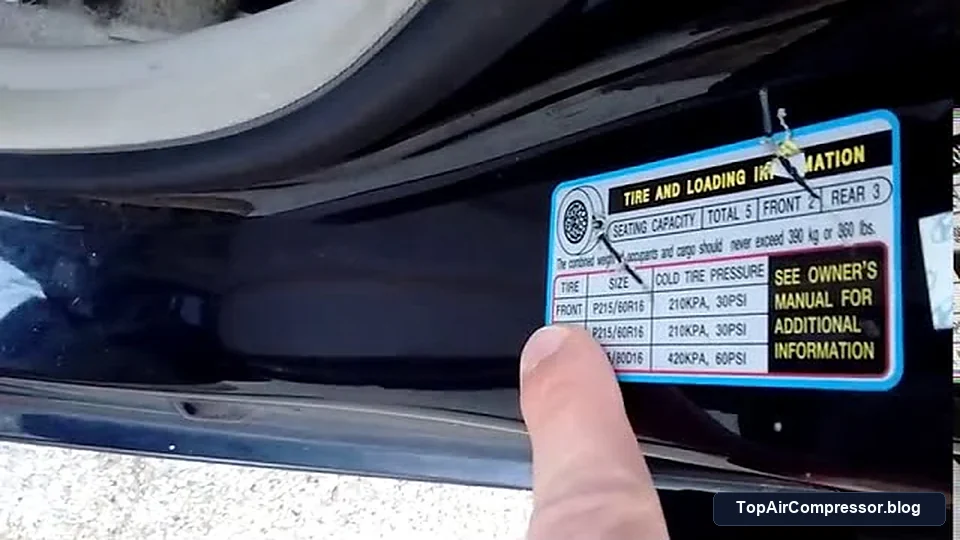
Never rely on the maximum limit stamped into your rubber tire sidewall. Choosing a tool from our best small tire inflator for car guide helps ensure accurate, safe everyday inflation.
Different vehicle trims, engine weights, and factory wheel sizes require unique PSI targets. Always verify your specific VIN configuration matches the exact placard numbers before connecting any compressed air source.
Never rely on the maximum pressure molded onto the flexible tire sidewall, as this figure represents structural limits rather than ideal vehicle loading requirements determined by automotive engineers.
Locate the official certification placard permanently affixed to the driver side door jamb or center pillar, which lists exact cold PSI ratings for original equipment tires.
Certain vehicles feature secondary reference tables located inside the fuel filler flap or within the glove compartment manual, providing alternative loads for sustained high speed highway driving.
- Locate the white and yellow placard inside the driver door jamb.
- Ignore maximum PSI ratings printed on the tire rubber sidewall.
- Consult your owner manual if the door jamb label is missing.
- Account for vehicle load changes when hauling heavy passenger cargo.
Decoding the Door Jamb Placard
The federal certification label displays recommended cold inflation pressures alongside your vehicle's gross weight ratings. Pay close attention to separate front and rear axle specifications if they differ.
- Identify front axle cold pressure recommendations clearly.
- Note rear axle cold pressure values for loaded driving.
Video Walkthrough: What Is The Correct Tire Pressure For Your Car? Fast \u0026 Easy!
Defining Cold Tire Pressure and Ambient Temperature Physics
Cold tire pressure requires measuring after sitting for three hours. Driving generates heat that distorts PSI readings, making a dependable tool from our best air compressor for car tires review essential.
Ambient temperature changes directly alter internal tire pressures according to basic gas laws. You will typically lose approximately one psi for every ten degrees Fahrenheit drop in outside autumn temperatures.
Winter mornings frequently trigger dashboard warnings because cold overnight temperatures shrink the air volume inside each tire casing. Always adjust your inflation levels outdoors during stable morning weather conditions.
True cold tire pressure must be measured after the automobile has remained stationary for at least three hours or driven under one mile at moderate speeds.
Ambient temperature fluctuations directly alter internal pneumatic forces, causing pressure to drop by roughly one PSI for every ten degree drop in outside air temperature.
Neglecting seasonal weather shifts causes chronic underinflation during autumn transitions, requiring drivers to manually add compressed air to compensate for falling atmospheric temperatures.
- Park your car out of direct sunlight before checking pressures.
- Allow tires to cool completely after highway driving sessions.
- Recheck pressures during seasonal weather transitions across regions.
- Factor in temperature drops when storing vehicles outdoors.
Establishing a Regular Inspection and Maintenance Routine
Establishing a consistent maintenance routine prevents premature tire wear and unexpected roadside failures. You should manually check your tire pressures at least once every month using a reliable dial pressure gauge.
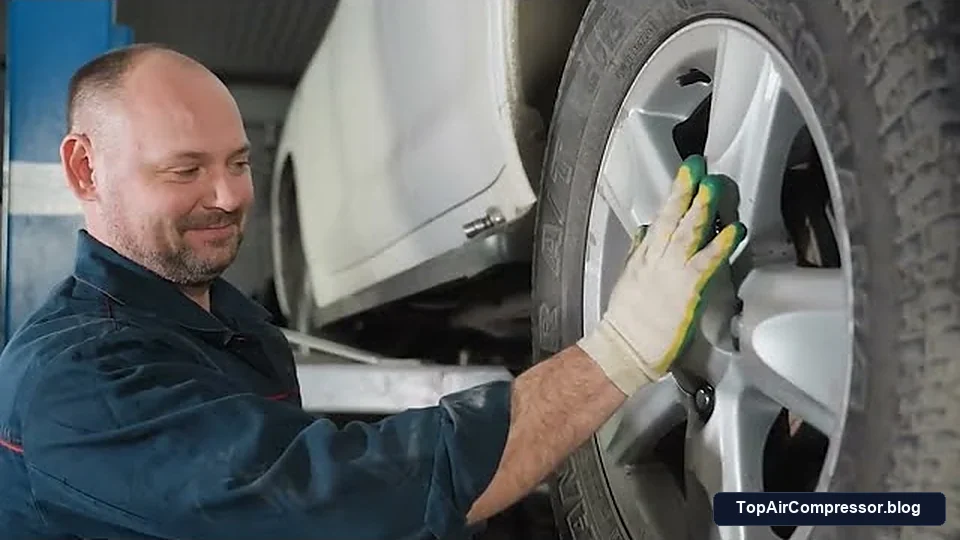
Visual inspections cannot reliably detect minor pressure drops or slow punctures caused by embedded road debris. Digital or analog gauges provide the exact numerical feedback required for precision inflation adjustments.
Always inspect your valve stems for missing caps, cracking rubber, or slow air leaks during monthly checks. Secure valve caps tightly to protect internal Schrader cores from moisture and road grime contamination.
Incorporate a thorough monthly pressure check using a calibrated dial gauge into your routine vehicle maintenance schedule before embarking on long distance holiday road trips.
Inspect all valve stems for missing protective caps, which prevent moisture ingress and dirt accumulation from causing slow air leaks through the Schrader core mechanism.
Rotate your tires every five thousand to eight thousand miles to promote uniform tread wear patterns and extend the functional service life of rubber compounds.
- Perform monthly pressure checks before embarking on long road trips.
- Store a digital or analog pressure gauge inside your glovebox.
- Inspect tread blocks for uneven wear patterns during checks.
- Replace missing valve stem caps immediately to prevent leaks.
Interpreting Tire Pressure Monitoring System Dashboard Warnings
Modern vehicles utilize a Tire Pressure Monitoring System to alert drivers of dangerous pressure drops. A glowing yellow dashboard icon indicates that at least one tire has fallen below safe operational limits.
Indirect TPMS setups monitor wheel rotational speeds through anti-lock braking sensors to detect rolling diameter changes. Direct TPMS designs use physical radio-frequency sensors mounted inside each individual tire valve assembly.
Never ignore a persistent TPMS warning light, even if your tires appear visually adequate from a distance. Investigate all four tires immediately with an accurate gauge to locate the underinflated assembly.
Direct tire pressure monitoring systems utilize internal battery powered radio frequency sensors mounted inside each wheel to broadcast real time pressure data directly to the dashboard.
Indirect systems monitor wheel rotational speed differences via anti lock braking sensors to detect reduced tire circumference indicating significant air loss events.
When the low pressure warning indicator illuminates as a solid yellow icon, immediately check all four tires and restore them to factory specifications.
- Identify the horseshoe-shaped dashboard light with an exclamation point.
- Check all four tires when the warning light activates unexpectedly.
- Reset the TPMS system after adjusting pressures to factory targets.
- Inspect sensors for battery failure if warning lights remain active.
Step-by-Step Procedure for Safely Inflating Your Car Tires
Properly inflating low tires requires reliable gear. Choosing a model from our best portable tire compressor for car list gives you precise control while working on level ground.
Remove the protective valve cap and firmly press your compressor chuck onto the Schrader stem. Monitor the built-in gauge closely while adding compressed air in short, controlled bursts to avoid overinflation.
If you accidentally exceed your target pressure, use the edge of your gauge to release small amounts of air. Recheck the final cold pressure reading to ensure it matches the door placard specifications.
Park your vehicle on level ground near a reliable compressed air source, remove the valve stem cap, and firmly press your pressure gauge against the metal stem.
Apply short bursts of compressed air from your inflator hose chuck, pausing frequently to verify current pressure readings on your analog gauge to prevent overfilling.
If you accidentally exceed the recommended placard limit, use the integrated deflector pin to bleed air out until reaching your exact target PSI.
- Park on flat, level pavement away from active traffic lanes.
- Attach the air chuck securely to prevent leaking compressed air.
- Add air incrementally to prevent accidental over-pressurization of tires.
- Replace valve stem caps securely after achieving proper inflation levels.
Using Portable Air Compressors Correctly
Portable 12-volt compressors connect directly to your auxiliary power outlet or battery terminals. Ensure your engine remains running during inflation to prevent draining your vehicle electrical system.
- Plug the compressor into a dedicated power source safely.
- Keep the vehicle engine running during high-draw inflation tasks.
Evaluating Common Misconceptions About High Tire Pressures
Some drivers mistakenly believe that inflating tires to the maximum PSI rating improves fuel economy. However, this practice compromises safety by reducing the available tire contact patch on wet roadways.
A common myth suggests that 36 psi is always too high for standard passenger car tires. In reality, many modern crossovers and large sedans specify 36 psi or higher on door placards.
Overinflated tires create a harsh, bumpy ride quality while accelerating wear across the center tread band. Always adhere strictly to the vehicle manufacturer placard rather than chasing arbitrary maximum pressure limits.
Some motorists mistakenly believe that inflating tires to the maximum sidewall limit improves fuel economy, but this practice actually reduces overall braking efficiency.
Overinflated tires transmit harsher impact shocks from road potholes into the vehicle suspension components, accelerating wear on delicate steering linkages and ball joints.
Always adhere strictly to vehicle manufacturer recommendations rather than internet myths to ensure balanced handling, maximum comfort, and optimal tread longevity.
- Reject the temptation to exceed vehicle placards for fuel savings.
- Understand that manufacturer specifications balance comfort, wear, and traction.
- Inspect center tread wear indicators to detect chronic overinflation habits.
- Consult professional technician guidelines when modifying factory wheel sizes.
Frequently Asked Questions
Is 36 psi too high for car tires?
Thirty-six psi is not inherently too high if your specific vehicle manufacturer placard recommends that exact target for your model. Always verify your driver door jamb label before making adjustments, because many modern sedans and crossovers require higher operating pressures.
How often should I check my tire pressure?
You should manually check your tire pressures at least once every month using a reliable analog or digital pressure gauge. Regular monthly inspections ensure you catch slow air leaks and seasonal ambient temperature drops before they trigger dashboard warnings.
What does the TPMS dashboard warning light mean?
A glowing yellow TPMS warning icon indicates that at least one of your tires has dropped significantly below safe operational limits. You should immediately check all four tires with a calibrated gauge and inflate them to match your door placard.
Why does tire pressure drop in cold weather?
Tire pressure drops in cold weather because low ambient temperatures cause the air molecules inside the casing to contract. You typically lose approximately one psi of pressure for every ten degree drop in outdoor winter temperatures.
Can I trust the max psi rating printed on the tire sidewall?
You should never use the maximum PSI rating printed on the tire sidewall as your normal operating pressure. That stamped number represents the absolute structural limit of the tire casing, whereas your vehicle placard lists the ideal pressure for safety.