What Is the Proper Tire Pressure for My Car?
Finding the right PSI ensures optimal vehicle handling, fuel economy, and tire longevity. Always check your specific vehicle placard before inflating.

The proper tire pressure is located on the driver door jamb placard, not the maximum limit printed on the tire sidewall. Always measure when tires are completely cold.
Looking for matching picks? See our Best Air Compressor For Car Tires: Top Rated Picks.
Practical Quick-Reference Table
| Scenario / Metric | Recommended Target | Why It Matters |
|---|---|---|
| Standard Passenger Car | 32 to 35 PSI | Ensures balanced contact patch and smooth ride comfort. |
| Mid-Size SUV / Crossover | 35 to 38 PSI | Supports heavier vehicle weight and load distribution safely. |
| Cold Tire Measurement | Ambient garage temp | Provides accurate baseline before frictional heat builds up. |
| Winter Temperature Drop | +1 PSI per 10°F drop | Prevents under-inflation during sudden cold weather snaps. |
| High-Speed / Max Load | Check door placard | Prevents excessive internal heat generation and tread wear. |
| TPMS Warning Threshold | 25% below placard | Alerts driver to critical pressure loss before structural damage. |
Locating Your Vehicle Manufacturer's Recommended PSI Specifications
Every production vehicle features a dedicated tire placard affixed to the driver-side door pillar. This sticker outlines the exact cold pressure required for your specific front and rear axle configurations.
Relying solely on generic numbers printed directly on the tire rubber sidewall leads to improper inflation. Consulting resources like our CFM tool sizing calculator alongside vehicle placards ensures proper equipment setup.
Door jamb stickers factor in your vehicle's gross weight ratings, suspension geometry, and handling dynamics. Engineers calculate these exact figures through rigorous testing to maximize braking efficiency and cornering stability.
If your vehicle door placard is missing or damaged, consult the owner manual for factory specifications. Replacement placards can also be ordered directly through authorized dealership parts departments using your unique VIN.
- Locate the certification label on the driver door edge or post.
- Verify front and rear axle pressures as they often differ significantly.
- Ignore the maximum PSI limit stamped on the tire rubber outer sidewall.
- Check manual documents if the physical door pillar sticker is illegible.
Decoding Door Placard Information
The manufacturer placard displays recommended cold PSI values alongside gross vehicle weight ratings. Understanding these figures prevents overloading and premature tread wear across all four tire positions.
Always match your replacement tires to the original equipment load index to maintain safety. Installing lower load index tires compromises vehicle stability under heavy braking and emergency maneuvers.
- Match tire size codes exactly with placard recommendations.
- Note separate load pressures for towing or heavy cargo.
Understanding the Critical Difference Between Cold and Hot Tire Pressure
Accurate pressure measurement requires checking your tires while they are completely cold. A cold tire is defined as a vehicle that has been parked for at least three hours or driven under one mile.
As you drive, tire flexing generates internal friction that heats the compressed air inside. This thermal expansion increases internal pressure by one to four PSI, skewing your gauge readings upward.
Never bleed air from hot tires to lower pressure back to the cold specification. Using the best air compressor for car tires ensures accurate cold adjustments once rubber cools completely.
Always perform your routine monthly inflation checks early in the morning before direct sunlight hits the vehicle. This eliminates external thermal variables and ensures precise calibration across every single wheel position.
- Allow vehicles to rest for three hours before checking pressures.
- Expect normal driving heat to naturally raise internal PSI readings.
- Never release air from hot tires following highway commuting sessions.
- Morning ambient temperature checks deliver the most reliable baseline data.
The Physics of Air Temperature Expansion
Gases expand when heated and contract when cooled according to fundamental thermodynamic gas laws. Understanding this relationship helps you anticipate seasonal pressure shifts before dashboard warning lights illuminate.
Solar radiation on parked vehicles can artificially inflate one side's pressure reading. Always measure the shaded side first or account for solar heating during afternoon inspections.
- Account for direct sunlight warming parked vehicle tires.
- Recognize thermal contraction during sudden overnight freezes.
Video Walkthrough: What Is The Correct Tire Pressure For Your Car? Fast \u0026 Easy!
Seasonal Temperature Fluctuations and How They Impact Tire Inflation
Ambient outdoor temperatures fluctuate drastically throughout the year, directly altering your tire internal pressure. For every ten-degree Fahrenheit drop, tires lose approximately one PSI of internal air pressure.
Winter weather demands proactive monthly pressure adjustments to combat natural thermal contraction. Neglecting seasonal drops leaves tires dangerously under-inflated, which increases rolling resistance and compromises wet braking traction.
Conversely, scorching summer asphalt increases internal tire temperatures and pressure levels significantly. Monitoring pressures during heatwaves prevents hazardous over-inflation that reduces contact patch area and degrades ride comfort.
Establish a routine of checking pressures during every seasonal equinox transition. This habit maintains ideal contact patch geometry and protects tire casings from structural fatigue caused by extreme pressure swings.
- Expect a one PSI loss for every ten-degree drop in ambient temperature.
- Adjust pressures upward during autumn freezes to maintain proper baseline.
- Monitor summer heat buildup to avoid dangerous over-inflation conditions.
- Inspect valve cores and caps regularly to prevent seasonal air leakage.
Winter Weather Pressure Maintenance
Snow and ice accumulation masks underlying pressure losses until handling becomes sluggish. Check your tires more frequently during sub-freezing weather to counteract rapid atmospheric cooling effects.
Ensure valve stems are free of ice and road salt residue before attaching pressure gauges. Moisture trapped inside valve mechanisms can freeze open and cause catastrophic air loss.
- Increase inspection frequency during severe winter weather spells.
- Clear ice and debris from valve stems prior to inflation.
Interpreting Tire Sidewall Markings Versus Door Jamb Placard Data
Consulting our best small tire inflator for car picks helps you match correct inflation targets. Every tire sidewall details size, load rating, and maximum structural pressure limits for safe vehicle operation.
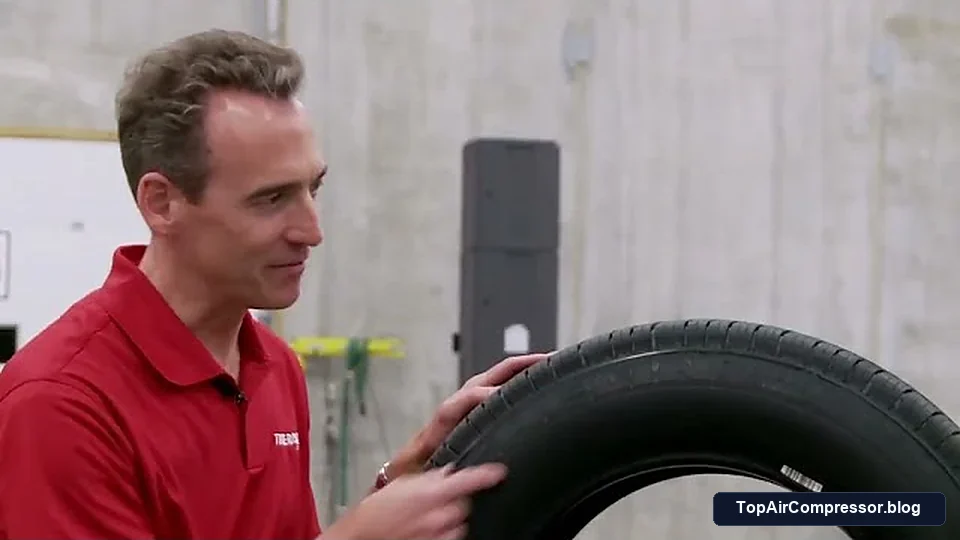
Automotive manufacturers design suspension systems around specific weight distributions and handling characteristics. Inflating tires to the sidewall maximum creates a harsh, bouncy ride and crowns the center tread.
Over-inflation resulting from following sidewall limits accelerates center tread wear and reduces braking grip. Conversely, under-inflation causes excessive shoulder flexing, internal heat buildup, and eventual sidewall structural failure.
Always prioritize the vehicle door placard numbers over tire sidewall stamps. The placard reflects engineering optimization for your specific chassis, wheelbase, weight distribution, and braking performance parameters.
- Sidewall numbers represent maximum structural pressure limits only.
- Following sidewall maximums causes harsh rides and center tread wear.
- Door placards account for vehicle weight distribution and handling specs.
- Always defer to vehicle manufacturer guidance over tire casing stamps.
Reading Size Codes and Load Indices
Tire size codes combine width, aspect ratio, construction type, and rim diameter specifications. Understanding these metrics ensures replacement tires match factory load index requirements safely and accurately.
Standard load versus extra load designations require different inflation strategies. Extra load tires often need slightly higher pressures to achieve identical load-carrying capacities.
- Verify load index numbers before installing replacement tires.
- Understand extra load tire pressure adjustments if applicable.
The Dangers and Mechanical Risks of Incorrect Tire Pressure Levels
Operating vehicles with improper tire pressure introduces severe mechanical risks and safety hazards. Under-inflated tires flex excessively, generating dangerous internal heat that can cause catastrophic tread separation at highway speeds.
Under-inflation also increases rolling resistance, forcing your engine to burn more fuel. This inefficiency wastes money and increases carbon emissions while accelerating shoulder tread wear across both axles.
Over-inflation reduces the tire's footprint on the pavement, diminishing traction during emergency stops. This loss of contact area compromises cornering grip and creates a harsh, jarring ride quality over road imperfections.
Maintaining precise inflation pressures protects suspension components, wheel bearings, and steering linkages from premature shock damage. Proper pressure ensures maximum contact patch area for optimal braking and acceleration control.
- Under-inflation causes dangerous heat buildup and tread separation.
- Low pressure increases rolling resistance and degrades fuel economy.
- Over-inflation reduces braking traction and damages suspension parts.
- Correct pressure preserves optimal contact patch area and steering feel.
Long-Term Wear Pattern Diagnostics
Inspect tread wear patterns monthly to diagnose chronic inflation errors early. Worn outer shoulders indicate sustained under-inflation, while bald center strips signal chronic over-inflation.
Catching alignment or pressure issues early extends tire lifespan significantly and prevents unexpected blowouts during long-distance highway driving trips.
- Inspect both outer shoulders for low-pressure wear indicators.
- Check center tread strips for signs of excessive inflation.
Video Walkthrough: What is the Proper Tire Pressure?
Technical Analysis of Performance Tires: Touring, Run-Flat, and SUV Models
Different tire categories require specific mechanical considerations regarding inflation and load support. Standard touring tires prioritize ride comfort, requiring moderate pressures aligned with standard passenger vehicle door placards.
Run-flat tires feature reinforced sidewalls designed to support vehicle weight temporarily after total pressure loss. These stiff sidewalls demand accurate pressure maintenance to prevent premature internal structural fatigue during commuting.
Heavy SUV and light truck applications utilize higher pressure ranges to support substantial vehicle weight. Neglecting proper inflation on utility vehicles leads to dangerous sway and compromised trailer towing stability.
Specialized performance tires, such as asymmetric tread designs or low-profile sidewalls, require strict adherence to manufacturer specifications. Their stiff construction offers superior cornering grip when inflated to precise factory targets.
- Touring tires balance comfort and moderate pressure requirements.
- Run-flat stiff sidewalls demand vigilant monitoring against fatigue.
- SUV applications require higher PSI ranges for heavy weight support.
- Performance models rely on exact pressure for maximum cornering grip.
Evaluating Specialized Tread Designs
Asymmetric and directional tread patterns rely on uniform pressure distribution to evacuate water effectively. Improper inflation disrupts hydroplaning resistance and wet traction performance.
Maintain strict pressure checks on specialized fitments to ensure uniform footprint contact across varying road surfaces and weather conditions.
- Ensure uniform pressure for effective water evacuation channels.
- Monitor specialized tread patterns for even wear progression.
Step-by-Step Procedure for Accurate Inflation Using an Air Compressor
Begin your inflation procedure by removing the plastic valve stem cap from the target tire. Inspect the brass valve core for dirt, corrosion, or sticking mechanisms before attaching any equipment.
Press your calibrated digital or dial pressure gauge firmly onto the valve stem. Listen for the hiss of escaping air to cease, and record the baseline cold pressure reading displayed.
Connect your portable air compressor hose securely to the valve stem and activate the pump. Add short bursts of compressed air, pausing frequently to check progress with your pressure gauge.
Once you reach the exact target PSI specified on your door placard, disconnect the compressor. Replace the protective valve stem cap tightly to keep moisture and road debris out of the core.
- Remove valve stem cap and inspect for dirt or corrosion.
- Attach pressure gauge firmly to establish accurate baseline reading.
- Use compressor in short bursts to avoid accidental over-inflation.
- Reinstall valve stem protective cap securely after completion.
Using Portable Compressors Safely
Connect 12V portable compressors directly to your vehicle's accessory outlet or battery terminals safely. Ensure the engine runs during inflation to prevent draining the vehicle battery.
Monitor compressor duty cycles to prevent overheating during multi-tire inflation tasks. Choosing units from our best portable tire compressor for car guide guarantees reliable performance and thermal protection.
- Run vehicle engine during compressor use to protect battery charge.
- Observe duty cycle limits on portable consumer air pumps.
Frequently Asked Questions
How often should I check my car tire pressure?
Check your tire pressure at least once every month using a reliable gauge. Routine monthly inspections prevent slow leaks and seasonal temperature drops from causing unexpected handling issues.
What does the TPMS dashboard warning light mean?
The Tire Pressure Monitoring System light indicates that one or more tires has dropped 25% below the recommended factory specification. Immediately check and inflate all tires to correct levels.
Can I inflate my tires when they are hot?
You can add air to hot tires, but you should never bleed air out of them. Hot driving conditions raise internal pressure naturally, so bleeding hot tires leaves them under-inflated later.
Where is the correct tire pressure listed on my vehicle?
The correct pressure is printed on the certification placard located on the driver-side door jamb. Never use the maximum pressure limit stamped on the tire sidewall.
How much pressure do tires lose in cold weather?
Tires typically lose about one PSI for every ten-degree Fahrenheit drop in ambient temperature. Fall and winter weather require proactive monthly inflation adjustments to maintain safe levels.