What Is the Recommended Tyre Pressure for My Car?
Maintaining proper tire inflation ensures maximum safety, optimal fuel economy, and extended tread life. Always reference factory placard specifications before filling your tires.

Your car's correct inflation level is printed on the driver doorjamb placard. Never rely on the maximum pressure listed on the tire sidewall.
Looking for matching picks? See our Best Air Compressor For Car Tyres: Top Picks (2026).
Practical Quick-Reference Table
| Scenario / Metric | Recommended Target | Why It Matters |
|---|---|---|
| Standard Commuting | Door placard PSI | Balances ride comfort and traction |
| Cold Weather Drop | Placard plus 1-2 PSI | Counters ambient temperature losses |
| Heavy Towing | Increased rear PSI | Prevents sway and stabilizes cargo |
| Monthly Check | Accurate digital gauge | Catches slow punctures early |
| Highway Travel | Cold setting baseline | Prevents dangerous heat expansion |
| Sidewall Limit | Never use for driving | Avoids severe under/overinflation risks |
Decoding Factory Vehicle Placard Specifications
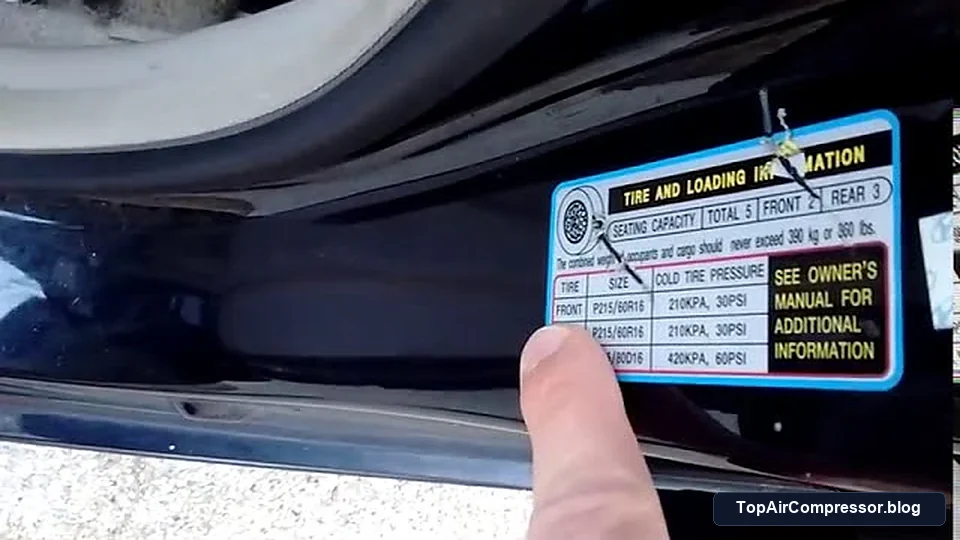
Finding the correct vehicle inflation value requires locating the manufacturer placard inside the driver-side door frame. This label provides precise numbers for front and rear axles.
When verifying pneumatic setups or using our cfm tool sizing calculator, avoid looking at sidewall markings. That number indicates the absolute maximum limit for daily driving.
Vehicle engineers calculate these specific numbers to balance ride comfort, load capacity, and handling stability. Altering them arbitrarily reduces mechanical grip and compromises braking performance.
The vehicle placard is normally located on the driver-side door jamb. It lists the exact cold inflation pressure recommended by the original manufacturer for optimal safety and handling performance.
Never rely on the maximum pressure stamped onto the tire sidewall. That figure represents the absolute limit for structural integrity, whereas the placard specifies the ideal PSI for your specific vehicle weight.
Pay close attention if your vehicle has staggered tire sizes between front and rear axles. Manufacturers engineer distinct pressure requirements to balance understeer tendencies and maximize overall stability during emergency braking maneuvers.
- Locate the official vehicle certification sticker
- Ignore maximum tire sidewall pressure limits
- Note different front and rear axle ratings
- Reference manufacturer payload guidelines carefully
Locating the Doorjamb Sticker
Open your driver door and inspect the metal pillar or edge. You will see a white and yellow certification label detailing gross vehicle weight and cold pressures.
If the door label is missing or painted over, check your glove compartment manual. Dealership parts departments can also retrieve original factory figures using your specific VIN number.
- Inspect driver door frame pillars
- Consult glove compartment owner manuals
- Contact dealerships for replacement figures
Mastering Cold Tire Pressure Measurements
Checking pneumatic pressure must always happen when tires are completely cold. Driving friction generates internal heat, which elevates readings. Consult our best air compressor for car tires guide for proper maintenance tools.
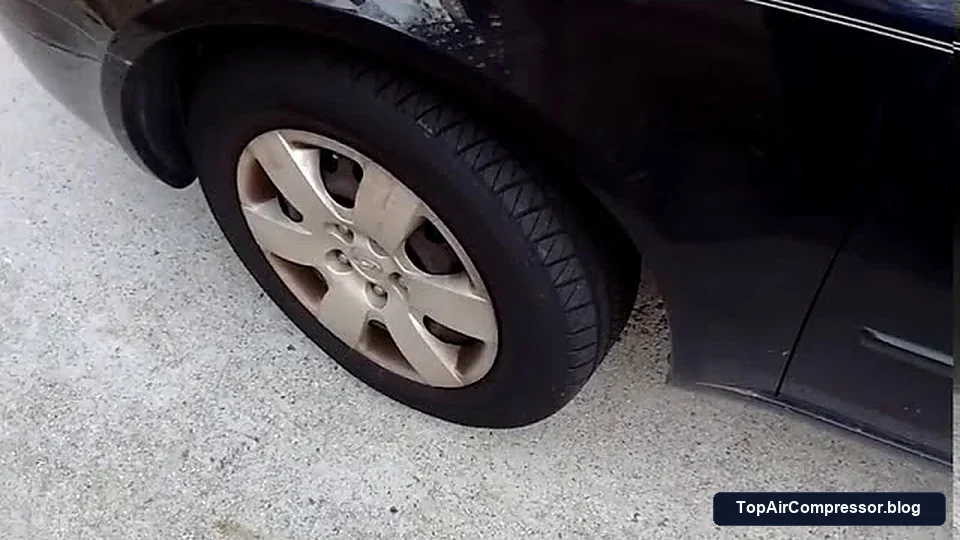
Industry standards define a cold tire as one that has sat idle for at least three hours or driven under one mile at low speeds.
If you measure tires immediately after highway travel, you might see readings climb by four to six PSI. Bleeding air then leaves them dangerously underinflated once cooled.
Always check your tire pressure when the vehicle has been stationary for at least three hours. Driving generates internal friction that heats the air inside, artificially inflating your pressure gauge readings by several PSI.
Remove the valve stem cap and firmly press a calibrated digital pressure gauge onto the metal valve. Listen for a brief hiss, which indicates a proper seal has been established before reading the digital display.
Maintain a dedicated, high-accuracy gauge in your glove compartment. Inexpensive pencil gauges often lose calibration over time, leading to chronic under-inflation conditions that degrade fuel economy and accelerate tread wear patterns.
- Measure only after three hours of inactivity
- Keep driving distances under one mile beforehand
- Avoid bleeding air from warm tires
- Account for friction-induced heat gains
Video Walkthrough: What Is The Correct Tire Pressure For Your Car? Fast \u0026 Easy!
Temperature Fluctuations and Atmospheric Physics
Ambient weather shifts dramatically impact internal pneumatic volume. For every ten-degree drop in outdoor temperature, your tires typically lose one PSI of air pressure.
Winter cold snaps frequently trigger dashboard warning lights because dropping temperatures shrink the trapped air molecules. Regular autumn adjustments prevent unexpected early morning low warnings.
Conversely, summer heat waves cause air to expand, raising pressure levels significantly. Monitoring seasonal shifts ensures your contact patch remains optimized for varying weather conditions.
Ambient temperature changes drastically impact internal tire pressure according to the ideal gas law. For every ten-degree Fahrenheit drop in outside air temperature, tires typically lose approximately one PSI of pressure.
Seasonal transitions require diligent monitoring as autumn turns to winter. Neglecting this thermodynamic reality means your tires could drop from a safe thirty-two PSI down to a dangerous under-inflated state overnight.
Conversely, direct summer sunlight can superheat tires parked outdoors. Always measure during the coolest morning hours to ensure you establish a truly baseline cold pressure before embarking on extended highway trips.
- Expect one PSI loss per ten degrees
- Adjust pressures during seasonal weather transitions
- Combat winter morning warning lights
- Monitor summer expansion rates closely
Establishing a Regular Inspection Schedule
Mechanics recommend checking your pneumatic levels at least once every month. Monthly checks catch slow leaks caused by minor punctures or aging valve stems.
Never wait for visual cues before testing your pressure with a reliable gauge. Modern radial tires often hide low air levels while maintaining a deceptive exterior profile.
Performing this quick maintenance before long road trips guarantees safer highway handling. Establishing a fixed routine protects your investment and prevents premature tread wear.
Adopt a strict routine of verifying your tire pressures at least once a month. Establishing this habit prevents slow leaks from going unnoticed until they trigger dashboard warnings or cause premature tread destruction.
Combine your monthly pressure checks with a visual inspection of the tread depth and sidewalls. Look for embedded nails, cracking rubber, or unusual wear patterns that indicate alignment or suspension issues.
Always pack a reliable unit from our best tyre inflator for car and bike reviews in your trunk. Topping off tires immediately upon discovering low pressure ensures you never drive on sub-optimal air volumes.
- Perform inspections every thirty days
- Never rely purely on visual checks
- Inspect valve stems for slow leaks
- Test pressures prior to long trips
Interpreting Dashboard Monitoring Systems
The tire pressure monitoring system illuminates a horseshoe-shaped warning light when pressure drops twenty-five percent below specifications. Ignoring this alert risks catastrophic structural failure.
Some advanced vehicle displays show exact PSI readings for each individual corner. Simpler systems use a single amber warning lamp requiring manual checks across all four wheels.
If the indicator blinks upon startup, the monitoring system itself has a sensor fault. Solid illumination simply points to insufficient inflation pressure somewhere on board.
Modern vehicles utilize Tire Pressure Monitoring Systems to alert drivers of significant pressure losses. An illuminated amber icon indicates that one or more tires have dropped twenty-five percent below the recommended placard pressure.
Indirect TPMS systems measure wheel speed differences via the ABS sensors. When a tire loses air, its overall diameter shrinks, causing it to rotate faster than the others and trigger the dashboard warning light.
Direct TPMS utilizes battery-powered radio sensors mounted inside each wheel assembly. These advanced sensors transmit exact PSI data directly to your dashboard, though they require system recalibration after every tire rotation procedure.
- Understand the twenty-five percent trigger rule
- Differentiate between solid and blinking warnings
- Inspect all four corners during amber alerts
- Address sensor battery faults promptly
Step-by-Step Air Compressor Inflation Procedures
Begin your inflation process by removing the protective plastic valve cap from the target stem. Press your digital or dial pressure gauge firmly onto the metal valve core.
Connect your unit from our best portable air compressor for car lineup securely and add air in short bursts. Incremental checks are essential for hitting precise pressure targets.
Once you reach the target figure listed on your door placard, screw the valve cap back on tightly. This cap prevents moisture entry and protects internal valve components.
Connect your portable air compressor to a stable twelve-volt power outlet or battery terminal. Set the digital auto-shutoff target on your compressor to match the exact target PSI listed on your driver door placard.
Secure the quick-connect chuck onto the tire valve stem firmly. Activate the compressor and monitor the digital gauge as air flows steadily into the chamber until it reaches your preset pressure limit.
Detach the chuck swiftly and screw the plastic valve cap back onto the stem to block moisture. Over-inflation happens quickly, so bleed off excess air using the deflator valve if you accidentally overshoot your target.
- Remove protective valve caps carefully
- Use accurate digital or dial gauges
- Add compressed air in short bursts
- Reinstall valve caps tightly afterward
Consequences of Incorrect Inflation Levels
Underinflation increases sidewall flexing, generating excessive internal heat that leads to tread separation. It also creates higher rolling resistance, which reduces your overall fuel economy significantly.
Overinflation reduces the available contact patch, concentrating wear entirely across the center tread. This harsh condition compromises traction and delivers a noticeably stiffer ride.
Maintaining exact manufacturer specifications ensures even weight distribution across the entire rubber footprint. Balanced wear extends overall tire life and maximizes emergency stopping performance.
Running on under-inflated tires increases rolling resistance and generates excessive internal heat. This structural stress rapidly delaminates rubber compounds, leading to catastrophic blowouts and severe reductions in fuel economy efficiency.
Over-inflation creates an equally dangerous scenario by shrinking the tire footprint. The center tread bears the entire vehicle weight, causing rapid center wear and significantly reducing your braking traction area on wet roads.
Both improper extremes compromise vehicle safety margins during evasive maneuvers. Maintaining exact manufacturer specifications ensures maximum contact patch area and predictable handling dynamics across all normal driving conditions.
- Avoid excessive sidewall flexing hazards
- Prevent center tread wear from overinflation
- Optimize rolling resistance for fuel savings
- Ensure maximum emergency braking traction
Specialized Vehicle Weight and Loading Variables
Towing heavy trailers or carrying maximum passenger loads changes your vehicle handling dynamics. Manufacturers often specify higher rear pressures for heavy cargo transport conditions.
Check your owner manual for specialized towing inflation tables before embarking on heavy hauling trips. Adjusting pressures prevents dangerous sway and maintains optimal steering control.
Return your pressures to standard daily commuting specifications once the heavy cargo is unloaded. This restores normal ride comfort and prevents unnecessary center tread wear.
Towing trailers or carrying heavy cargo loads alters your vehicle weight distribution significantly. Under these demanding conditions, you must consult the manufacturer guidelines to determine if you need higher cold inflation pressures.
Light trucks and commercial utility vehicles often require distinct front and rear PSI adjustments depending on bed cargo. Ignoring these heavy-load requirements accelerates suspension wear and compromises your steering control responsiveness.
Always return your tires to standard placard specifications once you unload the extra cargo. Running heavy-load pressures on an empty vehicle creates an overly stiff ride and reduces your overall braking contact patch.
- Consult manual towing pressure tables
- Adjust rear axle levels for cargo
- Prevent dangerous trailer sway issues
- Reset standard pressures after unloading
Frequently Asked Questions
Can I use the maximum pressure printed on my tire sidewall?
Never use the maximum sidewall figure for everyday driving conditions. That printed number represents the absolute structural limit rather than the optimal operating pressure calibrated for your specific vehicle weight and suspension design.
Always follow the manufacturer specifications printed directly on your vehicle doorjamb placard for safe daily commuting and optimal tire longevity.
How often should I check my tire pressure?
You should inspect your pneumatic pressure at least once every month using a reliable digital or dial gauge. Routine monthly checks help catch slow punctures early and prevent unexpected deflation during extreme weather shifts.
Furthermore, always verify your levels before embarking on extended highway road trips to maintain peak vehicle safety and optimal fuel efficiency.
What does a blinking TPMS warning light mean?
A blinking tire pressure monitoring system indicator typically points toward an electronic hardware malfunction rather than low air. This usually means an internal wheel sensor battery has failed or the receiver requires professional dealership reprogramming.
If the warning light stays solidly illuminated instead, you simply have one or more tires operating below the recommended threshold.
Does cold weather actually lower tire pressure?
Cold ambient temperatures cause trapped air molecules to contract significantly, which lowers your internal pressure readings. You can generally expect to lose about one PSI for every ten-degree drop in outdoor weather conditions.
Because of this physical law, autumn temperature drops frequently trigger dashboard warnings requiring immediate seasonal air inflation adjustments.
Should I adjust tire pressure when towing a trailer?
Towing heavy loads alters your vehicle weight distribution and requires higher rear tire pressures to support the added cargo. Consult your owner manual towing section to prevent dangerous trailer sway and maintain proper steering control.
Always remember to return your pressures to standard daily commuting specifications once you finish unloading your heavy cargo.