What Is the Right Tire Pressure for a Car?
Determining the right tire pressure ensures optimal vehicle safety, fuel efficiency, and tread wear. Mastering proper inflation techniques prevents premature rubber degradation and dangerous handling anomalies.

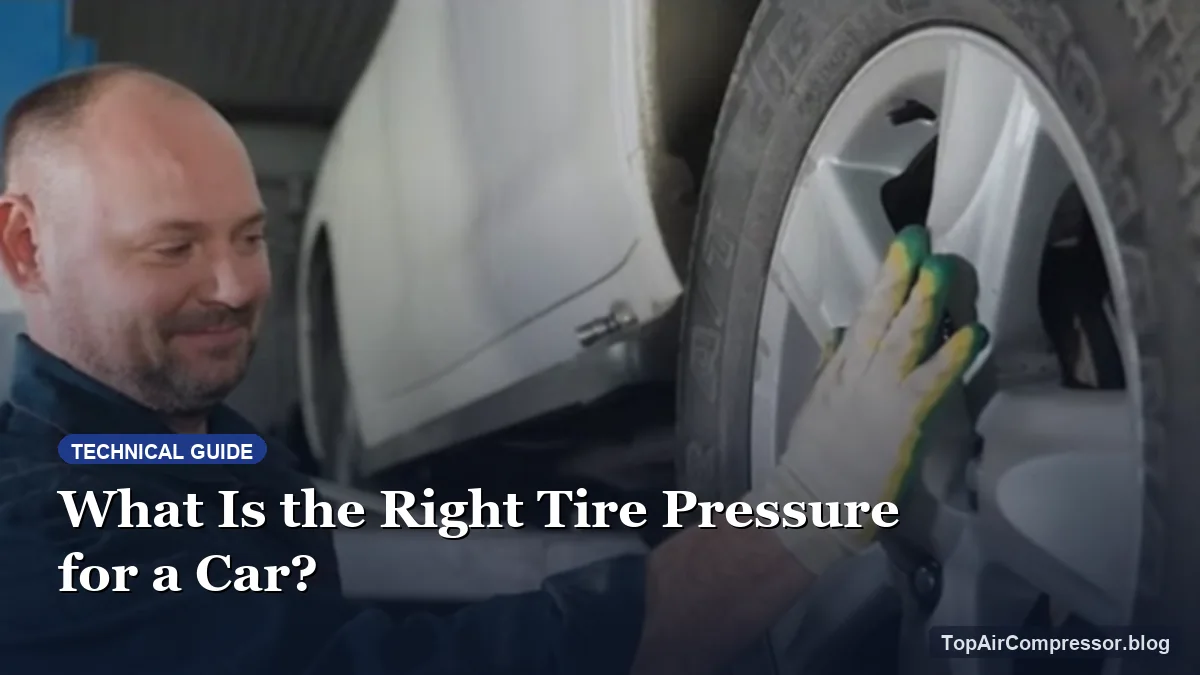
Always inflate your car tires to the factory placard pressure located on the driver door jamb rather than the maximum rating printed on the tire sidewall.
Looking for matching picks? See our Best Air Compressor For Car Tires: Top Rated Picks.
Practical Quick-Reference Table
| Scenario / Metric | Recommended Target | Why It Matters |
|---|---|---|
| Standard Passenger Car | 32 to 35 PSI | Balances ride comfort, braking efficiency, and even tread wear. |
| Compact & Subcompact | 30 to 33 PSI | Compensates for lighter vehicle weight while maintaining stability. |
| SUV & Light Truck | 35 to 40 PSI | Supports heavier loads and prevents excessive sidewall flexing. |
| Cold Inflation Check | Morning before driving | Delivers accurate baseline pressure before friction builds heat. |
| Winter Temperature Drop | Add 1 PSI per 10°F drop | Counteracts natural pressure loss caused by contracting air. |
| Sidewall Maximum | Never exceed printed PSI | Avoids catastrophic structural failure of the tire casing. |
Locating Your Vehicle Specific Factory Tire Pressure
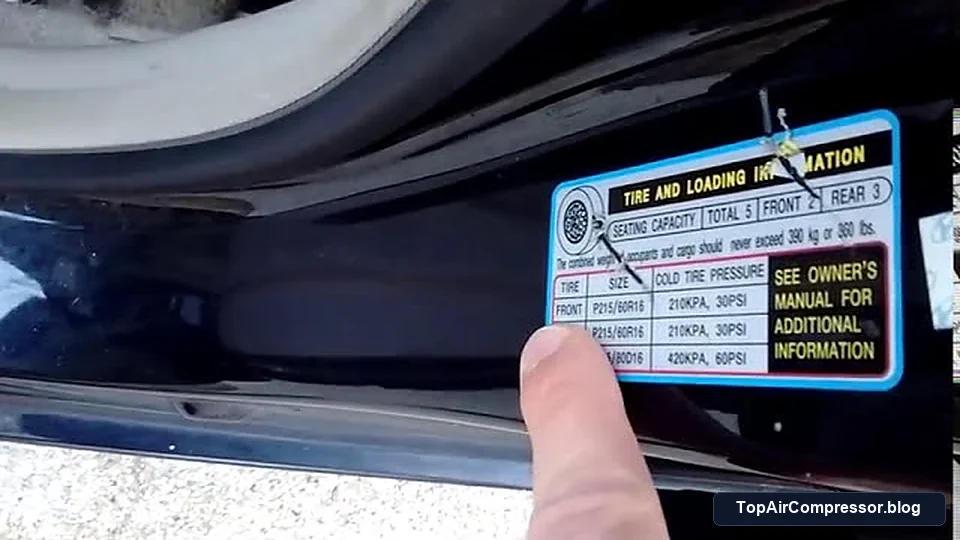
Every vehicle rolls off the assembly line with a specific load carrying requirement. Manufacturers calculate this exact pressure to balance vehicle handling, braking performance, and load capacity under normal driving conditions.
You should never rely solely on the tire rubber numbers. Check maximum pressure capacity using our cfm tool sizing calculator to understand pneumatic limits beyond your manufacturer operating target.
Open the driver side front door and inspect the metal or paper placard affixed to the door pillar. This label lists the correct front and rear PSI values for your exact vehicle trim.
Vehicles equipped with staggered tire setups may require different inflation pressures for front and rear axles. Always verify individual axle requirements before connecting any compressed air supply line to the valve stem.
Finding your correct inflation specification starts at the driver door jamb placard. Manufacturers affix this critical white and yellow safety sticker right on the B-pillar frame for easy daily reference.
Never rely solely on the tire sidewall when setting your daily inflation pressure. That molded figure represents the maximum pressure limit, not the ideal manufacturer recommendation designed for optimal vehicle handling.
Check the secondary backup location inside your glove box compartment or consult the owner manual. Fleet vehicles and commercial trucks often feature dual ratings depending on total cargo weight and rear axle loads.
Modern digital tire inflators require exact placard matching to prevent uneven tread wear. Entering the correct PSI value ensures your braking distances remain short and your fuel efficiency stays maximized.
- Locate the safety compliance certification label inside the driver door jamb.
- Check the vehicle owner manual for secondary PSI reference tables.
- Verify recommended cold pressure figures before adjusting inflation levels.
- Ignore maximum pressure ratings printed on the outer tire sidewall.
Secondary Placard Locations
Certain vehicle models place secondary tire pressure information inside the fuel filler door. This alternate location ensures easy reference during routine refueling stops.
Commercial vans or heavy utility vehicles might also display specific payload pressure adjustments inside the glove box compartment or beneath the hood latch assembly.
- Inspect the inside of the fuel filler flap for supplemental charts.
- Review glove box documentation for heavy towing pressure modifications.
The Critical Importance of Cold Inflation Pressure
Accurate pressure measurements require measuring tires when they are completely cold. Driving friction generates internal heat, causing compressed air molecules to expand and falsely elevate gauge readings.
A tire is considered cold when the vehicle has remained stationary for at least three hours. Alternatively, driving less than one mile at moderate speeds prevents significant temperature distortion inside the casing.
Checking warm tires often results in under inflation once the rubber cools down overnight. Always perform your monthly maintenance checks early in the morning before direct sunlight hits the rubber.
Environmental ambient temperatures directly influence internal tire pressure dynamics throughout changing seasons. Neglecting temperature shifts leads to chronic under inflation during sudden cold weather snaps.
Always check your tire pressure when the vehicle has been parked for at least three hours. Driving generates internal friction that heats the compressed air, causing a false pressure reading increase.
Ambient morning temperatures provide the most accurate baseline for your tire inflation levels, especially when using our best small tire inflator for car picks. Direct sunlight on one side can skew numbers by two to three PSI.
If you must drive to a service station, keep your trip under one mile at low speeds. This prevents significant heat buildup inside the rubber carcass that distorts your true cold inflation measurements.
Neglecting cold pressure rules leads to chronic under-inflation once the tires cool down completely overnight. Maintaining proper baseline metrics protects your suspension components and prevents premature sidewall flexing failures.
- Measure tire pressure after the vehicle sits parked for three hours.
- Avoid adjusting warm tires immediately after highway driving conditions.
- Account for morning ambient temperature changes across seasonal shifts.
- Use a calibrated digital or dial gauge for precise cold readings.
Temperature Coefficient Mechanics
Internal air pressure changes by approximately one PSI for every ten degree Fahrenheit shift in ambient temperature. Cold weather shrinks air volume, requiring proactive monthly top offs.
Summer heat expands internal air, occasionally pushing pressure dangerously close to maximum limits if tires were initially overfilled during cooler morning hours.
- Subtract one PSI for every ten degrees Fahrenheit of temperature drop.
- Add one PSI for every ten degrees Fahrenheit of temperature rise.
Video Walkthrough: What Is The Correct Tire Pressure For Your Car? Fast \u0026 Easy!
Standard Passenger Vehicle PSI Ranges and Categories
Most standard passenger cars require operating pressures ranging between thirty two and thirty five PSI. This standardized range provides adequate load support without compromising daily ride comfort.
Compact cars and smaller sedans often operate safely on slightly lower pressures around thirty PSI due to reduced gross vehicle weight ratings and lighter chassis configurations.
Midsize sedans and crossovers typically demand thirty three to thirty six PSI to maintain proper footprint contact patch geometry during emergency braking maneuvers and tight cornering sequences.
Always cross reference general industry averages with your specific door placard to ensure absolute accuracy for your particular vehicle make, model year, and suspension configuration.
Standard passenger car tires operate safely within a range of thirty two to thirty six PSI. Consult our best air compressor for car tires review when choosing tools for heavy mid-sized family crossover utility vehicles.
Light trucks and larger SUVs demand significantly higher pressure ratings, often requiring thirty five to forty five PSI. Heavy-duty towing applications frequently push rear tire requirements past fifty structural PSI.
Low-profile performance tires mounted on large alloy wheels require careful attention to manufacturer specifications. These stiff sidewall designs often utilize higher baseline pressures to prevent rim damage from sharp pothole impacts.
Exceeding standard ranges to chase marginal fuel gains creates harsh ride qualities and center tread wear. Always balance your chosen pressure against the vehicle gross weight rating stamped on compliance labels.
- Standard passenger cars generally require thirty two to thirty five PSI.
- Compact vehicles may utilize thirty to thirty three PSI safely.
- Crossovers and midsize sedans often target thirty three to thirty six PSI.
- Door placards always override generic automotive pressure guidelines.
Seasonal Temperature Fluctuations and Pressure Drift

Seasonal climate transitions present ongoing challenges for maintaining correct tire inflation levels across all geographic regions. Winter weather causes severe pressure loss as ambient temperatures plummet rapidly.
Failing to adjust for winter drops results in sluggish steering response, increased rolling resistance, and accelerated outer tread wear. Drivers must actively monitor gauges during the first autumn freeze.
Conversely, summer heat waves increase internal tire pressures significantly. Checking pressures during extreme afternoon heat prevents unexpected over inflation and harsh ride characteristics.
Establish a routine seasonal adjustment schedule to combat natural air permeation and thermal contraction throughout the changing calendar year without relying solely on dashboard warning lights.
Ambient temperature shifts drastically impact your pneumatic tire pressure throughout the changing calendar seasons. Physics dictates that for every ten degree Fahrenheit drop, tires lose roughly one PSI of air.
Winter cold snaps frequently trigger dashboard warning lights because stored air molecules contract rapidly. Checking pressures during autumn storms prevents unexpected flat spots and maintains safe traction margins on ice.
Conversely, blistering summer heat waves cause trapped air to expand rapidly inside the rubber chamber. High ambient asphalt temperatures can add four to six PSI, necessitating mid-summer air bleed adjustments.
Establishing a monthly adjustment routine protects you against radical weather transitions and severe pressure drift. Reliable digital pressure gauges ensure you maintain exact manufacturer tolerances despite extreme weather shifts.
- Perform monthly checks during autumn to combat rapid temperature drops.
- Prevent summer over inflation by checking pressures during cooler hours.
- Account for natural monthly air loss through rubber sidewall pores.
- Inspect valve cores for microscopic leaks during seasonal transitions.
Correct Compressed Air Inflation Procedures
Using an air compressor safely requires a stable setup and a reliable pressure gauge to prevent dangerous over pressurization. Remove the plastic valve cap and store it securely.
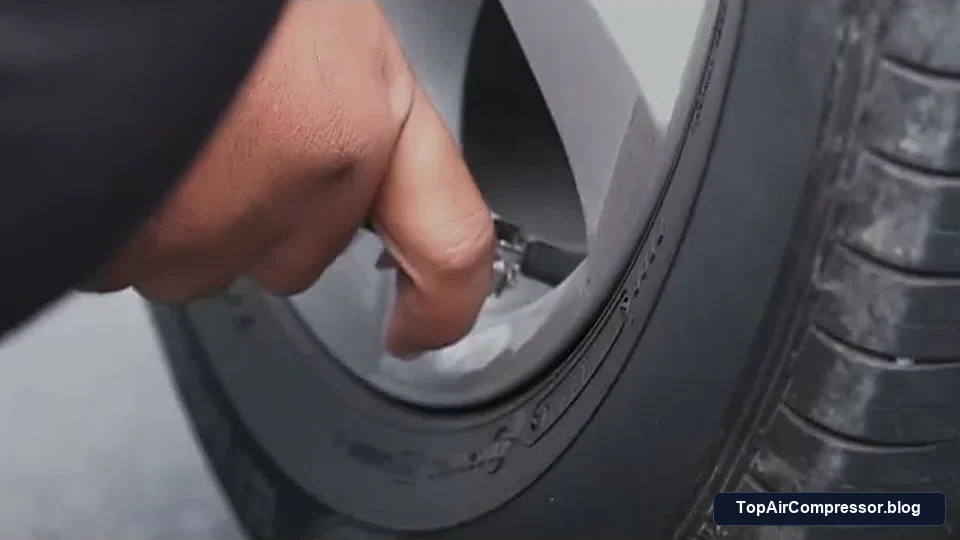
Press your tire inflator chuck firmly onto the metal valve stem until the escaping hiss stops. Review our best portable tire compressor for car guide before you engage the trigger to deliver controlled bursts.
Check the inline pressure gauge frequently during the inflation cycle to avoid overshooting your target PSI. Many modern portable inflators feature automatic shut off capabilities for precision work.
If you accidentally add too much air, depress the center valve pin manually using a pen tip or gauge deflater until the correct factory placard pressure is restored.
Begin your inflation process by removing the protective plastic valve stem cap carefully. Inspect the brass core for debris or corrosion before attaching your heavy-duty air chuck securely to the valve stem.
Utilize a calibrated inline pressure gauge connected to your garage air compressor system. Short bursts of compressed air allow gradual pressure building without overshooting your target manufacturer specifications by accident.
If you accidentally inject too much air into the chamber, use the bleed valve button. Never leave a running compressor unattended while filling tires to avoid dangerous burst pressure hazards and over-inflation.
Securely hand-tighten the valve stem cap back onto the threads once target inflation is achieved. This prevents moisture intrusion and dust accumulation that causes slow air leaks over extended driving periods.
- Remove and safely store valve stem dust caps before starting.
- Press the air chuck squarely onto the stem to eliminate leaks.
- Deliver controlled air bursts while monitoring gauge readings closely.
- Release excess pressure immediately if you overshoot the target PSI.
Reading Sidewall Markings and Maximum Limits
Tire sidewalls display a complex series of alphanumeric codes detailing size, load index, speed rating, and maximum inflation pressure specifications. Understanding these markings helps prevent dangerous mistakes.
The phrase max pressure followed by a specific PSI rating indicates the absolute structural limit of the tire casing. This is never the recommended operating pressure for daily driving.
Inflating a tire to its maximum sidewall rating creates a stiff, rigid contact patch that reduces traction, accelerates center tread wear, and compromises overall vehicle suspension compliance.
Always combine sidewall size data with your vehicle door placard to select replacement tires that match original equipment manufacturer load carrying capacities and safety parameters.
Tire sidewalls display a wealth of critical manufacturing data molded directly into the rubber compound. Look for the distinct text indicating maximum pressure alongside the allowable maximum load rating limits.
Exceeding the stamped maximum PSI rating creates catastrophic structural risks during high-speed highway driving. The sidewall text serves as a safety boundary rather than a recommended operating guideline for daily commuting.
Inspect the DOT serial code located near the inner bead to verify tire age. Rubber compounds degrade over time, reducing the structural integrity required to hold high compressed air safely under heavy loads.
Understanding speed rating letters helps you match replacement tires to your vehicle performance capabilities. High-performance tires feature reinforced internal belts designed to handle intense centrifugal forces without tread separation.
- Locate maximum pressure text stamped near the bead area.
- Distinguish between maximum limit ratings and recommended placard PSI.
- Read sizing codes to ensure proper replacement tire compatibility.
- Avoid matching operating pressure to the maximum sidewall figure.
Interpreting Tire Pressure Monitoring Systems
Modern vehicles feature an electronic tire pressure monitoring system designed to alert drivers when pressure drops twenty five percent below recommended placard levels.
A glowing dashboard icon resembling a horseshoe with an exclamation point indicates at least one tire requires immediate air service or professional inspection.
Flashing sensor lights upon vehicle startup often point toward a failing internal sensor battery or a temporary system communication fault requiring diagnostic reset procedures.
Never ignore a persistent warning light even if the tires appear visually acceptable from a distance. Modern low profile tires can hide significant pressure loss invisibly.
Modern vehicles utilize advanced TPMS technology to alert drivers of dangerous pressure drops instantly. A glowing dashboard warning icon typically indicates a drop below twenty five percent of the recommended cold pressure.
Direct TPMS sensors mounted inside each wheel valve measure actual internal pressure and temperature continuously. These battery-powered units transmit radio signals directly to your instrument cluster for real-time diagnostic monitoring.
Indirect systems monitor wheel rotational speed through ABS sensors to detect rolling diameter changes. When a tire loses air, its smaller rolling radius spins faster, triggering the dashboard low pressure alert without direct sensors.
Always perform manual pressure checks even when your dashboard monitoring system shows no active warnings. Routine gauge checks catch slow leaks early and protect your tire sensors from premature battery failure.
- Understand that the dashboard icon signifies a twenty five percent drop.
- Investigate flashing startup indicator lights for sensor faults.
- Inspect all four tires promptly when the warning light illuminates.
- Perform system resets after adjusting pressures to factory specifications.
Frequently Asked Questions
What is the standard tire pressure for most cars?
Most standard passenger cars require 32 to 35 PSI for optimal handling and tread wear. Always verify this number against your specific vehicle door placard before inflation.
Should I inflate my tires to the maximum PSI printed on the sidewall?
Never inflate tires to the maximum sidewall rating. That figure represents the absolute structural limit rather than the manufacturer recommended daily operating pressure.
Why does tire pressure drop during cold weather?
Cold ambient temperatures cause air molecules inside the tire to contract and lose volume. Expect to lose roughly one PSI for every 10 degree temperature drop.
How often should I check my vehicle tire pressure?
Check your tire pressure at least once a month and before long road trips. Always perform checks when the tires are completely cold.
What does a glowing TPMS dashboard warning light mean?
A steady dashboard warning light means at least one tire has dropped below safe operating thresholds. Inspect and inflate all tires immediately.