What PSI Should a 4x4 Tyre Be?
Proper tire pressure ensures traction, safety, and uniform tread wear across varying terrains. Adjusting your psi correctly protects your suspension components from premature damage.

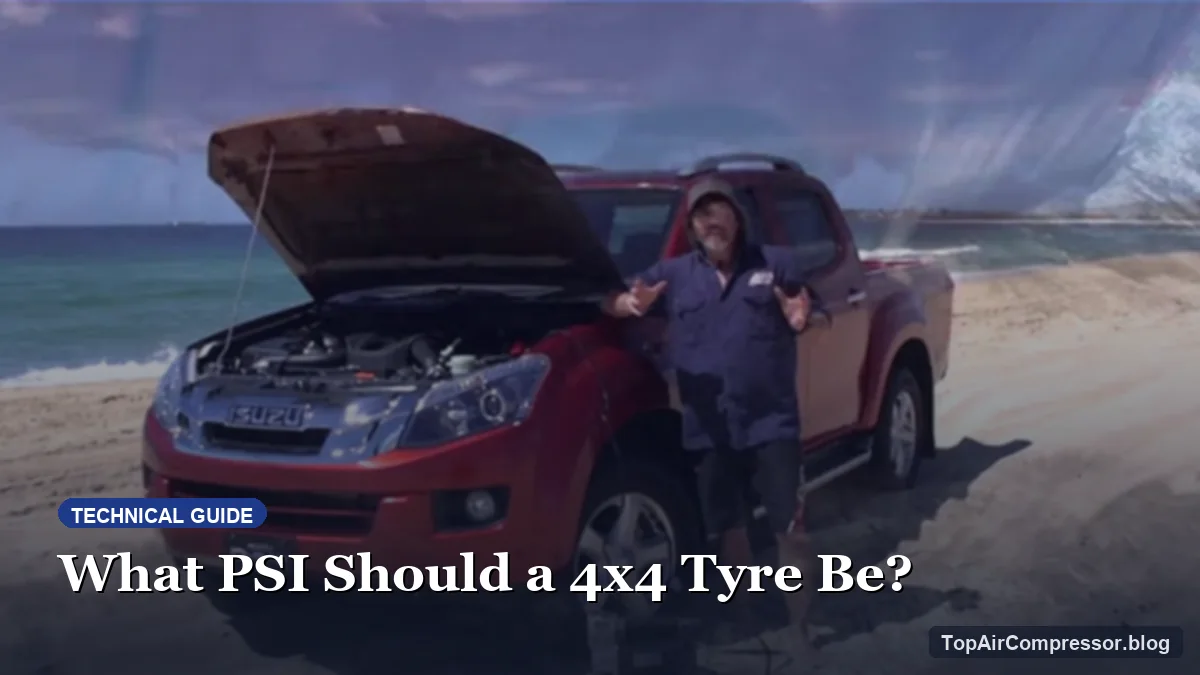
Standard street driving typically requires 32 to 38 PSI, while off-road crawling often necessitates lowering pressures between 15 and 22 PSI depending on tire construction.
Looking for matching picks? See our Best Tyre Compressor For 4X4: Top Off-Road Picks.
Practical Quick-Reference Table
| Scenario / Metric | Recommended Target | Why It Matters |
|---|---|---|
| Highway Driving | 32 to 38 PSI | Optimizes fuel economy and even tread wear. |
| Standard Dirt Roads | 25 to 30 PSI | Smoothes out minor washboard vibrations. |
| Soft Sand & Dunes | 15 to 20 PSI | Maximizes footprint to prevent sinking. |
| Technical Rock Crawling | 12 to 18 PSI | Conforms rubber over sharp jagged obstacles. |
| Heavy Cargo Loads | 38 to 42 PSI | Supports extra weight without sidewall flexing. |
| Compressor Duty Cycle | 30% to 50% | Prevents thermal motor burnout during use. |
Understanding Off-Road Tire Pressure Mechanics

Determining the correct inflation level for your heavy vehicle requires balancing load ratings with footprint requirements. Contact patch expansion directly dictates your traction across loose dirt, sand, and jagged rock surfaces.
When you lower your psi, the rubber carcass deforms significantly to distribute vehicle weight over a larger area. This mechanical flattening prevents sinking in soft sand and absorbs high-impact shocks from rocky obstacles seamlessly.
However, running pressures that are too low introduces dangerous structural liabilities like bead unseating during hard cornering maneuvers. Maintaining an optimal balance protects your sidewalls while maximizing grip on challenging technical inclines.
Heavy-duty models from our best tyre compressor for 4x4 guide play a vital role when transitioning between different terrains by restoring highway pressures efficiently. Always verify your compressor delivers adequate cubic feet per minute.
- Measure cold inflation levels before beginning any extended journey.
- Match your inflation target to total vehicle weight and cargo.
- Understand sidewall ply ratings before dropping below twenty psi.
- Keep a reliable digital pressure gauge inside your glove box.
Tire Construction and Sidewall Stiffness
Radial tires feature flexible sidewalls that bulge predictably when deflated, providing exceptional off-road traction. Load range ratings dictate how far you can safely drop pressure without risking internal structural cord damage.
Passenger-rated tires possess much thinner sidewalls compared to heavy-duty off-road alternatives, demanding higher minimum psi thresholds. Always inspect your tire sidewall stampings to identify maximum load limits and recommended cold inflation benchmarks.
- Examine ply counts listed on the outer rubber sidewall.
- Avoid aggressive deflation on light-duty passenger tire casings.
Manufacturer Placards Versus Real-World Terrain Pressures
Every factory vehicle includes a specialized placard located inside the driver door jamb detailing standard pressures. These baseline figures optimize fuel economy, ride comfort, and highway handling for stock equipment configurations thoroughly.
Installing larger aftermarket tires immediately invalidates the factory door placard numbers because internal volume changes significantly. You must calculate new baseline pressures using chalk tests or weight-to-pressure formulas provided by specialty manufacturers.
Off-road environments demand flexible PSI choices found in our best tyre inflator for 4x4 roundup to prevent vehicle immobilization. Dropping down creates a longer contact patch that bridges loose gravel and distributes vehicle mass efficiently.
Reinflation must occur before returning to high-speed paved roads to prevent excessive heat buildup and tread separation. Driving fast on under-inflated tires destroys internal structural belts through rapid friction and uncontrolled sidewall flexing.
- Check the driver door jamb for original equipment baselines.
- Account for added weight from winches, bumpers, and roof racks.
- Recalculate psi whenever you upgrade to larger tire diameters.
- Never exceed maximum pressure ratings stamped on the rubber.
Calculating Custom Pressures for Modified Rigs
Modified four-wheel-drive vehicles carry substantial extra weight from aftermarket armor, winches, and camping gear installations. This increased mass requires higher highway inflation pressures to prevent abnormal shoulder wear and internal casing fatigue.
Performing a simple chalk test helps determine if your current pressure ensures flat tread contact across pavement. Apply chalk across the tread face and drive a short distance to inspect wear patterns visually.
- Use chalk tests to verify even tread surface contact.
- Adjust psi incrementally until the chalk wears away evenly.
Video Walkthrough: WHAT PRESSURE?
Step-by-Step Air Compressor Calibration for Four-Wheel Drives
Operating an onboard model selected from our best tyre air compressor reviews requires systematic preparation to ensure fast, safe inflation cycles. Always inspect your electrical connections and air hoses for cracks before connecting the brass chuck.
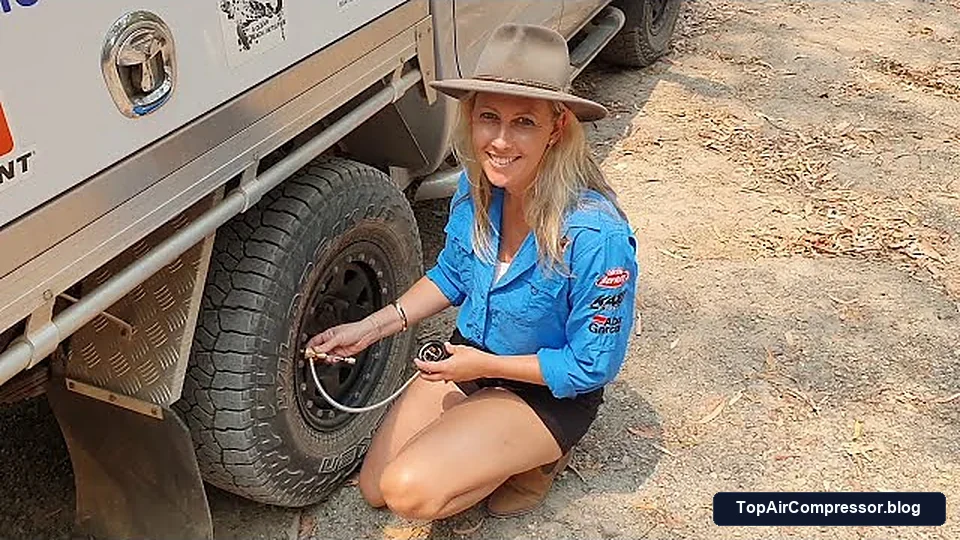
Start your vehicle engine to maintain alternator voltage and prevent draining the primary starter battery completely. High-output compressors draw substantial electrical current, making engine-assisted generation necessary during multi-tire inflation tasks.
Attach the quick-release chuck securely to the tire valve stem while monitoring the inline pressure gauge closely. Inflate the tire in short bursts, checking total pressure frequently to avoid overshooting your desired target psi.
Allow your air compressor to cool down periodically if you are inflating all four massive tires consecutively. Thermal overload switches protect electric motors from burning out during extended duty-cycle operations under heavy loads.
- Secure all power clamps directly to clean battery terminals.
- Keep air hoses clear of hot exhaust components during use.
- Monitor compressor body temperature during multi-tire inflation cycles.
- Store all fittings inside a clean bag to block dust.
Managing Air Delivery Rates and Duty Cycles
Understanding your equipment duty cycle prevents premature motor failure during high-volume tire inflation sessions. Most portable units feature specific run-time limits expressed as a percentage of total operational operating duration.
High CFM delivery rates reduce total waiting time when stepping up from trail pressures to highway levels. Always choose a compressor matched to your specific tire volume to avoid excessive thermal stress during operation.
- Check the manufacturer duty cycle rating before starting work.
- Give portable units adequate rest periods between heavy inflation cycles.
Technical Risks of Over-Inflation and Under-Inflation
Running highway pressures off-road creates dangerous rigidity causing your vehicle to bounce uncontrollably over obstacles. You can check proper volume requirements with our cfm and tank sizing calculator to avoid excessive stress on vulnerable suspension components.
Conversely, driving on extremely low pressures on high-speed asphalt causes catastrophic heat generation inside the rubber carcass. Casing separation frequently occurs when under-inflated tires rotate at highway speeds due to uncontrolled sidewall flexing.
Bead unseating represents another major hazard when cornering aggressively with severely reduced off-road tire pressure levels. Debris can enter the gap between the rim and bead, causing rapid air loss and stranded vehicle emergencies.
Uneven tread wear patterns emerge quickly if your daily driving pressures do not match load requirements. Over-inflation destroys the center tread, while under-inflation ruins both outer shoulders through excessive friction and heat accumulation.
- Inspect tread blocks regularly for signs of abnormal wear.
- Avoid high-speed driving on low trail pressure settings.
- Check for foreign debris lodged near the wheel bead.
- Maintain correct alignment to complement proper tire inflation.
Identifying Early Signs of Casing Fatigue
Internal structural fatigue manifests as subtle vibrations or irregular bulging along the outer sidewall rubber. Catching these structural defects early prevents catastrophic blowout events during high-speed highway transit or remote travel.
Inspect your tires thoroughly after every rigorous off-road excursion to spot cuts, bulges, or embedded rocks. Promptly replace any rubber showing compromised internal cords or deep gouges near the vulnerable sidewall zones.
- Look for unusual bulges along the outer sidewall area.
- Replace damaged rubber immediately before embarking on long trips.
Environmental Variables and Temperature Compensation
Ambient temperature fluctuations directly impact internal tire pressure according to foundational gas laws and thermodynamics. Every ten-degree shift in Fahrenheit alters your tire pressure by approximately one single pound per square inch.
Checking your pressures during freezing morning conditions requires adding air to compensate for dropping ambient temperatures. When the afternoon sun warms the asphalt, those same tires will experience a natural pressure increase.
High-altitude mountain driving also alters absolute pressure readings relative to changing barometric conditions in remote regions. Always verify your cold inflation levels when transitioning between vastly different elevations and climate zones.
Moisture buildup inside compressed air lines can introduce water droplets into your tires during inflation cycles. Installing an inline moisture trap protects your valve cores from corrosion and prevents unexpected pressure fluctuations later.
- Adjust baseline pressures when moving to colder climates.
- Account for elevation changes during cross-country road trips.
- Drain your compressor tank regularly to minimize moisture accumulation.
- Verify pressure readings after vehicles sit in direct sunlight.
Accounting for Tire Heat Buildup on Pavement
Driving at sustained highway speeds generates friction that naturally heats up the air trapped inside tires. This thermal expansion increases pressure readings by several psi, which is an expected physical reaction during travel.
Never bleed air out of hot tires during a long journey because they will become under-inflated. Always perform accurate pressure adjustments when the rubber has cooled down completely for at least three hours.
- Allow tires to cool before measuring baseline pressures.
- Avoid bleeding hot tires during highway rest stops.
Video Walkthrough: 4WD Tyre Pressure Tips
Routine Maintenance and Pressure Testing Protocols
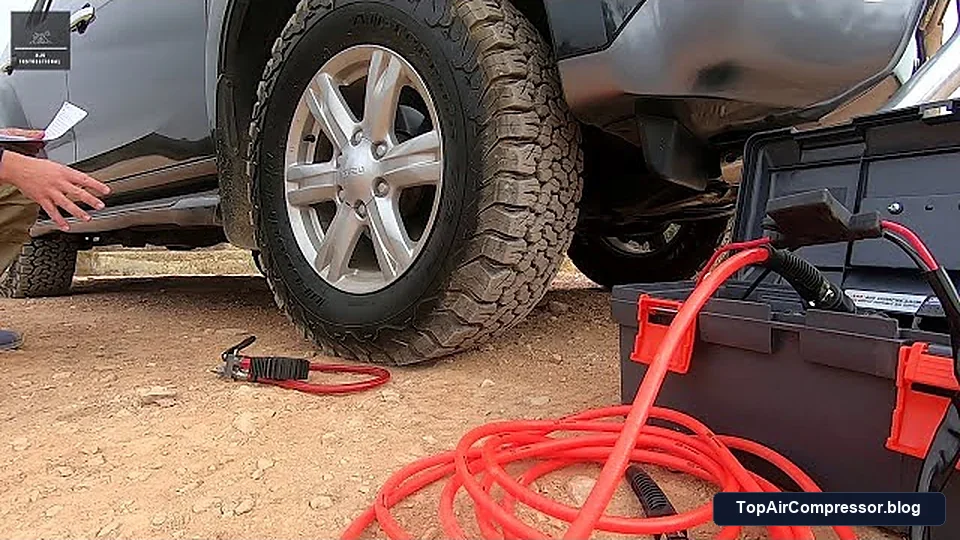
Establishing a consistent maintenance routine ensures your tires and air delivery equipment remain completely reliable. Inspect valve cores regularly for leaks and replace missing valve caps immediately to keep out damaging dirt debris.
Calibrate your digital or dial pressure gauges periodically against a certified reference standard to maintain accuracy. Dropping a gauge on concrete can knock internal mechanical components out of alignment, leading to false readings.
Store your portable air compressor in a clean, dry location protected from extreme moisture and dust. Lubricate quick-disconnect fittings lightly with appropriate pneumatic oil to ensure smooth operation during field recovery situations.
Inspect rubber air hoses for micro-cracks, abrasions, or bulging sections that indicate impending structural failure under pressure. Replacing damaged hoses proactively prevents sudden air loss during emergency roadside or trailside inflation tasks.
- Test pressure gauges against certified calibration standards annually.
- Keep valve stem caps securely fastened to block mud.
- Store pneumatic hoses without sharp kinks or severe bends.
- Check compressor intake filters and clean them regularly.
Field Diagnostics for Pneumatic Equipment Failures
When your compressor fails to build pressure, systematically check electrical fuses, relay switches, and hose connections. A blown inline fuse usually indicates an electrical overload caused by excessive operating resistance or motor strain.
Listen closely for audible air leaks around quick-disconnect fittings and threaded manifold ports during operation. Applying soapy water to connections helps reveal tiny bubbles escaping from faulty seals or loose threaded joints.
- Inspect inline fuses immediately when power fails.
- Use soapy water solutions to locate stubborn air leaks.
Frequently Asked Questions
Can I drive on the highway with 15 PSI in my tires?
Driving at highway speeds on 15 PSI causes dangerous excessive heat buildup and structural casing failure. Always reinflate your tires using a reliable compressor before returning to paved roads.
How do I know my exact off-road pressure target?
Your ideal off-road pressure depends on vehicle weight, tire stiffness, and specific terrain challenges. Testing incrementally while monitoring sidewall deflection helps establish a safe and effective operating baseline.
Do beadlocks allow even lower tire pressures?
Mechanical beadlock wheels physically clamp the outer tire bead to the rim, preventing unseating at very low pressures. This allows extreme off-roaders to run single-digit psi numbers safely in specialized environments.
Why does my tire pressure drop overnight?
Ambient temperatures drop significantly overnight, causing the air molecules inside your tires to contract and lower pressure. Thermal gas contraction explains why morning pressures routinely read lower than afternoon levels.
How often should I check my air compressor?
Inspect your portable air compressor and hoses before every major off-road trip or excursion. Regular checks ensure your equipment functions correctly when you need emergency trailside reinflation assistance.