What PSI Should Ford Focus Tyres Be?
Maintaining correct tire pressure ensures safety, optimal fuel economy, and extended tread life. Proper inflation keeps your vehicle handling predictably under all driving conditions.


Most standard Ford Focus models require 32 to 35 PSI for optimal performance. Always verify the exact specification listed on the driver door jamb placard.
Looking for matching picks? See our Best Tyre Air Compressor: Top Picks for Reliable Roadside Safety.
Practical Quick-Reference Table
| Scenario / Metric | Recommended Target | Why It Matters |
|---|---|---|
| Standard Daily Driving | 32-35 PSI | Ensures balanced tread wear and comfort. |
| High-Speed / Highway | 35-38 PSI | Reduces sidewall flex and heat buildup. |
| Cold Weather Drop | +1 PSI per 10°F drop | Prevents low-pressure warning triggers. |
| Max Cargo Load | 38-41 PSI | Supports heavy weight without tire damage. |
| Compact Spare Tire | 60 PSI | Ensures emergency readiness if deployed. |
| Tread Depth Limit | 2/32 inch | Maintains minimum legal wet traction grip. |
Decoding Vehicle Placards and Manufacturer Specifications
Every modern vehicle features a permanent certification label affixed near the driver door latch. This sticker displays the exact vehicle weight ratings alongside the factory recommended PSI for both front and rear tires.
Relying on sidewall maximum pressure stamped by manufacturers causes harsh rides. Consulting our cfm tool sizing calculator helps estimate pneumatic tool demands accurately before connecting hoses to your shop air supply.
Reviewing this safety placard during routine maintenance prevents under-inflation errors. Environmental shifts and gradual air permeation make monthly checks essential for keeping your compact hatchback operating safely on public roads.
Technical teams design the chassis geometry around specific tire rigidity profiles. Deviating from these factory baselines alters braking distances, cornering agility, and electronic stability control response times significantly across dry pavement.
- Locate the certification label on the inner driver door pillar.
- Match cold inflation numbers to the specified front and rear axles.
- Ignore the maximum pressure rating printed on the tire outer sidewall.
- Inspect valve stems for cracks during every scheduled placard review.
Locating Alternative Inflation Data Sources
Owners manuals provide comprehensive tables for different wheel diameters. Factory options ranging from standard sixteen-inch alloys to sporting nineteen-inch setups require distinct inflation targets to maintain stability.
Cross-referencing manual tables with your specific engine variant prevents errors. Heavier diesel or turbocharged powertrain layouts often demand unique front axle pressures compared to base naturally aspirated configurations.
- Check the glove box literature for detailed axle weight charts.
- Account for factory wheel upgrade packages when setting pressures.
Technical Breakdown of Standard PSI Requirements
Standard Ford Focus variants typically specify 32 PSI for everyday commuting duties. This baseline provides a compliant ride quality while minimizing rolling resistance to maximize overall fuel efficiency metrics.
Fully loaded passenger compartments or sustained highway commuting often call for bumped pressures. Elevating targets toward 35 PSI stabilizes the tire footprint and reduces dangerous internal heat generation at velocity.
Cold tire measurements must happen before driving significant distances. Reviewing our cfm vs psi guide helps clarify how pressure interacts with pneumatic delivery requirements during routine automotive maintenance tasks.
Maintaining consistent baseline measurements across all four corners prevents pulling. Uneven inflation forces the steering geometry to compensate constantly, accelerating mechanical wear across tie rods and ball joints.
- Target 32 PSI for standard daily commuting and city driving.
- Increase to 35 PSI for extended highway road trips.
- Take all baseline measurements when tires are completely cold.
- Check pressures before operating the vehicle in the morning.
Evaluating High-Performance Focus Variant Demands
Performance-oriented hatchback models equipped with low-profile tires demand greater internal rigidity. These aggressive rubber compounds require higher baseline pressures to prevent rim damage over sharp potholes.
Consulting the secondary manual supplement ensures you protect expensive alloy wheels. Stiff sidewalls on large diameter performance tires rely heavily on proper pneumatic support to absorb severe impacts.
- Verify low-profile tire placards for specialized tuning numbers.
- Inspect alloy wheel rims for structural bends during inflation.
Video Walkthrough: Ford Focus - RECOMMENDED TIRE PRESSURE \u0026 FACTORY TIRE SIZE (2011 - 2018)
Analyzing Tread Wear Patterns Caused by Improper Inflation
Under-inflation concentrates vehicle weight onto the outer shoulder tread blocks. This excessive flex generates high internal temperatures, causing rapid shoulder degradation and accelerated structural carcass fatigue over time.
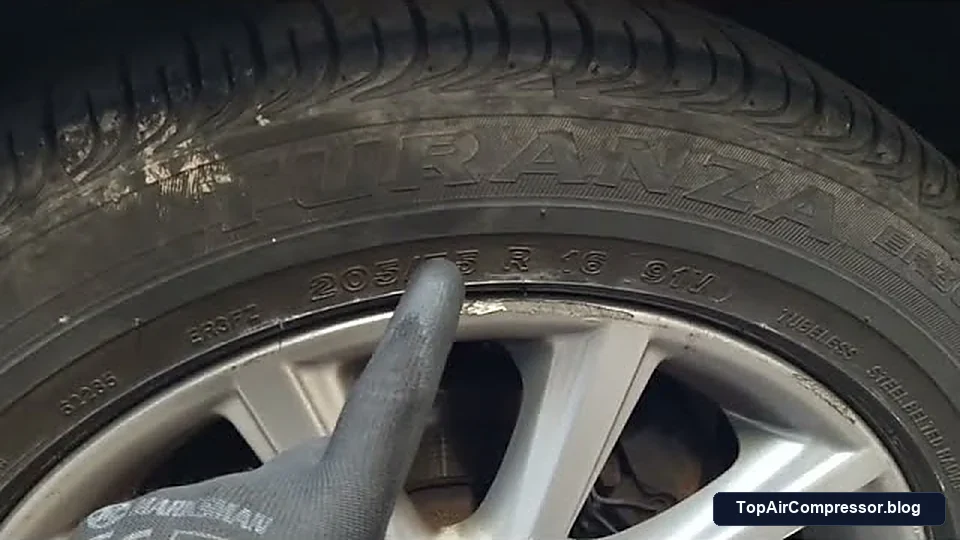
Conversely, over-inflation forces the tire contact patch to crown directly down the centerline. This narrows the functional footprint, reducing wet traction grip and causing premature wear across the middle treads.
Visual inspections reveal these wear anomalies long before safety becomes critical. Running your hand across the tread reveals feathering or cupping caused by chronic pressure neglect and poor alignment angles.
Maintaining balanced pressure distribution ensures even contact across the entire tread width. This maximizes mileage potential and preserves critical water evacuation channels required during heavy rainstorms.
- Shoulder wear indicates chronic under-inflation conditions.
- Center tread wear points to excessive over-inflation practices.
- Inspect tread depth regularly using a calibrated depth gauge.
- Rotate tires every designated interval to promote even wear.
Detecting Structural Tire Damage Early
Chronic low pressure causes internal steel belts to distort under heavy loads. This structural failure often manifests as sidewall bulges or sudden tread separation during high-speed highway transit.
Replacing compromised tires immediately prevents catastrophic blowouts. Never attempt to reinflate a tire that has operated extensively below safe pressure thresholds without a professional inspection.
- Look for sidewall blisters or cuts during monthly checks.
- Discard tires driven flat for extended operational periods.
Adjusting Pressure for Varied Cargo and Driving Speeds
Carrying heavy cargo loads changes the dynamic weight distribution across both axles. Adjusting tire pressure upward by two to three PSI helps support the additional mass without excessive sidewall deflection.
Sustained high-speed driving on interstate highways increases internal tire temperatures rapidly. Ensuring pressures match high-speed recommendations prevents dangerous thermal expansion cycles from compromising structural integrity.
Drivers must verify loads before embarking on long road trips. Checking our scfm vs cfm breakdown ensures proper equipment matching when inflating heavy-duty utility trailer tires or large truck configurations.
Returning pressures to standard baseline levels after unloading prevents harsh daily rides. Maintaining this dynamic adjustment habit optimizes tire longevity across changing operational missions throughout the year.
- Add pressure when hauling heavy cargo or multiple passengers.
- Verify high-speed placard recommendations before interstate trips.
- Revert to standard baseline settings after unloading cargo.
- Monitor tire temperatures during extended hot-weather driving.
Environmental Temperature Effects on Pneumatic PSI Levels
Ambient temperature fluctuations directly alter internal tire pressure measurements. Physics dictates that air loses density as temperatures drop, causing a loss of one PSI for every ten degree Fahrenheit decrease.
Seasonal transitions catch many motorists off guard during the first autumn frost. Dashboard warning lights frequently illuminate on chilly mornings simply due to thermal contraction rather than a physical puncture.
Summer heat waves have the exact opposite physical effect on contained air. High pavement temperatures can elevate cold baseline readings significantly, pushing tires toward dangerous maximum limits during transit.
Compensating for weather shifts requires monthly calibration checks. Adjusting your target numbers during seasonal changes ensures consistent vehicle handling regardless of external meteorological conditions.
- Expect pressure drops during sudden autumn temperature shifts.
- Check tires during seasonal changes to maintain baseline targets.
- Avoid bleeding hot tires back down after highway driving.
- Account for local climate when storing seasonal wheel sets.
Video Walkthrough: How to Find Tyre Pressure in Ford Focus IV ( 2018 - now ) | Check Tyre Pressure
Calibrating Air Compressors for Accurate Household Fills
Using a reliable digital pressure gauge ensures accurate readings during inflation tasks. Inexpensive pencil gauges often suffer from mechanical sticking and inaccurate spring calibrations over extended periods.
Connecting your portable air compressor requires steady airflow control. Choosing units from our best 200 psi air compressor roundup ensures reliable auto shut-off features when targeting precise inflation figures like 35 PSI.
Allowing compressed air to enter slowly helps prevent pressure surges. Short bursts paired with frequent gauge checks ensure you hit the target window accurately without repeatedly overshooting the mark.
Securing valve stem caps after completion keeps moisture and road debris away. Clean valve cores prevent slow leaks that gradually deflate tires over subsequent weeks of regular commuting.
- Use calibrated digital gauges for precise pressure verification.
- Set automatic shut-off compressors to your exact target PSI.
- Fill tires in short bursts to avoid over-inflation errors.
- Always replace protective valve stem caps securely.
Re-initializing the Tire Pressure Monitoring System
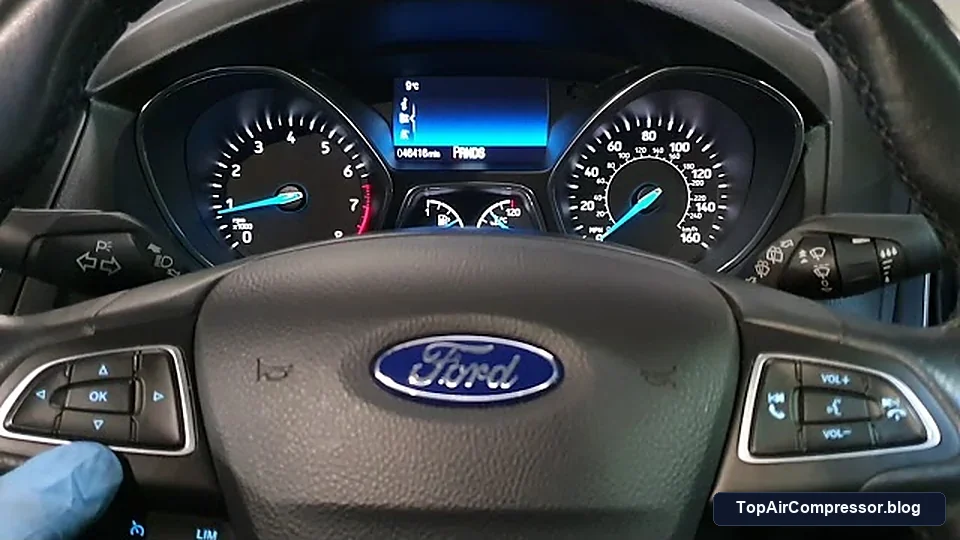
Modern Ford Focus models utilize indirect or direct monitoring sensors. Rotating tires or adjusting pressures requires a system reset procedure via the dashboard instrument cluster menu to clear alerts.
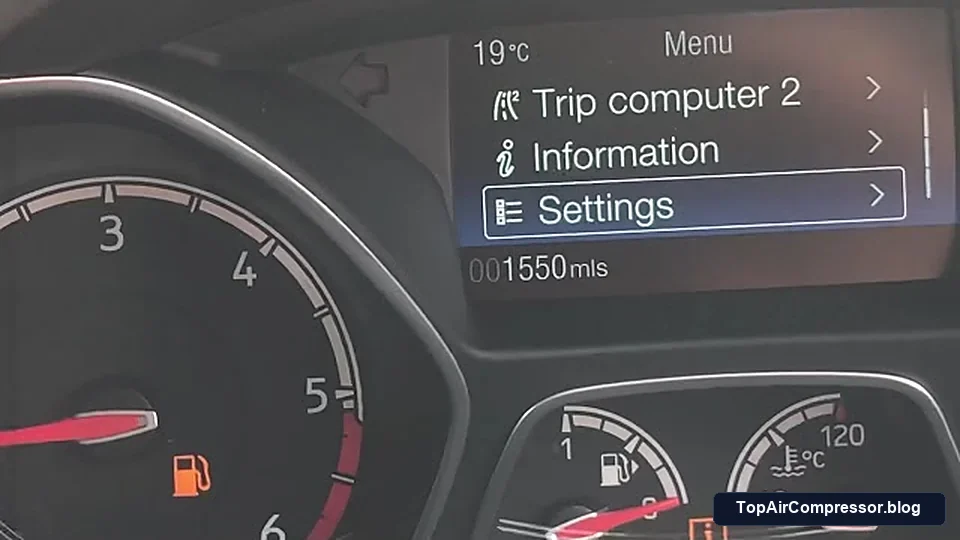
Indirect systems measure wheel speed variances using anti-lock braking sensors. Calibrating this system establishes a fresh baseline after you correct pressures across all four wheel positions properly.
Direct sensor systems utilize radio-frequency transmitters mounted inside each wheel rim. These units communicate specific pressure data directly to the vehicle computer module for real-time monitoring.
Failing to reset the system after inflation leaves warning lights illuminated. Following the exact menu prompts in your owner's manual clears faults and restores normal dashboard monitoring operations.
- Access the dashboard settings menu to initiate system resets.
- Drive the vehicle briefly to complete indirect sensor calibration.
- Inspect direct valve transmitters if warning lights persist.
- Verify all four pressures match placards before clearing faults.
Frequently Asked Questions
What exact PSI does a standard Ford Focus need?
Most standard models require 32 to 35 PSI for normal daily driving. Always verify your specific vehicle requirements using the placard located on the driver door jamb.
Why does my tire pressure warning light come on when it gets cold?
Cold ambient temperatures cause internal air to contract and lose density. This thermal drop reduces pressure by one PSI for every ten degree drop, triggering sensors.
Should I use the pressure listed on the tire sidewall?
No, the sidewall lists the maximum structural limit established by the tire manufacturer. You should always follow the lower vehicle placard figures set by Ford engineers.
How often should I check my Ford Focus tire pressure?
You should check your tire pressures at least once per month using a calibrated gauge. Checking before long road trips or seasonal weather shifts is also essential.
How do I reset the TPMS light after inflating my tires?
Navigate through the instrument cluster menu to locate the maintenance settings. Select the tire pressure reset option and hold the confirmation button until the system confirms calibration.