What PSI Should Mini One Tyres Be?
Discover the precise cold inflation pressure specifications required for Mini One vehicles. Maintain optimal vehicle handling and extend tread life through accurate pneumatic management.

Most Mini One models require between 32 and 35 PSI depending on your specific wheel size and vehicle load. Always verify the manufacturer placard located on your driver door jamb.
Looking for matching picks? See our Best Mini Air Compressor: Top Roadside & Home Picks.
Practical Quick-Reference Table
| Scenario / Metric | Recommended Target | Why It Matters |
|---|---|---|
| Standard City Driving | 32 to 34 PSI | Ensures balanced comfort and even tread wear. |
| Highway Commuting | 34 to 36 PSI | Reduces internal heat buildup at high speeds. |
| Fully Loaded Vehicle | 36 to 38 PSI | Supports heavier cargo weights safely. |
| Cold Weather Drop | Add 2 to 3 PSI | Compensates for low ambient temperatures. |
| Compact Spare Tyre | 60 PSI | Ensures emergency readiness when deployed. |
| Low Profile Wheels | 35 to 38 PSI | Protects alloy rims from severe impact damage. |
Decoding Mini One Tyre Pressure Specifications
Maintaining correct tyre pressure on your Mini One is essential for safety, fuel economy, and even tread wear. Incorrect inflation severely compromises vehicle handling dynamics and braking distances across wet roads.
Standard factory specifications for these compact hatchbacks typically range between 32 PSI and 36 PSI. However, exact figures vary significantly based on your wheel diameter, suspension package, and year.
Front and rear axles may require different pressures to balance weight distribution effectively during cornering maneuvers. Consulting official documentation prevents premature rubber degradation and maintains factory-engineered safety margins.
Ignoring these foundational guidelines leads to excessive shoulder wear or center tread bulging. Modern TPMS sensors will also trigger warning lights if pressure drops below critical thresholds.
Mini One tyre pressure specifications depend heavily on wheel size, engine configuration, and passenger capacity. Standard factory recommendations usually range between 32 and 36 PSI for optimal fuel efficiency.
Maintaining accurate inflation pressures ensures proper contact patch geometry. Deviating too far from factory values accelerates tread wear along the outer shoulders or center rib of the tyre.
European metric ratings often display pressures in bar alongside PSI. Always verify your target numbers using the exact load index and speed rating stamped on your current tyres.
Consult the official manual for specific ECO pressures and check out our scfm vs cfm breakdown if you plan on maximizing fuel economy during long highway commutes without compromising vital braking traction distances.
- Check pressures monthly using a calibrated digital gauge.
- Match PSI numbers to your specific wheel diameter.
- Never exceed the maximum sidewall pressure rating.
- Inspect tread wear patterns for signs of incorrect inflation.
Wheel Size Variations and Air Volume
Larger alloy wheels paired with lower profile tyres often demand higher inflation pressures to protect rims. Low profile sidewalls have less cushion and absorb impacts more harshly.
Standard fifteen-inch steel wheels operate efficiently at baseline pressures recommended by the primary manufacturer. Always match your gauge readings directly to your specific factory wheel setup.
- Measure cold pressure before driving on new wheel setups.
- Account for rim width when determining target inflation ranges.
Manufacturer Placard Locations and Meanings
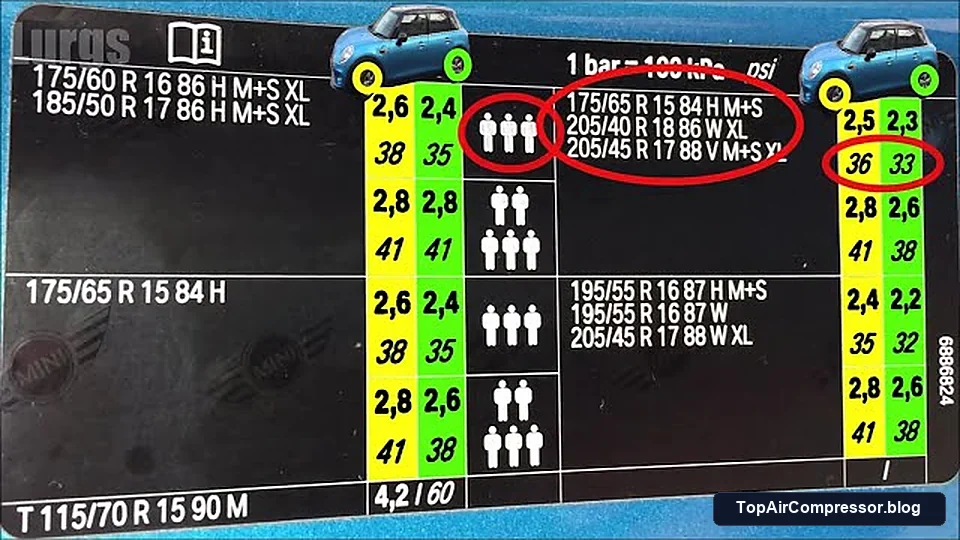
Finding your exact tyre pressure requirement requires locating the official vehicle placard affixed by the manufacturer. This critical sticker, which pairs well with guidelines from our cfm tool sizing calculator, is permanently mounted inside the driver door frame.
Opening the driver door reveals a comprehensive data table listing recommended pressures for normal and maximum loads. Never rely on the sidewall maximum, which indicates the tyre's absolute limit.
Fuel filler flaps on European hatchbacks sometimes display supplementary pressure values for high-speed driving conditions. Cross-reference both locations to determine the absolute best operational PSI range.
Faded or missing placards can be replaced by authorized dealerships using your unique vehicle identification number. Clear visibility of these specs ensures proper maintenance during every routine service check.
The official tyre information placard on a Mini One is typically located on the driver door B-pillar. Opening the front door reveals this critical sticker immediately.
This manufacturer placard outlines recommended cold inflation pressures for both front and rear axles. It also details the maximum allowable vehicle payload capacity and gross weight limits.
Never rely exclusively on the maximum pressure stamped on the tyre sidewall. That sidewall figure represents structural limits rather than the ideal ride comfort specifications.
Check this placard whenever you purchase replacement tyres to ensure compatibility. Different speed ratings or reinforced sidewalls may require minor baseline pressure adjustments during installation.
- Locate the data sticker on the driver door pillar.
- Verify dual-load specifications for passenger and cargo weights.
- Ignore sidewall inflation limits printed on rubber compounds.
- Keep placard information clean and legible for reference.
Video Walkthrough: Mini Cooper Tyre Pressures - Mini Cooper Tire Pressures
Understanding Cold Versus Warm Inflation Pressures
Professional technicians always measure and adjust tyre pressures when the vehicle has remained stationary for hours. Driving friction generates internal heat, causing air molecules to expand rapidly inside chambers.
Checking tyres immediately after a highway commute will falsely elevate your digital pressure gauge readings. Cold inflation pressure provides the only accurate baseline for comparison against factory standards.
If you must drive to a service station, consult our best mini air compressor reviews to find reliable tools for roadside top-offs. Keep journeys under two miles and allow tyres to cool completely before final adjustments.
Temperature drops outdoors will naturally decrease internal PSI values without any actual air leakage occurring. Compensating for weather changes prevents nuisance warning lights during sudden seasonal shifts.
Always check and set your tyre pressures when the vehicle has rested for at least three hours. Driving generates internal friction that heats up compressed air inside.
Warm driving conditions can artificially inflate pressure readings by four to six PSI. Adjusting hot tyres often results in dangerous under-inflation once the rubber cools down completely.
Ambient temperature drops also affect baseline pressures significantly. Expect a loss of roughly one PSI for every ten-degree Fahrenheit decrease in outside winter temperatures.
Keep an accurate digital pressure gauge in your glove box to monitor morning fluctuations. Reliable tools prevent costly guesswork during sudden seasonal weather transitions.
- Park vehicle for three hours before taking pressure readings.
- Avoid adjusting pressures immediately following highway travel.
- Factor in ambient weather shifts when inspecting tyres.
- Use a portable inflator for convenient home calibrations.
Adjusting PSI for Heavy Loads and High Speeds
Transporting multiple passengers and heavy luggage requires increasing your baseline tyre pressure to support loads. Fully loaded Mini One vehicles need higher PSI levels to prevent excessive sidewall flexing.
Sustained high-speed autobahn or interstate driving generates extreme thermal stress on smaller rubber compounds. Adding two to three PSI counteracts heat buildup and protects structural integrity.
Always revert your tyre pressures back to standard factory settings once heavy cargo is unloaded. Over-inflating an empty vehicle degrades ride comfort and reduces central tyre contact patches.
Consult the vehicle placard for specific dual-load columns detailing exact PSI increments for heavy hauling. Precision adjustments protect suspension components from premature wear and harsh impacts.
Traveling with a fully loaded Mini One requires higher tyre pressures to support extra weight. Check your door placard for specific fully loaded PSI recommendations.
Sustained high-speed autobahn or interstate driving generates extreme internal heat. Adding two to three PSI above standard baseline helps prevent dangerous tread separation risks.
Remember to reduce pressures back to normal standard levels once heavy cargo is unloaded. Maintaining overloaded pressures during solo commutes causes harsh riding and center tread wear.
Consult specialized towing or cargo guidelines if your Mini One utilizes roof racks. Extra aerodynamic drag and top-heavy mass demand meticulous pressure calibration checks.
- Increase PSI by two to three units for heavy cargo.
- Return to standard pressures after unloading passengers.
- Monitor tyre temperatures during extended highway road trips.
- Check sidewalls for bulging after carrying heavy weights.
Selecting the Correct Portable Air Compressor
Maintaining correct PSI at home requires a reliable 12-volt portable inflator or small workshop compressor. Look for units equipped with accurate digital pressure gauges and automatic shut-off features.
Connecting directly to your vehicle auxiliary power outlet provides convenient roadside inflation capabilities during emergencies. Digital auto-shutoff prevents accidental over-inflation by stopping airflow at your preset target.
Verify that your compressor hose reaches all four wheel valves easily without straining electrical cords. Compact diaphragm pumps deliver adequate airflow for passenger vehicle tyres without excessive noise.
Regular calibration of your portable inflator gauge ensures accurate readings over years of workshop use. Compare your digital device against a certified manual stick gauge periodically.
Choose a 12V portable air compressor by reviewing our cfm vs psi comparison guide that delivers adequate airflow for passenger tyres. Units featuring a direct digital auto-shutoff feature prevent accidental over-inflation.
Look for robust brass threaded chucks rather than cheap plastic lever clamps. Quality fittings prevent annoying air leaks during high-pressure tyre inflation tasks.
Duty cycle ratings matter significantly when inflating four Mini One tyres sequentially. Select a device offering at least a 50 percent duty cycle to avoid thermal overload.
Power connectivity is another vital operational consideration for roadside emergencies. Models equipped with both battery clamp adapters and cigarette lighter plugs offer maximum versatility.
- Choose inflators featuring automated digital shut-off controls.
- Ensure power cords reach all four vehicle tyre valves.
- Keep a manual pressure gauge in your glove compartment.
- Inspect compressor hoses for cracks or air leaks.
Video Walkthrough: How to Check the Tire Pressure in your MINI
Step-by-Step Inflation Calibration Procedure
Remove the valve stem cap from your front left tyre and store it safely in your pocket. Firmly press the compressor nozzle onto the bare valve stem until hissing stops.
Observe the current pressure reading displayed on your inflator screen and compare it against targets. If pressure is low, activate the compressor until your exact target PSI is achieved.
Release the trigger or let the automatic unit halt when the desired measurement registers clearly. Quickly remove the nozzle and immediately replace the protective valve stem dust cap.
Repeat this methodical process for remaining tyres, including your spare wheel if equipped. Systematic checking guarantees uniform handling characteristics across all four corners of the vehicle.
Park your Mini One on a flat, level surface and engage the parking brake firmly. Remove the valve stem cap from the first designated tyre valve.
Press the compressor nozzle squarely onto the valve stem until hissing stops completely. Read the initial pressure measurement on your calibrated digital gauge.
Activate the compressor briefly to add air in measured increments. If you accidentally overshoot the target, depress the manual deflation valve to bleed excess pressure.
Securely reinstall the valve stem caps by hand to keep out moisture and road debris. Repeat this meticulous process across all four road wheels systematically.
- Remove dust caps and store them in a safe location.
- Press nozzle straight onto stem to prevent air leakage.
- Monitor digital gauges continuously during active inflation.
- Replace valve caps promptly to block moisture ingress.
Recognizing Signs of Incorrect Tyre Pressures
Under-inflated tyres generate excessive rolling resistance, leading to rapid shoulder wear and reduced fuel mileage. You may notice sluggish steering response and increased body roll during sharp turns.
Conversely, over-inflation causes harsh ride quality and accelerates center tread wear due to reduced footprints. Harsh impacts transfer directly through suspension components when tyres lack proper deflection capability.
Uneven wear patterns across left and right tyres indicate chronic pressure discrepancies or alignment issues. Visual inspections reveal structural degradation long before catastrophic failures occur on highways.
Pay close attention to vehicle drifting or pulling sensations while braking on straight roadways. Promptly investigating these symptoms preserves expensive rubber compounds and enhances overall driving safety.
Under-inflated tyres generate excessive sidewall flexing and dangerously high internal temperatures. Watch for premature wear along both outer tread shoulders during routine inspections.
Conversely, over-inflation concentrates vehicle weight strictly across the narrow center tread band. This condition drastically reduces your vehicle braking footprint and compromises wet traction.
Unexplained vibration or a stiff, jarring ride often points toward incorrect pressures. Modern TPMS dashboard warnings demand immediate visual inspection of your Mini One wheels.
Uneven wear patterns across a single tyre indicate alignment issues compounded by pressure imbalances. Address these mechanical anomalies alongside routine monthly pressure checks.
- Inspect tread shoulders for signs of under-inflation wear.
- Watch for center tread baldness caused by over-inflation.
- Note any unusual steering pull or vibration while driving.
- Address sudden pressure loss warnings immediately.
Seasonal Temperature Fluctuations and PSI Adjustments
Ambient outdoor temperatures significantly influence pneumatic pressure inside every vehicle tyre throughout the year. Every ten-degree drop in Fahrenheit typically results in a loss of one PSI.
Winter mornings frequently trigger dashboard low-pressure warnings due to this thermodynamic contraction of air. Seasonal adjustments are mandatory to maintain proper handling during freezing weather conditions.
Recheck your tyre pressures during the first warm days of spring to prevent over-inflation issues. Sun exposure on parked vehicles can artificially raise internal readings during afternoon hours.
Establishing a monthly inspection habit protects your Mini One against unexpected weather-related pressure drops. Consistent monitoring maximizes tyre lifespan and optimizes braking efficiency in all climates.
Winter ambient temperature drops cause significant air contraction inside vehicle tyres. You must inspect pressures monthly to combat natural cold weather deflation.
Summer heatwaves expand trapped air, occasionally pushing pressures above safe operating limits. Recheck your tyres during early morning hours before solar radiation heats the rubber.
Seasonal tyre swaps demand fresh baseline measurements rather than assuming previous settings. Winter compound tyres often require distinct cold inflation adjustments.
Keep an accurate logbook or rely on smartphone reminders for seasonal checks. Proactive monitoring extends tyre lifespan and preserves optimal fuel economy standards.
- Add air when winter temperatures drop significantly outdoors.
- Reduce pressure slightly if spring weather overheats tyres.
- Inspect tyres after major regional weather transitions.
- Use garage shelter to minimize extreme thermal swings.
Frequently Asked Questions
How often should I check my Mini One tyre pressure?
Inspect your pressures at least once a month using a reliable digital gauge. Cold morning checks deliver the most accurate baseline readings for daily driving.
Can I use public gas station air pumps?
Public air stations work well, but their gauges are often inaccurate due to rough handling. Always verify pressures with your personal digital gauge afterward.
What causes my tyre pressure warning light to stay on?
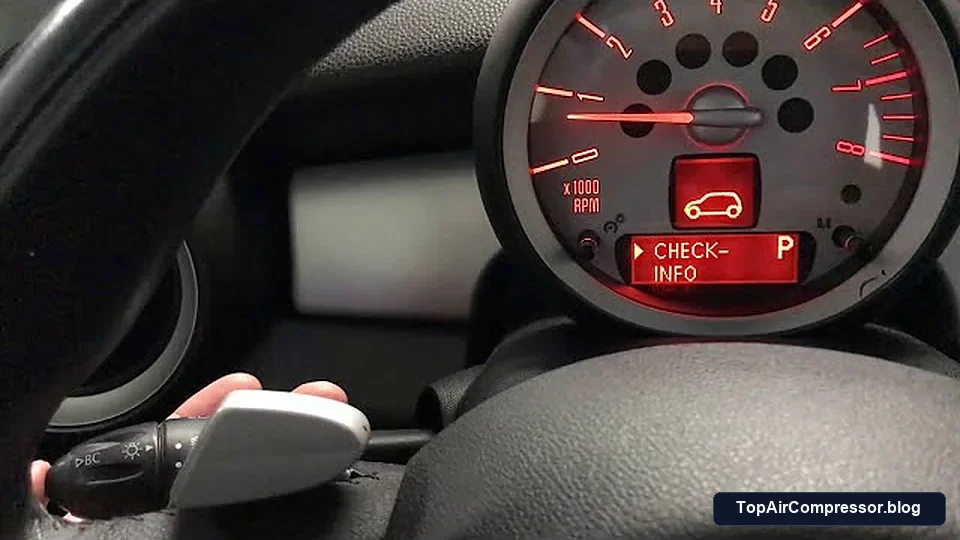
A persistent warning light indicates low pressure, a slow puncture, or a failing sensor. Inspect all tyres thoroughly and reset the system via your dashboard menu.
Should front and rear tyres have different pressures?
Some models specify different pressures to accommodate weight distribution. Always follow the exact specifications printed on your specific door placard.
Does cold weather really affect tyre pressure?
Yes, dropping temperatures cause air molecules to contract significantly inside the chamber. You lose about one PSI for every ten-degree temperature drop.