What PSI Should My Ford Kuga Tyres Be?
Maintaining correct tire pressures ensures optimal fuel economy and vehicle safety. This technical manual details exact inflation metrics for your Ford Kuga.

Most Ford Kuga models require between 32 to 38 PSI, but you must verify the placard inside your driver door jamb for exact factory specifications.
Looking for matching picks? See our Best Tyre Air Compressor: Top Picks for Reliable Roadside Safety.
Practical Quick-Reference Table
| Scenario / Metric | Recommended Target | Why It Matters |
|---|---|---|
| Standard Load (17-inch) | 32 PSI / 2.2 Bar | Ensures even tread wear and ride comfort. |
| Standard Load (18/19-inch) | 35 PSI / 2.4 Bar | Maintains handling response for larger alloy wheels. |
| Fully Loaded / Highway | 38 PSI / 2.6 Bar | Supports extra weight and prevents sidewall overheating. |
| Eco / High Fuel Economy | 36 PSI / 2.5 Bar | Reduces rolling resistance without sacrificing safety. |
| Compact Spare Tire | 60 PSI / 4.2 Bar | Guarantees emergency readiness under heavy loads. |
| Cold Inflation Check | Morning Ambient | Delivers accurate baseline readings before friction heat. |
Understanding Factory Tire Pressure Standards for Crossovers
Modern compact sport utility vehicles rely heavily on precise pneumatic pressures to manage vehicle weight. Operating your Ford Kuga outside recommended ranges causes uneven tread wear and poor braking performance.
Engineers calculate these exact PSI figures based on gross vehicle weight ratings and suspension geometry. Ignoring these manufacturer guidelines compromises stability during emergency maneuvers and increases braking distances.
Wheel diameter significantly impacts your baseline pressure requirements across different trim levels. Larger alloy wheels featuring lower profile sidewalls generally demand higher inflation pressures to prevent rim damage.
Verifying your exact requirements prevents premature tire degradation and optimizes overall mechanical efficiency. Always consult technical documentation before inflating your vehicle tires with a portable compressor.
- Factory PSI accounts for vehicle weight distribution.
- Trim variations alter baseline pressure requirements.
- Incorrect pressure reduces emergency braking efficiency.
- Sidewall profile dictates minimal safe operating limits.
Wheel Size Variances and Load Index
Different trim levels feature unique wheel diameters that alter required inflation figures. Consider upgrading using our favorite high-pressure workshop options before connecting any portable air compressor system.
Higher load index ratings allow tires to handle heavier structural loads safely. Match your replacement tires to original equipment manufacturer specifications for best results.
- Match pressure to installed wheel diameter.
- Verify load index ratings on sidewalls.
Locating Your Vehicle Placard and Technical Door Data
The definitive PSI rating for your specific Ford Kuga is printed on a manufacturer placard. You will find this durable sticker located on the driver side door pillar.
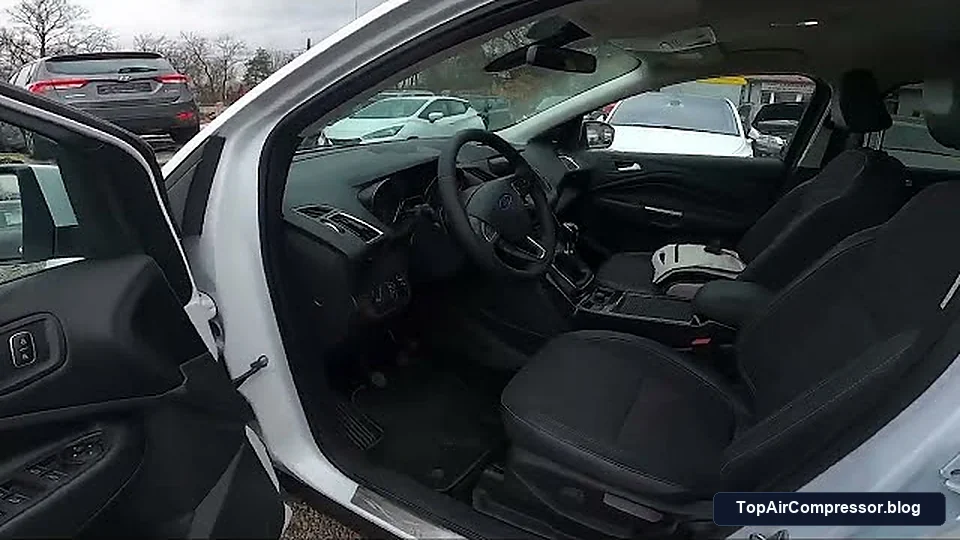
Opening the driver door reveals vital load limits, recommended cold pressure figures, and size dimensions. Never rely on the maximum pressure molded directly onto the tire sidewall.
Sidewall figures indicate absolute structural maximums rather than recommended vehicle operating pressures. Using maximum sidewall ratings will produce a harsh ride and center tread wear.
Take a clear photograph of your door placard for quick reference during routine maintenance checks. This ensures you always apply the correct pressure regardless of location.
- Locate the metal or paper placard on the door jamb.
- Ignore the maximum pressure printed on tire sidewalls.
- Note front and rear axle pressure differences clearly.
- Keep digital records of your vehicle placard data.
Interpreting Placard Symbols and Metrics
Vehicle placards display pressures in both bar and PSI measurement units. Understanding our guide to cfm vs psi helps ensure your air compressor gauge matches the correct system.
Front and rear axles often require different pressures due to engine placement. Pay close attention to these axle-specific guidelines during routine inflation tasks.
- Convert bar to PSI accurately when needed.
- Note differing front and rear axle specs.
Video Walkthrough: How to Find Sticker With Recommended Tire Pressure in Ford Kuga I ( 2008 – 2012 )
Preparing Your Air Compressor and Pressure Gauge Hardware
Before connecting any equipment, inspect your air compressor hose and chuck for visible damage. A secure mechanical connection prevents pressure leakage during the active inflation process.
Digital pressure gauges offer superior accuracy compared to traditional mechanical pencil gauges. Calibrate your gauge periodically against a certified reference tool to ensure reliable readings.
Unwind the power cord fully to prevent thermal buildup in mobile 12-volt compressor units. Plug the unit into a dedicated accessory socket capable of handling required electrical current.
Keep valve stem caps in a safe location while working to prevent loss. Clean any accumulated dirt from the brass valve core before attaching the inflator chuck.
- Inspect hoses and chucks for cracks or leaks.
- Utilize calibrated digital gauges for maximum precision.
- Unwind power cables fully to prevent overheating.
- Clean valve stems before attaching equipment.
Checking Gauge Calibration and Battery Status
Low batteries in digital pressure gauges can cause erratic measurements during critical tasks. Replace internal cells annually to maintain dependable workshop performance.
Store your pressure gauge in a protective case away from extreme temperature swings. Environmental extremes can distort internal mechanical bourdon tubes over time.
- Replace digital gauge batteries annually.
- Protect gauges from extreme temperature shifts.
Step-by-Step Cold Inflation Procedures for Maximum Accuracy
Always check and inflate your tires when they are completely cold. Tires are considered cold after the vehicle has sat stationary for at least three hours.
Driving generates internal friction heat that increases tire pressure by several PSI. Adjusting pressures on warm tires leads to under-inflation once the rubber cools down.
Attach the compressor chuck firmly to the valve stem until hissing stops completely. Monitor the digital readout on your compressor as air flows steadily into the chamber.
Add air in short bursts if you are slightly above your target metric. Review the differences in airflow ratings before releasing excess pressure until your target PSI is achieved.
- Perform inflation checks only on cold tires.
- Allow three hours of cooling time after driving.
- Attach chuck securely to eliminate air leaks.
- Use bleed valves to fine-tune final pressure.
Handling Stubborn Valve Stems and Core Leaks
Old Schrader valves can stick or leak slightly after inflation tasks are completed. Keep spare valve cores and a small removal tool in your glove box.
Apply a drop of soapy water to the valve opening to detect microscopic leaks. Bubbles indicate a faulty core that requires immediate tightening or replacement.
- Keep spare Schrader valve cores available.
- Use soapy water tests to check for leaks.
Adjusting PSI for Heavy Cargo, Towing, and Highway Driving
When transporting heavy cargo or towing a trailer, increase tire pressure appropriately. Consult your vehicle manual to determine the exact payload pressure adjustments required.
Higher highway speeds generate substantial internal heat within the tire carcass structure. Maintaining correct high-speed pressures prevents dangerous tread separation and sidewall flexing.
Return your tire pressures to standard city driving specifications once heavy loads are removed. Operating unladen vehicles at maximum load pressure degrades ride comfort significantly.
Monitor tire temperature manually by feeling the tread after long highway journeys. Excessive heat buildup points toward underlying under-inflation or excessive vehicle loading.
- Increase pressure when carrying heavy loads.
- Adjust settings for sustained high-speed driving.
- Revert to standard PSI after unloading cargo.
- Check tire temperatures after long highway trips.
Towing and Cargo Weight Distribution Calculations
Calculate your total payload by combining passenger weights and cargo mass. Never exceed the gross axle weight rating specified on your door placard.
Distribute heavy items evenly across the rear cargo floor to balance axle loads. Balanced loads ensure even tire contact patches during transit.
- Combine passenger and cargo mass accurately.
- Distribute weight evenly across cargo areas.
Managing Seasonal Temperature Fluctuations and PSI Drift
Ambient temperature changes directly impact internal tire pressure dynamics. You can expect to lose roughly one PSI for every ten degree drop in temperature.
Winter weather requires frequent pressure checks to combat natural air contraction effects. Failing to adjust for winter drops results in chronic under-inflation conditions.
Summer heat waves cause internal pressures to rise significantly above baseline metrics. Check your pressures during early morning hours before direct sunlight heats the rubber.
Establish a monthly routine to check pressures during seasonal transition periods. Consistent monitoring prevents unexpected dashboard warning lights during sudden weather shifts.
- Expect one PSI loss per ten degree temperature drop.
- Increase monitoring frequency during winter months.
- Check pressures during cool morning hours in summer.
- Maintain a monthly seasonal inspection schedule.
TPMS Warning Light Diagnosis and Reset Procedures
Tire Pressure Monitoring Systems illuminate when pressure drops twenty five percent. Inspect all four positions immediately upon seeing this dashboard warning indicator.
Some vehicle models require a manual reset procedure after adjusting pressures. Follow instructions in your owner manual to clear the monitoring system.
- Inspect all tires when TPMS lights activate.
- Perform manual system resets after adjustments.
Preventing Common Inflation Errors and Equipment Risks
Avoid over-inflating tires beyond structural safety limits during emergency adjustments. Excessive pressure can cause catastrophic structural failure of the tire casing.
Never leave a portable air compressor running unattended for extended periods. Monitor the pressure gauge continuously to prevent dangerous over-pressurization events.
Ensure your compressor duty cycle matches the duration of your inflation task. Overheating damages internal piston seals and permanently ruins portable equipment motors.
Store your air compressor in a clean, dry environment away from moisture. Using our handy pneumatic sizing calculator helps prevent moisture corrosion inside the receiver tank over time.
- Never exceed maximum structural safety limits.
- Monitor compressors continuously during operation.
- Respect equipment duty cycle limitations.
- Store compressors in dry, clean workshop spaces.
Recognizing Duty Cycle Limits on Mobile Units
Portable 12-volt compressors require mandatory cooling periods between heavy inflation tasks. Running units continuously leads to thermal overload and motor burnout.
Check manufacturer documentation for specific runtime percentages and cooling intervals. Proper usage extends the operational lifespan of your workshop equipment.
- Allow cooling intervals between heavy tasks.
- Consult manuals for specific runtime limits.
Routine Maintenance Schedules for Valves, Cores, and Seals
Incorporate comprehensive tire valve inspections into your quarterly vehicle maintenance routine. Healthy valve components prevent slow air leaks that degrade fuel economy.
Replace missing valve stem caps immediately to keep moisture and road salt away. Caps act as a secondary sealing mechanism protecting the internal core.
Inspect tread depth alongside pressure checks using a dedicated mechanical gauge. Uneven wear patterns indicate alignment issues rather than simple pressure errors.
Keep a detailed log of your pressure adjustments and maintenance dates. Tracking historical data helps identify slow leaks before they cause roadside failures.
- Inspect valve components on a quarterly basis.
- Always replace missing plastic valve stem caps.
- Measure tread depth during pressure checks.
- Keep written records of maintenance actions.
Storage Best Practices for Seasonal Wheel Sets
Store removed seasonal wheel sets in a cool, dark environment. Reduce pressure slightly to fifty percent during long-term storage periods.
Keep stored tires away from electric motors that generate ozone gas. Ozone exposure accelerates rubber degradation and causes deep sidewall cracking.
- Reduce pressure slightly during long-term storage.
- Keep stored tires away from ozone sources.
Frequently Asked Questions
What exact PSI should my Ford Kuga tires be?
Most Ford Kuga models require between 32 to 38 PSI depending on trim level. Always verify the exact specification printed on your driver door placard.
Should I check tire pressure when tires are hot?
No, you must always check and adjust pressure when tires are cold. Driving generates friction heat that artificially inflates pressure readings by several PSI.
How often should I check my Ford Kuga tire pressure?
You should check your vehicle tire pressures at least once every month. Frequent checks prevent fuel economy losses and catch slow leaks early.
Does towing a heavy trailer change my required PSI?
Yes, towing or carrying heavy payloads requires increased pressure settings. Consult your owner manual to determine the exact payload adjustments needed.
What causes my tire pressure monitoring light to turn on?
The warning light activates when pressure drops below safe thresholds. This often happens due to natural air loss or sudden winter temperature drops.