What PSI Should My Honda Civic Tires Be At?
Proper inflation ensures optimal fuel economy, predictable handling, and maximum tread life. Always rely on factory specifications rather than generic estimates.

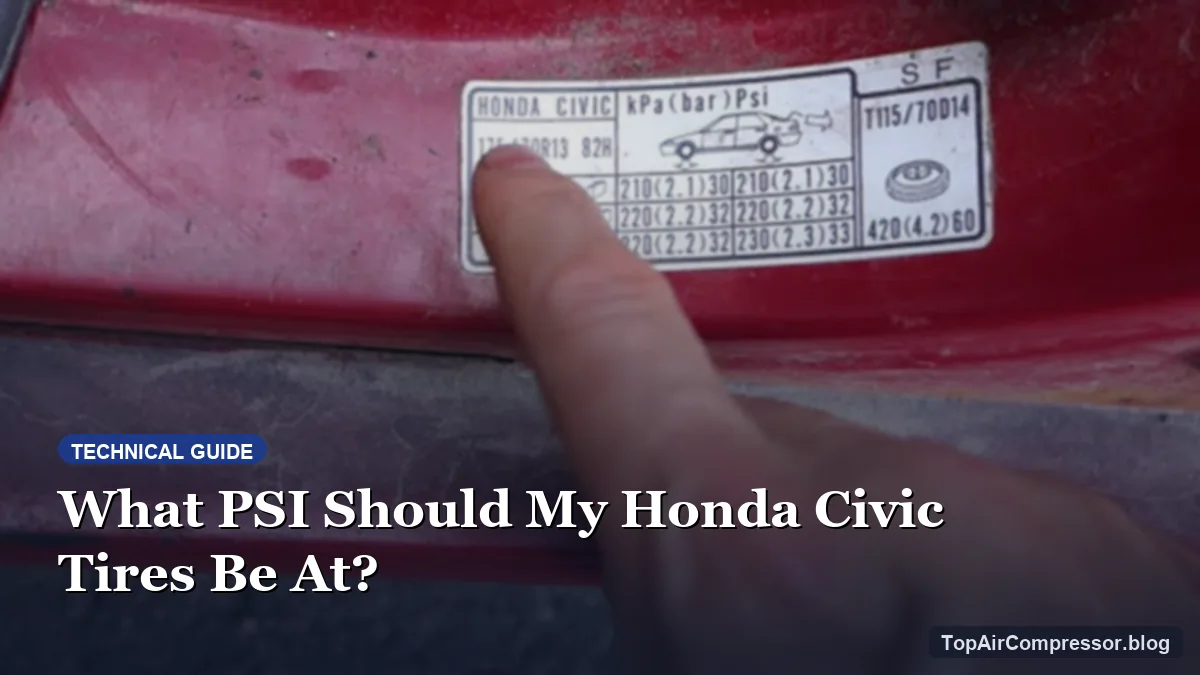
Most modern Honda Civics require 32 to 35 PSI for daily commuting. Always verify the exact figure on your driver door jamb placard.
Looking for matching picks? See our Best Air Compressor For Bike Tires: Top Road & Trail Picks.
Honda Civic Inflation Quick-Reference Matrix
| Generation / Trim | Recommended Cold PSI | Critical Operational Note |
|---|---|---|
| Standard Sedan Trims | 32 PSI | Maintains balanced comfort and efficiency. |
| Sport & High-Performance | 33 to 35 PSI | Supports stiffer sidewalls and larger wheels. |
| Cold Weather Drop | +1 PSI per 10°F drop | Compensates for natural air density loss. |
| Full Cargo Load | 35 to 38 PSI | Prevents excessive heat buildup under heavy weights. |
| Compact Spare Tire | 60 PSI | Requires high pressure due to small internal volume. |
| TPMS Reset Threshold | Re-calibrate after adjustment | Ensures accurate low-pressure sensor warnings on dash. |
Locating Your Specific Honda Civic Tire Pressure Placard
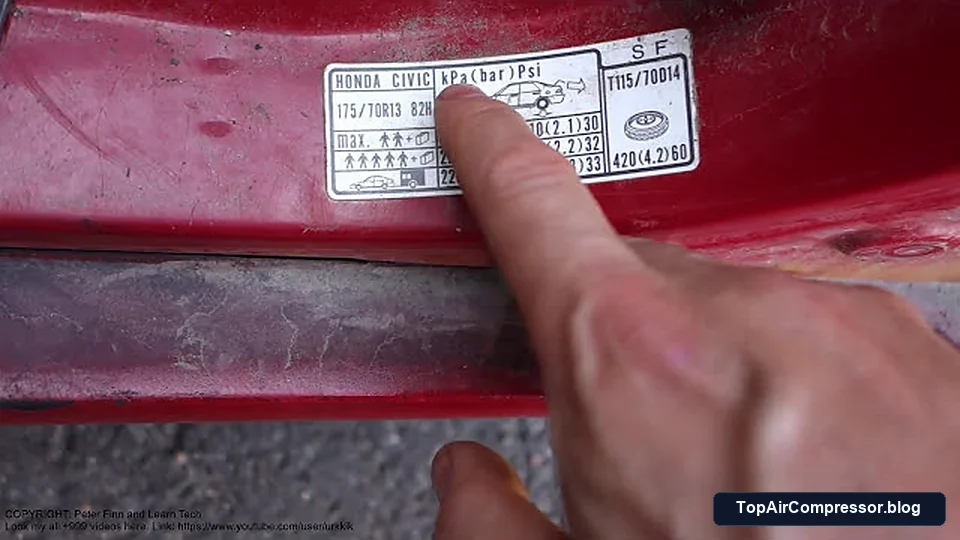
Finding the correct inflation pressure for your specific vehicle requires checking the factory certification label. Manufacturers place this vital sticker on the driver-side door jamb for easy access.
Never use the maximum pressure printed directly on the tire sidewall. Check specs using our CFM & tank sizing calculator reference data to understand proper equipment loads and maintain safe operating limits.
Older vehicle generations may feature slightly different requirements depending on original equipment manufacturer tire dimensions. Always cross-reference the placard values whenever installing replacement tires of identical size.
Checking the door placard guarantees you account for specific gross vehicle weight ratings. This prevents premature center tread wear caused by over-inflation or dangerous sidewall flexing from under-inflation.
- Open the driver-side front door completely to locate the white and yellow placard.
- Locate the cold tire inflation pressure values listed for both front and rear axles.
- Ignore the maximum psi rating molded onto the outer rubber tire sidewall.
- Confirm your exact door jamb matches the specific vehicle trim level and year.
Decoding the Manufacturer Door Placard Data
The certification label displays recommended cold pressures alongside seating capacity limits. Understanding these certified metrics ensures your suspension operates within safe mechanical parameters.
Compare your current tire size designation against the placard text to ensure proper fitment. Mismatched aftermarket replacements often require adjusted pressure calculations by professional technicians.
- Match your exact tire size code to the placard specifications.
- Note the maximum occupant and cargo weight limits listed alongside psi.
Standard PSI Ranges for Common Civic Trims and Sizes
Standard Honda Civic sedan models typically operate efficiently at 32 PSI for everyday driving conditions. This baseline balances ride comfort, braking traction, and rolling resistance effectively.
Sport trims featuring larger alloy wheels and lower profile tires often demand 35 PSI. Using our recommended best air compressor for car tires ensures you hit these dynamic targets easily.
Hybrid variants incorporate unique suspension calibrations and low rolling resistance tires. Reviewing the specific door sticker remains mandatory to prevent reduced battery efficiency or uneven wear.
Maintaining accurate pressures across different wheel sizes prevents premature shoulder degradation. Routine monthly checks keep your contact patch uniform across varying asphalt temperatures.
- Base LX and EX trims generally specify 32 psi cold pressure.
- Sport and Touring variants often require 33 to 35 psi.
- Always verify your exact trim level before operating your air compressor.
- Keep a digital gauge in your glove box for quick weekly verifications.
Evaluating Aftermarket Tire Size Adjustments
Upgrading to larger aftermarket wheels alters the internal air volume required. You must calculate new baseline pressures based on load index ratings rather than factory door stickers.
Consult a professional tire retailer if you install significantly lower profile replacements. Incorrect pressures on low-profile sidewalls risk severe rim damage from potholes.
- Check load index ratings on aftermarket sidewalls carefully.
- Adjust baseline psi upward if total internal volume decreases.
Video Walkthrough: How to read Honda Civic tire and wheel pressure info label. Years 1990 - 2010
Front Versus Rear Pressure Balancing and Load Adjustments
Some Civic generations specify identical pressures for both front and rear axles. Other performance trims require distinct front and rear values to optimize handling dynamics.
The heavy engine and transmission reside directly over the front axle of your vehicle. This layout occasionally warrants slightly higher front pressures under heavy cargo conditions.
Carrying heavy luggage or rear passengers increases overall vehicle weight significantly. Adjusting rear pressures upward by 2 PSI prevents excessive tire deflection during long highway trips.
Always perform pressure adjustments while tires remain cold using our tested best air pumps for car tires. Driving friction generates internal heat, which artificially elevates readings by several psi.
- Check if your specific trim lists split front and rear pressures.
- Add slight pressure for heavy cargo loads during extended road trips.
- Never bleed air from hot tires after aggressive highway driving.
- Maintain balanced pressures across matching left and right sides.
Atmospheric Temperature Effects and Cold Pressure Rules
Ambient outdoor temperatures directly influence the internal pressure of your tires. Ambient air loses approximately 1 PSI for every 10°F drop in outside temperature.
Seasonal temperature shifts require proactive monthly adjustments during autumn and spring transitions. Neglecting seasonal drops leaves tires chronically under-inflated as winter weather arrives.
Cold pressure measurements mean checking tires before driving or after sitting for hours. Driving friction increases internal temperatures, giving falsely high readings on your digital gauge.
Park your vehicle in a shaded area for accurate morning pressure evaluations. Direct sunlight on one side of the car can skew gauge readings by several pounds.
- Expect a one psi drop for every ten degree temperature decrease.
- Measure cold pressure before driving more than one mile.
- Re-inflate tires during the first cold snap of autumn.
- Account for direct sunlight warming individual tires unevenly.
Troubleshooting TPMS Warnings and Slow Air Leaks
The tire pressure monitoring system activates when pressure drops twenty-five percent below recommendation. This warning light prevents dangerous driving conditions caused by severe deflation.
Persistent air loss in a single tire usually indicates a small nail puncture. Inspect the tread blocks thoroughly using soapy water to locate elusive bubbling leaks.
Faulty valve stems or corroded alloy wheel beads also cause gradual pressure loss over time. Replace standard rubber valve cores whenever you install new replacement tires.
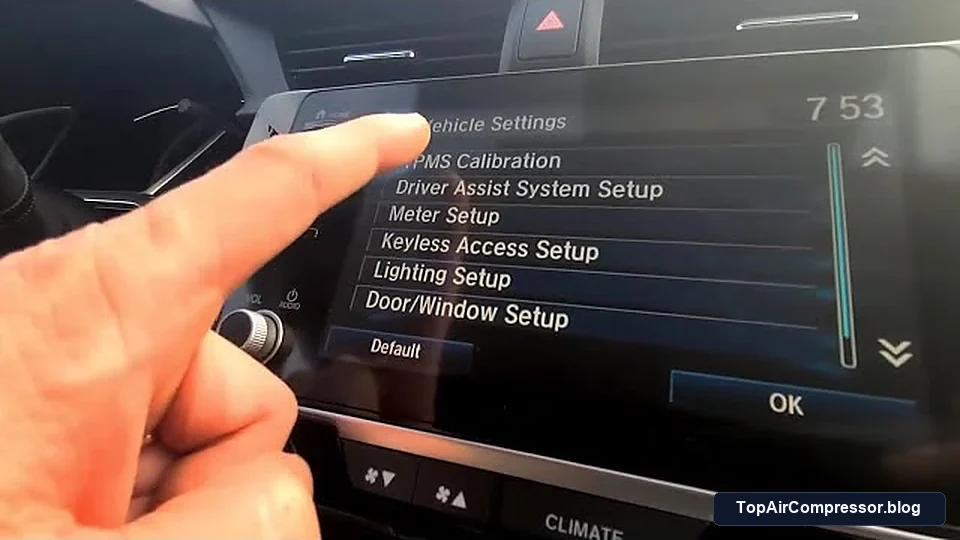
Always perform a system calibration reset after correcting all four tire pressures. Consult your dashboard menu to complete the manual TPMS re-learn procedure successfully.
- Investigate dashboard warning lights immediately upon illumination.
- Inspect tread patterns for embedded nails or sharp debris.
- Check valve cores for air leaks using soapy water spray.
- Reset the TPMS system through the driver information interface.
Operating Your Air Compressor Safely During Inflation
Connect your best portable air compressor for truck tires securely to the exposed valve stem. Ensure the brass chuck locks firmly in place to prevent air leakage during inflation.
Monitor the digital pressure gauge on your inflator continuously to avoid over-pressurization. Exceeding maximum structural limits risks catastrophic tire failure during highway operation.
Allow portable DC compressors to cool down periodically during extended inflation tasks. Continuous duty cycles generate intense internal heat that can damage internal electric motors.
Replace missing valve stem caps immediately after completing your monthly maintenance routine. These small plastic caps prevent moisture and road salt from corroding internal valve cores.
- Lock the air chuck securely onto the brass valve stem.
- Monitor the pressure gauge closely to prevent over-inflation.
- Allow portable electric compressors to cool between tires.
- Install protective valve caps tightly after finishing inflation.
Frequently Asked Questions
What exact PSI should my Honda Civic tires be at?
Most standard Honda Civics require 32 PSI for daily driving. Always verify the exact specification printed on your driver door jamb placard.
Should I inflate my Civic tires to the max PSI listed on the sidewall?
Never inflate tires to the maximum sidewall rating. That figure represents structural limits, not the optimal operating pressure designed by Honda.
Why does my Civic tire pressure drop when the weather gets cold?
Ambient air contracts as temperatures fall, losing roughly 1 PSI per 10°F drop. Regular monthly adjustments prevent under-inflation during seasonal changes.
How often should I check my Honda Civic tire pressure?
Check your cold tire pressures at least once per month using an accurate gauge. Routine checks maximize fuel efficiency and extend tread life.
How do I reset the TPMS light after inflating my Civic tires?
Navigate your dashboard settings menu to the TPMS calibration screen and select calibrate. Drive for several minutes to complete the system reset.