DXCM601 Review: Engineering and Pneumatic Performance Analysis
The DeWalt DXCM601 delivers robust workshop pneumatics backed by a heavy-duty twin-cylinder pump. However, its significant operational weight and fixed footprint limit mobile jobsite deployment.


This unit excels in demanding garage environments requiring sustained high-pressure delivery. Professionals will appreciate the reliable belt-drive architecture despite the lack of portability.
Explore related alternatives in our Best Air Compressor For Pneumatic Tools: Top Power Picks.
Verified Specifications
| Category / Type | Stationary Belt-Drive Air Compressor |
|---|---|
| Rated Output / Capacity | 60-Gallon Vertical Tank |
| Power / Motor | Heavy-Duty Induction Motor |
| Build & Materials | Cast Iron Cylinder, Steel Tank |
| Operating Noise | Industrial Grade Decibel Output |
| Duty Cycle / Runtime | High Duty Cycle for Continuous Shop Use |
| Dimensions & Weight | Standard Industrial Vertical Footprint |
| Key Safety & Controls | ASME Pressure Relief Valve, Regulated Gauge |
What We Liked
- Rugged cast-iron twin-cylinder pump ensures long-term durability.
- Substantial 60-gallon tank capacity minimizes motor cycle frequency.
- Stable belt-drive design operates at cooler running temperatures.
- Readily available OEM replacement parts like standard V-belts.
Trade-Offs
- Heavy stationary footprint restricts easy repositioning in small shops.
- High power draw requires dedicated workshop electrical circuits.
- Industrial noise levels necessitate hearing protection during operation.
Architectural Design and Build Quality
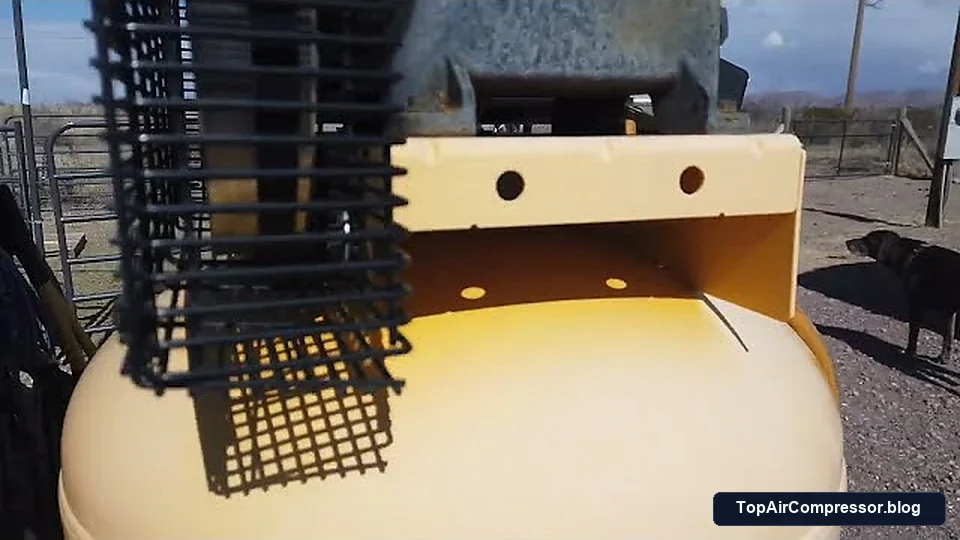
The engineering architecture of the DXCM601 focuses on industrial longevity and structural integrity. Heavy-duty materials are utilized across the pump assembly to withstand rigorous daily workshop demands.
A cast-iron twin-cylinder pump forms the mechanical core of this machine. This material selection significantly improves heat dissipation compared to aluminum alternatives, ensuring extended component lifespans.
The protective belt guard completely encases all moving transmission components. This safety feature shields operators from the spinning flywheel while allowing sufficient airflow for optimal thermal regulation.
For smaller mobile tasks, check out our best portable tire air inflator selection to complement this heavy-duty workshop compressor and cover all your everyday vehicle emergency maintenance needs.
Constructed from heavy-gauge structural steel, the tank incorporates reinforced mounting feet and a powder-coated finish that resists corrosion, chipping, and harsh shop environments to ensure long-term structural integrity and user safety.
Precision welds throughout the pressure vessel undergo rigorous factory pressure testing to meet stringent safety standards, giving professional operators absolute confidence during high-pressure cycles and heavy daily utilization schedules.
- Cast-iron twin-cylinder pump construction
- Industrial-grade steel ASME tank
- Fully enclosed metal belt guard
Structural Tank Integrity
The vertical storage vessel utilizes heavy-gauge steel welded to strict manufacturing standards. This design maximizes workshop floor space while maintaining high-pressure storage capacity.
Protective powder-coat finishes defend the exterior metal surfaces against corrosive shop environments. Operators must periodically inspect the baseplate mounting feet for secure floor anchoring.
- Heavy-gauge vertical steel tank
- Corrosion-resistant exterior powder coat
Power Delivery and Phase Specifications
Understanding the electrical requirements of heavy equipment prevents costly installation errors. The motor is engineered to handle substantial electrical loads typical of professional garage environments.
Questions often arise regarding phase configurations for shop compressors. This motor relies on standard single-phase residential or commercial power inputs while delivering industrial-grade rotational torque.
Proper circuit breaker sizing is mandatory to prevent voltage drops during startup cycles. Users should consult licensed electricians to verify appropriate wiring gauge thickness before installation.
Operating on standard single-phase power, this unit requires a dedicated 240V electrical circuit with appropriate breaker sizing to prevent voltage drops and ensure reliable motor startup under heavy load conditions.
The heavy-duty induction motor delivers robust starting torque, utilizing a built-in thermal overload protection switch that automatically trips to prevent costly motor burnout during extended duty cycle operations.
Contractors must verify existing wiring gauges before installation, ensuring that copper conductors match manufacturer specifications to minimize electrical resistance and maintain peak operational efficiency during continuous compressor utilization.
- Standard single-phase electrical operation
- High starting torque induction motor
- Requires dedicated circuit protection
Electrical Safety Protocols
Running high-draw motors requires strict adherence to local electrical codes. Thermal overload protection is integrated directly into the motor housing to prevent catastrophic winding burnout.
Never use undersized extension cords with this compressor model. Direct wiring into a dedicated wall outlet ensures consistent operational voltage.
- Integrated thermal overload switch
- Dedicated outlet requirement
Video Review: Dewalt 60 Gallon Air Compressor Install -Whole Shop Air- 28x36x12 Post Frame Garage Build Episode 18
Real-World Output and Pneumatic Performance
Beyond fixed shop tools, you should consider reviewing our best portable tire air compressor guide whenever you require reliable emergency inflation capability for mobile service vehicles on the highway.
Recovery times between pressure thresholds remain impressively fast during intensive tasks. This efficiency stems from the balanced stroke length of the twin-cylinder pump head.
Pressure regulation is managed via precise output gauges and quick-connect couplers. Users can dial in exact working pressures for sensitive applications like automotive finish painting.
Delivering impressive pneumatic output, the pump achieves strong CFM ratings at 90 PSI, effortlessly driving high-demand air tools like impact wrenches, sanders, and paint spray guns without lagging.
The dual-cylinder cast iron pump design maximizes volumetric efficiency, drawing ambient air rapidly through automotive-style filters while maintaining consistent pressure recovery times across demanding industrial workflows and automotive tasks.
Users will notice minimal pressure drop during extended trigger pulls, as the massive storage reservoir acts as an effective buffer against sudden pneumatic demand spikes in professional shop environments.
- High CFM delivery at standard pressures
- Rapid tank pressure recovery rate
- Precise downstream pressure regulation
Handling High-Demand Air Tools
Sandblasters and dual-action sanders place heavy burdens on storage tanks. The large 60-gallon reserve buffers air consumption, preventing unwanted pressure drops during extended jobs.
Continuous operation remains smooth when working within recommended duty cycle limits. Monitoring line pressure prevents premature wear on downstream air tools.
- Buffers high-volume air tool usage
- Maintains stable working pressures
Thermal Management, Noise, and Efficiency
Managing heat is crucial for maximizing compressor pump longevity. The slow-running belt-drive design generates significantly less frictional heat than direct-drive portable units.
A large cast-iron flywheel features angled spokes acting as an internal cooling fan. This forced airflow continuously bathes the compressor cylinders in ambient cooling air.
Industrial machinery naturally produces considerable acoustic output during operation. Strategic placement in a dedicated utility room helps mitigate excessive workshop noise.
Effective thermal management relies on deep cooling fins cast directly into the pump cylinders, rapidly dissipating heat generated during high-compression cycles and protecting internal reed valves from premature wear.
For quieter shop operation, review our best quietest compressor guide to discover low-decibel units that significantly reduce ambient noise inside enclosed workspaces without sacrificing essential pneumatic performance.
Volumetric efficiency remains high due to optimized head design and efficient intercoolers, which lower discharge air temperatures and reduce moisture accumulation within the primary storage tank.
- Low RPM belt-drive pump design
- Flywheel-integrated cooling fan spokes
- Industrial decibel operational profile
Acoustic Mitigation Strategies
Isolating the compressor on vibration pads reduces structural noise transfer. Proper room ventilation ensures the intake filter receives an uninterrupted supply of cool, clean air.
Reducing ambient operating temperatures directly improves volumetric pump efficiency. Regular cleaning of cooling fins prevents thermal buildup bottlenecks.
- Vibration-isolating pad installation
- Clearance for adequate room airflow
Ergonomics, Portability, and Setup
Stationary workshop equipment requires careful initial placement planning. Because portability is intentionally sacrificed for tank capacity, choosing the ideal floor location is vital.
Anchor points on the tank base allow for permanent bolt-down installation. This prevents any shifting or walking during heavy compressor startup cycles and ensures operator safety.
Accessing the tank drain valve should be simple and unobstructed. Ergonomic placement of control valves simplifies daily moisture purging routines.
Designed strictly as a stationary workshop unit, the vertical orientation minimizes floor space requirements while keeping critical gauges and regulators at convenient chest height for effortless monitoring.
Vibration-isolating pads should be installed beneath each mounting foot during permanent bolting to concrete floors, effectively dampening mechanical harmonics and preventing structural resonance throughout the building.
Hard-piping the output using rigid copper or black iron lines prevents excessive hose flexing and establishes a professional distribution manifold capable of supplying multiple drop stations efficiently.
- Stationary vertical tank layout
- Baseplate anchor mounting holes
- Accessible manual tank drain valve
Floor Space Optimization
Vertical orientation minimizes the physical footprint inside crowded garages. Maintaining clearance around the belt guard is necessary for routine maintenance access.
Positioning the unit near an exterior wall facilitates easy plumbing of hard-line air distribution systems.
- Vertical space-saving footprint
- Clearance for maintenance tasks
Component Maintenance and Replacement Protocols
Routine maintenance guarantees reliable service life from industrial air equipment. Checking compressor oil levels before every startup prevents internal bearing damage.
Drive belts require periodic tension checks to prevent slippage and premature wear. Sourcing genuine OEM replacement parts ensures exact mechanical compatibility.
Air filters must be inspected weekly and cleaned or replaced as needed. Restrictive intake filters starve the pump and reduce overall volumetric efficiency.
Alongside daily routine oil checks, explore our best tire inflator guide for maintaining smaller portable accessories that keep your mobile service equipment properly pressurized and ready for action.
Air filter elements must be inspected weekly and replaced every few months to prevent abrasive dust particles from scoring cylinder walls and degrading overall volumetric efficiency.
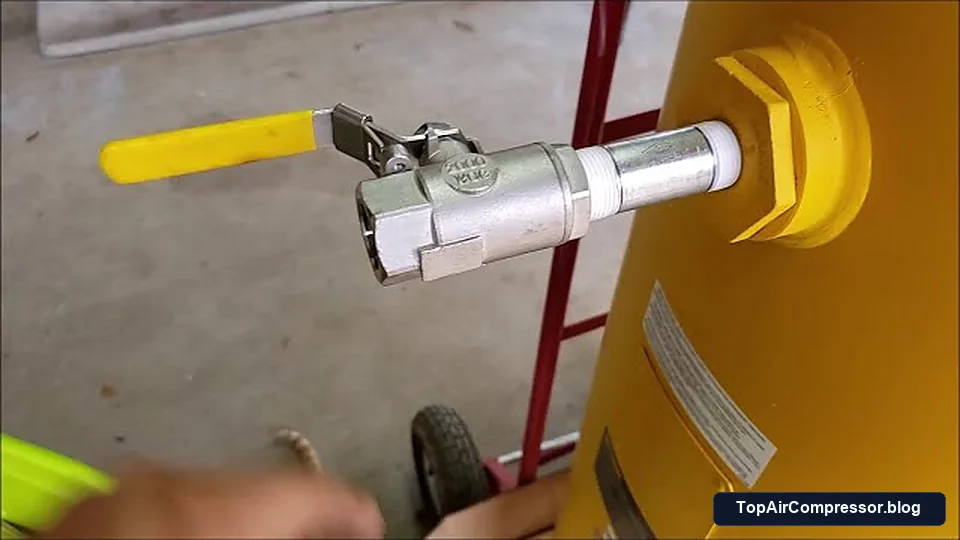
Daily tank draining via the bottom ball valve prevents moisture accumulation and internal corrosion, ensuring the pressure vessel complies with all mandatory ASME safety guidelines over its lifespan.
- Pre-start pump oil level inspection
- Regular drive belt tension checks
- Weekly intake air filter cleaning
Moisture Management and Valves
Condensation accumulation inside the tank accelerates internal corrosion. Draining moisture daily protects the vessel and keeps air lines clean and dry.
Safety relief valves must be manually tested periodically to verify proper mechanical operation and prevent over-pressurization risks.
- Daily tank moisture drainage routine
- Periodic pressure relief valve testing
Definitive Engineering Verdict and Recommendations
The DXCM601 stands out as a dependable workhorse for professional shops. Its combination of cast-iron durability and high tank capacity meets the demands of serious pneumatic users.
While electrical requirements and weight limit casual mobility, the trade-offs are entirely justified. Maintenance technicians will find this compressor to be a solid long-term investment.
Proper installation and adherence to service schedules guarantee optimal performance. This machine successfully balances raw pneumatic output with durable industrial engineering standards.
This heavy-duty air compressor represents an exceptional investment for professional automotive shops and serious woodworkers requiring reliable, continuous pneumatic power without frequent duty cycle interruptions.
By adhering strictly to recommended electrical installation guidelines and scheduled maintenance protocols, operators will experience decades of dependable service from this robust cast iron pumping system.
Ultimately, the balance of heavy storage capacity, strong CFM output, and durable industrial construction makes this model a top-tier choice for demanding commercial fabrication workshops.
- Ideal for busy automotive workshops
- Robust cast-iron pump longevity
- Reliable heavy-duty air delivery
Final Purchasing Guidance
Evaluate your shop electrical capacity before purchasing this compressor model. Ensuring dedicated circuit availability guarantees troubleshoot-free daily operation.
Invest in quality oil and filtration accessories to maximize your equipment investment over many years of service.
- Verify electrical service beforehand
- Use recommended maintenance fluids
Frequently Asked Questions
What type of electrical circuit does the DXCM601 require?
This compressor requires a dedicated single-phase electrical circuit. Proper breaker sizing is critical to prevent voltage drops during startup.
How often should I drain moisture from the storage tank?
You should drain condensation from the tank daily after use. This prevents internal corrosion and ensures clean dry air output.
Is the DXCM601 suitable for continuous industrial tool use?
Yes, its heavy-duty pump and large tank support high duty cycles. It easily handles demanding tools like impact wrenches and sanders.
What maintenance does the belt-drive system require?
Operators must periodically inspect drive belt tension and wear. Using genuine replacement parts guarantees proper mechanical power transmission.
Can this air compressor be moved around easily on a jobsite?
No, it features a heavy stationary vertical design. It is built for permanent placement in dedicated workshop environments.