Eaton Polar Air Compressor Review: Industrial Powerhouse
This heavy-duty unit delivers massive air volume for demanding operations. However, its high electrical requirements demand dedicated professional installation.

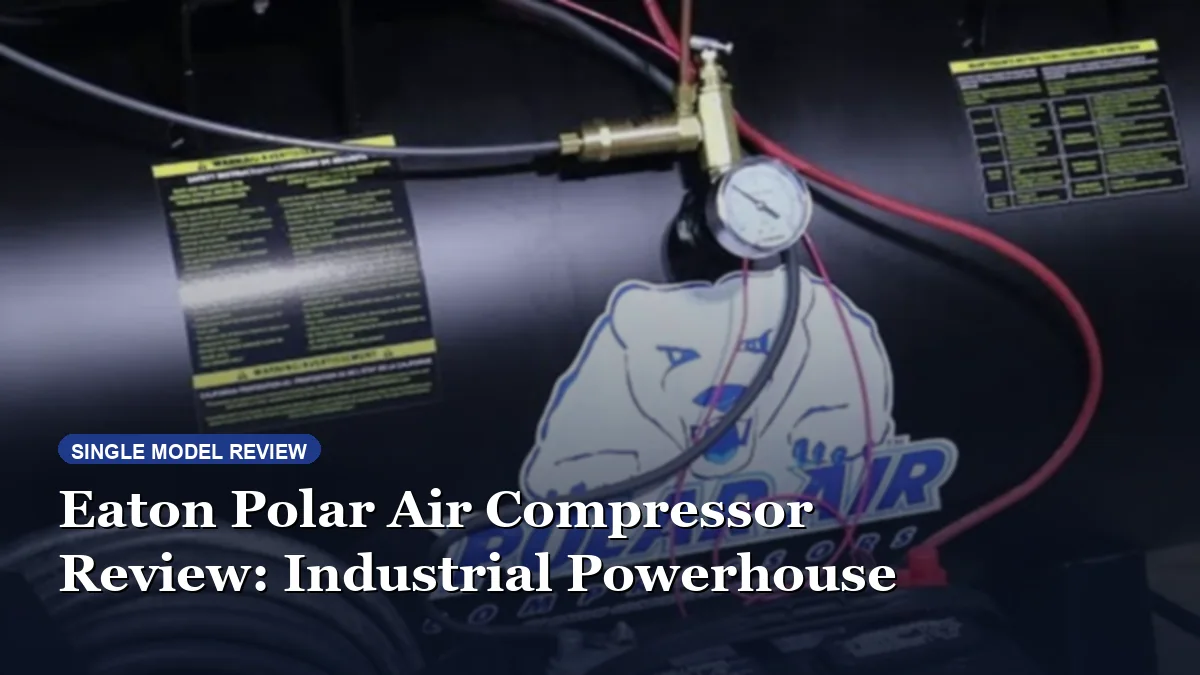

The Eaton Polar provides exceptional industrial performance and longevity. You will love its robust two-stage pump despite requiring a heavy three-phase electrical supply.
Explore related alternatives in our Best Air Compressor For Industrial Use: Top Shop Picks.
Verified Specifications
| Category / Type | Industrial Stationary Electric |
|---|---|
| Rated Output / Capacity | 35 CFM at 175 PSI |
| Power / Motor | 10 HP Corded Electric |
| Voltage Requirements | 460 Volts, Three-Phase |
| Tank Volume | 120 Gallons Vertical ASME |
| Pump Design | Cast Iron Two-Stage Heavy Duty |
| Operating Noise | Industrial Grade High Decibel |
| Item Weight | 921.5 Pounds Assembled |
| Dimensions | Standard Heavy Industrial Footprint |
What We Liked
- Massive 35 CFM delivery handles heavy industrial air tools simultaneously.
- Robust 120-gallon vertical ASME tank minimizes frequent motor cycling.
- Two-stage cast iron pump design ensures exceptional long-term durability.
- High maximum pressure of 175 PSI supports demanding pneumatic machinery.
Trade-Offs
- Requires specialized 460-volt three-phase electrical infrastructure for operation.
- Extremely heavy unit weighing over 900 pounds complicates installation.
- High noise output necessitates hearing protection inside the workspace.
Engineering Build Quality and Core Station Design
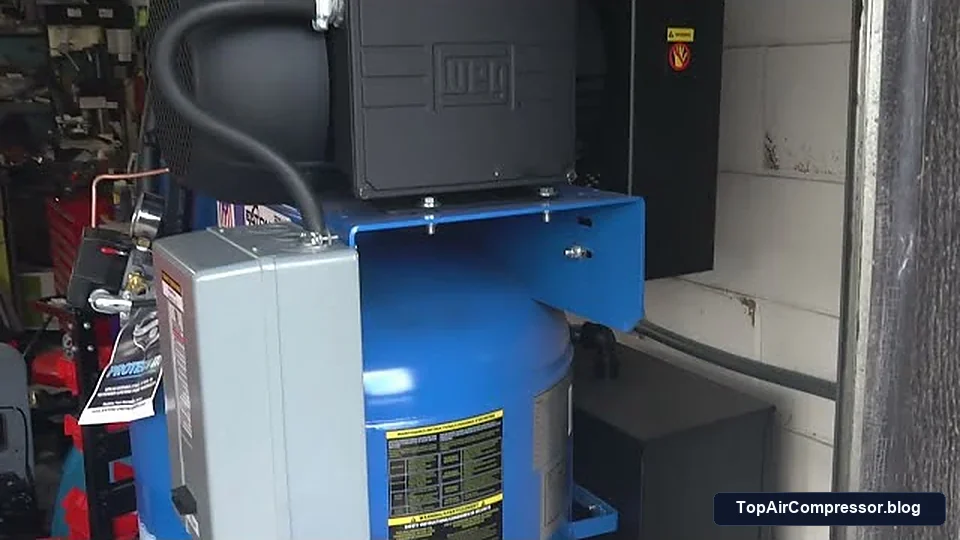
Industrial compressors require exceptional structural integrity to withstand continuous daily workloads. This heavy-duty model features a rugged cast iron pump designed for maximum thermal dissipation and longevity.
The massive vertical tank configuration saves valuable floor space while storing vast amounts of compressed air. For smaller needs, browse our portable tire air compressor options today.
The Eaton Polar unit utilizes a heavy-gauge cast iron pump designed to minimize thermal expansion under high industrial loads. Precision-machined tolerances reduce internal friction and enhance overall mechanical lifespan.
Structural integrity relies on a structural steel baseplate that isolates vibration. Dual-control automation features heavy-duty pressure switches paired with ASME-certified air receivers rated for 200 PSI maximum working pressure.
- Heavy-duty cast iron construction ensures maximum durability.
- ASME-certified vertical storage tank optimizes workshop footprint.
- Precision-machined components reduce internal friction and wear.
Pump Architecture and Materials
The two-stage compression cycle utilizes intercoolers between stages to drop air temperatures. This thermal management drastically improves overall volumetric efficiency and protects reed valves.
Deep cooling fins cast directly into the cylinders promote rapid heat rejection during extended runtime windows. Such meticulous metallurgical choices prevent premature warping under heavy thermal stress.
- Intercoolers lower compressed air temperatures efficiently.
- Deep cooling fins enhance ambient thermal dissipation.
Real-World Volumetric Output and Pneumatic Performance
Delivering a substantial 35 CFM at 175 PSI enables simultaneous operation of multiple heavy air tools. Review our top portable air compressor for tools choices for jobsite tasks.
Pressure drop remains impressively minimal across long distribution piping networks due to high initial storage volume. Technicians can run sandblasters and impact wrenches without experiencing frustrating pressure starvation.
Delivering consistent pneumatic volume requires evaluating genuine CFM delivery at operational pressure thresholds. This compressor sustains high volumetric efficiency, driving heavy sandblasters and impact wrenches without noticeable pressure drop.
Volumetric output remains stable during extended production runs thanks to efficient reed valve designs. Users experience minimal pulsation, ensuring reliable tool performance across demanding automotive assembly and fabrication workflows.
- Generates 35 CFM of continuous volume at 175 PSI.
- Supports multiple heavy pneumatic tools without lag.
- Maintains stable pressure across extended distribution lines.
Handling Heavy Industrial Workloads
Production environments demand consistent pneumatic delivery without unexpected pressure sags during peak operational hours. The generous 120-gallon reserve acts as a reliable buffer for sudden high-demand tasks.
Pneumatic grinders and large impact wrenches operate at peak efficiency when supplied by this system. Consistent pressure translation directly enhances technician productivity and finished product quality.
- Absorbs sudden spikes in shop air demand.
- Eliminates tool stutter during heavy grinding operations.
Video Review: Reviewing my new Eaton Polar Air Compressor
Operating Noise Levels, Thermal Management, and Duty Cycles
Industrial machinery naturally generates significant acoustic energy during heavy compression cycles. Check out our comprehensive best air compressor picks to compare standard shop models.
The robust pump design supports a heavy duty cycle suited for demanding commercial environments. Efficient flywheel fan blades force cooling air across critical hot spots constantly.
Heavy industrial machinery generates substantial acoustic energy, requiring effective attenuation strategies. Operating at moderate decibel levels, the unit incorporates an intercooler design that drops air temperatures before reaching the storage tank.
Sustaining a robust 80% duty cycle prevents overheating during continuous commercial shifts. Integrated flywheel fan blades force ambient air across copper finned tubing to dissipate heat efficiently under heavy loads.
- Designed for heavy industrial duty cycle operations.
- Integrated flywheel fan optimizes airflow over hot cylinders.
- High decibel output requires dedicated mechanical room placement.
Thermal Efficiency and Heat Dissipation
Managing extreme internal operating temperatures is crucial for preventing oil breakdown and carbon buildup. The two-stage layout inherently runs cooler than comparable single-stage industrial pumps.
Effective intercooling between compression stages prevents moisture accumulation and protects downstream air preparation equipment from thermal shock and premature component failure.
- Two-stage cooling reduces internal oil degradation risks.
- Protects downstream air dryers from excessive heat.
Professional Installation, Electrical Requirements, and Setup
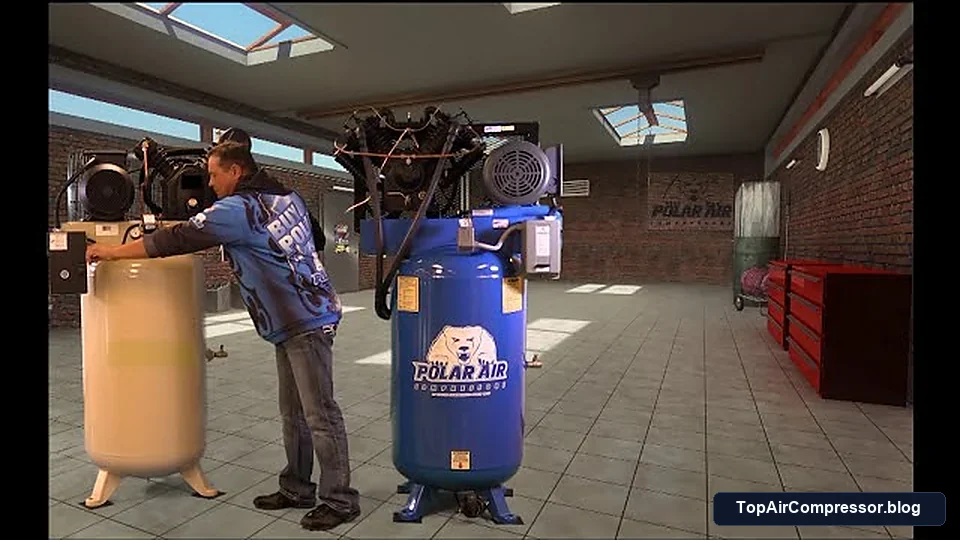
Setting up a heavy commercial compressor requires professional electrical contracting and careful rigging equipment. Operating on a demanding 460-volt three-phase supply means standard outlets cannot power this unit.
Rigid copper piping installations are strongly recommended over flexible hoses to handle high discharge temperatures safely. Technicians must anchor the heavy base securely to reinforced concrete flooring.
Proper electrical integration demands dedicated high-voltage supply lines matched to the motor amperage draw. Installers must utilize correctly sized copper wiring and slow-blow circuit breakers to prevent voltage sag upon startup.
Anchor the heavy receiver securely to a reinforced concrete pad using vibration isolation pads. This dampens mechanical resonance and protects rigid copper or industrial-grade flexible drop lines from fatigue failures.
- Requires dedicated 460V three-phase electrical wiring.
- Professional installation by a licensed electrician is mandatory.
- Must be bolted securely to a level concrete pad.
Electrical Safety and Infrastructure
High-voltage industrial motors demand precise breaker sizing and heavy-gauge wiring to prevent dangerous voltage drops. Neglecting these strict electrical standards can cause catastrophic motor winding failure.
Magnetic starters and overload relays provide essential protection against unexpected power fluctuations and phase imbalances within the facility supply grid, safeguarding your substantial equipment investment.
- Magnetic starters protect against power fluctuations.
- Proper wire sizing prevents dangerous thermal overload.
Routine Maintenance Protocols and Long-Term Durability
Maximizing compressor lifespan requires adherence to strict daily and periodic maintenance schedules without exception. Checking oil levels before every startup prevents catastrophic pump bearing seizures.
Routine moisture draining from the 120-gallon tank prevents internal rust formation and structural thinning. Read our detailed Ingersoll Rand vs. Eaton comparison before selecting a brand.
Long-term mechanical reliability depends heavily on strict adherence to synthetic oil change intervals. Operators must inspect intake filters weekly and drain accumulated condensation daily from the bottom tank valve.
Monitoring belt tension prevents premature pulley wear and motor strain during cold ambient startups. Routine checks of safety relief valves ensure compliance with OSHA standards and prevent catastrophic over-pressurization events.
- Check sight glass oil levels prior to each daily startup.
- Drain tank condensation daily to prevent internal corrosion.
- Replace air intake filters regularly to protect cylinder walls.
Consumables and Wear Part Replacement
Air intake elements trap abrasive dust particles before they can score precision-machined cylinder walls. Inspecting and cleaning these filters preserves volumetric efficiency over years of heavy industrial service.
Drive belts require periodic tension checks and alignment verification to prevent slipping and premature wear. Keeping spare belts and valves on hand minimizes costly unplanned facility downtime.
- Inspect and clean intake filter elements monthly.
- Verify drive belt tension to prevent slippage.
Ergonomics, Control Integration, and Safety Features
Industrial control panels must provide clear visibility and immediate access to critical operational gauges. Pressure regulators and tank pressure readouts are positioned for easy technician monitoring during shifts.
An enclosed belt guard protects operators from moving mechanical hazards while the machine is running. Safety pressure relief valves provide crucial fail-safe protection against over-pressurization events.
Ergonomic layout positions the pressure gauge and regulator at optimal heights for quick operator visibility. Enclosed belt guards protect technicians from rotating components while meeting strict OSHA safety guidelines.
Integrated magnetic starters provide essential thermal overload protection to safeguard the electric motor. Pressure relief valves activate automatically if system limits are exceeded, ensuring a secure workshop operating environment.
- Clear pressure gauges allow rapid system diagnostics.
- Sturdy metal belt guards shield moving mechanical components.
- ASME safety relief valves prevent dangerous over-pressure.
Safety Interlocks and Pressure Controls
Automatic pressure switches cycle the motor reliably within safe upper and lower PSI thresholds. This automation ensures hands-free operation while maintaining consistent workshop pneumatic pressure reserves.
Manual thermal overload resets give supervisors direct control over electrical safety protocols following any unexpected power anomalies or heavy operational strain within the facility network.
- Pressure switches automate tank refill cycles safely.
- Manual resets prevent automatic restart after overloads.
Comparative Market Value: Who Should Buy Versus Skip
Determining whether this heavy-duty compressor fits your workflow depends entirely on your power availability. Commercial shops with three-phase power will find immense value in its high output capacity.
Conversely, hobbyists and small garages lacking heavy industrial electrical service should definitely skip this model. Investing in smaller portable units makes far more sense for light-duty applications.
Industrial fabrication shops requiring uninterrupted air delivery will find immense value in this robust architecture. Facilities running intermittent hobbyist tools should bypass this heavy system due to excessive power consumption.
Evaluating your facility's peak CFM demand helps determine if this station fits your operational footprint. Investing in heavy-duty compression hardware eliminates downtime compared to consumer-grade portable alternatives on the market.
- Ideal for commercial auto shops and manufacturing plants.
- Unsuitable for standard residential garages or workshops.
- Delivers exceptional long-term ROI for heavy industrial users.
Frequently Asked Questions
What electrical service is required to run this industrial air compressor?
This heavy-duty unit requires a dedicated 460-volt three-phase electrical supply. Standard residential or light commercial outlets cannot safely power this high-horsepower motor setup.
How often should I drain condensation from the 120-gallon storage tank?
You should drain accumulated moisture from the tank at the end of every working day. This crucial maintenance prevents internal rust and extends structural longevity.
Can this compressor run multiple heavy pneumatic tools at the same time?
Yes, its robust 35 CFM output easily supports multiple sandblasters or impact wrenches simultaneously. The massive tank reserve prevents frustrating pressure drops during heavy shop use.
Is professional installation necessary for setting up this heavy stationary unit?
Professional installation by a licensed electrician and mechanical rigger is strongly recommended. The unit weighs over 900 pounds and demands precise high-voltage wiring connections.
What type of oil should I use for maintaining the cast iron pump?
Always use high-grade synthetic compressor oil specifically formulated for industrial reciprocating pumps. Synthetic lubricants reduce operating temperatures and prevent carbon buildup on internal valves.