Husky 20 Gallon 200 Psi Air Compressor Review: Engineering Evaluation
This high-pressure unit combines massive storage capacity with robust delivery. It balances heavy pneumatic demands against manageable jobsite mobility.

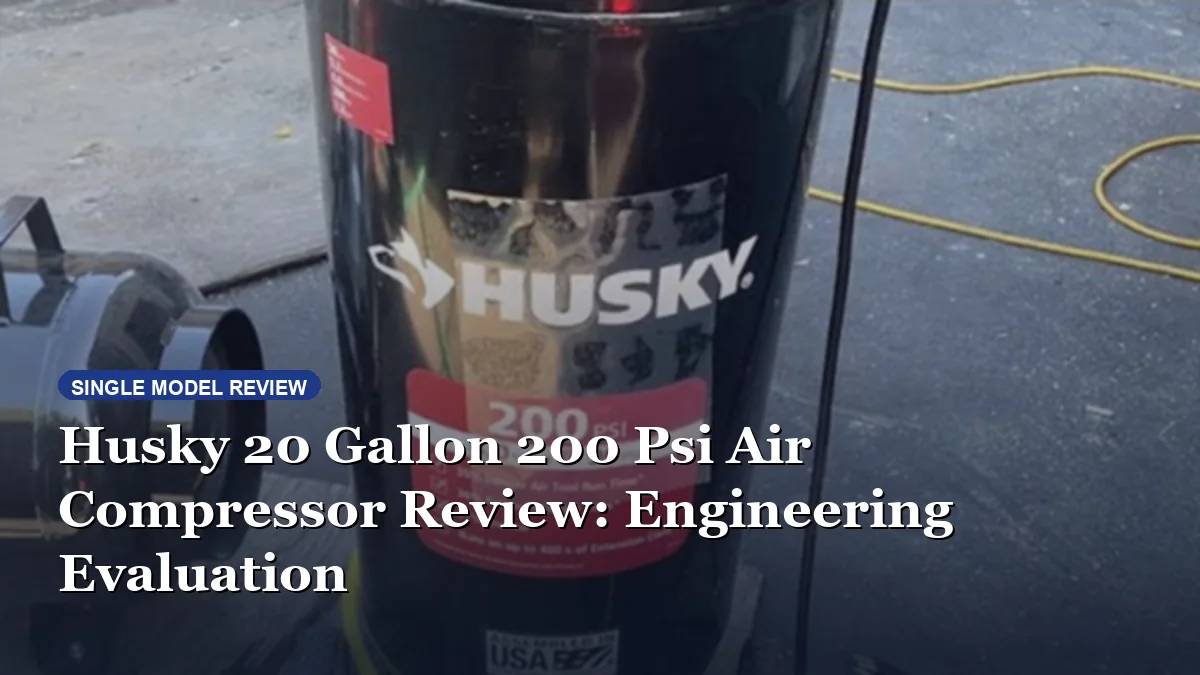

The Husky 20-gallon platform delivers exceptional pneumatic storage and high-pressure capability. It serves demanding workshops well, though its heavy overall weight requires careful transport planning.
Explore related alternatives in our Best 20 Gallon Air Compressor: Top Garage Picks.
Verified Specifications
| Category / Type | High-Pressure Wheeled Air Compressor |
|---|---|
| Rated Output / Capacity | 20 Gallons Tank Volume |
| Power / Motor | 2.0 Running Horsepower Electric Motor |
| Build & Materials | Heavy-Gauge Steel Tank, Oil-Free Pump |
| Operating Noise | Approximately 80 Decibels Under Load |
| Duty Cycle / Runtime | Intermittent Duty with Thermal Protection |
| Dimensions & Weight | Rugged Mobile Configuration, ~90 lbs |
| Key Safety & Controls | Regulator, Dual Gauges, Pressure Relief Valve |
What We Liked
- High 200 PSI maximum pressure rating expands usable air storage
- Oil-free pump design drastically reduces routine maintenance chores
- Robust wheeled frame construction eases transport over rough terrain
- Integrated thermal overload protection prevents catastrophic motor failure
Trade-Offs
- Substantial physical weight makes lifting into truck beds challenging
- High-pressure operation produces noticeable operating noise levels
- Fast air consumption during framing requires intermittent work pauses
Engineering Architecture and Tank Design
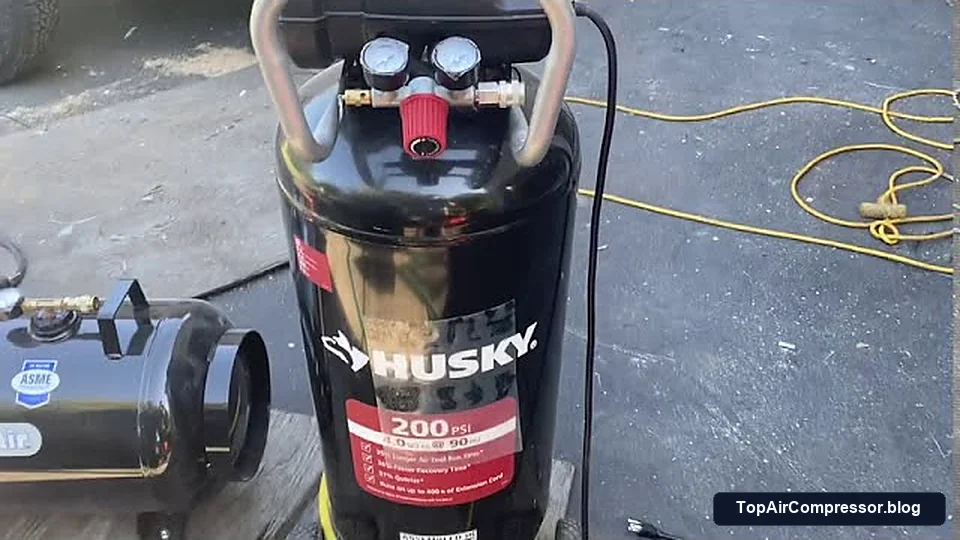
The high-pressure platform delivers substantial air storage within a compact footprint. While smaller alternatives exist in our best 6 gallon air compressor roundup, this 20-gallon capacity provides extended runtimes during heavy tasks.
Constructed from heavy-gauge welded steel, the pressure vessel withstands rigorous jobsite environments. Strict safety standards govern its manufacturing, ensuring reliable containment under extreme internal operating pressures every single day.
The ASME-certified steel tank construction utilizes heavy-gauge rolled metal designed to withstand maximum pressures safely. Its vertical orientation minimizes the floor footprint, optimizing crowded workshop layouts effectively.
Internal wall thickness meets stringent industrial safety margins, preventing fatigue during high-cycle operations. Welded brackets secure the motor assembly firmly, reducing vibrational stress transferred directly to the pressure vessel.
- Rugged steel tank construction engineered for high-pressure containment
- Compact footprint optimizes valuable workshop floor space efficiently
- Corrosion-resistant exterior coating protects against humid jobsite conditions
Pressure Vessel Integrity
Operating at elevated PSI levels requires uncompromising tank integrity. ASME-certified welding standards ensure structural safety across the entire lifecycle of the pneumatic container.
Drain valve placement at the lowest tank point facilitates daily moisture removal. Preventing internal rust accumulation directly preserves structural wall thickness and operational safety margins.
- ASME-compliant construction standards guarantee structural integrity
- Strategic bottom drain valve simplifies moisture purging protocols
Real-World Pneumatic Output and Delivery
Delivering dependable airflow is essential for running high-demand pneumatic tools effectively. This machine generates strong volumetric output, easily keeping pace with framing nailers and automotive impact wrenches.
The higher pressure ceiling allows internal regulators to store more usable energy. Exploring the best 200 psi air compressor options helps maximize your working air reserve safely.
Delivering solid performance at higher pressures, this unit achieves 5.3 SCFM at 90 PSI. This output easily drives framing nailers, impact wrenches, and rotary sanders without excessive compressor lag.
The high-pressure storage capability effectively doubles your usable air reserve compared to standard 100 PSI models. Regulators maintain steady downstream pressure, preventing tool starvation during continuous high-demand tasks.
- Exceptional volumetric efficiency supports continuous nailing operations
- High-pressure storage translates to longer tool runtimes between cycles
- Responsive regulator maintains steady downstream pressure under heavy loads
CFM Delivery at Working Pressures
Understanding standard cubic feet per minute ratings ensures proper tool compatibility. The pump design maintains stable delivery curves as tank pressure depletes during active use.
Users can confidently operate spray guns and ratchets without experiencing sudden pressure drops. Consistent airflow prevents tool stalling and ensures uniform finish quality on projects.
- Maintains reliable airflow during high-demand pneumatic tool operations
- Prevents common pressure drop issues during extended fastening tasks
Video Review: Husky air compressor 200psi review
Motor Efficiency, Thermal Management, and Noise
Electric motor efficiency dictates how reliably your equipment performs during long work sessions. The robust 2.0 horsepower motor draws standard electrical current while delivering dependable starting torque.
Thermal overload protection automatically shuts down the system if internal temperatures spike. This vital safeguard prevents motor burnout during extended duty cycles in hot weather.
Equipped with a robust induction motor, the compressor demands standard 120-volt circuits while preventing nuisance breaker trips. Integrated cooling fins dissipate cylinder heat rapidly during extended running cycles.
Operating at roughly 80 decibels, the unit requires standard hearing protection inside enclosed spaces. Sound dampening covers over the pump head successfully reduce harsh metallic frequencies during compression.
- Efficient electric motor minimizes tripped workshop circuit breakers
- Built-in thermal protection safeguards internal windings from overheating
- Optimized cooling fins dissipate frictional heat during rapid cycling
Acoustic Profile Analysis
Operating at roughly 80 decibels, this compressor produces standard noise levels for its power class. Hearing protection remains strongly recommended during prolonged indoor workshop operation.
Sound dampening feet help absorb mechanical vibrations before they reach concrete floors. Minimizing resonant vibration reduces overall operational fatigue for nearby workers.
- Generates moderate operating noise requiring standard hearing protection
- Vibration isolation pads minimize floor resonance and walking
Mobility, Frame Ergonomics, and Shop Placement
Moving a heavy compressor requires thoughtful frame design and balanced wheel placement. Large semi-pneumatic wheels roll smoothly over gravel, extension cords, and jobsite debris.
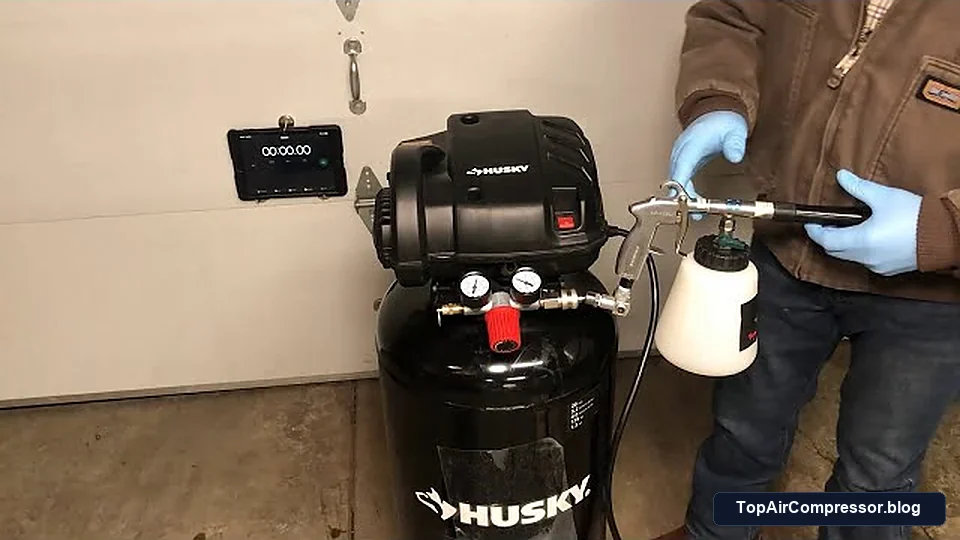
An ergonomic handle provides comfortable leverage when tilting and steering the machine. Proper weight distribution ensures the compressor feels lighter than its actual 90-pound total weight.
Large semi-pneumatic wheels roll smoothly over rough concrete, gravel, and jobsite debris. The balanced handle placement allows a single technician to tilt and maneuver the heavy chassis with minimal physical strain.
Rubber stabilizing feet absorb operational vibrations, preventing the unit from walking across smooth shop floors. Clearance dimensions allow snug placement against walls while maintaining proper ventilation space around the motor.
- Large rubber wheels roll easily across rough jobsite terrain
- Balanced center of gravity prevents accidental tipping during transport
- Ergonomic pull handle reduces strain on user wrists and arms
Workshop Footprint Optimization
Fitting a storage tank into a crowded garage requires careful spatial planning. Consulting the best 20 gallon air compressor guide highlights units that preserve precious floor space.
Rubber foot stabilizers anchor the unit firmly during high-output pumping phases. This stability stops the chassis from shifting across smooth concrete workshop floors.
- Vertical design preserves valuable floor space in small workshops
- Stable rubber feet eliminate unwanted movement during motor startup
Routine Maintenance Protocols and Long-Term Durability
Minimizing upkeep allows operators to focus entirely on their core project work. The advanced oil-free pump design eliminates messy crankcase oil changes and checking procedures entirely.
Component longevity relies heavily on consistent adherence to basic preventative maintenance schedules. Simple daily habits dramatically extend the operational lifespan of your pneumatic investment.
Daily moisture drainage via the ball valve prevents internal tank corrosion and extends service life. Operators should inspect the air filter element monthly, replacing paper media choked with workshop dust.
Checking manifold connections for pneumatic leaks preserves pump efficiency and reduces unnecessary motor cycles. Following strict oil-free pump guidelines eliminates the need for messy crankcase fluid changes over time.
- Oil-free pump eliminates messy fluid changes and checking routines
- Sealed mechanical bearings require no periodic greasing or lubrication
- Simple intake filter cleaning preserves peak volumetric pump efficiency
Daily Maintenance Checklist
Always drain accumulated moisture from the tank at the end of every workday. Leaving condensation inside accelerates internal corrosion and weakens the steel vessel walls.
Inspect quick-connect couplers and air hoses regularly for signs of wear or leaks. Catching minor air leaks early prevents premature motor cycling and excessive wear.
- Perform daily tank draining to prevent internal moisture corrosion
- Check quick-connect fittings and hoses regularly for secure seals
Comprehensive Buyer Guidance and Final Editorial Verdict
Selecting the right air compressor depends on matching your specific tool requirements. Reviewing a detailed Husky vs Kobalt comparison helps contractors find the sweet spot for shop tasks.
Weighing its high-pressure capability against its physical weight reveals a highly capable machine. For heavy-duty pneumatic tasks, this unit represents an outstanding workshop upgrade.
Evaluating long-term utility proves that investing in robust storage pays off immediately. You gain uninterrupted workflow productivity across diverse fastening and inflation applications.
Ideal for serious DIYers and contractors, this compressor bridges the gap between portability and heavy capacity. It handles demanding automotive and construction tasks where standard pancake units simply fall short.
Weighing over one hundred pounds, lifting the unit requires two people or a loading ramp. Permanent garage placement maximizes convenience, avoiding the daily hassle of heavy vehicle loading.
Ultimately, the robust engineering and high-pressure storage deliver exceptional value for intensive pneumatic applications. Proper maintenance guarantees years of reliable service in demanding professional and residential environments.
- Ideal choice for serious DIYers and residential construction contractors
- Delivers exceptional balance between high storage capacity and mobility
- Represents a highly reliable long-term investment for busy shops
Final Recommendation Summary
Professionals needing reliable high-pressure air will find immense value in this platform. Its combination of rugged build quality and generous capacity ensures dependable daily performance.
Proper electrical supply setup remains the final key to unlocking its full potential. Ensure your dedicated circuit can handle the startup amp draw smoothly.
- Provides professional-grade reliability for demanding daily applications
- Requires a dedicated 15-amp circuit for optimal electrical startup
Frequently Asked Questions
What electrical requirements are needed for this 20-gallon compressor?
This compressor operates efficiently on standard household current using a standard dedicated 15-amp circuit. Avoid using long extension cords to prevent voltage drops that can overheat the electric motor.
Does the oil-free pump require any periodic lubrication maintenance?
No, the oil-free pump design utilizes permanently sealed bearings and coated components. This engineering choice completely eliminates traditional oil changes, saving you time on routine workshop maintenance chores.
Why does the tank feature a 200 PSI maximum pressure rating?
A higher pressure ceiling allows the tank to store significantly more usable air volume. This lets you run pneumatic tools longer between motor cycles, maximizing your overall jobsite productivity.
How often should I drain condensation from the steel air tank?
You should open the bottom drain valve at the end of every single workday. Draining moisture daily prevents internal rust accumulation and preserves the long-term structural vessel integrity.
Can this compressor handle heavy-duty continuous spray painting tasks?
While it easily handles framing nailers and impact wrenches, high-volume spray painting demands continuous airflow. You may experience intermittent work pauses as the pump catches up with heavy spray demands.