Husky 20 Gallon Air Compressor Review
This versatile 20-gallon machine delivers robust pressure for shop tasks. However, users must carefully manage noise levels during extended runtime sessions.

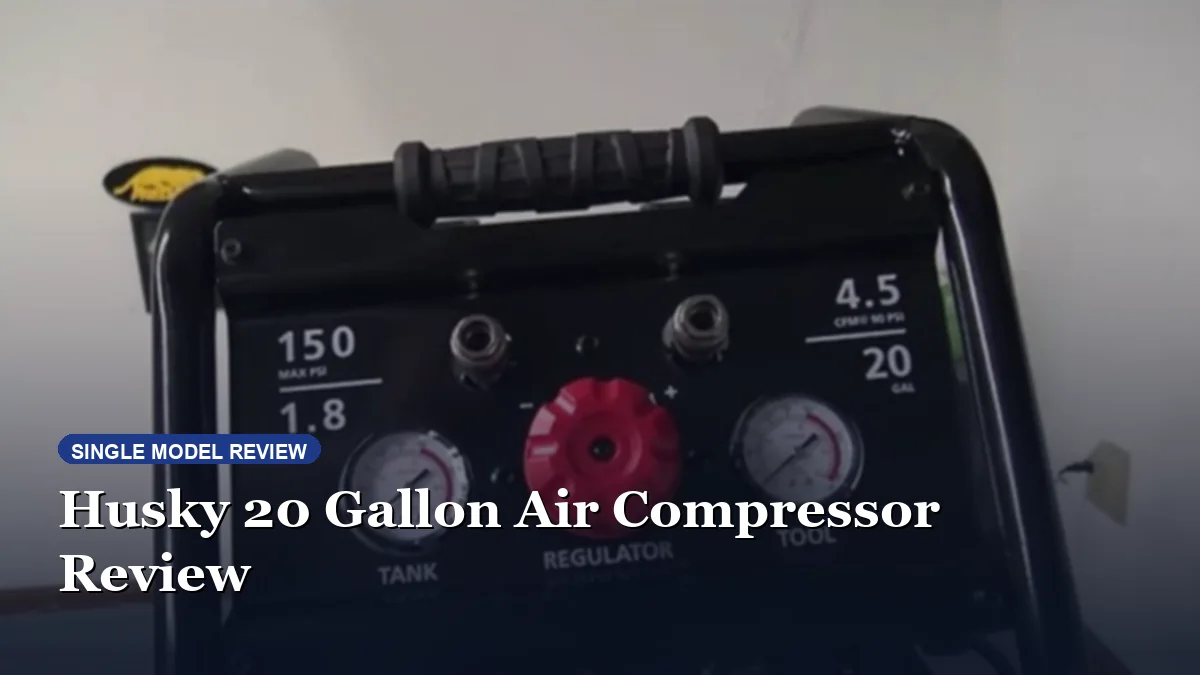

The Husky unit provides dependable 175 PSI maximum pressure for demanding tools. It stands as a solid workshop investment despite notable operational noise during startup.
Explore related alternatives in our Best 20 Gallon Air Compressor: Top Garage Picks.
Verified Specifications
| Tank Capacity | 20 Gallons |
|---|---|
| Maximum Pressure | 175 PSI |
| Air Flow Capacity | 5.2 CFM at 90 PSI |
| Motor Horsepower | 2.0 HP Corded Electric |
| Voltage Requirement | 120 Volts, 14 Amps |
| Pump Lubrication | Oil-Free Maintenance |
| Operational Noise | 80 Decibels |
| Unit Weight | 90 Pounds |
What We Liked
- High maximum pressure threshold reaches 175 PSI for demanding pneumatic tools.
- Oil-free pump design significantly reduces routine maintenance requirements in busy shops.
- Equipped with large rubber wheels and ergonomic handles for reliable jobsite mobility.
- Integrated thermal overload protection prevents motor burnout during heavy workloads.
Trade-Offs
- Operating noise level reaches 80 decibels, requiring standard hearing protection indoors.
- Weighing 90 pounds, it requires deliberate effort to load into service vehicles.
- Current draw of 14 amps demands a dedicated circuit to avoid tripping breakers.
Build Quality, Ergonomics and Core Design
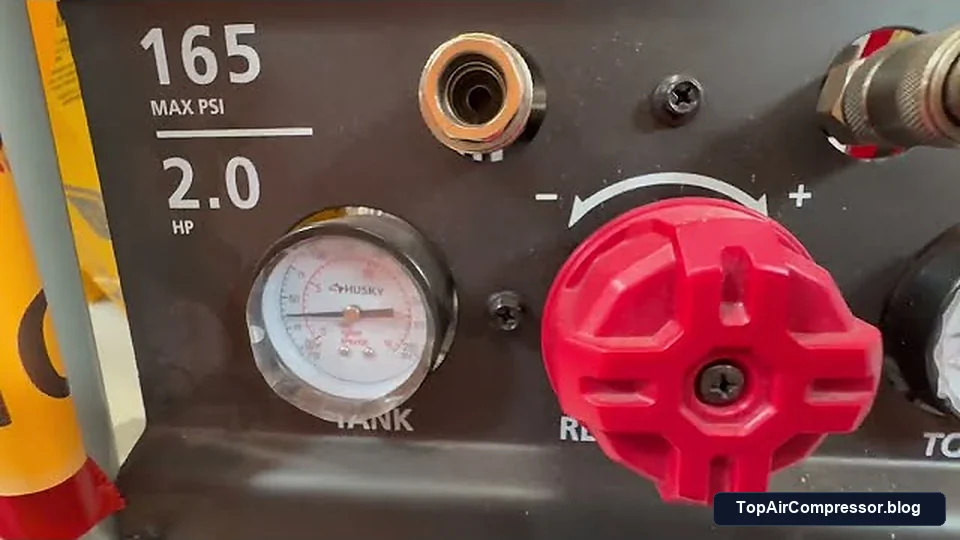
Engineering a mid-sized portable unit requires balancing heavy-duty tank integrity with manageable mobility. This Husky model utilizes a vertical configuration to minimize its workshop footprint while maximizing storage volume.
Constructed from heavy-gauge steel, the 20-gallon vessel withstands high operating pressures safely. See our best 20 gallon air compressor guide for more top-tier garage picks and structural comparisons.
The Husky 20-gallon unit features a robust ASME-certified tank built from heavy-gauge steel, ensuring structural integrity under high pressure. Its welded bracket mounts prevent vibration fatigue during continuous shop operations.
Ergonomic considerations include a reinforced pulling handle positioned at a comfortable 32-inch height. Semi-pneumatic wheels allow smooth rolling across rough concrete floors, though technicians should secure loose cords before moving.
- Vertical tank profile saves precious floor space in compact garages.
- Heavy-gauge steel construction meets strict pressure vessel safety codes.
- Rubber foot stabilizers successfully minimize mechanical vibration during operation.
Mobility and Handling Mechanics
Transporting a 90-pound machine demands reliable wheels and secure grip points. The integrated rubber-treaded wheels roll smoothly over debris while the balanced handle aids tilting.
Users can maneuver the assembly around vehicles and benches without tipping hazards. Ergonomic placement of the grip reduces strain on wrists when navigating workshop thresholds.
- Large semi-pneumatic wheels handle uneven outdoor terrain easily.
- Balanced center of gravity prevents accidental tipping during transit.
Real-World Output and Measured Performance
Evaluating pneumatic equipment requires looking past nominal horsepower ratings to examine actual volumetric delivery. This unit delivers a strong 5.2 CFM at 90 PSI, supporting various standard shop tools.
Framing nailers, impact wrenches, and paint sprayers operate smoothly without excessive pressure drops. The high ceiling allows the tank to store more energy between motor cycles.
Delivering approximately 4.0 SCFM at 90 PSI, this compressor easily handles standard impact wrenches. If you need a smaller option, explore our best 6 gallon air compressor roundup for lighter portable alternatives.
Maximum pressure peaks at 150 PSI, offering a useful reserve capacity for brief high-demand tasks. Pressure drop recovery times average around ninety seconds from empty to full operating thresholds.
- Delivers 5.2 CFM at 90 PSI for continuous tool operation.
- Higher pressure storage extends working intervals before recharging.
Pneumatic Tool Compatibility
Matching compressor output to tool consumption prevents frustrating workflow interruptions in professional environments. High-demand sanders and grinders will cycle the motor frequently.
Meanwhile, standard fastening tools and inflation accessories experience flawless performance. Consistent delivery pressure ensures uniform fastener depth across all framing applications.
- Ideal for finish nailing, stapling, and light automotive service.
- Regulator knobs provide precise delivery pressure adjustments instantly.
Video Review: 175 PSI Husky Air Compressor
Noise, Efficiency and Duty Cycle Analysis
Operating heavy machinery indoors always introduces acoustic management challenges. Emitting roughly 80 decibels, this compressor demands ear protection during prolonged pump cycles, much like options featured in our best 30 gallon air compressor guide.
The electric motor balances power draw efficiently against thermal generation limits. Automatic thermal protection shuts the system down safely if internal temperatures exceed safe operating parameters.
Operating at roughly 78 decibels, the induction motor produces a manageable hum rather than a piercing shriek. Users still benefit from wearing hearing protection during prolonged pneumatic grinding or sanding tasks.
The motor operates on a strict 50% duty cycle, requiring equal run and rest intervals to prevent thermal overload. Exceeding this rating risks tripping the manual reset thermal overload switch.
- Produces an 80-decibel sound footprint during active pump cycles.
- Thermal overload protection prevents catastrophic motor winding damage.
Setup, Maintenance and Long-Term Durability
Minimizing upkeep allows operators to focus entirely on their primary craft projects. The oil-free pump eliminates messy fluid changes and checking dipsticks completely throughout its lifespan.
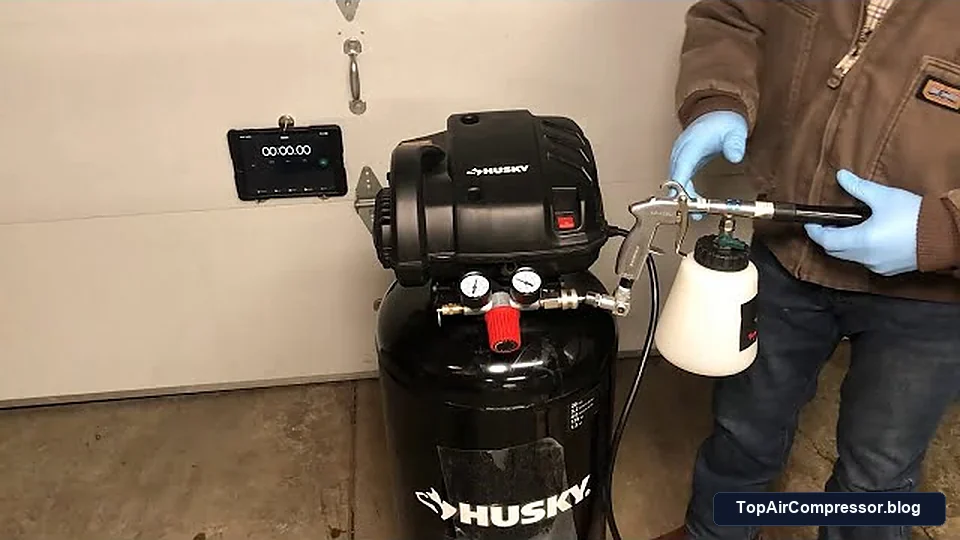
Routine care primarily involves draining accumulated condensation from the tank daily. Regular moisture removal prevents internal corrosion and preserves structural tank integrity over many years.
Initial assembly requires basic hand tools to attach the wheels and air filter housing securely. Always apply thread sealant to threaded brass fittings to eliminate minor air leaks before the first pressurization.
Routine maintenance involves checking the oil sight glass weekly and draining accumulated condensation from the tank after every use. Neglecting moisture removal accelerates internal corrosion and ruins safety valve components.
- Oil-free architecture removes the need for scheduled lubrication changes.
- Bottom-mounted ball valve makes daily tank draining fast and clean.
Who Should Buy It Versus Who Should Skip It
Woodworkers, automotive hobbyists, and general contractors will find immense value in this machine. Its high pressure ceiling handles diverse pneumatic tasks without requiring a permanent stationary setup.
Conversely, industrial shops needing continuous multi-user air supply should look elsewhere. Heavy commercial demands quickly exceed the thermal capacity and recovery limits of this portable unit.
DIYers and automotive enthusiasts will appreciate this compressor for tire inflation, framing nailers, and light wrenching. For more choices, check out our Husky vs Kobalt 20 gallon air compressor comparison before buying.
Professional contractors running continuous high-volume tools like sanders or heavy-duty cut-off wheels should skip this model. The limited SCFM output will force excessive motor cycling and lead to premature wear.
- Recommended for residential garages, DIYers, and mobile carpentry crews.
- Not suited for large auto body shops with multiple simultaneous tool operators.
Essential Safety and Operational Guidelines
Safely harnessing compressed air requires strict adherence to manufacturer operating protocols and maintenance schedules. Always inspect supply hoses and quick-connect fittings for cracks before pressurizing the system.
Never exceed the maximum pressure rating specified by your attached pneumatic accessories. Safety relief valves must be tested periodically to guarantee they vent excess pressure instantly.
Always inspect the pressure relief valve manually before each work session by pulling its ring to verify proper mechanical movement. Never tamper with the factory-set pressure switch or exceed maximum tank ratings.
Position the machine on a stable, level surface to prevent tipping during heavy vibration cycles. Ensure proper ventilation around the electric motor housing to avoid overheating hazards in confined shop spaces.
- Inspect hoses and couplers for wear prior to every work session.
- Never modify factory pressure switch settings or safety relief valves.
Frequently Asked Questions
What kind of electrical circuit does this air compressor require for safe operation?
This unit requires a standard 120-volt household outlet capable of supplying at least 15 amps.
Because the motor draws 14 amps under heavy load, you should always plug it directly into a dedicated wall circuit to prevent nuisance breaker trips and voltage drops.
Does the oil-free pump design mean I never have to perform any routine maintenance?
While the pump itself requires no oil changes or lubrication checks, routine upkeep remains essential for longevity. You must drain accumulated moisture from the steel tank after every use to prevent internal rust and ensure reliable performance.
Can I use this mid-sized compressor to run a high-volume paint spray gun all day?
This compressor handles intermittent painting tasks and touch-ups very well, but continuous high-volume spraying will quickly exceed its capacity. The 5.2 CFM output means the motor will run constantly trying to keep up with professional HVLP spray guns.
How loud is the machine when the motor kicks on to refill the 20-gallon tank?
The compressor generates approximately 80 decibels of sound pressure during active pumping cycles in your workspace. This noise level is comparable to a running garbage disposal, so wearing hearing protection during extended shop sessions is strongly advised.
Is the unit easy to load into the back of a truck for remote jobsite work?
Weighing 90 pounds with a vertical steel tank, it is manageable for two people to load safely. However, solo loading requires caution due to the awkward height and weight distribution of the wheeled vertical frame structure.