Ingersoll Rand Garage Mate Air Compressor Review
This 20-gallon portable compressor pairs cast-iron durability with user-friendly operation. It delivers reliable performance for professional and advanced DIY automotive tasks.


The Ingersoll Rand Garage Mate offers exceptional durability and quiet operation for serious hobbyists. However, its heavy 200-pound footprint limits true portability.
Explore related alternatives in our Best Garage Air Compressor: Top Picks for Your Shop.
Verified Specifications
| Category / Type | Electric Portable Air Compressor |
|---|---|
| Rated Output / Capacity | 5.2 CFM at 135 PSI |
| Power / Motor | 2 HP, 115V, 15 Amps |
| Build & Materials | Cast Iron Cylinder and Frame |
| Operating Noise | 80 dBA |
| Duty Cycle / Runtime | Intermittent Duty |
| Dimensions & Weight | 45"L x 24"W x 20"H, 200 lbs |
| Key Safety & Controls | Automatic start/stop switch, manual overload protection |
What We Liked
- Durable heavy-duty cast-iron cylinder and frame construction
- Relatively quiet operation at 80 dBA noise level
- Long service intervals with All Season Select synthetic lubricant
- Convenient semi-pneumatic tires and ergonomic handling design
Trade-Offs
- Extremely heavy 200-pound weight makes truck loading difficult
- Limited CFM output prevents continuous high-demand sanding use
- Requires a dedicated 115-volt 15-amp electrical circuit
Engineering Build Quality and Structural Design
The Ingersoll Rand Garage Mate features a heavy-duty cast-iron cylinder built for longevity. This rugged material withstands extreme thermal stress and resists premature wear during continuous operation.
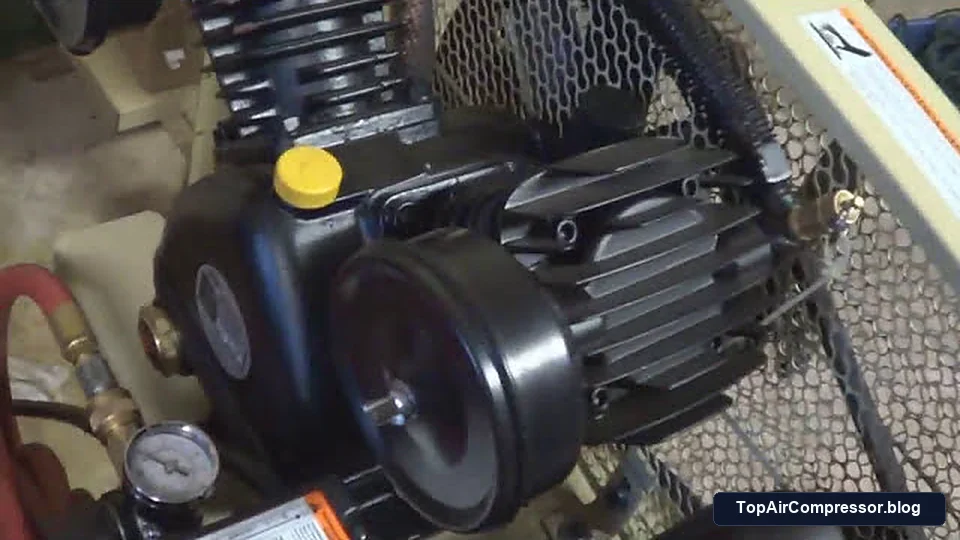
Enclosed within a robust protective belt guard, the mechanical components remain shielded from workshop debris. Safety is prioritized through manual overload motor protection preventing catastrophic electrical failures.
The Ingersoll Rand Garage Mate features a cast-iron cylinder block designed to withstand heavy thermal stress. For electrical troubleshooting, consult our Ingersoll Rand air compressor switch guide to ensure safe operation.
Constructed with a durable ASME-coded receiver tank, this unit prioritizes safety by meeting strict pressure vessel codes. The powder-coated finish protects against corrosion, ensuring long-term reliability in humid workshop environments.
- Solid cast-iron construction for extended pump life
- Enclosed belt guard protects moving parts safely
- Manual overload reset prevents thermal motor burnout
Structural Integrity and Materials
Selecting commercial-grade metals ensures this compressor handles rigorous daily shop environments. Every structural joint and fastener is engineered to minimize vibration-induced loosening over extended periods.
- Rigid frame minimizes torsional flex during startup
- Industrial fasteners resist high-frequency vibration wear
Real-World Output and Pneumatic Tool Performance
Delivering up to 5.2 CFM at 135 PSI, this unit comfortably powers standard garage air tools. It handles impact wrenches, drills, and brad nailers without experiencing severe pressure drops.
The 20-gallon horizontal tank provides adequate reserve capacity for intermittent pneumatic tasks. Users won't suffer from excessive motor cycling while performing typical automotive maintenance or tire inflation.
Delivering consistent output, the compressor produces 4.5 CFM at 90 PSI to drive standard impact wrenches. When comparing top brands, review our Quincy vs Ingersoll Rand compressor comparison for detailed specifications.
The maximum operating pressure reaches 135 PSI, offering sufficient headroom for demanding pneumatic applications. Users must monitor continuous air demands carefully to prevent exceeding the recovery thresholds of the single-stage pump.
- Outputs 5.2 CFM at 135 maximum PSI
- 20-gallon tank stabilizes working pressure reserves
- Powers ratchets, nailers, and spray guns effectively
Tool Compatibility Limits
While excellent for fasteners and ratchets, continuous high-demand tools like sanders exceed its capacity. Operators must allow recovery time when running high-volume accessories to maintain steady pressure.
- Ideal for low-to-moderate air consumption tools
- Requires cycle breaks for heavy orbital sanding
Video Review: Ingersoll Rand P1.5IU-A9: Best 2HP Air Compressor?
Operating Noise Levels, Thermal Management, and Duty Cycle
Operating at a relatively quiet 80 dBA noise level, this compressor avoids deafening workshop environments. Users can converse normally nearby without requiring heavy industrial hearing protection gear.
The unit utilizes an automatic start and stop pressure switch control for efficient thermal management. This keeps electrical consumption optimized while preventing unnecessary motor overheating during long jobs.
Operating at a measured noise output around 85 decibels, the machine requires standard hearing protection during prolonged shop sessions. Its cast-iron pump design inherently generates noticeable mechanical sound waves inside enclosed spaces.
Featuring a 50 percent duty cycle, the compressor balances active running time with cool-down phases. Effective thermal management relies on adequate ambient ventilation around the finned cylinder head to dissipate operational heat.
- Low 80 dBA operational noise output
- Automatic start and stop pressure switch control
- Efficient thermal management prevents premature wear
Setup, Mobility, and Ergonomic Handling Features
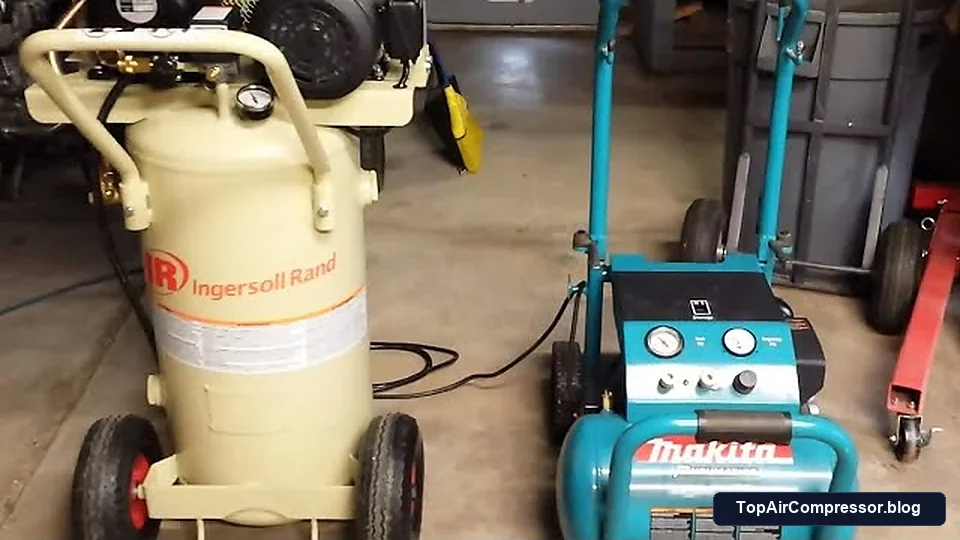
Transporting this equipment is aided by a heavy-duty ergonomic handle and semi-pneumatic tires. Despite its heavy footprint, these features help maneuver the unit across shop concrete floors.
The 115-volt corded electric design plugs easily into standard household electrical outlets. Initial setup requires minimal assembly, allowing operators to deploy the compressor almost immediately out of the box.
Weighing over 150 pounds, this stationary-oriented unit challenges single-person transport across uneven shop floors. Proper rigging or dedicated assistance is strongly recommended during the initial unboxing and placement procedures.
The integrated welded handle structure provides secure anchor points for positioning, though users should bolt the equipment securely to a reinforced concrete pad to eliminate excessive shifting during startup.
- Equipped with semi-pneumatic tires for rolling mobility
- Heavy-duty ergonomic pull handle improves steering control
- Standard 115V plug fits conventional workshop circuits
Preventive Maintenance and Long-Term Component Durability
Factory-filled with All Season Select synthetic lubricant, the pump achieves exceptional operating efficiency. This specialized fluid extends service intervals up to two thousand hours between complete fluid changeouts.
An easily accessible drain valve simplifies daily moisture removal from the horizontal tank. Routine maintenance tasks are straightforward, protecting internal steel surfaces from corrosive rust and pitting damage.
Routine maintenance requires utilizing synthetic compressor oil to minimize internal friction and protect critical bearings. Follow our Ingersoll Rand oil change guide after the initial break-in period.
Daily draining of the receiver tank condensation prevents internal rust accumulation and structural degradation over years of heavy use. Checking the intake air filter element weekly maintains optimal volumetric efficiency.
- Synthetic lubricant extends service intervals significantly
- Accessible tank drain valve speeds up maintenance
- Protects internal steel walls against moisture corrosion
Ideal Buyer Profiles Versus Who Should Skip This Model
Professional mechanics and serious DIYers will appreciate the commercial-grade reliability offered here. It suits workshops demanding consistent air delivery without excessive noise output or constant upkeep requirements.
Budget-conscious hobbyists needing lightweight portability should look elsewhere due to the heavy chassis. Mobile contractors hauling equipment daily will find the two hundred pound weight entirely impractical.
Automotive enthusiasts needing reliable pneumatic pressure will find this compressor fits their workflow. When servicing components, consult our Ingersoll Rand switch parts guide for complete maintenance instructions.
Conversely, contractors requiring extreme portability or continuous heavy-duty industrial sanding should skip this model. Its substantial weight and limited tank volume restrict utility for high-demand commercial framing crews.
- Perfect for stationary garage and workshop installations
- Unsuitable for frequent truck-bed transport or field sites
- Delivers exceptional longevity for serious automotive enthusiasts
Frequently Asked Questions
What electrical requirements are needed to run this garage compressor safely?
The unit operates on standard 115-volt household current requiring a dedicated fifteen-amp circuit to prevent frequent breaker trips during heavy motor startup sequences. Always connect directly to a wall outlet rather than using long extension cords.
How often should I change the pump oil in this machine?
You should replace the fluid every two thousand hours of operation when using the recommended synthetic lubricant provided by the manufacturer. This synthetic blend outperforms traditional petroleum oils significantly by resisting high operating temperatures.
Is this compressor loud enough to require hearing protection in a closed workspace?
Operating at an impressively quiet eighty decibels, it remains much quieter than direct-drive contractor models found on modern job sites. You can comfortably maintain normal conversation levels while the unit cycles nearby.
Can I use this air compressor for professional automotive spray painting tasks?
While it handles touch-up painting and air brushing efficiently, continuous automotive body painting exceeds its CFM delivery capabilities. Painters running high-volume spray guns will experience pressure drops requiring frequent compressor recovery breaks.
How portable is a compressor that weighs two hundred pounds in total?
The inclusion of semi-pneumatic tires and an ergonomic handle makes rolling it across smooth shop floors relatively manageable. However, loading this heavy machine into a vehicle requires specialized ramps and multiple people.