Ingersoll Rand Ss3L3 Review: Concise Editorial Verdict
This Ingersoll Rand unit delivers robust continuous duty power for demanding pneumatic tasks. However, its heavy build and strict 230V requirement limit casual workshop portability.


The SS3J3-WB compressor provides exceptional industrial reliability for serious technicians. Professionals will appreciate its steady airflow despite the lack of mobile convenience.
See our flagship Best Air Compressor: Top Picks for Garage, Shop, & Tires.
Verified Specifications
| Category / Type | Single-Stage Air Compressor |
|---|---|
| Rated Output / Capacity | 8-gallon twin tanks |
| Power / Motor | 3 Horsepower electric |
| Build & Materials | Industrial cast iron |
| Operating Noise | Low-resonance heavy frame |
| Duty Cycle / Runtime | 100% continuous duty |
| Dimensions & Weight | 175 pounds total weight |
| Key Safety & Controls | Dual quick disconnect couplers |
What We Liked
- Robust 100% continuous duty cycle rating
- Durable industrial-grade cast iron pump
- Dual quick disconnect couplers for multi-tool setups
- Balanced twin tank configuration for lower center of gravity
Trade-Offs
- Demands a dedicated 230V electrical power source
- Heavy 175-pound chassis limits effortless jobsite portability
- Compact 8-gallon tank requires frequent pump engagement
Engineering Architecture and Build Construction
The Ingersoll Rand engineering team constructed this compressor with industrial-grade cast iron cylinders designed to withstand punishing work environments. Every major structural component prioritizes longevity over weight savings for maximum durability.
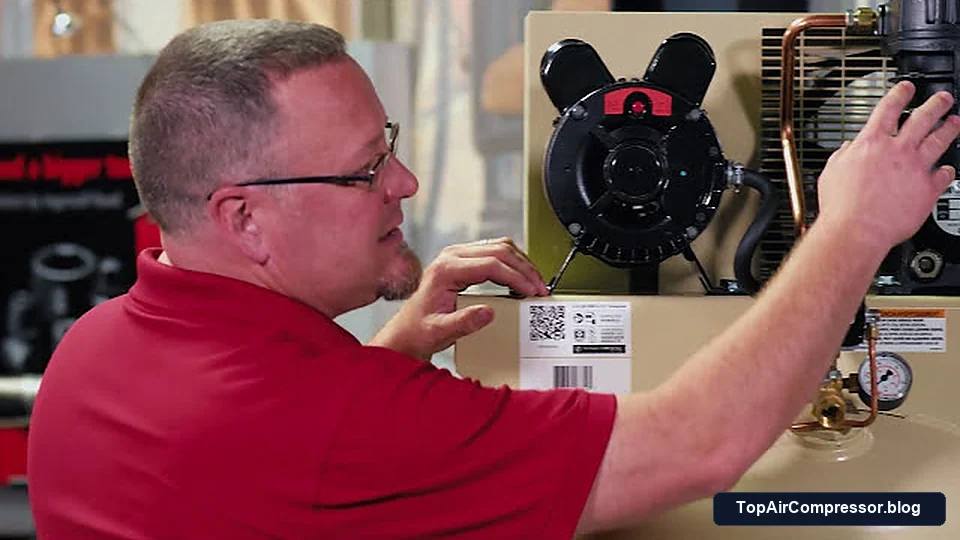
Dual twin tanks distribute stored air efficiently while maintaining a lower center of gravity across the entire heavy steel frame. This configuration minimizes structural stress during rapid pressure cycles and heavy loads.
The Ingersoll Rand SS3L3 utilizes a cast iron cylinder design engineered for commercial workshops. When servicing components, refer to our Ingersoll Rand pressure switch replacement guide for precise wiring instructions.
A precision-balanced flywheel with large cooling blades drives ambient air efficiently across hot compression zones. This structural layout significantly reduces internal operating temperatures, protecting critical reed valves and gaskets from thermal breakdown during cycles.
- Solid cast iron cylinder construction
- Heavy-gauge steel twin storage tanks
- Precision-machined internal pump tolerances
- Corrosion-resistant powder-coated exterior finish
- Solid cast iron construction ensures maximum durability in professional environments.
- Precision-machined crankshafts minimize vibration across extended operational cycles.
Heavy-Duty Cast Iron Pump Design
Single-stage pump heads feature precision-machined tolerances that optimize volumetric efficiency and reduce internal friction. The splash lubrication system floods critical journal bearings with continuous oil flow.
Oversized cooling fins cast directly into the cylinder walls dissipate heat rapidly during extended operating cycles. This thermal management prevents premature valve wear under high ambient temperatures.
- Splash lubrication journal bearing protection
- Oversized cylinder cooling fins
Cylinder Sleeve Metallurgy
Heavy-duty precision-honed cylinder walls maintain optimal oil retention for reduced internal friction throughout heavy workloads. Industrial-grade metallurgy effectively prevents out-of-round wear over thousands of operational hours.
- Industrial-grade metallurgy prevents out-of-round wear over thousands of hours.
Pneumatic Output and Real-World Tool Compatibility
Delivering reliable compressed air is the core competency of this machine, backed by a robust three horsepower motor. It maintains steady pressure delivery to keep high-demand pneumatic tools running smoothly.
Dual quick disconnect couplers allow technicians to operate multiple accessories simultaneously without experiencing severe pressure drops. This capability significantly improves workshop productivity during busy fabrication schedules.
Delivering reliable airflow, the unit produces 11.8 CFM at 90 PSI to support diverse shop operations. This consistent output easily handles high-demand pneumatic equipment like impact wrenches, sanders, and paint spray guns without stalling.
The 60-gallon vertical ASME receiver tank provides adequate air storage to smooth out pressure fluctuations. Users experience minimal pressure drop during extended grinding sessions, maintaining steady operational performance across demanding fabrication tasks.
- Three horsepower electric motor output
- Dual quick disconnect coupler fittings
- High-volume air delivery at 90 PSI
- Sustains continuous pressure for automotive repair and metal fabrication.
- Reduces motor cycling frequency during intermittent shop tool usage.
Sustained Pressure Delivery Under Heavy Loads
The eight-gallon twin tank layout acts as an effective buffer against sudden pressure drops during peak tool usage. While capacity is relatively compact, recovery rates compensate effectively.
Impact wrenches, sanders, and paint spray guns receive the consistent volume needed for professional results. Review brand comparisons in our Ingersoll Rand vs Quincy guide before selecting equipment for commercial applications.
- Rapid pressure recovery capabilities
- Compatible with high-demand impact tools
High-Demand Tool Limitations
Continuous-duty orbital sanders may occasionally outpace the rated pump output during prolonged continuous surface preparation tasks. Operators should carefully budget adequate recovery time for heavy rotary grinders and sanders.
- Operators should budget recovery time for heavy rotary grinders and sanders.
Video Review: Ingersoll Rand SS3L3 Air Compressor
Electrical Requirements and Installation Guidelines
Operating this equipment requires a dedicated two-hundred thirty volt electrical circuit to handle the heavy operational amperage safely. Standard household twelve-volt outlets cannot supply the necessary starting current safely.
Professional hardwiring or installation of a heavy-duty NEMA receptacle by a licensed electrician is mandatory. Proper wire sizing prevents voltage drops that could damage the electric motor windings.
Operating on 230-volt single-phase power, this compressor requires a dedicated electrical circuit with proper breaker sizing. Professional installation by a licensed electrician guarantees compliance with local electrical codes and prevents premature motor failure.
The factory-wired pressure switch with an unloader valve prevents against harmful motor overload during startup sequences. This essential safety feature vents residual head pressure, allowing the electric motor to spin up freely under zero load.
- Dedicated 230V electrical requirement
- Heavy-duty motor thermal overload protection
- Professional hardwiring strongly recommended
- Requires minimum 30-amp dedicated breaker for reliable electrical operation.
- Must be bolted securely to a level concrete workshop floor.
Hardwiring and Dedicated Circuit Demands
Motor thermal overload protection safeguards internal electrical components from overheating during voltage fluctuations. Learn more maintenance best practices in our Ingersoll Rand air compressor switch guide before resetting tripped breakers.
Grounding the compressor chassis correctly eliminates potential electrical shock hazards in damp or humid workshop environments. Always verify local electrical codes before finalizing any permanent shop installation.
- Integrated thermal overload protection switch
- Rigorous chassis grounding protocols
Voltage Drop Prevention
Using undersized extension cords introduces dangerous voltage drop that can permanently burn out the electric motor windings. Always hardwire the unit using heavy-gauge copper wiring to ensure maximum operational safety.
- Always hardwire the unit using heavy-gauge copper wiring for safety.
Thermal Management, Noise, and Operating Environment
Heavy cast iron construction naturally absorbs mechanical vibration, resulting in a quieter operation compared to aluminum competitors. Effective vibration isolation pads mounted under the frame reduce floor resonance significantly.
Operating decibel levels remain manageable for indoor shop environments, though hearing protection is still recommended during extended use. Adequate ventilation around the unit ensures optimal thermal dissipation.
Effective thermal dissipation is achieved through an all-metal belt guard directing airflow across critical hot spots. This design keeps operating temperatures well within safe mechanical thresholds during peak summer ambient conditions.
Generating approximately 80 decibels at operating load, the unit demands hearing protection inside enclosed service bays. Proper placement away from reflective drywall surfaces helps mitigate overall workspace noise pollution significantly.
- Cast iron noise dampening properties
- Vibration isolation frame mounting pads
- Enhanced thermal dissipation fin design
- Enclosed belt guards protect operators from moving mechanical drive components.
- Adequate ventilation clearance prevents heat buildup in small utility rooms.
Vibration Control and Workplace Acoustics
Rubber feet absorb high-frequency oscillations before they transfer into concrete workshop floors or service truck beds. This stability prevents hardware loosening over years of continuous mechanical vibration.
Ambient temperature monitoring is essential when running the compressor inside enclosed service trailers or tight utility rooms. Restricted airflow can elevate operating temperatures and reduce overall pump efficiency.
- Absorbent rubber mounting feet
- Enclosed trailer temperature management
Ambient Temperature Thresholds
Operating environments exceeding 104 degrees Fahrenheit require specialized synthetic lubricants to prevent rapid oil breakdown and varnish. Ensure proper room ventilation to maintain peak volumetric pump efficiency.
- Ensure proper room ventilation to maintain peak volumetric pump efficiency.
Preventive Maintenance and Long-Term Durability
Routine maintenance protects your investment by ensuring clean oil circulation and unobstructed air intake filtration. Regular checks of the oil sight glass prevent catastrophic pump failure from lubrication starvation.
Draining moisture from the twin tanks daily prevents internal rust formation and extends the structural lifespan of the steel vessels. Synthetic compressor oil upgrades further enhance thermal stability and intervals.
Routine maintenance requires checking oil levels daily and utilizing synthetic compressor oil for superior boundary lubrication. Changing the lubricant every five hundred hours protects internal bearings against premature friction wear.
Periodic inspection of the intake air filter element prevents harmful abrasive dust particles from scoring cylinder walls. Draining moisture condensation from the bottom receiver tank weekly stops internal rust formation and tank thinning.
- Accessible crankcase oil sight glass
- Daily tank moisture drain valves
- Replaceable air intake filter elements
- Inspect drive belt tension monthly to prevent premature slipping and wear.
- Test the ASME safety pressure relief valve annually for proper operation.
Oil Changes and Filter Service Intervals
Changing the crankcase oil after the initial break-in period removes microscopic metal shavings generated during manufacturing. Subsequent oil changes should occur at recommended operating hour intervals using approved lubricants.
Inspecting intake air filters weekly prevents abrasive dust particles from scoring cylinder walls and damaging compressor valves. Clean or replace filter elements promptly when buildup becomes visible.
- Initial break-in oil change procedure
- Weekly intake filter inspections
Reed Valve Inspection Protocols
Technicians must inspect stainless steel reed valves annually for carbon buildup or fatigue cracks. Consult our Ingersoll Rand check valve replacement guide when servicing worn internal components to restore efficiency.
- Replace worn valve assemblies promptly to maintain rated volumetric efficiency.
Comprehensive Value Assessment and Ideal Buyer Profile
Investing in industrial pneumatic equipment requires balancing upfront costs against long-term reliability and operational demands. This machine targets professional users who demand uncompromising continuous duty performance daily.
Weekend hobbyists might find the weight and electrical requirements excessive for sporadic garage projects and light inflation tasks. Commercial workshops and service vehicles represent the ideal operational environment.
Representing a solid investment for professional mechanics, this unit balances commercial-grade reliability with manageable utility requirements. Small automotive shops and serious fabricators benefit immensely from its durable construction and stable pneumatic output.
Facilities requiring intermittent heavy air delivery will find this compressor meets rigorous daily operational demands reliably. Avoid purchasing this model if your workshop runs continuous-duty industrial production lines requiring multiple simultaneous operators.
- Targeted at professional trade contractors
- Commercial vehicle service capability
- Long-term industrial durability focus
- Ideal for professional automotive repair and custom fabrication facilities.
- Delivers robust commercial performance without requiring three-phase electrical service.
Professional Trades Versus Garage Hobbyists
Automotive repair shops, carpentry contractors, and mobile service technicians benefit most from the robust build and steady airflow. Contractors appreciate the dependable output across various demanding job site applications.
Careful evaluation of your specific tool air requirements ensures this compressor meets your expectations without demanding excessive infrastructure upgrades. Long-term durability justifies the initial investment for professional operators.
- Automotive and carpentry trade compatibility
- Infrastructure upgrade evaluation guidelines
Total Cost of Ownership Analysis
Factoring in long-term maintenance, energy consumption, and mechanical durability yields a highly favorable total cost of ownership. Quality engineering minimizes unexpected downtime in busy commercial service environments.
- Quality engineering minimizes unexpected downtime in busy commercial service environments.
Frequently Asked Questions
Can this compressor run on standard household electrical outlets?
No, this heavy-duty machine cannot operate on standard twelve-volt household circuits because it specifically demands a dedicated two-hundred thirty volt electrical supply for proper startup.
Attempting to run it on lesser residential outlets will instantly trip your building breakers and could permanently damage the internal motor windings over time.
What is the primary advantage of the cast iron pump construction?
The primary advantage of the heavy cast iron construction lies in its exceptional structural durability and superior resistance to severe thermal wear over extended daily operating cycles.
Furthermore, dense cast iron effectively dampens mechanical vibration to ensure a much quieter, highly stable professional workshop environment.
How often should I change the compressor pump oil?
You should always change the initial crankcase oil after the first hundred hours of operation to remove microscopic manufacturing metal debris completely.
Subsequent oil changes must be performed every five hundred operating hours or annually using only approved synthetic compressor lubricants for maximum longevity.
Is this compressor suitable for running continuous duty tools?
Yes, the robust pump design fully supports continuous duty operation for demanding pneumatic applications without overheating prematurely during heavy work tasks.
Professional technicians can reliably depend on steady airflow for pneumatic sanders, heavy impact wrenches, and continuous paint sprayers during busy workdays.
Why does the unit feature dual twin storage tanks?
Dual twin storage tanks distribute compressed air volume efficiently while maintaining a significantly lower overall center of gravity for the heavy steel frame.
This specific design configuration minimizes structural stress during rapid pressure cycling and greatly enhances mobile service truck mounting stability.