Makita MAC2400 Big Bore Review: Heavy-Duty Performance
This industrial-grade twin-stack compressor delivers robust pneumatic power for continuous jobsite applications. Its primary trade-off is a heavy, cast-iron build that demands deliberate lifting effort.

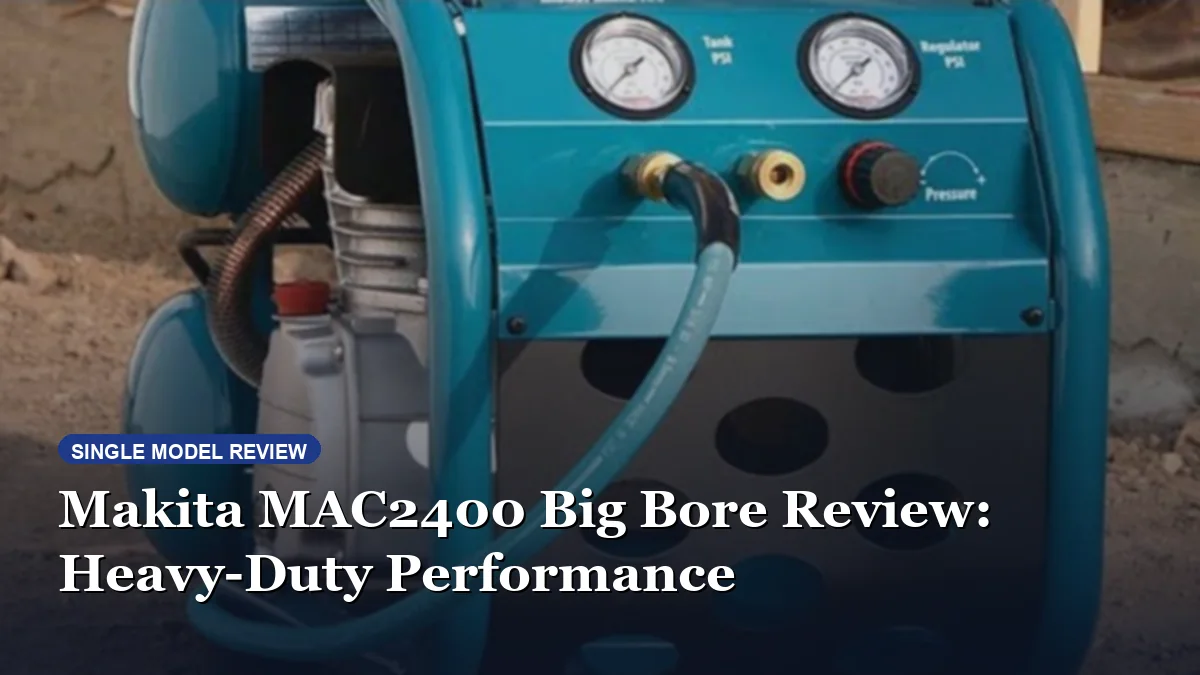

The Makita MAC2400 combines exceptional pump durability with impressive output recovery. It stands as a premier choice for demanding contractors seeking reliable pneumatic pressure under harsh working conditions.
Explore related alternatives in our Best Heavy Duty Air Compressor: Top Picks for 2026.
Verified Specifications
| Category / Type | Twin-Stack Electric Air Compressor |
|---|---|
| Rated Output / Capacity | 4.2 CFM at 90 PSI |
| Power / Motor | 2.5 Running Horsepower, Big Bore Cylinder |
| Build & Materials | Cast Iron Cylinder with Industrial Roll Cage |
| Operating Noise | 79 dB operational sound rating |
| Duty Cycle / Runtime | Oil-Lubricated Pump for Extended Life |
| Dimensions & Weight | Weighs 77 pounds, compact twin tanks |
| Key Safety & Controls | Dual-manometer gauges and brass couplers |
What We Liked
- High displacement Big Bore cylinder pump design
- Robust cast iron construction handles jobsite abuse
- Low pump RPM minimizes thermal wear and noise
- Dual output universal quick-connect brass fittings
- Roll cage frame protects vital engine components
Trade-Offs
- Heavier physical footprint at over seventy pounds
- Requires proper initial oil break-in procedure
- Corded electric power limits remote off-grid setup
Engineering Build Quality and Industrial Design
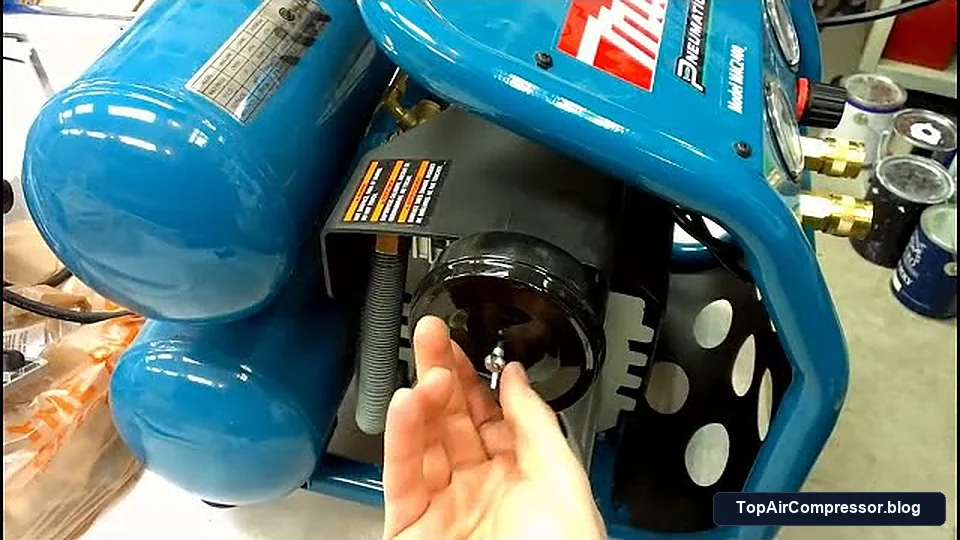
The Makita MAC2400 features a rugged tubular steel roll cage that completely shields the motor assembly. This rugged frame absorbs severe jobsite impacts while preventing accidental drops from damaging vulnerable manifold valves.
Engineering excellence shines through its heavy-duty cast iron cylinder sleeve. This thermal-efficient material dissipates operational heat rapidly, ensuring long component lifespans during high-demand framing and roofing applications.
The Makita MAC2400 utilizes a heavy-duty cast-iron cylinder sleeve designed to reduce bore wear significantly. This commercial-grade material choice directly extends the operating lifespan of the 2.5 horsepower pump under harsh daily conditions.
Protected by a rugged roll-cage construction, the internal components remain completely shielded from accidental jobsite impacts. The protective steel framework also provides safe lifting points while reinforcing the entire twin-stack tank assembly against structural twisting.
- Heavy-duty tubular steel protective roll cage frame
- Cast iron cylinder sleeve for maximum thermal dispersion
- Large industrial air intake filter elements included
Pump Mechanics and Cylinder Geometry
The proprietary Big Bore cylinder design utilizes a larger bore and stroke ratio. This geometric advantage generates significantly higher compressed airflow at lower operational RPM speeds.
Running at reduced rotational speeds directly decreases friction coefficient values across internal piston rings. Consequently, operators experience extended mechanical longevity compared to direct-drive oil-free alternatives.
- Optimized stroke-to-bore ratio for high volume output
- Low RPM operation reduces mechanical friction and wear
Real-World Output and Pneumatic Performance
Delivering 4.2 CFM at 90 PSI, this compressor easily powers framing nailers, roofing guns, and dual finish tools simultaneously. Jobsite productivity remains exceptionally high due to rapid tank recovery cycles.
The twin-tank configuration holds 4.2 gallons of compressed volume, smoothing out delivery surges. Pressure regulation stays remarkably consistent even when drawing heavy intermittent loads from demanding pneumatic equipment.
Delivering consistent pneumatic power, the unit pumps 4.2 CFM at 90 PSI. This robust delivery rate easily satisfies continuous framing nailers without inducing major pressure drops during rapid, multi-shot sequences on busy residential building sites.
Operating at a maximum pressure of 130 PSI, the pump stores ample reserve volume. When reviewing best portable tire air compressor options, technicians find these units efficiently run finish nailers without waiting for frequent cycles.
- Outputs 4.2 CFM at standard 90 PSI operating threshold
- Twin-tank design stabilizes pneumatic delivery pressure profiles
- Drives multiple framing or finish nailers efficiently
Pressure Recovery and Air Delivery Consistency
Under heavy sustained fastener driving, the pump kicks on seamlessly without stalling. The high-flow regulator maintains steady working pressures to prevent erratic fastener depth penetration.
Contractors will appreciate the stable delivery curve when running high-demand air tools like impact wrenches or heavy staplers during rapid assembly tasks.
- Fast compressor cycle recovery from empty to full
- Maintains consistent working pressure under heavy tool loads
Video Review: Makita MAC 2400 Big Bore 2.5 HP Air Compressor Review
Acoustic Profile, Thermal Efficiency, and Duty Cycle
Operating at roughly 79 decibels, this oil-lubricated unit runs quieter than typical jobsite compressors. While not silent, it allows for normal conversation levels near the running machine.
Oil lubrication acts as an internal coolant, lowering operating temperatures significantly. This thermal management supports a robust extended duty cycle suitable for prolonged professional renovation tasks.
Operating at a modest 79 decibels, this low-noise design allows contractors to work indoors without violating local occupational noise limits. The slower-speed pump rotation directly curtails harsh metallic whines common in direct-drive units.
Thermal management remains exceptional thanks to automotive-style finned copper tubing that rapidly dissipates high compression heat. This efficient cooling system protects synthetic lubricating oils and prevents premature valve degradation during extended high-demand working shifts.
- Measured operating noise level of approximately 79 decibels
- Oil-lubricated pump design enhances thermal cooling efficiency
- Supports extended operational duty cycles without overheating
Managing Heat and Lubrication Demands
Proper oil maintenance ensures internal bearings and cylinder walls remain fully coated during startup. Checking the clear sight glass prevents unexpected lubrication starvation issues.
Using recommended synthetic oils prevents carbon buildup on valve reeds while maintaining volumetric efficiency. Evaluating best air compressor picks helps technicians understand how proper lubrication ensures years of heavy daily professional use.
- Clear sight glass for rapid oil level verification
- Synthetic oil compatibility for cold weather operations
Setup, Ergonomics, and Usability on the Jobsite
Initial assembly requires attaching the intake filter and filling the pump crankcase with the supplied oil. Clear manual instructions guide users through the initial break-in period smoothly.
Ergonomic balance points make lifting the unit manageable, though its seventy-seven-pound weight requires two hands. The integrated cord wrap adds convenience during transport between vehicles.
Weighing nearly eighty pounds, the unit demands proper lifting mechanics despite featuring an integrated handlebar. Users should utilize two-person transport methods when loading this heavy machinery into service trucks or navigating uneven terrain.
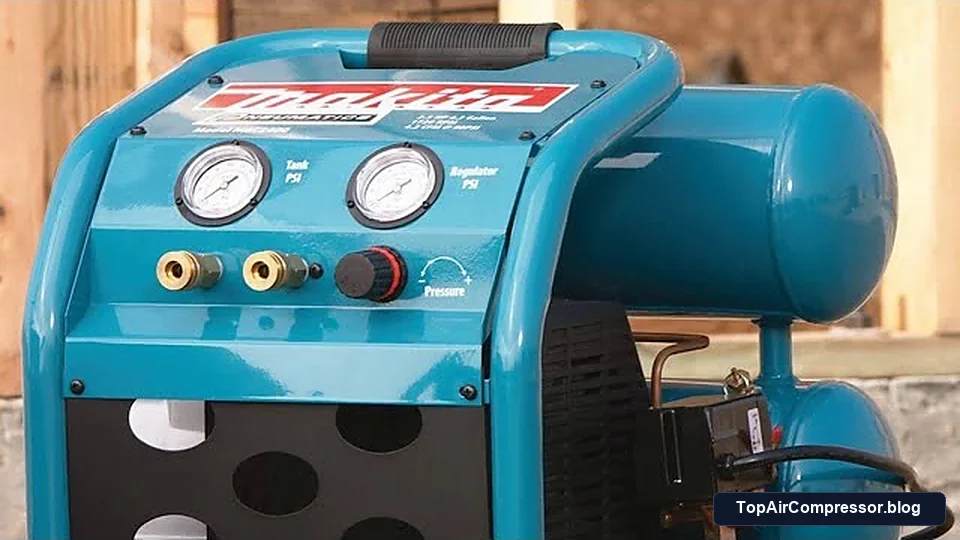
Conveniently positioned brass couplers and industrial regulators allow quick hose connections with minimal hand fatigue. The recessed pressure gauges are shielded against accidental impacts from dropped tools or construction materials rolling across concrete floors.
- Straightforward initial setup and pump oil filling process
- Integrated electrical cord wrap for tidy transport storage
- Accessible drain valves for quick daily moisture purging
Transport and Portability Challenges
Transporting a heavy twin-stack compressor requires secure tie-down placement inside work trucks. The rugged roll cage provides convenient attachment points for cargo straps during transit.
Jobsite mobility is aided by the balanced center of gravity, preventing tipping when rolling across rough terrain or unpaved subfloors.
- Balanced center of gravity prevents accidental tipping
- Rugged frame serves as secure cargo strap tie-down
Maintenance Protocols and Long-Term Durability
Routine maintenance involves draining tank condensation daily and checking the oil sight glass weekly. Keeping moisture purged prevents internal tank corrosion and preserves structural integrity.
Air filter elements should be inspected regularly to maintain volumetric efficiency. By consulting our rolair vs makita comparison, users can evaluate alternative brands offering uncompromised compressor longevity across demanding professional schedules.
Routine maintenance requires regular oil level checks via the clear sight glass before starting daily tasks. Operators must drain accumulated moisture from the twin tanks daily using the accessible ball valve to prevent internal corrosion.
Inspecting the pleated air filter element weekly prevents abrasive dust particles from entering the cylinder bore. Replacing worn filter media preserves volumetric efficiency and ensures the motor does not strain unnecessarily under standard operating loads.
- Daily tank moisture drainage prevents internal corrosion
- Weekly oil level inspections protect internal piston components
- Periodic air filter cleaning sustains peak CFM output
Common Wear Items and Replacement Schedule
Valve reeds and intake filters represent the primary wearable components over years of service. Fortunately, Makita designs these parts for straightforward field servicing by technicians.
Replacing pump oil annually keeps operating temperatures low and protects precision-machined steel components from premature abrasive wear.
- Field-serviceable valve reeds and intake filter assemblies
- Annual oil change maintains optimal internal lubrication
Comprehensive Buyer Verdict and Recommendations
The Makita MAC2400 proves itself as an indispensable asset for serious professional contractors. Its unmatched pump durability and steady airflow make it a benchmark choice for carpentry crews.
While heavier than lightweight hobbyist models, its superior build quality justifies the extra carrying effort. Anyone needing dependable jobsite power will find this compressor an exceptional investment.
Professional contractors seeking reliable pneumatic performance will find this unit ranks high in our best portable air compressor for tools guide. Its durable cast-iron construction guarantees an exceptional long-term investment for framing crews.
Although heavier than ultra-portable trim units, the superior build quality justifies the extra weight during transport. Workshops and busy remodeling teams requiring dependable compressed air will benefit immensely from integrating this powerful machine.
- Ideal for professional framing, roofing, and trim crews
- Exceptional pump longevity outweighs its heavier physical weight
- Delivers professional-grade pneumatic reliability in harsh conditions
Who Should Buy It Versus Who Should Skip
Professional contractors and dedicated remodelers will maximize the value of this heavy-duty machine. DIY homeowners tackling occasional weekend projects might prefer lighter, oil-free alternatives.
Evaluate your daily pneumatic tool requirements against its weight specifications before purchasing to ensure optimal jobsite compatibility.
- Recommended for daily professional contracting applications
- Consider lighter models for infrequent residential DIY tasks
Frequently Asked Questions
What type of oil should be used in the Makita MAC2400 compressor?
You should use a non-detergent SAE 30 oil with a high flash point for optimal performance. Using synthetic compressor oil is also recommended if you operate the unit in cold weather environments to ensure reliable cold starts every single time.
How often should I drain the air tanks to prevent rust?
You must drain the moisture from the twin tanks after every single day of active use. Opening the brass ball valves while the system has slight residual pressure helps forcefully expel accumulated condensation and prevents internal tank corrosion effectively.
Can this air compressor run a framing nailer continuously?
Yes, the 4.2 CFM output at 90 PSI easily handles continuous framing nailer operation without pressure drops. It provides more than enough volume to keep pace with rapid fastening during subfloor installation or wall assembly tasks.
Why does the compressor require an initial pump break-in period?
The break-in procedure allows the new piston rings and cast iron cylinder walls to seat together perfectly. Running the unit open-ended for fifteen minutes lets the components mate, ensuring maximum operational efficiency and longevity.
Is the Makita MAC2400 too loud for indoor residential remodeling work?
Operating at roughly 79 decibels, it is noticeably quieter than standard direct-drive jobsite air compressors. While audible indoors, it allows normal crew communication and causes minimal disturbance during occupied home remodeling projects.