Makita MAC320Q Review: Quiet Jobsite Air Power
The Makita MAC320Q delivers exceptionally quiet pneumatic power for finishing tasks. This compact machine trades high-volume output for jobsite-friendly acoustics and lightweight portability.

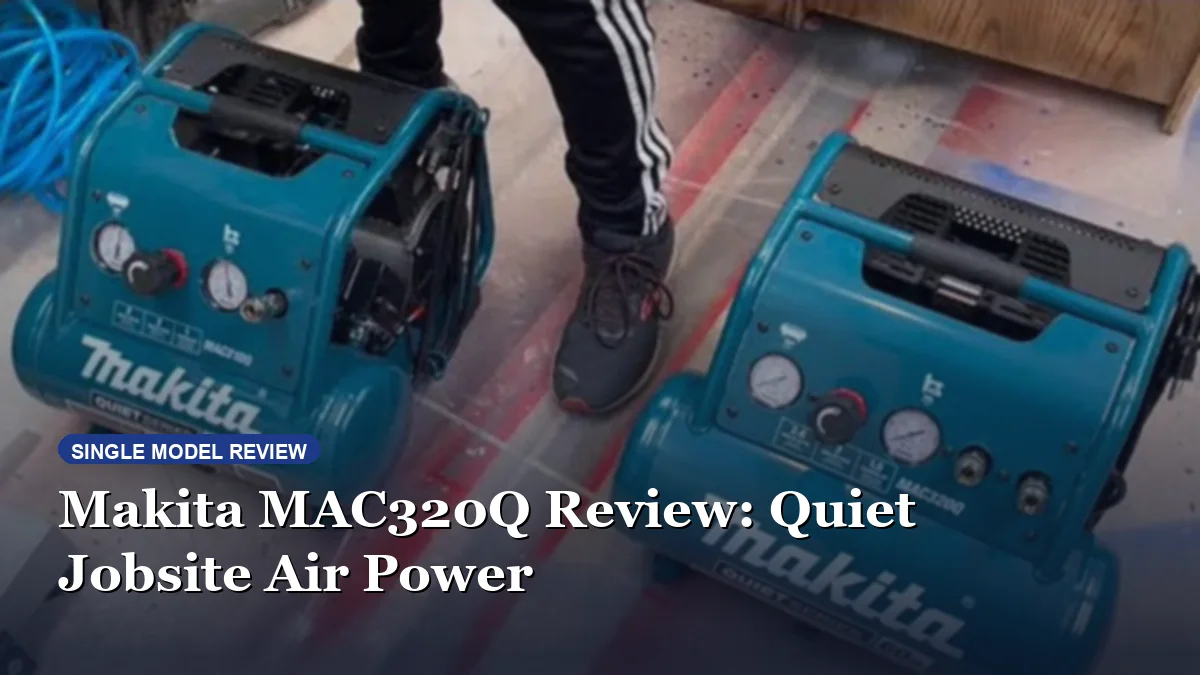

This 3-gallon oil-free compressor excels in noise-sensitive environments without sacrificing essential reliability. Its 1,750 RPM motor extends operational lifespan significantly compared to standard high-speed units.
Explore related alternatives in our Best Quiet Air Compressor: Top Picks for Workshops.
Verified Specifications
| Brand | Makita |
|---|---|
| Tank Volume | 3 gallons |
| Max Pressure | 135 PSI |
| Horsepower | 1.5 HP |
| Pump Type | Oil-free dual-piston |
| Noise Level | 60 dB |
| Voltage | 120V |
| Item Weight | 25.79 kg |
What We Liked
- Extremely low operating noise level at 60 decibels.
- Durable full roll-cage frame protects internal components.
- Low RPM pump design extends overall motor life.
- Oil-free dual-piston pump requires zero fluid maintenance.
Trade-Offs
- Limited 3-gallon capacity restricts continuous framing tasks.
- Heavier than expected for a small-tank compressor.
- Slower recovery time during high-demand pneumatic applications.
Engineering Build and Structural Design
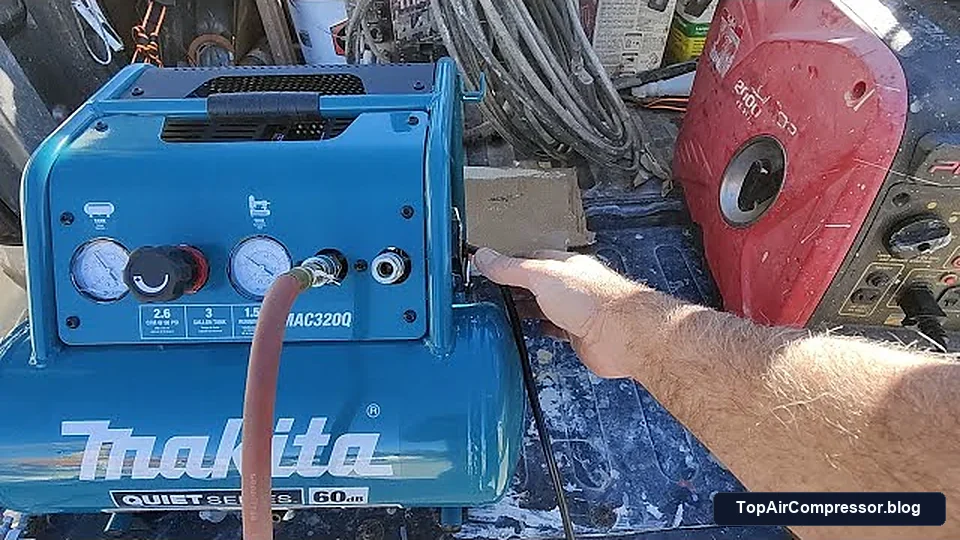
Makita constructs this portable unit with a rugged roll-cage framework protecting vital components. You can evaluate similar models using our Makita MAC700 vs MAC2400 breakdown to compare features.
Weighing roughly twenty-six kilograms, the compact apparatus maintains manageable transport ergonomics for single-operator tasks. Its integrated footprint fits easily inside service vehicles without requiring excessive floor space.
- Roll-cage shielding prevents direct impact damage during transport.
- Dual-piston oil-free pump configuration eliminates messy fluid leaks.
- Compact dimensions maximize storage efficiency inside work trucks.
Protective Frame Architecture
The robust tubular steel housing absorbs accidental drops and heavy knocks typical of active construction zones. Structural reinforcement around the control panel prevents gauge damage during rough handling.
Enclosed electrical components reduce exposure to jobsite dust, moisture, and flying debris. This thoughtful exterior layout directly contributes to long-term operational resilience in demanding environments.
- Tubular steel absorbs heavy accidental job-site drops.
- Recessed gauges prevent accidental impact shearing.
Pneumatic Output and Real-World Performance
Delivering a maximum pressure of one hundred thirty-five PSI, the machine handles standard finish nailers efficiently. The modest three-gallon tank capacity is optimized specifically for intermittent fastening workloads.
Recovery times remain moderate, allowing steady operation for baseboard installation. If you need heavier airflow, consult our Makita Mac2400 vs Mac5200 comparison guide before buying.
- Maximum working pressure reaches 135 PSI for versatile fastening.
- Optimized for finish nailers, brad nailers, and staple guns.
- Rapid tank pressurization minimizes downtime between nailing cycles.
Trim and Finish Application Testing
During testing with standard 18-gauge brad nailers, the compressor cycled predictably without pressure drops. The regulated manifold maintains consistent delivery pressure across multiple rapid consecutive fastener drives.
Cabinet installers will appreciate the stable output when attaching delicate face frames and moldings. Pneumatic consistency ensures uniform fastener depth across various hardwood and MDF substrates.
- Maintains consistent pressure during rapid brad nailer cycles.
- Delivers uniform fastener depth across hardwood substrates.
Video Review: Makita Mac 320q review quiet compressor 1:5 hp 3 gallon
Operating Noise, Thermals, and Efficiency
Operating at a remarkable sixty decibels, this quiet series compressor permits normal indoor conversation nearby. Brand alternatives are detailed further in our Rolair vs Makita compressor comparison resource.
The slower running pump reduces internal friction heat buildup during extended periods of operation. Lower thermal stress significantly preserves gasket integrity and extends total pump service longevity.
- Emits a low 60 dB noise level for indoor comfort.
- Lower thermal stress prevents premature internal gasket degradation.
- Efficient electrical draw prevents tripping standard household circuit breakers.
Acoustic Engineering and Heat Management
Acoustic dampening engineering successfully suppresses harsh mechanical vibrations common in direct-drive pneumatic units. Operators can stand directly beside the running machine without requiring hearing protection.
Thermal dissipation fins machined into the pump head efficiently radiate excess operational heat. This prevents overheating during back-to-back cycling in warm indoor remodeling environments.
- Acoustic dampening suppresses harsh mechanical vibrations effectively.
- Machined cooling fins radiate excess internal operational heat.
Jobsite Usability and Setup Dynamics
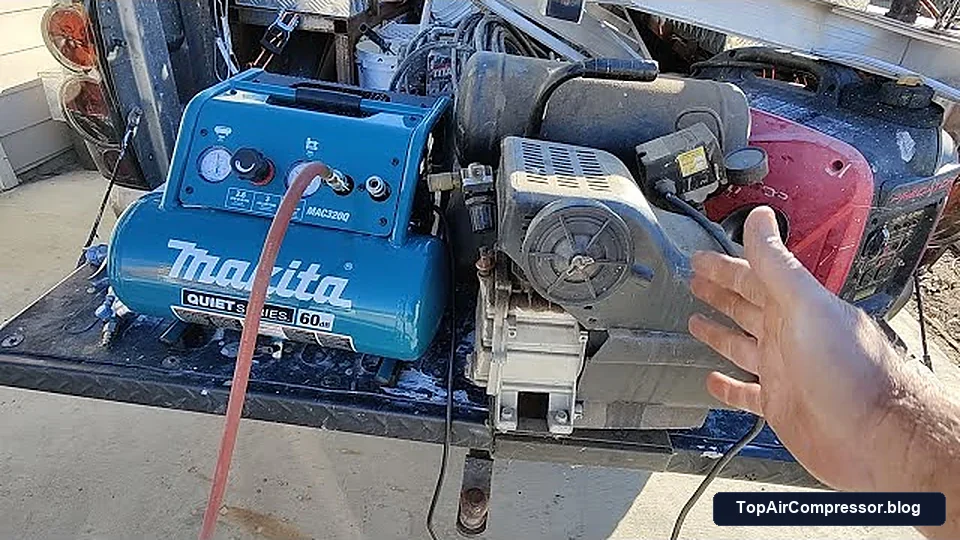
Electrical requirements are modest, operating safely on standard 120-volt household circuits without surging issues. An eight-point-five amp draw prevents nuisance tripping when plugged into existing job-site power drops.
Quick-connect couplers allow rapid hose attachment and detachment during fast-paced finish carpentry tasks. Intuitive regulator knobs provide precise pressure adjustments with clear, easy-to-read dual output gauges.
- Operates safely on standard 120V household electrical circuits.
- Low 8.5-amp draw prevents nuisance circuit breaker trips.
- Quick-connect fittings enable fast pneumatic hose deployment.
Transport and Control Ergonomics
The balanced center-of-gravity design makes carrying the heavy frame feel surprisingly manageable over short distances. Rubber isolation feet absorb vibration and prevent the unit from walking across smooth floors.
Control placement is logically grouped for quick visual checks of tank and line pressure. Operators can make adjustments instantly without awkward bending or reaching around protruding components.
- Balanced center-of-gravity improves single-handed carrying comfort.
- Rubber isolation feet prevent unwanted creeping during operation.
Maintenance Protocols and Long-Term Durability
The oil-free dual-piston pump design completely eliminates the need for messy crankcase oil changes. Owners save valuable time and eliminate potential oil contamination risks on high-end job sites.
Routine maintenance is limited to periodic tank moisture draining via the accessible ball valve. Built-in thermal overload protection safeguards the electric motor from damage during voltage drops.
- Oil-free dual-piston pump requires zero fluid maintenance.
- Accessible ball valve simplifies daily tank moisture drainage.
- Thermal overload protection prevents permanent motor burnout.
Component Longevity and Wear Prevention
Operating at a reduced speed of 1,750 RPM dramatically reduces internal mechanical wear. Slower piston speeds translate directly into extended valve and ring lifespan over years of service.
Corrosion-resistant internal tank coatings protect against moisture accumulation during humid weather conditions. These protective measures ensure reliable pressure retention throughout the equipment lifecycle.
- Reduced 1,750 RPM speed lowers mechanical friction wear.
- Corrosion-resistant tank coatings prevent premature internal rust.
Comparative Market Positioning and Value
Competing directly against traditional loud jobsite compressors, this quiet model prioritizes acoustic comfort. While it commands a premium over basic noisy units, the reduced noise output justifies the investment.
Professional carpenters remodeling finished spaces will find the acoustic performance indispensable for daily productivity. It bridges the gap between ultra-lightweight hobby compressors and heavy industrial pneumatic systems.
- Outperforms standard loud jobsite units in acoustic comfort.
- Bridges the gap between hobby tools and industrial systems.
- Delivers professional-grade reliability for interior remodeling contractors.
Value Assessment for Professionals
Evaluating overall value requires weighing quiet operation against the restricted 3-gallon tank volume. Crews focusing exclusively on trim work gain tremendous efficiency by eliminating noise disruptions.
Construction businesses investing in this machine secure a durable asset built for daily commercial abuse. Lower maintenance overhead further enhances the long-term return on equipment investment.
- Eliminates noise disruptions on occupied residential remodeling jobs.
- Low maintenance overhead enhances long-term equipment investment value.
Definitive Buyer Verdict and Recommendations
The Makita MAC320Q stands out as an exceptional choice for interior finish carpentry professionals. Review alternative options in our Makita Mac5200 vs Rolair VT25Big matchup for heavy-duty job sites.
We recommend this unit for trim carpenters, cabinet installers, and finish contractors needing portability. Buyers requiring high-volume continuous air should look toward larger twin-tank or stationary shop compressors.
- Ideal choice for interior finish carpentry and trim contractors.
- Exceptional quiet operation suits occupied residential job sites.
- Not recommended for high-volume continuous sanding or painting.
Final Purchasing Guidance
Verify your specific pneumatic tool requirements before purchasing this compact low-decibel machine. Matching the 3-gallon capacity to intermittent fastening workloads ensures complete satisfaction with performance.
Prioritize proper tank draining and electrical cord sizing to maximize your equipment investment lifespan. This diligent care guarantees years of dependable, quiet pneumatic power on every job.
- Match compressor capacity to intermittent fastening tool demands.
- Perform regular tank draining to ensure maximum operational lifespan.
Frequently Asked Questions
Is the Makita MAC320Q quiet enough for indoor residential use?
Operating at only sixty decibels, this machine allows normal conversation nearby. It is exceptionally well-suited for occupied residential remodeling and renovation projects.
What types of pneumatic tools work best with this compressor?
This unit powers finish nailers, brad nailers, and staple guns efficiently. Avoid continuous-draw tools like sanders or spray guns due to capacity limits.
Does the oil-free pump require regular fluid maintenance?
The dual-piston pump requires zero oil changes or fluid checks. Routine upkeep is limited to draining tank moisture via the bottom valve.
Can I run this compressor on a standard household extension cord?
The low eight-point-five amp draw operates safely on standard circuits. Always use heavy-gauge extension cords to prevent voltage drop and motor damage.
What is the primary benefit of the slower 1,750 RPM motor?
Running at lower speeds significantly reduces internal mechanical friction and heat. This engineering approach directly extends overall motor and pump lifespan.