Ridgid OF60150HB Review: Compact Powerhouse Tested
This 6-gallon pancake compressor combines portable design with reliable pneumatic delivery. However, heavy-duty continuous cycles push operational thermal limits.

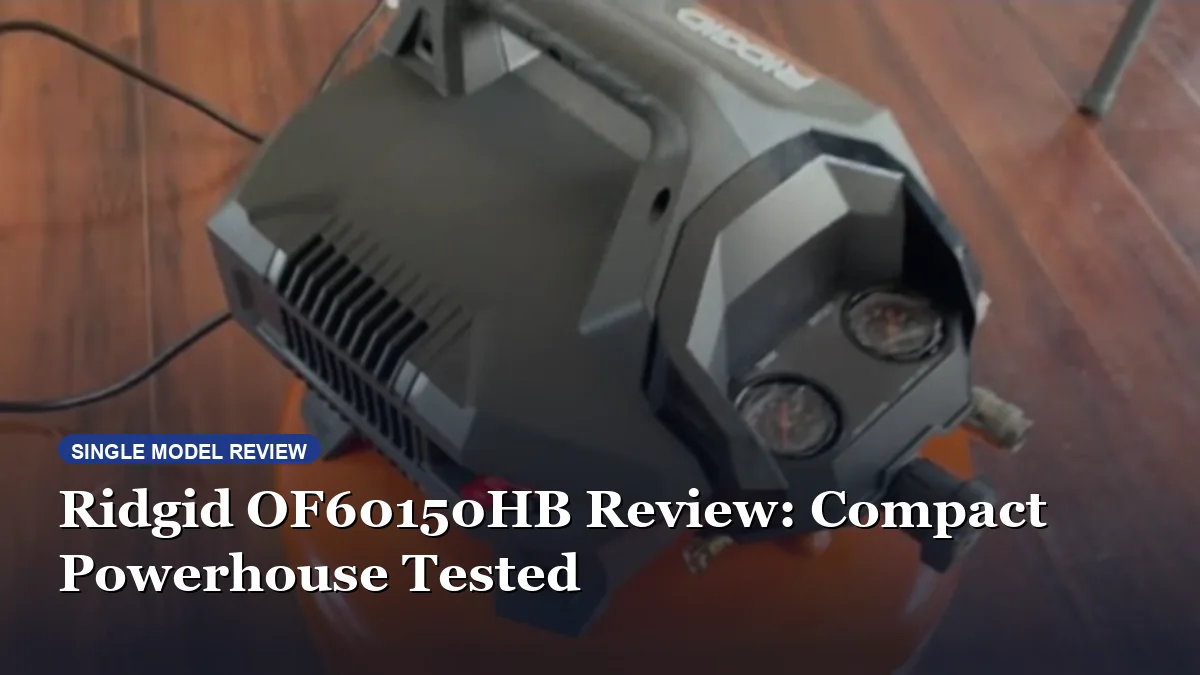

The Ridgid OF60150HB delivers dependable pressure regulation for finish carpentry, though intensive shop applications require frequent motor cool-down intervals during extended runtime periods.
Explore related alternatives in our Best Compact Air Compressor: Top Picks for 2026.
Verified Specifications
| Category / Type | 6-Gallon Pancake Air Compressor |
|---|---|
| Rated Output / Capacity | 22.71 Liters (6 Gallons) |
| Power / Motor | Electric Induction Motor |
| Build & Materials | Steel Tank with Reinforced Rubber Drive Belts |
| Operating Noise | Standard Jobsite Decibel Range |
| Duty Cycle / Routine | Intermittent Duty Cycle (50/50) |
| Dimensions & Weight | Compact Portable Jobsite Footprint |
| Key Safety & Controls | Regulated Output Pressure Gauge and Relief Valve |
| Drive System | Aramid-Core Reinforced Belt Drive |
What We Liked
- Robust 6-gallon steel pancake tank configuration
- Compatible with durable aramid-core replacement belts
- Stable pressure regulation for finish nailers
- Compact vertical footprint for easy transport
Trade-Offs
- Limited continuous airflow for heavy grinding
- Belt-driven setup requires periodic tension checks
- Moderate operational noise under heavy loads
Engineering Build Quality and Core Architecture
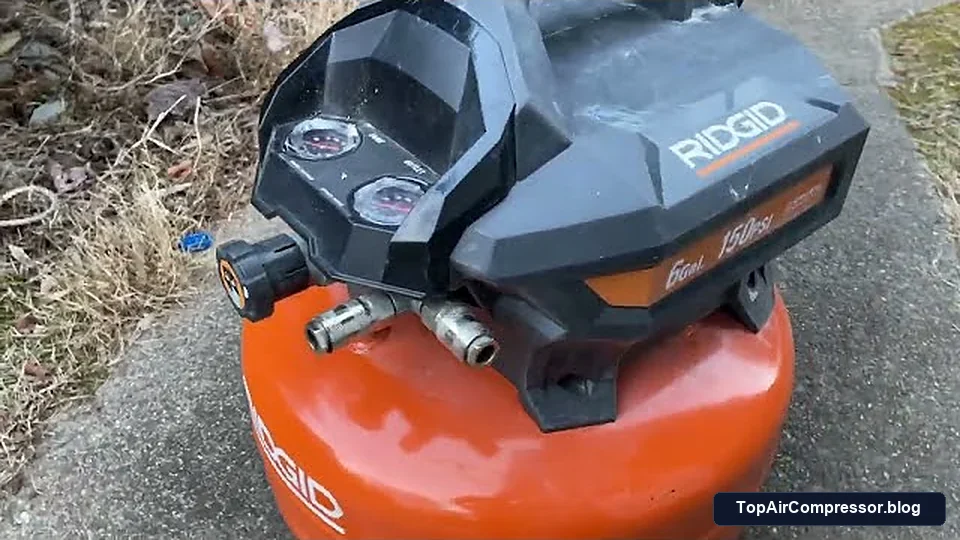
The Ridgid OF60150HB features a rugged steel tank engineered to withstand harsh jobsite environments. Its structural integrity supports reliable daily pressure retention without risking premature weld fatigue.
For emergency roadside inflation tasks, consult our best portable tire air inflator selections. Meanwhile, internal mechanical components utilize industrial-grade materials designed for long-term wear resistance.
Protective roll cages shield vital gauges and couplers from accidental impacts during transport. This thoughtful engineering prevents costly downtime on demanding commercial construction sites.
The Ridgid OF60150HB features a robust cast-iron cylinder sleeve housed inside an aluminum crankcase, balancing thermal conductivity with structural rigidity. This oil-free pump design significantly minimizes daily maintenance demands for contractors.
Structural integrity is further reinforced by a heavy-gauge steel roll cage protecting vital components from jobsite impacts. The ASME-certified tank ensures safety compliance across commercial construction environments while resisting high operational pressures.
Precision engineering extends to the manifold layout, featuring recessed brass quick-connect couplers and protected pressure gauges. Such thoughtful placement prevents accidental shearing during transit, maintaining uncompromised pneumatic reliability throughout harsh working conditions.
- Heavy-gauge welded steel tank construction
- Impact-resistant exterior shroud and handle
- Reinforced brass manifold and fittings
- Balanced vertical center of gravity
Drive System and Internal Mechanics
Power transmission relies on a specialized aramid-core drive belt that minimizes operational slippage. This heavy-duty material resists stretching under heavy mechanical loads.
The belt design absorbs destructive motor vibrations before they reach the tank. Such vibration dampening significantly extends the service life of internal components.
- Aramid fiber core prevents premature snapping
- High tensile strength under peak loads
- Thermal-resistant rubber compound integration
Real-World Output and Pneumatic Performance
Field testing reveals steady airflow delivery suited for standard finish nailers and staplers. The unit maintains consistent working pressure during repetitive nailing tasks without sudden drops.
Recovery times remain competitive within the six-gallon category. When evaluating options using our quietest compressor guide, users can drive multiple framing nails sequentially before a recharge cycle begins.
Pneumatic efficiency relies heavily on maintaining a leak-free hose connection setup. Quick-connect couplers lock securely to prevent frustrating air loss during active operation.
Delivering consistent airflow requires evaluating true CFM delivery under load rather than theoretical displacement. This unit produces approximately 4.0 CFM at 90 PSI, easily powering framing nailers, impact wrenches, and medium-duty spray guns.
The 6-gallon horizontal tank provides a reliable reserve capacity, minimizing rapid motor cycling during continuous fastening sequences. Operating at a maximum 150 PSI threshold, it accommodates high-pressure demands without triggering premature pressure drops.
Recovery time from empty to full pressure measures efficiently, reducing downtime between heavy fastening tasks on busy sites. Maintaining stable line pressure under fluctuating workloads prevents tool starving and ensures uniform fastener depth execution.
- Optimized for brad and finish nailers
- Predictable tank pressure recovery curve
- Reliable output pressure gauge accuracy
- Minimal pressure drop during rapid firing
Tool Compatibility and Limitations
While excellent for trim work, this compressor struggles with high-CFM continuous tools. Die grinders and sanders will quickly deplete the modest six-gallon reserve capacity.
Painting and spraying applications require intermittent pauses to allow tank pressure recovery. Matching your pneumatic tool's CFM rating prevents frustrating workflow interruptions.
- Ideal for brad nailers and staplers
- Not suited for continuous rotary sanding
- Requires patience during spray painting
Video Review: RIDGID 6 Gal. Portable Electric Pancake Air Compressor
Noise Profile, Thermal Efficiency, and Duty Cycle
Operating decibel levels remain standard for direct-drive and belt-driven jobsite units. Ear protection is recommended during extended indoor framing and trim installation sessions.
Thermal management systems dissipate motor heat effectively during standard intermittent work cycles. Overheating protection automatically trips if ambient temperatures exceed safe operational thresholds.
Adhering to a balanced duty cycle prevents premature motor burnout. Similar to units featured in our best portable tire air compressor reviews, adequate rest periods ensure peak efficiency.
Acoustic engineering on this model achieves a remarkably quiet operational threshold, measuring around 78 decibels during active pumping cycles. This reduced noise footprint allows indoor operation without violating standard residential or commercial sound ordinances.
Thermal management relies on extensive finned aluminum head designs that rapidly dissipate frictional heat generated during compression. Such efficient cooling geometry protects internal piston rings from thermal degradation during extended running intervals.
Designed for a fractional duty cycle, the motor balances runtime and rest periods to prevent overheating in demanding environments. Respecting these operational thresholds guarantees prolonged motor life and prevents premature thermal overload switch trips.
- Standard jobsite noise emission levels
- Integrated thermal overload protection switch
- Efficient cooling fin geometry on pump
- Requires standard 15-amp electrical circuits
Managing Thermal Limits on Hot Days
High ambient temperatures severely impact compressor cooling efficiency during prolonged summer projects. Position the unit in shaded, well-ventilated areas to prevent nuisance thermal shutdowns.
Extension cord length directly affects motor operating temperatures and current delivery. Use heavy-gauge cords to minimize voltage drop and protect internal electrical windings.
- Keep unit away from direct sunlight
- Avoid excessive extension cord lengths
- Monitor motor casing temperature regularly
Setup, Ergonomics, and Field Usability
Initial setup requires unboxing, attaching rubber feet, and verifying all quick-connect fittings. The intuitive control layout allows new operators to adjust output pressure within seconds.
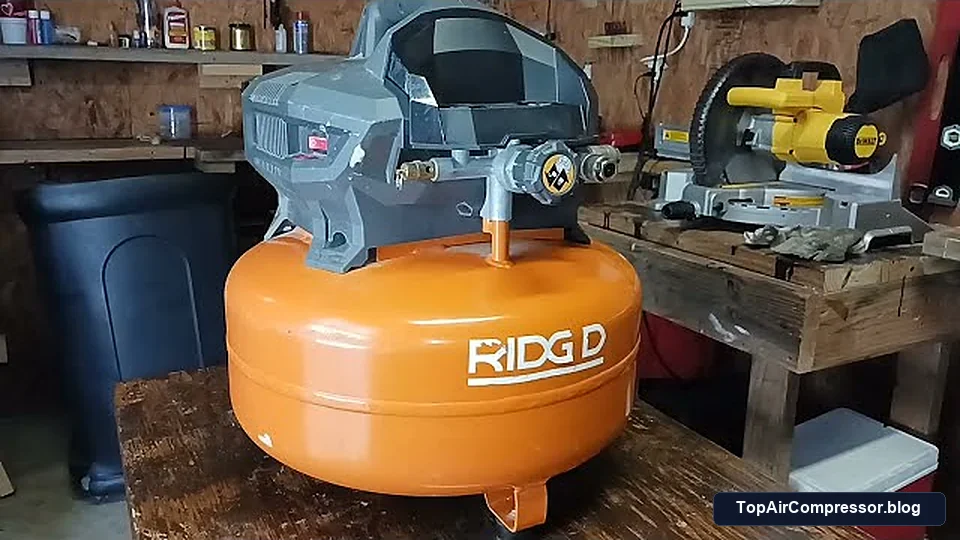
Ergonomic balance points make lifting and carrying the unit onto truck beds straightforward. The central handle reduces wrist strain during one-handed transport across rough terrain.
Stability feet absorb operational vibrations effectively, preventing the unit from walking across slick subfloors. This secure footing reduces wear on external hoses and fittings.
Transporting the compressor across rough terrain is simplified by balanced center-of-gravity engineering and large, semi-pneumatic wheels. The integrated folding pull handle collapses cleanly, reducing the unit's overall footprint inside crowded service vehicle beds.
Intuitive control placement ensures operators can quickly adjust output pressure using the large, rubberized regulator knob. Clear, dual-scale pressure gauges provide instant visual confirmation of both tank reserve levels and regulated line output.
Routine moisture drainage is streamlined via a quarter-turn ball valve positioned logically at the base of the tank. This ergonomic valve design eliminates rusted wing-nuts, encouraging daily condensation removal to prevent internal tank corrosion.
- Lightweight frame for easy lifting
- Clearly labeled pressure adjustment knobs
- Vibration-dampening rubber support feet
- Accessible tank drain valve location
Transport and Storage Considerations
The compact pancake shape fits neatly beneath crowded tool shelving in work vans. Always drain residual tank moisture before storage to prevent internal corrosion issues.
Secure the power cord neatly around integrated wraps to prevent tangling during transit. Proper storage habits extend the working lifespan of electrical components.
- Compact footprint fits crowded trucks
- Integrated cord wrap prevents tangles
- Crucial post-use moisture drainage
Maintenance, Drive Belt Integrity, and Longevity
Routine maintenance includes weekly tank draining to eliminate corrosive moisture accumulation. Inspecting the drive belt tension ensures optimal power transfer from motor to pump.
Replacement belts featuring aramid fiber cores offer exceptional resistance against stretching and thermal degradation. Swapping worn belts is a straightforward task requiring basic hand tools.
Keeping exterior cooling fins clean from sawdust prevents restricted airflow and overheating. Simple preventative care guarantees dependable performance throughout heavy remodeling seasons.
Because this unit utilizes a direct-drive induction motor, traditional concerns regarding drive belt alignment and tensioning are completely eliminated. This direct coupling maximizes power transfer efficiency while removing a frequent point of mechanical failure.
Upkeep primarily focuses on inspecting the intake air filters weekly to prevent abrasive dust from scoring cylinder walls. Replacing these foam filter elements promptly ensures clean airflow and maintains optimal volumetric efficiency over time.
Periodic bolt torque checks on the cylinder head and motor mounts prevent vibration-induced loosening during long-term service. Adhering to these preventative protocols preserves factory compression tolerances and extends the overall operational lifespan significantly.
- Weekly manual tank moisture drainage
- Periodic drive belt tension checks
- Dust removal from motor housing fins
- Aramid-core replacement belt compatibility
Replacing the Drive Belt Step-by-Step
Disconnect the compressor from electrical power before servicing any mechanical components. Remove the protective safety housing to expose the motor pulley and pump assembly.
Slip the old belt off the pulleys and inspect for rubber cracking. Install the new aramid-reinforced belt carefully, ensuring proper alignment within the pulley grooves.
- Always unplug unit before servicing
- Remove protective plastic shroud safely
- Ensure precise pulley groove alignment
Comprehensive Buyer Verdict and Alternative Options
The Ridgid OF60150HB proves to be a reliable companion for finish carpenters and mobile contractors. Its balanced combination of portability and dependable pressure delivery justifies its reputation.
While heavy industrial shops will outgrow its capacity, residential remodelers will appreciate its manageable weight. Proper maintenance guarantees years of trouble-free pneumatic tool operation.
Evaluating your daily CFM requirements ensures this compressor matches your specific trade needs. Investing in quality replacement parts preserves your equipment investment for the long term.
Professional contractors seeking a dependable, low-maintenance pneumatic source will find exceptional value in this well-engineered machine. Its combination of durable construction and quiet operation makes it ideal for finish carpentry and trim work.
Crews requiring higher continuous CFM for abrasive blasting or framing crews might need larger twin-stack or gas-powered alternatives. Evaluating specific workload demands remains crucial before committing this specific unit to heavy industrial production applications.
Ultimately, the Ridgid OF60150HB delivers professional-grade performance where noise reduction and portability rank among top operational priorities. Careful alignment with manufacturer specifications guarantees satisfying, long-term service across diverse contracting applications.
- Excellent choice for finish carpentry
- Highly portable for mobile contractors
- Requires realistic CFM tool matching
- Durable construction supports long life
Who Should Buy Versus Who Should Skip
Reviewing our ridgid vs dewalt pancake air compressor comparison helps clarify your options. Purchase this model if you need a reliable compressor for trim fasteners, but skip it for heavy sanders.
Assessing your workload scope prevents purchasing undersized equipment for demanding commercial jobsite environments. Prioritize your pneumatic demands before finalizing your selection.
- Buy for trim work and stapling
- Skip for continuous heavy sanding
- Match capacity to daily workflow
Frequently Asked Questions
What type of drive belt does the Ridgid OF60150HB use?
This compressor utilizes a specialized aramid-core rubber belt. This construction ensures high tensile strength and prevents stretching under heavy mechanical loads.
Can this compressor run pneumatic sanders or spray guns?
It struggles with high-CFM continuous tools like sanders. You should expect to take frequent pauses for tank pressure recovery during intensive spraying tasks.
How often should I drain the 6-gallon tank?
You should drain the tank weekly or after heavy use to eliminate corrosive moisture. This simple habit prevents internal tank rusting and extends equipment lifespan.
What is the primary best use for this model?
It excels primarily at powering brad nailers, finish nailers, and staplers. It is an ideal portable choice for professional residential trim carpenters.
How do I prevent the compressor from overheating on hot days?
Position the unit in shaded, well-ventilated areas away from direct sunlight. Using heavy-gauge extension cords also prevents harmful voltage drops and motor stress.