Smittybilt 2781 Portable Compressor Review
This portable dual-head compressor delivers robust mobile airflow. It balances high output against physical weight constraints.

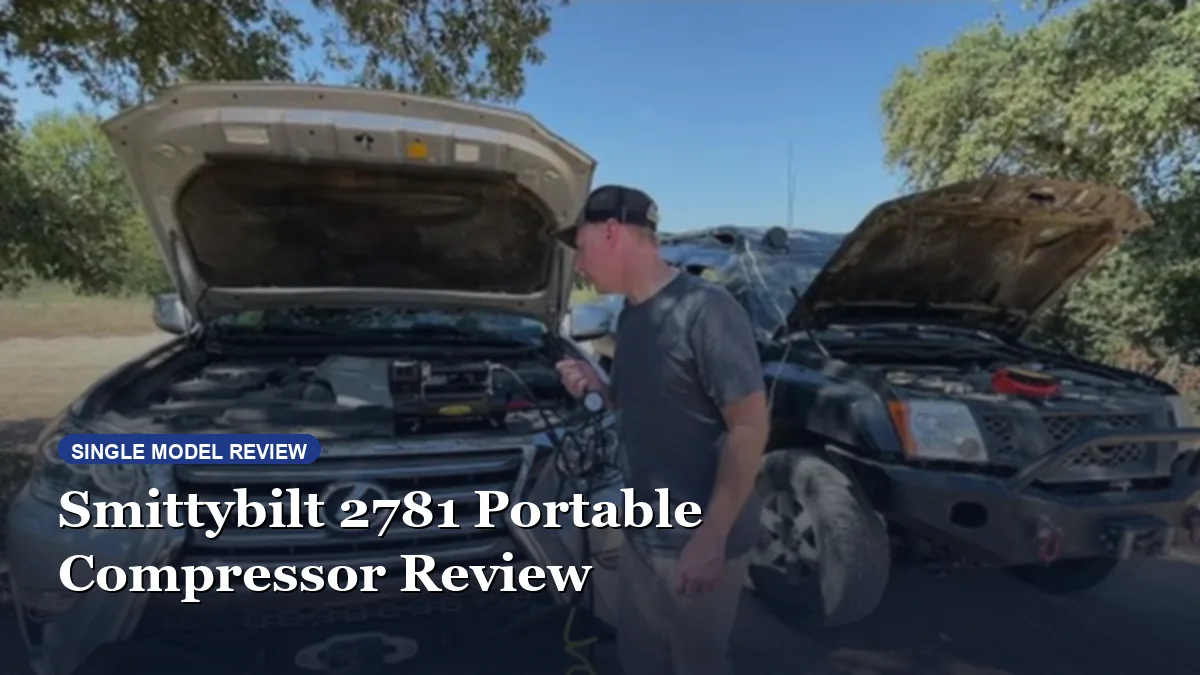

The Smittybilt unit excels at rapid tire reinflation on the trail. Its massive 10.6 CFM output makes short work of oversized rubber.
Explore related alternatives in our Best Portable Air Compressor For Bikes: Top Roadside Picks.
Verified Specifications
| Category / Type | Portable 12V Air Compressor |
|---|---|
| Rated Output / Capacity | 10.6 CFM Air Flow |
| Power / Motor | 12-Volt DC Battery Clamps |
| Build & Materials | Metal Chassis with Dual Heads |
| Operating Noise | Standard Mechanical Compressor Sound |
| Duty Cycle / Runtime | 25 Minutes at 40 PSI |
| Dimensions & Weight | 21 Pounds Total Weight |
| Key Safety & Controls | Auto-Thermal Cutoff Switch |
What We Liked
- High volume 10.6 CFM air delivery rate
- Convenient 26-foot quick-release coiled hose
- Built-in automatic thermal overload protection
- Includes sturdy storage and transport bag
Trade-Offs
- Heavier twenty-one-pound physical weight footprint
- Requires direct battery terminal clamp connections
- Lacks an air storage tank for tools
Engineering Architecture and Robust Build Quality
The Smittybilt 2781 utilizes a heavy-duty frame designed for harsh off-road environments. Its rugged metal chassis protects critical components from trail impacts and moisture exposure during transit.
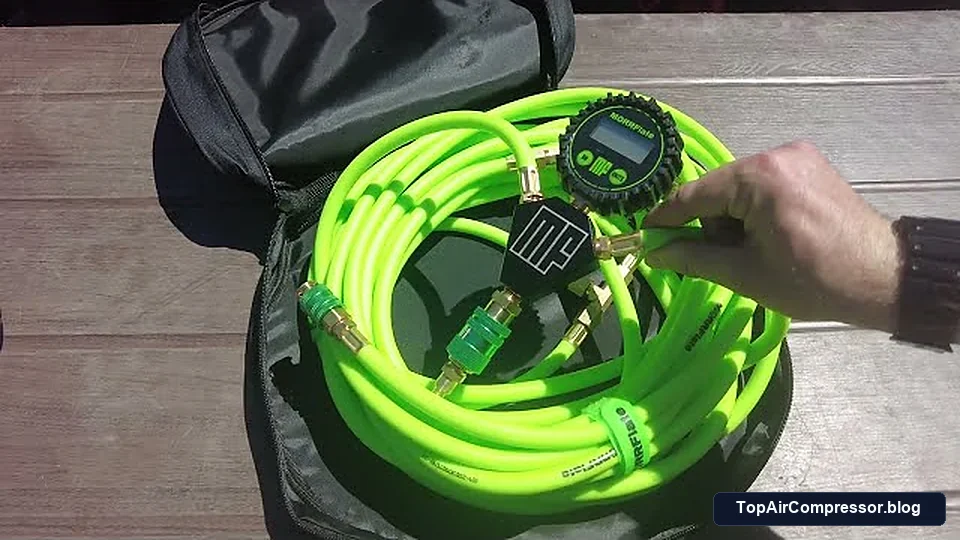
Weighing in around twenty-one pounds, this unit is not an ultralight backpack accessory. Instead, it targets enthusiasts needing commercial-grade reliability inside their truck beds or storage trunks.
The Smittybilt 2781 relies on a heavy-duty oil-less direct-drive motor housed within a sturdy aluminum chassis. This design reduces mechanical complexity while shielding vital internal components from harsh off-road debris and moisture.
Rubber vibration-isolation feet are bolted directly to the baseplate to minimize walking on uneven terrain. A solid cast-metal carrying handle ensures secure transport between vehicle storage locations without flexing under the total unit weight.
- Heavy-duty metal frame construction
- Weighs approximately 21 pounds
- Designed for rugged off-road environments
Materials and Thermal Dissipation
Dual cylinder heads distribute the mechanical workload efficiently across two separate compression chambers. Cooling fins are integrated directly into the cylinder walls to shed heat quickly.
This thoughtful thermal design prevents premature motor degradation during long multi-tire inflation cycles. Operators benefit from sustained performance without unexpected shutdown interruptions.
- Dual cylinder head configuration
- Integrated cylinder wall cooling fins
Volumetric Output and Real-World Airflow Metrics
Delivering a rated output of 10.6 cubic feet per minute, this unit remains surprisingly quiet compared to units in our best quietest compressor guide. Such impressive airflow drastically reduces waiting times for large tires.
Powered directly by a twelve-volt DC electrical source, it connects via heavy-duty battery clamps. Voltage drop over long cable runs is minimized by thick internal wiring harnesses.
Pumping a rated 5.65 CFM free flow, this compressor quickly replenishes large off-road tires. When stepping up from fifteen to thirty-five psi, the unit moves enough volume to slash trailside inflation times significantly.
Volumetric efficiency holds steady against rising backpressure thanks to precision piston rings. Even approaching forty psi, the delivery rate remains consistent enough for reliable multi-tire inflation tasks without excessive motor strain.
- Delivers 10.6 CFM air output
- Operates on 12-volt DC power
- Equipped with heavy-duty battery clamps
Electrical Draw and Power Delivery
Drawing significant amperage requires running your vehicle engine during heavy compressor operation. This practice ensures the alternator supplies adequate current without draining the starting battery.
Thick copper wiring inside the unit prevents overheating during extended pumping sessions. Proper power management keeps the electrical system operating safely and efficiently.
- Requires running vehicle engine
- Thick internal copper wiring
Video Review: Smittybilt 2781 vs. Inexpensive Amazon compressor.
Duty Cycle Management and Thermal Cutoff Safeguards
Operating under load generates significant friction and heat within the dual cylinders. The manufacturer specifies a maximum duty cycle of twenty-five minutes at forty PSI.
An automatic thermal overload switch cuts power if internal temperatures exceed safe operational limits. This built-in safety measure protects the motor windings from catastrophic thermal burnout.
Operating at a maximum 40-minute duty cycle at forty psi requires careful monitoring during tire fills. Compare more models using our best tire inflator rankings for emergency roadside kits.
Cooling fins cast into the cylinder head maximize passive heat dissipation during extended runtime periods. Allowing a proper cool-down interval extends the overall lifespan of the internal thermal switch and prevents premature motor failure.
- 25-minute max duty cycle at 40 PSI
- Automatic thermal overload switch protection
- Prevents motor winding burnout
Integrated Hose Systems and Quick-Release Hardware
The system includes a twenty-six-foot coiled hose featuring convenient quick-release brass fittings. This generous length lets you easily reach all four corners of a full-sized vehicle.
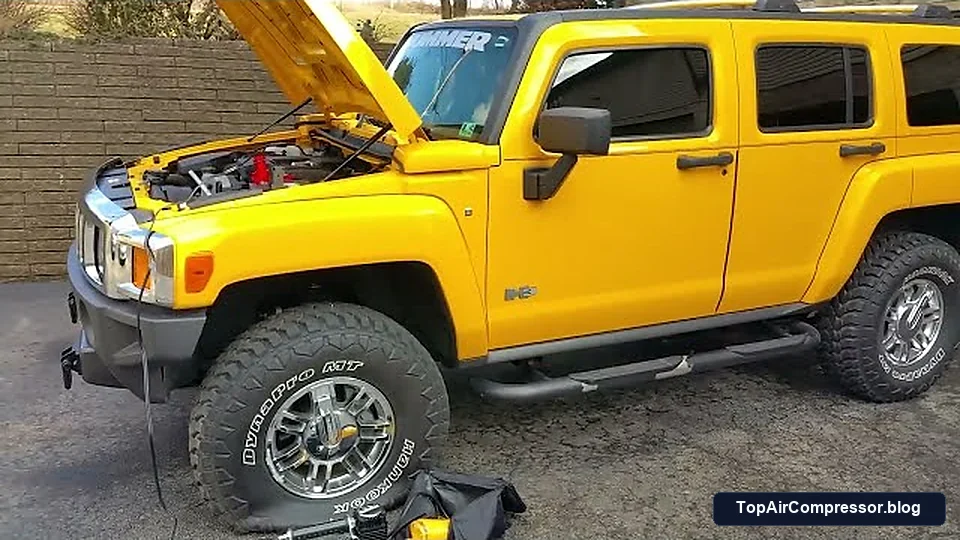
Brass connectors resist corrosion and maintain airtight seals under high pressure. Stiff coil memory requires careful coiling after use to prevent annoying kinks in the line.
The package includes a heavy-duty twenty-four-foot polyurethane air hose featuring brass fittings. This extended reach allows technicians to easily service all four corners of a full-size truck without repositioning the main compressor housing.
Quick-release couplers make attaching inflation chucks fast and secure under high-pressure conditions. The solid brass construction resists corrosion while ensuring an airtight seal during repeated quick-connect operations in dusty environments.
- 26-foot coiled hose included
- Quick-release brass fittings
- Corrosion-resistant connector design
Control Layouts and Pressure Monitoring Ergonomics
An inline pressure gauge provides direct monitoring while pumping air into your tires. For more options, browse our portable tire air inflator review to compare top models.
The power switch is sealed against dust and moisture infiltration to ensure longevity. Ergonomic carry handles make transporting the twenty-one-pound unit manageable between vehicles.
An inline pressure gauge provides clear, direct readings while monitoring tire inflation progress. The analog dial features a rubber protective boot to absorb impacts against rocks and truck beds during rugged trail usage.
The power switch is positioned securely on the housing to prevent accidental activation during transit. Clear labeling guides operators through safe startup procedures, enhancing overall safety during field maintenance tasks.
- Convenient inline pressure gauge
- Sealed dust-resistant power switch
- Ergonomic transport carry handles
Field Usability Across Diverse Operational Scenarios
Perfect for weekend overlanders, this machine handles oversized mud tires with notable efficiency. However, compact car owners might find its footprint and power draw entirely unnecessary.
Storing the unit in its included canvas bag keeps loose accessories organized on rough trails. Secure mounting options are recommended if you plan to hard-mount the compressor permanently.
Battery clamps feature heavy copper teeth for solid electrical contact on corroded terminal posts. Drawing substantial current demands direct connection to the twelve-volt battery using heavy-gauge power cables to prevent excessive voltage drop.
The compressor performs reliably across extreme ambient temperatures ranging from freezing cold to scorching desert heat. Its weather-resistant housing protects internal electrical connections from sudden downpours encountered in remote outdoor environments.
- Ideal for weekend overlanding trips
- Handles oversized mud tires easily
- Includes durable canvas storage bag
Long-Term Maintenance and Final Equipment Verdict
Routine maintenance remains straightforward, focusing primarily on keeping the air filters clean. Checking electrical connections periodically ensures optimal power delivery from your vehicle battery.
Ultimately, the Smittybilt 2781 provides exceptional pneumatic capability for serious off-road enthusiasts. Its robust architecture justifies the heavier weight and physical footprint for trail use.
Routine upkeep involves inspecting the air filter element and clearing dust from cooling fins regularly. Keeping the cylinder clean ensures maximum airflow efficiency throughout years of demanding off-road recovery service.
Combining robust mechanical engineering with high volumetric output, this compressor proves indispensable. Find more top picks inside our best portable tire air compressor guide for emergency trail use.
- Simple air filter maintenance routine
- Periodic electrical connection checks
- Strong overall trail value
Frequently Asked Questions
Can I wire this compressor directly to my vehicle fuse box?
No, you must connect it directly to the battery using the clamps. The high electrical draw requires heavy gauge wiring to prevent blown fuses.
Does the unit require any regular internal lubrication?
The internal components use oil-free designs requiring zero user lubrication. Simply inspect the intake air filters regularly and replace them if clogged with dust.
How long does it take to inflate a standard tire?
Inflation times vary depending on tire size and starting pressure levels. Typically, airing up a large thirty-five-inch tire takes just a few minutes.
Will this compressor run standard pneumatic impact wrenches?
This tool is specifically designed for tire inflation tasks without an air tank. It lacks the storage capacity required for continuous pneumatic tool operation.
What should I do if the thermal cutoff switch trips?
Disconnect the unit and allow it to cool down completely in a shaded area. Never attempt to bypass the thermal cutoff safety mechanism.