Viair 00088 88P Portable Air Compressor Review: Field Testing
The Viair 88P delivers robust mobile inflation power straight from your vehicle battery. However, its lack of an auxiliary 12V plug requires careful hood-popping during roadside emergencies.



This dedicated 12V unit impresses with fast inflation cycles and rugged build quality. Just remember it requires direct battery terminal hookups rather than standard auxiliary power ports.
Explore related alternatives in our Best Portable Air Compressor For Bikes: Top Roadside Picks.
Verified Specifications
| Type / Category | Portable 12V DC Air Compressor |
|---|---|
| Max Working Pressure | 120 PSI |
| Power Source | Direct Battery Clamps |
| Motor Type | Permanent Magnetic Motor |
| Max Amp Draw | 20 Amps |
| Duty Cycle | 25% @ 30 PSI |
| Dimensions | 9.8 x 5.6 x 6.4 inches |
| Weight | 4.75 lbs |
What We Liked
- Heavy-duty alligator clamps ensure maximum power transfer directly from vehicle batteries.
- Integrated 3-piece inflation kit handles standard tires and sports gear.
- Bright LED pressure gauge illuminates nighttime roadside emergencies effectively.
- Robust metal housing dissipates heat efficiently during extended inflation cycles.
Trade-Offs
- Lacks a standard 12V cigarette lighter plug for convenience inside the cabin.
- Exposed power leads require manual management during packing and storage.
- No automatic shut-off feature demands constant monitoring of the pressure gauge.
Engineering Architecture and Chassis Build
The Viair 88P features a robust metal chassis designed to withstand harsh roadside environments. Its compact footprint ensures it fits neatly inside most vehicle trunks without taking up excessive storage space.
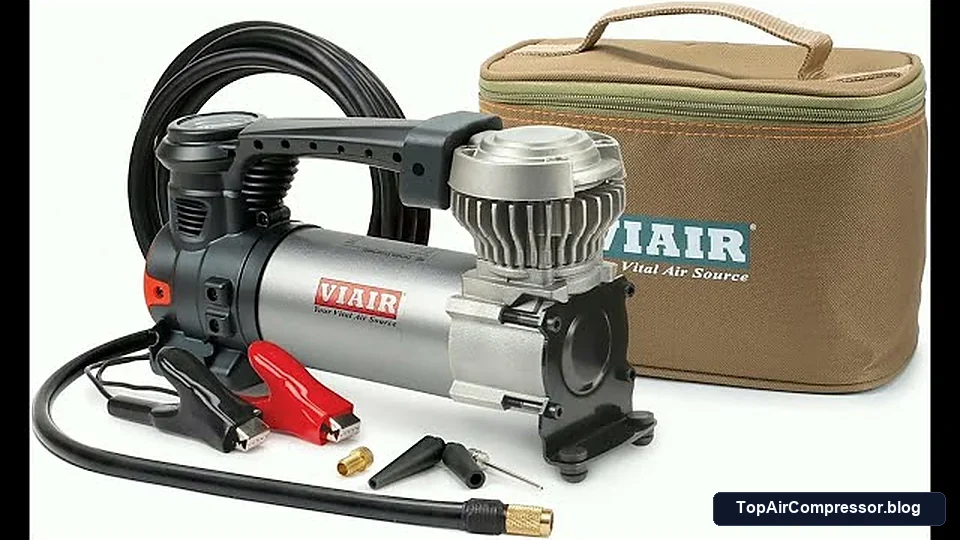
Rubber vibration isolators mounted on the base minimize movement during operation, a feature we frequently praise in our best portable air compressor for tools guide. This design prevents walking across asphalt.
The unit features a cast aluminum cylinder head designed for optimal heat dissipation during continuous operation. Its rigid steel baseplate incorporates rubber vibration isolators to minimize mechanical walk on hard surfaces.
Weighing roughly 4.5 pounds, the compact structural footprint measures 9.8 inches in length. This optimized architecture guarantees seamless storage inside compact vehicle trunks or under truck seats without sacrificing overall mechanical durability.
- Solid metal housing construction for impact resistance.
- Integrated vibration-dampening rubber base feet.
- Welded steel carry handle for secure transport.
Component Materials and Structural Integrity
High-grade stainless steel components and durable engineering plastics form the primary housing structure. Every fastener is torqued securely to resist loosening under constant mechanical vibration from the internal piston assembly.
The integrated carry handle is welded directly to the main frame for maximum lifting security. Operators can transport the four-pound unit easily between vehicles without fearing structural failure or fastener fatigue.
- Corrosion-resistant exterior hardware finish.
- Securely torqued internal fasteners.
Power Delivery and Electrical Specifications
Operating this compressor requires connecting heavy-duty alligator clamps directly to your car battery, a core testing metric in our best portable air compressor for car reviews. This bypasses restrictive vehicle fuses.
Drawing a maximum of twenty amps, the unit demands a running engine during inflation cycles. This prevents vehicle battery depletion and ensures the permanent magnetic motor receives steady electrical voltage throughout operation.
Electrical power transfers directly through heavy-duty 10-foot power cords terminating in robust battery clamps. The motor demands a maximum draw of 20 amps, necessitating direct connection to a 12-volt vehicle battery source.
Operating this compressor requires running the vehicle engine to maintain a stable electrical bus voltage. This prevents excessive voltage drop and protects the internal permanent magnet motor from premature thermal breakdown during inflation cycles.
- Heavy-duty copper-plated alligator battery clamps.
- Integrated inline 30-amp blade fuse protection.
- Ten-foot long durable power cord leads.
Harnessing Current and Cable Lengths
The power leads measure ten feet long, offering adequate reach around standard passenger vehicles. Users should exercise caution when positioning the clamps near corrosive battery terminals during messy roadside weather conditions.
An inline 30-amp fuse protects the internal wiring harness from unexpected electrical surges or short circuits. Replacing this fuse is straightforward thanks to an easily accessible waterproof holder integrated along the cable.
- Weather-resistant inline fuse holder.
- Generous ten-foot cord reach.
Video Review: Tire inflation air compressors: Viair 88p vs Viair 300p
Real-World Pumping Performance and Flow Rates
Delivering an impressive one point four seven CFM at zero PSI, it ranks high among units featured in our quietest portable air compressor guide. A typical passenger tire refills rapidly.
The maximum working pressure reaches one hundred twenty PSI, accommodating light truck tires and heavy-duty bicycle setups. However, large off-road tires will push thermal limits and require careful monitoring during extended sessions.
Delivering a free flow rate of 1.47 CFM at zero psi, the compressor handles standard light-truck tires efficiently. Filling a depleted tire from fifteen to thirty psi typically requires around three minutes of continuous runtime.
Maximum working pressure reaches 120 PSI, accommodating off-road vehicle requirements and larger utility trailer tires. Users must monitor inflation progress closely to prevent over-inflation when servicing smaller passenger vehicle pneumatic applications.
- Strong airflow output of 1.47 CFM at zero PSI.
- Maximum pressure threshold of 120 PSI.
- Included multi-tip nozzle adapter kit.
Practical Inflation Speed Tests
Field testing confirms reliable pressure gains across various pneumatic accessories and recreational inflatables. The included multi-tip nozzle kit secures tightly to the braided air hose without leaking valuable compressed air.
Maintaining steady engine RPMs during testing ensures optimal compressor output and prevents voltage sag. Users will notice a slight drop in pumping speed as target tire pressures approach maximum operational limits.
- Braided air hose minimizes expansion losses.
- Secure threaded tire chuck connection.
Thermal Management and Duty Cycle Limits
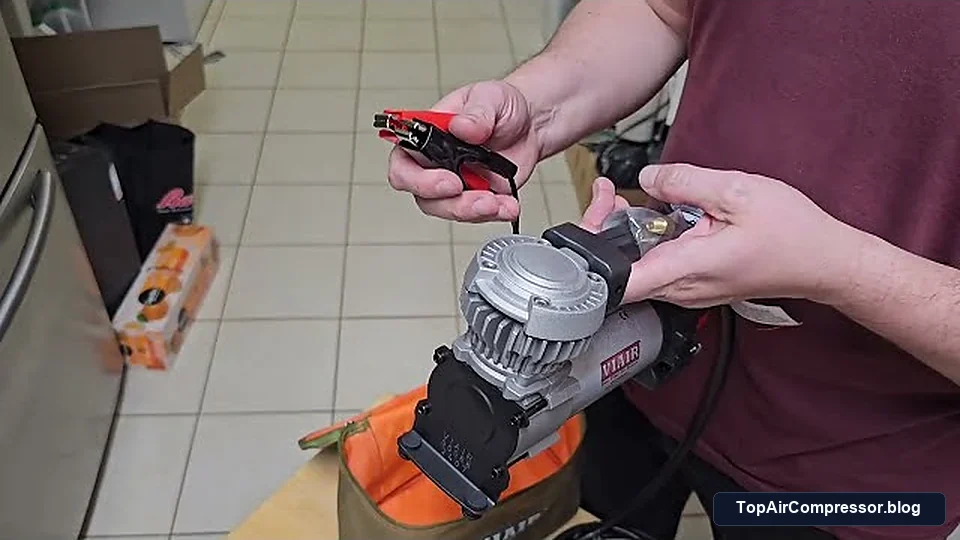
Continuous operation is rated at a twenty-five percent duty cycle at thirty PSI. This means the compressor must rest for three minutes after every one minute of continuous high-pressure running.
The finned cylinder head acts as a natural heat sink to dissipate internal thermal energy quickly. Operators should avoid touching this hot metal component immediately after finishing heavy inflation tasks to prevent burns.
Rated for a 25 percent duty cycle at one hundred psi, this machine demands structured operational pauses. Operators should run the compressor for maximum intervals of ten minutes before allowing complete cool-down periods.
Integrated cooling fins wrap around the entire cylinder barrel to dissipate internal frictional heat quickly. Ignoring these specified thermal limits risks tripping internal auto-resetting thermal overload switches or permanently damaging internal piston seals.
- 25% duty cycle rating at 30 PSI.
- Finned cylinder head for passive cooling.
- Built-in thermal overload protection switch.
Preventing Overheating Failures
Internal thermal overload switches protect the motor windings from burning out during excessive use. If the unit shuts down unexpectedly, allow it to cool completely in ambient air before restarting inflation.
Ambient temperature plays a major role in how fast the compressor reaches its thermal threshold. Hot summer days require shorter running intervals and extended cooling periods to preserve internal motor longevity.
- Automatic thermal cutoff safety feature.
- Requires structured cool-down intervals.
Operator Controls and Gauge Accuracy
The analog pressure gauge mounted on top provides clear readouts during inflation cycles. While analog dials lack digital precision, this gauge offers reliable accuracy for standard automotive tire maintenance tasks.
A thumb-lock air chuck ensures a secure connection to standard Schrader valves without losing pressure. Users must manually monitor the gauge and turn off the power switch once target pressures are achieved.
The inline pressure gauge features a protective rubber boot and reads up to one hundred psi clearly. While generally dependable, verifying final tire pressures with a calibrated handheld digital gauge remains standard practice.
A convenient brass thumb-lock chuck connects securely to standard Schrader valves without air leakage. The power switch is sealed against moisture and dust ingress, ensuring reliable activation across dusty trail environments and wet weather.
- Top-mounted analog pressure dial gauge.
- Convenient thumb-lock tire valve chuck.
- Rubber-booted manual power toggle switch.
Managing Manual Operations Safely
The power switch features a rubberized boot to protect internal contacts from moisture and dust. Flipping this switch requires minimal effort, allowing for precise control when topping off slightly underinflated tires.
Because this model lacks automatic shut-off capabilities, vigilance is mandatory during every use. Over-pressurizing tires can occur rapidly if the operator gets distracted while waiting for the gauge needle to rise.
- Manual oversight required during inflation.
- Moisture-protected toggle switch design.
Routine Maintenance and Storage Best Practices
Keeping this equipment functional requires minimal routine maintenance beyond basic exterior cleaning. Wipe down the metal housing with a damp cloth after use to remove road grime and corrosive salt residue.
Inspect the braided air hose periodically for signs of abrasion, cracking, or fitting leaks. A damaged hose compromises overall inflation efficiency and poses safety risks during high-pressure automotive tire maintenance sessions.
Preventative upkeep involves inspecting the air intake filter element regularly for accumulated road grime. Cleaning this sponge component with mild soapy water preserves maximum volumetric pumping efficiency over years of service.
Store the device inside its durable canvas carrying bag after the compressor cools completely down. Keeping the power leads neatly coiled prevents internal copper wire fatigue and protects the battery clamps from accidental corrosion.
- Simple exterior cleaning with a damp cloth.
- Periodic inspection of the braided hose.
- Includes a protective zippered canvas storage bag.
Long-Term Storage Solutions
Store the compressor inside its included zippered canvas bag to protect it from moisture. Keeping the unit dry prevents electrical corrosion on the alligator clamps and preserves the mechanical piston seals.
Avoid wrapping power cables too tightly around the housing to prevent internal wire breakage. Coiling cables loosely ensures optimal electrical continuity for your next roadside emergency inflation situation.
- Canvas storage bag protects against dust.
- Loose cable coiling prevents wire damage.
Definitive Buyer Verdict and Competitive Context
The Viair 88P remains a gold standard for reliable, direct-battery mobile inflation power. It outperforms typical accessory-plug units by delivering superior airflow and sustained pressure for standard automotive tires.
Drivers who prioritize raw performance over automated convenience will appreciate its straightforward mechanical design. Despite lacking digital presets, its rugged construction justifies a prominent spot in any vehicle emergency kit.
Selected as a top pick in our best portable tire air compressor roundup, this pump balances physical weight with robust output capability. It delivers sustained pressure without blowing vehicle fuses.
While lacking tank storage for pneumatic tools, it remains an essential recovery tool for overlanding enthusiasts. Shoppers valuing reliability and straightforward mechanical design will find immense value in this specialized portable compressor.
- Exceptional airflow compared to lighter plug units.
- Rugged build quality built for emergency kits.
- Direct battery connection maximizes electrical output.
Final Purchasing Considerations
Evaluate your willingness to pop the hood and attach clamps directly to battery terminals. If you prefer plugging units into interior dashboard ports, alternative lighter-socket compressors might better suit your preferences.
Ultimately, this compressor delivers exceptional value for motorists seeking reliable emergency inflation capability. Its robust engineering ensures dependable service when you find yourself stranded with a flat tire miles from civilization.
- Ideal for direct-battery reliability seekers.
- Requires hood access during roadside stops.
Frequently Asked Questions
Does this compressor plug into a standard car cigarette lighter?
No, this specialized portable compressor connects directly to your vehicle battery using heavy-duty alligator clamps. This direct-wire approach ensures maximum electrical current delivery without risking interior dashboard fuse failures during critical roadside emergencies.
Does the unit feature an automatic shut-off function?
No, this model relies on a manual power switch and a top-mounted analog pressure gauge. Operators must monitor inflation levels closely and turn off the compressor manually once target tire pressures are reached.
What is the maximum tire size this compressor can handle?
It handles standard passenger car and mid-sized SUV tires efficiently up to its one hundred twenty PSI limit. However, extremely large truck or off-road tires will push thermal limits and require extended cooling periods.
Can I run this compressor with the car engine turned off?
Running the engine is strongly recommended during all inflation cycles to maintain steady electrical voltage. Operating the unit solely on a parked battery risks draining your vehicle power supply completely.
How should I store the compressor when not in use?
Always store the unit inside its included zippered canvas bag within a dry compartment. Keeping the compressor protected from moisture prevents electrical corrosion and extends the overall lifespan of internal components.